
Mastering SEO: Is AI-Driven Content the Key to Rapid Google Rankings?
What’s the Buzz About AI in SEO, and Why Should You Care?

The Unmistakable Shift in Search: Why AI SEO Demands Your Attention
The landscape of Search Engine Optimization (SEO) is undergoing a profound transformation, driven by the rapid advancements in Artificial Intelligence (AI). Gone are the days when manual, labor-intensive processes were the sole path to visibility. Today, AI SEO is not just a buzzword; it’s a fundamental shift in how we approach content creation and strategy for achieving high Google rankings.
This isn’t merely an incremental upgrade; it’s a paradigm shift. The AI in SEO market, for instance, is projected to reach an astounding $12.6 billion by 2028, reflecting a critical industry-wide adoption. This growth isn’t speculative—it’s fueled by tangible results. We’re observing that AI can automate up to 80% of content creation tasks, liberating marketers to focus on higher-level strategic initiatives rather than getting bogged down in repetitive production.
AI-driven content isn’t just faster; it’s smarter.
Why should this matter to you? Traditional SEO methods, while foundational, often struggle to keep pace with the sheer volume and complexity of data required to dominate today’s search results. AI-powered tools, on the other hand, can analyze millions of keywords, identify nuanced user intent, and pinpoint opportunities that human specialists might overlook. This capability directly translates into improved organic traffic, with studies showing AI-optimized content can boost traffic by up to 50% within six months. The competitive edge this provides is immense, allowing businesses to secure faster Google rankings and maintain them.
Platforms like GenWrite are precisely engineered to harness this power, automating the end-to-end blog creation process with a strong focus on SEO optimization. We research keywords, analyze competitors, and integrate relevant elements, all designed to deliver high-quality, AI SEO tool-driven content that aligns with both search engine guidelines and Large Language Models (LLMs). This strategic integration of AI into your content workflow isn’t just about efficiency; it’s about building a robust, future-proof strategy for consistent traffic growth.
This transformative approach ensures your content isn’t just seen, but truly resonates, driving significant organic reach and website traffic.
How Does AI Revolutionize Content Creation for Search Engines?
The landscape of content creation for search engines has undergone a profound transformation, moving beyond manual keyword stuffing and into an era of intelligent automation. This isn’t just about generating text faster; it’s about fundamentally reshaping how content is conceived, optimized, and delivered to align with complex search algorithms and user intent.
The Core Shift: From Manual Effort to Intelligent Automation
Historically, creating SEO-optimized content was a labor-intensive process, demanding extensive manual research, writing, and iterative refinement. Today, AI SEO content generator tools have shifted this paradigm, enabling businesses to scale their content efforts exponentially. These platforms leverage machine learning to analyze vast datasets, identify trending topics, and even predict content performance.
AI automates up to 80% of content creation tasks, freeing marketers for strategy.
This level of automation means that what once took hours for a human writer can now be accomplished in minutes, allowing for a consistent stream of fresh, relevant material. The true power of SEO content automation tools lies in their ability to maintain high quality and relevance at a speed impossible for human teams alone. They ensure that your content pipeline is always flowing, keeping your digital footprint active and competitive.
Aligning with Algorithmic Intelligence
Modern search engines, like Google, prioritize content that is not only keyword-rich but also semantically relevant, authoritative, and truly helpful to the user. This is where AI tools for SEO truly shine. They move beyond simple keyword density checks to understand the underlying context and nuances of a topic, mirroring how search algorithms interpret queries and content.
AI algorithms can analyze millions of data points to create content that naturally incorporates semantic keyword clusters and demonstrates comprehensive topic coverage. This deep understanding helps content rank higher by satisfying the sophisticated natural language processing (NLP) capabilities of engines like Google’s BERT update. The result is content that isn’t just written, but engineered for search engine visibility and user engagement.
Beyond Generation: AI’s Role in Optimization
While the ability to generate content quickly is impressive, the revolution extends far deeper. An AI SEO blog generator isn’t merely a writing assistant; it’s an optimization engine. These tools conduct in-depth competitor analysis, pinpointing gaps in existing content and suggesting optimal structures that resonate with top-ranking pages. They also identify long-tail keywords and emerging trends that human analysts might miss, providing a significant edge in competitive niches.
For instance, platforms like GenWrite are designed to automate the end-to-end blog creation process, from keyword research and competitor analysis to adding relevant links and images, and even auto-publishing. This ensures every piece of content is not only well-written but also perfectly structured and optimized for search engine guidelines and large language models (LLMs).
AI optimizes content for performance, not just presence.
This continuous optimization loop, often in real-time, is crucial. As I’ve discussed in “Boosting Website Traffic with AI: A New SEO Strategy for 2026“, leveraging these capabilities leads to consistent traffic growth. By integrating AI, we shift from reactive adjustments to proactive, data-driven content strategies that anticipate search trends and user needs, leading to improved organic traffic by up to 50% within six months.
Choosing the Best SEO AI Writer and Content Generator for Your Blog
The digital landscape is flooded with general-purpose text generators, but writing readable prose is no longer enough to rank on Google. To scale your organic search presence, it is essential to transition from basic drafting tools to a dedicated seo content generator. While standard platforms merely output text based on isolated prompts, a specialized seo ai writer integrates real-time search engine data, competitor analysis, and automated workflows to ensure your posts align with modern search algorithms.
Comparing Tool Types: Standard AI vs. Professional SEO Platforms
To choose the right software, it is vital to compare the different categories of tools available on the market. Understanding the distinction between a generic chatbot and a professional ai seo writer is key to achieving sustainable search visibility:
- General AI Copywriters: Excellent for creative writing and brainstorming, but they lack search intent analysis, keyword density tracking, and live SERP data.
- On-Page SEO Assistants: Interactive editors that guide your manual writing process by suggesting keywords and readability improvements in real time, but require heavy manual effort.
- Dedicated SEO Content Generators: End-to-end platforms engineered to research, structure, optimize, and write SEO-compliant articles automatically.
| Feature | Standard AI Writer | Professional seo content generator |
|---|---|---|
| Primary Focus | General text generation & basic readability | Search engine visibility, keyword optimization, and organic traffic |
| SEO Workflow | Manual prompting, manual keyword insertion | Automated, end-to-end SEO and keyword workflows |
| Data Integration | Static training data; no real-time search engine access | Live SERP analysis, NLP entity extraction, and keyword metrics |
| Output Structure | Standard paragraphs and generic formatting | Semantic HTML (H2, H3, H4), schema-ready layouts, and optimized tables |
What to Look For in a Professional ai writer seo Platform
Unlike basic tools, a specialized ai writer seo platform handles the technical heavy lifting behind the scenes. When evaluating options, look for these core features that set professional systems apart from standard AI tools:
Live SERP & Competitor Analysis
An advanced platform does not write in a vacuum. It analyzes top-performing competitor structures in real time, identifying content gaps, optimal heading structures, and semantic entities to build comprehensive articles that outperform established rivals.
Intelligent Keyword Integration & NLP
Rather than stuffing keywords awkwardly, a sophisticated seo ai writer uses natural language processing (NLP) to seamlessly integrate primary and secondary terms. This ensures your content reads naturally for users while sending the right signals to search engine crawlers.
Automated Workflows and Structured Output
The platform should automatically generate structured layouts—including optimized H3 and H4 tags, bullet points, and tables—that search engines can easily parse, index, and potentially feature in rich snippets.
Does a Free SEO Writing Assistant Exist?
For startups, individual bloggers, or marketing teams testing the waters before committing to a premium subscription, a common question is whether a reliable free option actually exists.
While several platforms offer free tiers or basic browser extensions to capture initial interest, these free options typically come with strict limitations—such as capped word counts, restricted access to advanced NLP entities, and no bulk generation features. To scale your production and unlock advanced competitor insights, upgrading to a premium ai seo writer is eventually necessary.
Discovering the Right AI SEO Blog Tools
When evaluating the market, you will find a spectrum of tools. Some focus narrowly on drafting, others on post-publish optimization, and a select few offer an end-to-end automated solution. For those seeking comprehensive automation and superior SEO outcomes, GenWrite stands out. It is a comprehensive AI blog generator designed to automate the entire workflow—from keyword research and competitor analysis to adding relevant links, generating images, and automatically publishing directly to your CMS.
We understand the challenges of scaling high-quality, search-optimized content. GenWrite streamlines your operations, ensuring that your blog posts are both reader-friendly and perfectly aligned with search engine guidelines and large language models (LLMs).
Elevating Your Blog with Comprehensive AI Solutions
Choosing the right software can dramatically impact your organic reach. Unlike traditional writing workflows, modern AI tools provide the speed and precision necessary to compete in today’s fast-paced digital environment. To understand how these next-gen platforms compare to legacy workflows, you can read about how to outrank rivals with AI SEO software vs. traditional methods for 2026 speed.
Integrating these tools strategically ensures that every piece of content you produce is a calculated step toward higher rankings and increased website traffic. If you are looking to choose the best solutions, consider reading our guide on AI SEO blog writing tools to make an informed decision. For a broader perspective on enhancing your content strategy, explore these seo ai tools to optimize your production workflow.
The right technology does not just write; it strategizes, optimizes, and publishes, empowering you to achieve rapid Google rankings with efficiency and precision.
Can AI Smartly Structure Your Content for Superior SERP Visibility?
Crafting content that truly resonates with both human readers and search engine algorithms is a meticulous art, particularly when it comes to structure. Many content creators grapple with outlining their articles in a way that maximizes both readability and search visibility. The challenge lies in balancing user experience with the intricate demands of SEO.
The Precision of AI in Content Outlining
This is precisely where AI offers a transformative advantage. AI tools for SEO optimization don’t just generate text; they delve deep into SERP data, analyze top-ranking competitors, and deconstruct user queries to reverse-engineer optimal content outlines. This advanced analysis extends to suggesting logical heading hierarchies—H1, H2, H3, H4—that reflect semantic relationships and provide clear navigational paths for both users and search engine crawlers.
A well-structured article, guided by AI, inherently enhances dwell time and reduces bounce rates, sending positive signals to search engines about content quality. AI-driven structuring is a non-negotiable for modern SEO success. It significantly improves the chances of securing valuable featured snippets and rich results by presenting information in an easily digestible, organized format.
Beyond just headings, AI also refines overall readability. It ensures content isn’t just keyword-rich but flows logically, making complex topics accessible to a wider audience. AI identifies patterns in successful content, such as the optimal placement of bullet points, internal links, and visual breaks, all designed to boost engagement. This meticulous focus on user experience is paramount, as Google increasingly prioritizes content that comprehensively satisfies user intent.
Automating Structure for Superior SEO with GenWrite
This is where SEO content automation tools like GenWrite truly shine. As an AI SEO blog generator, GenWrite doesn’t merely write; it intelligently structures your entire blog from the ground up. It considers everything from initial topic research to in-depth competitor analysis, ensuring the generated outline aligns with the best practices for search engine guidelines and large language models (LLMs).
This systematic approach means you’re not just getting content; you’re receiving strategically organized information designed for maximum SERP visibility. The manual effort involved in achieving such granular structural perfection can be immense. For a deeper dive into how AI compares to traditional content creation methods in driving rapid Google rankings, explore our article on Manual vs. AI Content: What Drives Faster Google Rankings in 2026?
AI provides a systematic, data-driven blueprint for content architecture. Ultimately, AI’s ability to smartly structure content transforms a frequently overlooked aspect of SEO into a powerful lever for achieving superior SERP visibility and enhanced user engagement, streamlining the entire content creation process.
Do AI Tools Uncover Hidden Keyword Gems for Rapid Ranking?
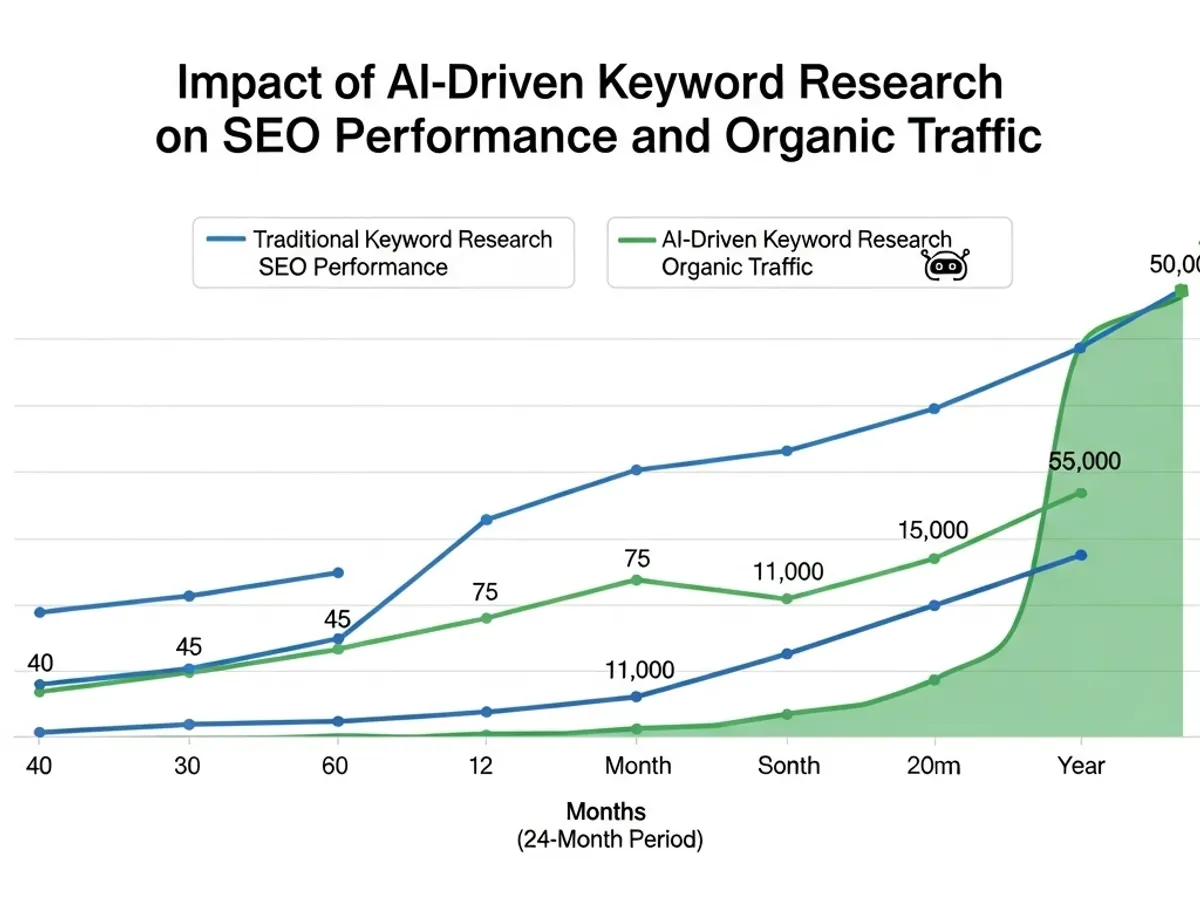
Uncovering those elusive keyword gems—the ones that promise high relevance and lower competition—has traditionally been a labor-intensive, often hit-or-miss endeavor. Manual keyword research, while foundational, simply can’t compete with the sheer analytical power of modern AI. We’re not just talking about finding popular terms; we’re talking about identifying micro-niches and emerging trends that human eyes might overlook entirely.
AI’s Enhanced Keyword Discovery
At the core of AI’s capability is its ability to process and analyze vast datasets at lightning speed. Where a human might spend hours sifting through spreadsheets, an AI SEO content generator can scour millions of search queries, competitor strategies, and trending topics in minutes. This allows for the discovery of long-tail keywords and semantic variations that are highly specific, carry clear user intent, and often present less competition, making them prime targets for rapid ranking.
AI tools for SEO don’t just find keywords; they reveal opportunities.
This intelligent analysis extends beyond mere volume. AI evaluates factors like keyword difficulty, search intent, and even the competitive landscape of the SERP (Search Engine Results Page), giving you a strategic edge. It’s a fundamental shift from guessing to data-driven precision.
Pinpointing Content Gaps with AI Precision
One of the most powerful applications of AI in keyword strategy is its ability to identify critical content gaps. By analyzing what your competitors are ranking for and, more importantly, what they’re missing, AI tools can highlight topics and angles where you can create authoritative content. This isn’t just about covering existing ground better; it’s about pioneering new territory that perfectly aligns with untapped search demand.
AI helps you see what’s missing, not just what’s there.
This insight allows you to strategically target keywords that satisfy unmet user needs, positioning your content as the go-to resource and accelerating your path to higher organic visibility. It’s about being proactive rather than reactive in your content creation.
Decoding Search Intent for Strategic Targeting
Understanding why someone is searching for a particular term is just as important as knowing what they’re searching for. AI excels at analyzing search intent through advanced Natural Language Processing (NLP), distinguishing between informational, navigational, transactional, and commercial queries. This deep understanding enables you to craft content that directly addresses the user’s underlying need, leading to higher engagement rates and improved ranking potential.
For example, if an SEO blog writing AI identifies that users searching for “best running shoes” are primarily looking for reviews and comparisons (informational/commercial intent), it can guide your content strategy to focus on comprehensive review articles rather than just product listings.
Strategic Recommendations for Accelerated Rankings
Ultimately, AI tools don’t just present data; they provide actionable recommendations. They can prioritize keywords based on their potential for rapid ranking, taking into account factors like your website’s authority, current competition, and the keyword’s commercial value. This strategic guidance ensures you’re investing your content efforts where they will yield the fastest and most impactful results.
This analytical prowess is precisely what platforms like GenWrite leverage to automate the end-to-end blog creation process. By researching high-potential keywords and analyzing competitor content, GenWrite ensures the generated content is optimized for rapid ranking and increased website traffic. For a deeper dive into the efficiency gains, exploring the difference between traditional and modern approaches is insightful: Manual vs. AI Content: What Drives Faster Google Rankings in 2026?.
AI transforms keyword data into a clear roadmap for ranking success.
What Role Does AI Play in Real-time Content Optimization and Adaptation?
The digital landscape is in perpetual motion, with search engine algorithms evolving constantly and user behavior shifting almost daily. This relentless pace presents a significant challenge for maintaining SEO rankings, but it’s precisely where AI steps in as a game-changer for real-time content optimization and adaptation.
Continuous Performance Monitoring
Traditional SEO often involved periodic content reviews, which risked missing crucial windows for improvement. Today, advanced AI tools for SEO optimization continuously monitor content performance metrics, from organic traffic and bounce rates to keyword rankings and user engagement signals.
This isn’t about guesswork; it’s about data-driven insights delivered at an unprecedented speed.
AI algorithms can process vast datasets, identifying subtle patterns and anomalies that indicate changes in search intent or algorithmic preferences. They act as an always-on analyst, providing an immediate pulse on how your content is resonating with your audience and search engines.
Intelligent Adjustment Suggestions
Beyond just monitoring, AI excels at recommending actionable adjustments. When a piece of content starts to dip in rankings or engagement, AI doesn’t just flag the issue; it often suggests specific remedies. These might include adding new semantically related keywords, restructuring subheadings for better readability, or updating outdated statistics.
Real-time insights enable proactive content refinement, preventing significant drops in visibility.
These SEO content automation tools analyze competitor content that ranks highly for similar queries, extracting structural and linguistic elements that could enhance your own pages. This allows for iterative improvements, ensuring your content remains competitive and relevant.
Adapting to Evolving Search Dynamics
Google’s BERT update, for instance, underscored the importance of natural language processing (NLP) and contextual understanding. AI-powered platforms are uniquely positioned to adapt to such shifts by analyzing content not just for keywords, but for overall topical authority, sentiment, and alignment with complex user queries.
AI helps content adapt to algorithm changes and user behavior by identifying what’s working now.
Tools like GenWrite, for example, are designed to automate the end-to-end blog creation process, but their utility extends to post-publication optimization. By analyzing live performance data, GenWrite can provide recommendations to refine existing articles, ensuring they continue to meet both user expectations and the latest search engine guidelines. This capability makes it an indispensable AI SEO blog writing software for sustained ranking.
This continuous feedback loop ensures that your content strategy isn’t static but rather a living, breathing entity that constantly learns and adapts. The result is not just maintaining rankings, but actively improving them in a dynamic online environment. For more on how AI assists in this, explore mastering blog post SEO with AI tools.
How to Integrate AI-Driven Content into Your Existing SEO Strategy Seamlessly?

Integrating AI-driven content into an established SEO strategy can feel like a daunting overhaul, but it doesn’t have to be. Our goal isn’t to dismantle what works; it’s to augment and accelerate it, transforming your workflow from manual to hyper-efficient. The key lies in strategic, seamless integration that enhances, rather than disrupts, your existing processes.
Identifying Integration Opportunities: Where AI Shines
Before diving headfirst, pinpoint the areas where your current content workflow experiences friction or could benefit most from automation. Think about the time-consuming tasks that AI tools for SEO excel at. Are you struggling with extensive keyword research, generating initial drafts, or optimizing existing content for new search trends?
AI isn’t here to replace your expertise; it’s here to supercharge your capacity.
For instance, while a human expert determines content strategy and tone, AI SEO writing software can rapidly generate outlines or first drafts. This frees up your team to focus on nuanced editing, fact-checking, and infusing the unique brand voice that only human creativity can provide.
A Phased Approach to Seamless Adoption
Rather than a sudden shift, I advocate for a phased integration, treating it like an agile development sprint. Start small, measure impact, and iterate. This minimizes risk and allows your team to adapt comfortably.
- Audit Your Workflow: Map out your current content creation journey from ideation to publication. Identify bottlenecks and repetitive tasks.
- Pilot AI for Specific Tasks: Introduce AI tools for SEO to tackle singular, high-volume tasks first. This could be generating topic ideas, refining meta descriptions, or drafting introductory paragraphs.
- Establish Human-in-the-Loop Processes: Always maintain human oversight. AI-generated content requires review, refinement, and a final human touch to ensure accuracy, brand alignment, and emotional resonance.
- Train Your Team: Equip your content creators with the skills to effectively prompt AI, evaluate its output, and integrate it into their existing toolkits. Understanding how to interact with AI is crucial.
- Measure and Optimize: Track key metrics like time saved, content quality, and search performance improvements. Use these insights to refine your integration strategy.
This iterative process ensures that AI integration becomes an evolution, not a revolution.
Leveraging AI for Enhanced Output and Efficiency
Consider how AI-driven content can elevate aspects of your SEO that were previously labor-intensive. From uncovering niche long-tail keywords to structuring content for optimal SERP visibility, AI provides a data-driven advantage. AI can process vast amounts of data to identify content gaps and emerging trends, feeding these insights directly into your content plan.
The synergy between human insight and AI efficiency creates a powerful competitive edge.
Tools like GenWrite are designed precisely for this kind of seamless integration, serving as an advanced SEO blog generator that automates research, drafting, and optimization. It helps you increase website traffic and organic reach by aligning content with search engine guidelines and LLMs, all while freeing up your valuable time. To truly master this synergy, understanding how to shape AI writing for top SEO results becomes paramount, ensuring your AI content is not just generated, but expertly crafted for ranking success.
Are There Limitations? What AI Can’t (Yet) Do in Driving Google Rankings?
While the ascent of AI-driven content in SEO is undeniable, promising unparalleled efficiency and scale, it’s crucial to ground our expectations in reality. There are specific, fundamental aspects of driving Google rankings where AI, for all its sophistication, still encounters significant limitations. Recognizing these boundaries allows us to leverage AI effectively without falling into the trap of over-reliance.
The Absence of True Creativity and Unique Insight
AI excels at pattern recognition, data synthesis, and content generation based on existing information. This makes AI SEO blog writing software incredibly effective for automating repetitive tasks and optimizing for known keyword clusters. However, genuine originality—the spark of an entirely new idea, the ability to connect disparate concepts in a novel way, or the deep empathy required to craft truly resonant narratives—remains largely outside AI’s current capabilities.
AI operates on algorithms and existing data. It can rephrase, summarize, and even blend information in sophisticated ways, but it struggles to produce content that genuinely pushes boundaries, offers a fresh perspective not derived from pre-existing sources, or challenges conventional wisdom. This limitation becomes particularly evident when aiming for thought leadership or creating content that requires a truly unique voice and perspective.
The Nuance of Critical Thinking and Authority
Beyond creativity, AI SEO software for content writing also faces hurdles in replicating human critical thinking and nuanced understanding. Authoritative content often demands more than just factual accuracy; it requires the ability to interpret complex data, draw insightful conclusions, and present arguments with a persuasive, human touch. AI can present facts, but it cannot understand the implications in the same way a human expert can.
For instance, understanding the subtle shifts in search intent, anticipating future trends not yet reflected in current data, or crafting a piece that resonates emotionally with a specific audience segment often requires a level of intuition and contextual awareness that AI has yet to master. This human element is vital for building trust and establishing genuine authority with both readers and search engines.
Ultimately, while AI tools like GenWrite are invaluable for streamlining workflows and optimizing for technical SEO, they serve as powerful assistants, not replacements, for human ingenuity. The most impactful SEO content—the kind that truly stands out, drives engagement, and earns high rankings—is a synergy of AI’s efficiency and human creativity, critical thinking, and nuanced understanding. Leveraging AI effectively means understanding where its strengths lie and, crucially, where human input remains indispensable for crafting content that is not just optimized, but also genuinely original and authoritative.
What’s the Future: How Will AI Further Shape SEO and Content Creation?
The landscape of SEO and content creation is in a perpetual state of flux, but the pace of change is accelerating exponentially with the advent of advanced AI. We’re not just talking about automating tasks anymore; we’re on the cusp of an era where AI fundamentally reshapes how content achieves prominence and impact. This future isn’t about AI replacing human creativity, but about amplifying it to unprecedented levels.
The future of AI SEO promises an even deeper integration into every facet of digital strategy. We’ll see AI move beyond generating drafts to becoming a true strategic partner, capable of predictive analysis that anticipates search trend shifts before they fully materialize. Imagine AI tools for SEO optimization that don’t just react to current search intent but project future user needs with remarkable accuracy. This next wave will empower content creators to not only optimize for today’s Google Rankings but to build content ecosystems resilient to tomorrow’s algorithm updates, ensuring sustained visibility.
Content creation will evolve from a reactive process to a proactive, highly personalized endeavor. AI will enable hyper-segmentation, allowing content to be dynamically tailored to individual user preferences and learning styles on a massive scale. This means AI will not only assist in writing but also in designing entire user journeys, optimizing visual elements, and even adapting tone in real-time. Expect to see AI play an increasingly important role in areas such as voice search optimization, visual search, and augmented reality, pushing the boundaries of what engaging content truly means.
For content creators, this future isn’t about being replaced; it’s about being augmented. Tools like GenWrite are already pioneering this path by automating the end-to-end blog creation process, from keyword research and competitor analysis to content generation and publishing. As AI advances, platforms like ours will offer more sophisticated features, including advanced sentiment analysis for content alignment and deeper integration with user behavior analytics to continually refine strategies. For those looking to fine-tune their approach, understanding how to tune your AI SEO writer for engaging content in 2025 will be paramount.
The true power of future AI in SEO lies in its ability to predict and personalize, not just automate.
This evolution demands that content strategists embrace these AI tools for SEO optimization not as a crutch, but as an indispensable co-pilot. The market for AI in SEO is projected to reach $12.6 billion by 2028, underscoring the massive investment and rapid advancements expected. We’re moving towards a paradigm where AI doesn’t just assist; it orchestrates comprehensive content strategies, ensuring every piece of content is perfectly positioned to capture attention and drive conversions. Explore more about how GenWrite is shaping this future at GenWrite.co.
The next generation of AI in SEO will focus on predictive intelligence and hyper-personalization, transforming content creation into a dynamic, strategically orchestrated process that demands human oversight and sophisticated AI tools for competitive advantage.
Unlocking Your Ranking Potential: Is AI the Ultimate Key?
Our journey through the evolving landscape of SEO has illuminated a profound truth: AI is no longer a peripheral tool but a central force reshaping how we approach content and search visibility. We’ve explored how AI automates creation, unearths hidden keyword gems, and fine-tunes content for superior SERP visibility, fundamentally changing the game for those aiming for top Google Rankings.
The Power of AI-Driven Content
AI’s ability to analyze vast datasets and identify patterns that human specialists might miss is truly transformative. It revolutionizes content creation by aligning output with algorithmic intelligence, moving beyond simple generation to strategic optimization. AI-driven content offers unprecedented efficiency and scale. This automation, which can handle up to 80% of content tasks, frees up valuable human resources for more strategic initiatives, allowing marketers to focus on creativity and nuanced insights.
From generating initial drafts to structuring content for optimal readability and suggesting real-time optimizations, AI acts as an invaluable co-pilot. Tools like an AI SEO content generator empower teams to produce high-quality, relevant content at a pace previously unimaginable. This accelerates the process of achieving higher organic traffic and improving overall search performance.
Is AI the Ultimate Key for Rapid Google Rankings?
So, is AI the ultimate key to rapid Google Rankings? My perspective is clear: AI is an indispensable key, but it’s not the only key. It’s a powerful enabler, significantly amplifying our capacity to create, optimize, and distribute content that resonates with both search engines and human audiences. However, success hinges on a strategic blend of AI’s analytical prowess and human ingenuity.
AI excels at data analysis, pattern recognition, and scalable execution. Yet, it’s the human element — creativity, empathy, strategic thinking, and understanding nuanced user intent — that imbues content with true authority and distinctiveness. The most successful SEO strategies leverage AI to refine and accelerate processes, allowing human experts to focus on the unique value proposition and brand voice that only they can provide.
Actionable Final Thoughts
To truly unlock your ranking potential, consider these actionable steps:
- Embrace AI as an Augmentation, Not a Replacement: Use AI tools to handle repetitive tasks, generate content ideas, and optimize for technical SEO. This allows your team to concentrate on strategic planning and qualitative content review.
- Prioritize Quality and Relevance: Even with AI, content must be accurate, valuable, and directly address user intent. Google’s BERT update underscores the importance of natural language processing; ensure your AI-driven content is semantically rich and genuinely helpful.
- Invest in Integrated Solutions: Look for platforms that offer end-to-end capabilities. GenWrite, for instance, automates keyword research, content creation, competitor analysis, and publishing, streamlining your entire SEO workflow. This comprehensive approach ensures consistency and efficiency, directly impacting your Google Rankings.
- Continuously Monitor and Adapt: The SEO landscape is dynamic. Utilize AI’s real-time monitoring capabilities to track performance, identify trends, and adapt your content strategy proactively. This iterative approach is crucial for sustained success.
By strategically integrating AI into your SEO framework, you’re not just creating content; you’re building a resilient, high-performing digital presence that consistently drives superior Google Rankings. It’s about working smarter, not just harder, and letting AI elevate your human potential.
Ready to accelerate your SEO and content creation? Discover how GenWrite can automate your blog publishing process for faster traffic growth.
People Also Ask
How can AI content help achieve faster Google rankings?
AI can help achieve faster Google rankings by generating SEO-optimized content at scale, identifying high-potential keywords, and structuring articles for better search engine understanding. This efficiency allows for more content to be published, increasing your online presence and authority quicker.
What are the main benefits of using AI for SEO content?
The main benefits include increased efficiency and speed in content creation, enhanced keyword research capabilities to uncover hidden opportunities, and data-driven optimization for improved search engine performance. AI tools can also analyze competitor content to identify winning strategies.
Can AI tools truly understand search intent and user needs?
Advanced AI tools can analyze vast amounts of data to identify patterns in search queries and user behavior, effectively inferring search intent. While they excel at data analysis, human oversight is still crucial to ensure content truly resonates with the nuances of human emotion and experience.
What is the role of AI in content optimization for SERP visibility?
AI plays a significant role by analyzing top-ranking content to identify optimal structures, keyword density, and readability scores. It can suggest improvements to existing content and guide the creation of new content to better match what search engines and users are looking for.
Are there limitations to using AI for SEO content creation?
Yes, AI currently cannot fully replicate human creativity, critical thinking, emotional intelligence, or unique brand voice. While AI can generate and optimize content efficiently, human input is essential for originality, strategic insight, and ensuring content is accurate and engaging.
How can I integrate AI-driven content into my existing SEO strategy?
Integrate AI tools by using them to augment your current processes, such as for initial keyword research, content outlining, or optimizing existing drafts. A human-in-the-loop approach ensures quality and brand alignment, making AI a powerful assistant rather than a complete replacement.