
How to Shape AI Writing for Top SEO Results
What’s Reshaping SEO Writing in the Age of AI?

The landscape of Search Engine Optimization (SEO) writing is undergoing a profound transformation, driven by the rapid advancements in artificial intelligence. This isn’t merely an incremental update; it’s a fundamental reshaping of how content is conceived, created, and optimized for search visibility. The traditional model, heavily reliant on manual labor for every step, is giving way to a more strategic, AI-augmented approach.
At its core, AI is redefining efficiency and precision in content creation. With AI projected to contribute a staggering $15.7 trillion to the global economy by 2030, its influence on marketing, particularly content marketing, is undeniable. AI tools are no longer just a novelty; they are becoming essential for competitive advantage. This shift demands that content professionals embrace new methodologies to stay ahead.
The Paradigm Shift: From Manual to Augmented Intelligence
Historically, crafting SEO-optimized content was a painstaking process of keyword research, manual drafting, and iterative optimization. Today, an SEO AI writer can automate numerous stages, from identifying trending topics to generating initial drafts. This frees up human writers to focus on higher-order tasks like strategic planning, brand voice integration, and injecting unique insights that AI cannot yet replicate.
AI-driven SEO tools can analyze vast datasets, pinpointing keyword density, readability scores, and even content originality in mere seconds. This capability allows content creators to align their strategies with evolving user intent far more effectively than ever before. Studies show that AI-optimized content can significantly improve organic traffic, sometimes by as much as 50%. The combination of human creativity and AI’s analytical power forms a new, potent content creation workflow.
Empowering Precision and Scale
The true power of AI in SEO writing lies in its ability to offer both precision and unprecedented scale. Instead of spending hours on repetitive tasks, marketers can leverage AI to accelerate content production, addressing multiple niche topics simultaneously. For instance, an ai seo content writing platform can generate outlines and draft initial articles, allowing human experts to refine and elevate the output. This ensures a consistent content pipeline, crucial for sustained organic growth.
Google’s algorithms increasingly prioritize content demonstrating expertise, authoritativeness, and trustworthiness (E-A-T). While an ai content writer doesn’t inherently possess E-A-T, it can be guided to synthesize information, identify credible sources, and structure content in a way that signals authority to search engines. This strategic oversight is where human expertise becomes indispensable, guiding AI to produce content that meets stringent quality benchmarks.
The New Role of the Human Writer
The age of AI doesn’t diminish the human writer’s role; it elevates it. Instead of being typists, writers become editors, strategists, and curators of AI-generated content. They provide the critical layer of creativity, nuance, and emotional intelligence that AI lacks, ensuring content resonates authentically with the target audience. This collaboration ensures that content is not only optimized for search engines but also deeply engaging and valuable for human readers. This fundamental reshaping demands a proactive approach, recognizing that successful SEO in the AI era hinges on smart integration and strategic human guidance.
Why Can’t We Ignore AI in Our SEO Content Strategy?
The question is no longer if AI will impact SEO content strategy, but how deeply it already has and will continue to do so. Ignoring the transformative power of artificial intelligence in content creation is akin to overlooking search engines themselves two decades ago. The landscape has fundamentally shifted, demanding a proactive integration of AI tools to simply remain competitive.
The Unprecedented Leap in Efficiency and Scale
Traditional content creation is a resource-intensive process, demanding significant time for research, drafting, and optimization. This often creates a bottleneck, limiting the volume and velocity of content production. The advent of seo writing ai has shattered these limitations.
AI tools can analyze vast datasets, identify trending topics, and even generate initial drafts at speeds impossible for human writers. This automation of repetitive tasks like keyword research and preliminary content generation frees up marketing professionals to focus on higher-level strategic thinking and creative refinement.
AI empowers teams to produce more, higher-quality content faster than ever before.
This efficiency isn’t just about saving time; it’s about scaling content operations without proportionally scaling costs. With 43% of marketing professionals already leveraging AI writing tools, those who hesitate risk being outpaced in the sheer volume and freshness of their content.
Precision Optimization for Search Performance
Modern SEO demands more than just keyword stuffing; it requires semantic relevance, readability, and a deep understanding of user intent. This is where AI truly excels. An advanced seo ai writer doesn’t just generate text; it optimizes it from the ground up.
AI-driven SEO tools can analyze content for keyword density, LSI (Latent Semantic Indexing) keywords, readability scores, and even content originality in seconds. They offer real-time suggestions for improving headlines, meta descriptions, and body copy to align perfectly with search engine algorithms and user expectations.
Studies reveal that AI-optimized content can improve organic traffic by up to 50%. This significant uplift underscores the direct impact AI has on visibility and search rankings.
Gaining a Decisive Competitive Edge
In a digital world where content reigns supreme, the ability to rapidly produce high-quality, optimized material is a critical differentiator. Businesses that embrace AI for their SEO content strategy gain a formidable advantage over those that do not.
AI allows for rapid iteration and adaptation to Google’s ever-evolving algorithm updates, which increasingly favor content demonstrating Expertise, Authoritativeness, and Trustworthiness (E-A-T). By automating the technical aspects, human experts can pour their energy into infusing genuine insight and unique perspectives into the AI-generated framework.
Ignoring AI is no longer an option; it’s a strategic misstep that leaves valuable organic traffic on the table.
Leveraging AI means not just keeping pace, but setting the pace. To understand how to best harness this power, it’s essential to learn How to Direct an AI Writer for Top SEO Performance in 2025 and ensure your content doesn’t just get seen, but ranks exceptionally well.
How Do AI SEO Tools Actually Optimize Your Content?
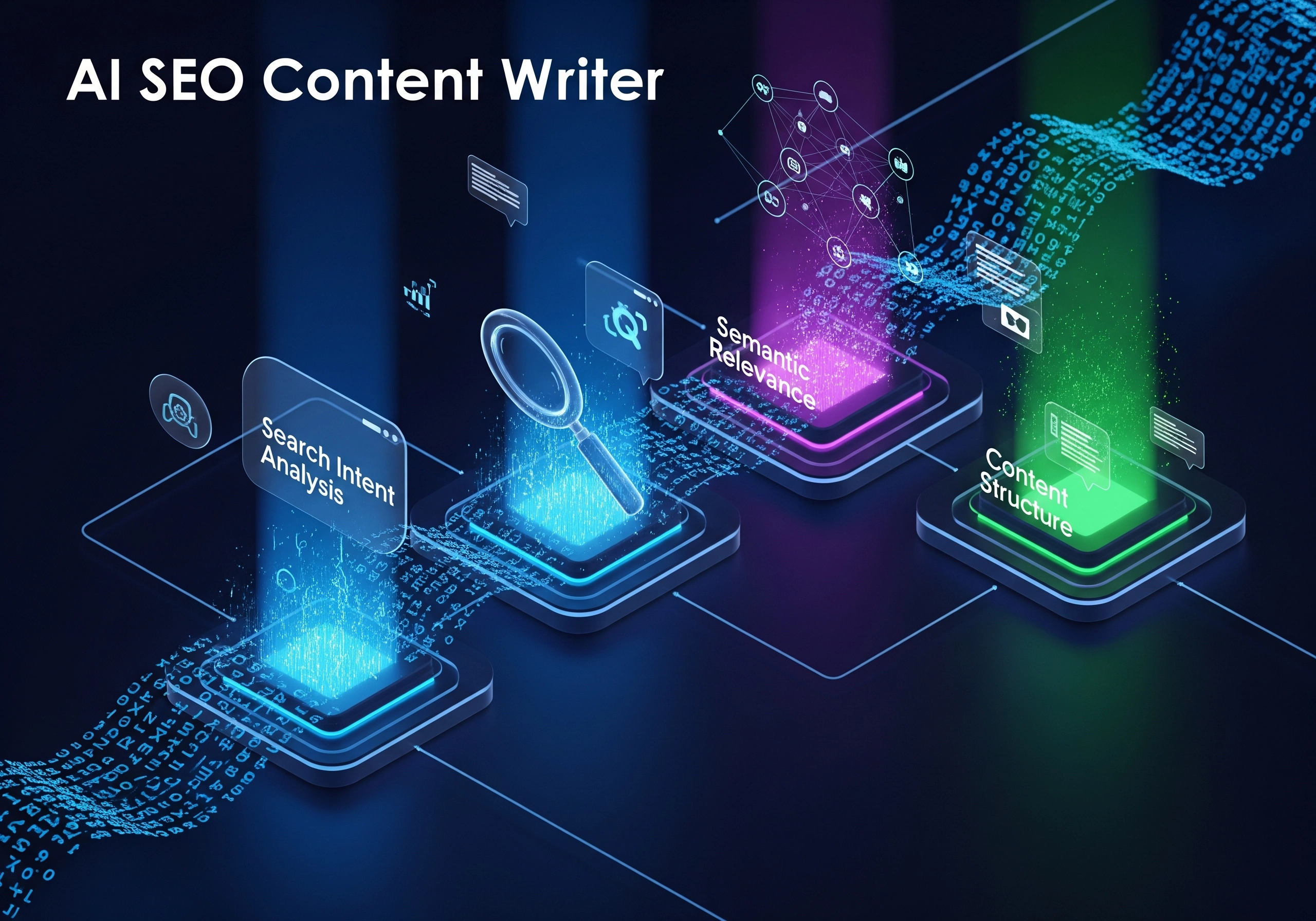
The question isn’t whether AI tools optimize content, but how they achieve such profound improvements in search engine performance. Traditional SEO demanded meticulous manual analysis, often leading to missed opportunities or outdated strategies. Today, AI-powered platforms revolutionize this by dissecting vast datasets with unparalleled speed and precision, moving far beyond simple keyword matching to deeply understand search intent and content quality.
Decoding Search Intent and Semantic Relevance
At the core, advanced seo writing tools don’t just identify keywords; they deconstruct the underlying intent behind queries. Instead of merely suggesting high-volume terms, these tools analyze entire semantic clusters and related entities. They grasp the nuanced relationship between a primary keyword and its long-tail variations, synonyms, and conceptual associations.
This allows for the creation of content that comprehensively addresses a user’s query, fulfilling multiple related needs within a single piece. AI-driven platforms can analyze competitive content to reveal semantic gaps, providing actionable insights to make your content more authoritative and relevant. This deeper understanding helps content align with Google’s evolving algorithms, which increasingly prioritize comprehensive, user-satisfying content over keyword-stuffed articles.
Structuring for Readability and Search Engine Crawlability
Optimized content isn’t just about what you say, but how you say it and how it’s presented. AI seo content writing tools excel at analyzing content structure, suggesting optimal heading hierarchies (H1, H3, H4), paragraph lengths, and the strategic use of lists or tables. They identify dense blocks of text that might deter readers and propose ways to break them down, significantly improving readability scores.
Beyond aesthetics, this structural guidance directly impacts search engine crawlability. Clear, logical organization helps search engine bots understand the content’s hierarchy and main topics, making it easier to index and rank. This proactive approach ensures your content is not only engaging for humans but also perfectly accessible for algorithms.
AI optimizes content for both human engagement and machine comprehension, a dual advantage for ranking.
Enhancing On-Page SEO Elements and Technical Health
AI’s optimization prowess extends to the nitty-gritty of on-page SEO. These tools offer real-time suggestions for meta titles, descriptions, and image alt tags, ensuring they are keyword-rich, compelling, and adhere to character limits. They can even analyze your internal linking structure, recommending strategic links that distribute link equity and improve site navigation. For instance, an AI SEO writer might suggest connecting a new blog post to older, authoritative content, bolstering the overall topical authority of your site.
Moreover, some advanced tools go further, identifying potential technical SEO issues that might hinder performance, such as broken links, slow loading images, or unoptimized URLs. By addressing these factors, AI ensures that the foundation of your content is technically sound, preventing any hidden barriers to search engine visibility.
The AI Optimization Cycle: Continuous Improvement
Think of AI content optimization as a continuous feedback loop. These intelligent systems don’t just offer one-time suggestions; they analyze post-publication performance data, such as organic traffic, user engagement metrics (time on page, bounce rate), and conversion rates. Based on this, they can recommend further refinements, A/B tests, or entirely new content angles to capitalize on emerging trends or address user pain points more effectively.
This iterative process of analysis, optimization, deployment, and re-analysis is a significant departure from traditional, static SEO strategies. By leveraging AI to constantly refine and adapt your content, businesses have seen organic traffic improve by as much as 50%, demonstrating the tangible impact of these sophisticated tools on search engine rankings and user acquisition.
What are the Essential Steps to Guide AI for SEO Excellence?
Unlocking the full potential of an ai seo writer isn’t about simply hitting ‘generate’; it’s about mastering the art of guidance. As AI tools become more sophisticated, the human role shifts from content creation to strategic instruction and meticulous refinement. This process ensures AI-generated content not only ranks but also resonates deeply with your target audience, reflecting brand voice and authority.
Defining the North Star: Clear Objectives & Intent
The journey begins with precision. Before any content is generated, you must articulate the exact objective for each piece. What specific search intent are you targeting—informational, navigational, commercial investigation, or transactional? Clearly define the desired outcome: brand awareness, lead generation, or direct sales.
A well-defined objective acts as the AI’s compass, preventing generic or off-target content.
Provide your ai seo content writer with a brief that includes the target audience, their pain points, and the unique value proposition you aim to convey. This initial clarity drastically reduces the need for extensive post-generation edits.
Keyword Cluster Mapping: Beyond Single Terms
Effective guidance transcends feeding the AI a single keyword. Instead, provide semantic keyword clusters that encompass the primary term, related long-tail variations, and supporting entities. This approach helps the AI understand the broader context and develop semantically rich content that satisfies comprehensive search queries.
Instruct the AI on the appropriate density and placement of these keywords, avoiding old-school stuffing tactics. Focus on natural language integration that enhances readability and information density.
Structuring for Success: The Content Blueprint
Even the most advanced AI benefits from a clear structural blueprint. Provide a detailed outline that includes suggested headings (H3s, H4s), key discussion points for each section, and desired content flow. Specify the introduction’s hook, the body’s logical progression, and the conclusion’s call to action.
This structured approach ensures the ai seo writer builds a coherent narrative. It helps the AI organize its vast knowledge base into a user-friendly format, optimizing for both human comprehension and search engine crawlability.
Setting Quality & E-E-A-T Parameters
Google’s algorithms increasingly prioritize content that demonstrates Experience, Expertise, Authoritativeness, and Trustworthiness (E-E-A-T). Guide your AI by specifying the required level of detail, factual accuracy, and unique insights. Demand content that goes beyond surface-level information, incorporating data, statistics, and expert perspectives where appropriate.
Human oversight is non-negotiable for infusing content with genuine E-E-A-T and maintaining brand voice.
Emphasize the importance of original thought and the avoidance of generic or templated phrases. This ensures the output from your ai seo content writer stands out in a crowded digital landscape.
The Iteration and Refinement Loop
Treat AI content generation as an iterative process, not a one-shot solution. The initial output from your ai seo writer is a strong draft, not a final product. Provide specific, actionable feedback on areas needing improvement, such as tone, clarity, factual corrections, or deeper exploration of certain topics.
This continuous feedback loop is crucial for teaching the AI your specific quality standards and preferences. Over time, the AI learns and adapts, producing increasingly refined and SEO-optimized content that aligns perfectly with your goals. For deeper insights into this process, explore How to Fine-Tune Your AI Writer for SEO Success in 2025.
Can You Really Produce Human-Quality Content with AI?

Can AI truly craft content that feels as authentic and engaging as a human’s? This is a pivotal question for businesses leveraging content automation. While AI has made remarkable strides in generating grammatically sound and semantically rich text, achieving genuine human-quality output—especially for competitive SEO—isn’t an automatic outcome. It demands a synergistic partnership, blending machine efficiency with human insight.
AI excels at data processing and pattern recognition, making it a powerful assistant for initial drafts and keyword optimization. However, it currently lacks the innate understanding of nuance, empathy, and unique brand voice that defines authentic human communication. The true potential lies in a collaborative approach.
AI: The Engine, Humans: The Art Director
Think of AI as a high-speed content factory, capable of producing raw material at an unprecedented scale. Tools often marketed as the best ai writer for seo can rapidly assemble information, structure arguments, and even mimic various writing styles. Yet, this output typically serves as a robust foundation, not the final masterpiece. The indispensable step involves human oversight and refinement. Editors and strategists infuse creativity, strategic foresight, and emotional intelligence into the AI-generated text.
AI lays the groundwork; human expertise builds the masterpiece.
This human touch is fundamental to transforming generic AI output into content that genuinely connects with an audience and achieves high search rankings. It involves meticulous fact-checking and ensuring credibility—critical for establishing Expertise, Experience, Authoritativeness, and Trustworthiness (E-E-A-T). These are signals Google’s algorithms increasingly prioritize. Without human intervention, AI-generated content often remains functional but struggles to be truly captivating or persuasive.
Cultivating Uniqueness: Brand Voice and Strategic Depth
A current limitation of AI is its struggle to consistently replicate a unique brand voice or introduce truly novel perspectives. While AI can analyze and mimic existing styles, it falters in originating the subtle humor, specific industry jargon, or distinctive tone that sets one brand apart. This is precisely where human editors and strategists become indispensable.
For superior SEO performance, content must stand out in a crowded digital landscape, not merely blend in. This requires injecting unique insights, challenging conventional wisdom, and expressing authentic opinions—elements only a human expert can genuinely provide, moving beyond commonly known information. The ultimate goal is to create content that not only answers user queries comprehensively but also builds a lasting connection and establishes authority.
In essence, true human-quality content transcends flawless grammar or keyword density. It’s defined by the distinct perspective, the authentic voice, and the empathetic connection that cultivates trust and loyalty—factors AI can powerfully augment but not yet fully originate.
How Can ‘GenWrite’ Supercharge Your SEO Content Creation?
The relentless demand for high-quality, SEO-optimized content often strains resources and timelines, compelling marketing teams to seek smarter solutions. How can organizations keep pace with content velocity without sacrificing the depth and performance essential for ranking in today’s competitive search landscape? This challenge is precisely where innovative platforms like GenWrite redefine the landscape of modern content creation.
GenWrite acts as a powerful co-pilot, fundamentally transforming the AI content workflow from a tedious, manual process into an agile, strategic one. It doesn’t just generate text; it orchestrates the initial stages of content development, allowing human experts to elevate their focus. Imagine automating the arduous tasks of topic research, outline generation, and initial draft assembly.
GenWrite empowers writers to move from creation to curation.
By handling these foundational elements, GenWrite frees up invaluable human capital. Instead of spending hours on preliminary research or structuring a piece from scratch, writers can dedicate their expertise to refining the narrative, infusing unique insights, and ensuring every piece resonates with authentic brand voice. This shift is crucial for demonstrating the Expertise, Authoritativeness, and Trustworthiness (E-A-T) that Google’s algorithms increasingly prioritize. The result is content that is not only optimized for search engines but also deeply engaging for the target audience.
Streamlining the Content Lifecycle with GenWrite
GenWrite’s capabilities extend far beyond simple text generation. It’s engineered to integrate seamlessly into a comprehensive SEO strategy, ensuring that every piece of AI content is primed for discoverability and impact. The platform leverages advanced algorithms to analyze keyword density, readability, and semantic relevance, factors that are critical for achieving high rankings.
Consider the traditional content creation process: a writer researches, outlines, drafts, optimizes, and then refines. This multi-step journey is often fraught with bottlenecks. GenWrite intervenes early, providing a robust foundation. It can quickly generate initial drafts that incorporate target keywords and address user intent, drastically cutting down the time spent on the nascent stages. This efficiency is paramount, especially when 43% of marketing professionals are already using AI writing tools to gain a competitive edge. Visit GenWrite to explore its full suite of features.
Automating the mundane unlocks strategic bandwidth for human creativity.
This agile approach to content creation translates directly into tangible benefits, such as the potential to improve organic traffic by up to 50% with AI-optimized content. By allowing GenWrite to handle the more repetitive aspects, human writers can concentrate on injecting the creativity, nuanced understanding, and strategic depth that differentiate truly exceptional content. This collaboration between human ingenuity and AI efficiency ensures that content is not just produced quickly but is also of a consistently high, SEO-ready quality. For deeper insights into guiding your AI writer, check out the GenWrite blog.
GenWrite empowers teams to scale their content efforts, producing a higher volume of high-quality, SEO-optimized articles, blog posts, and web pages without overburdening their human talent. It transforms content pipelines into highly efficient engines, driving greater visibility and organic growth.
Which Advanced AI Features Boost Your Content’s Ranking Potential?
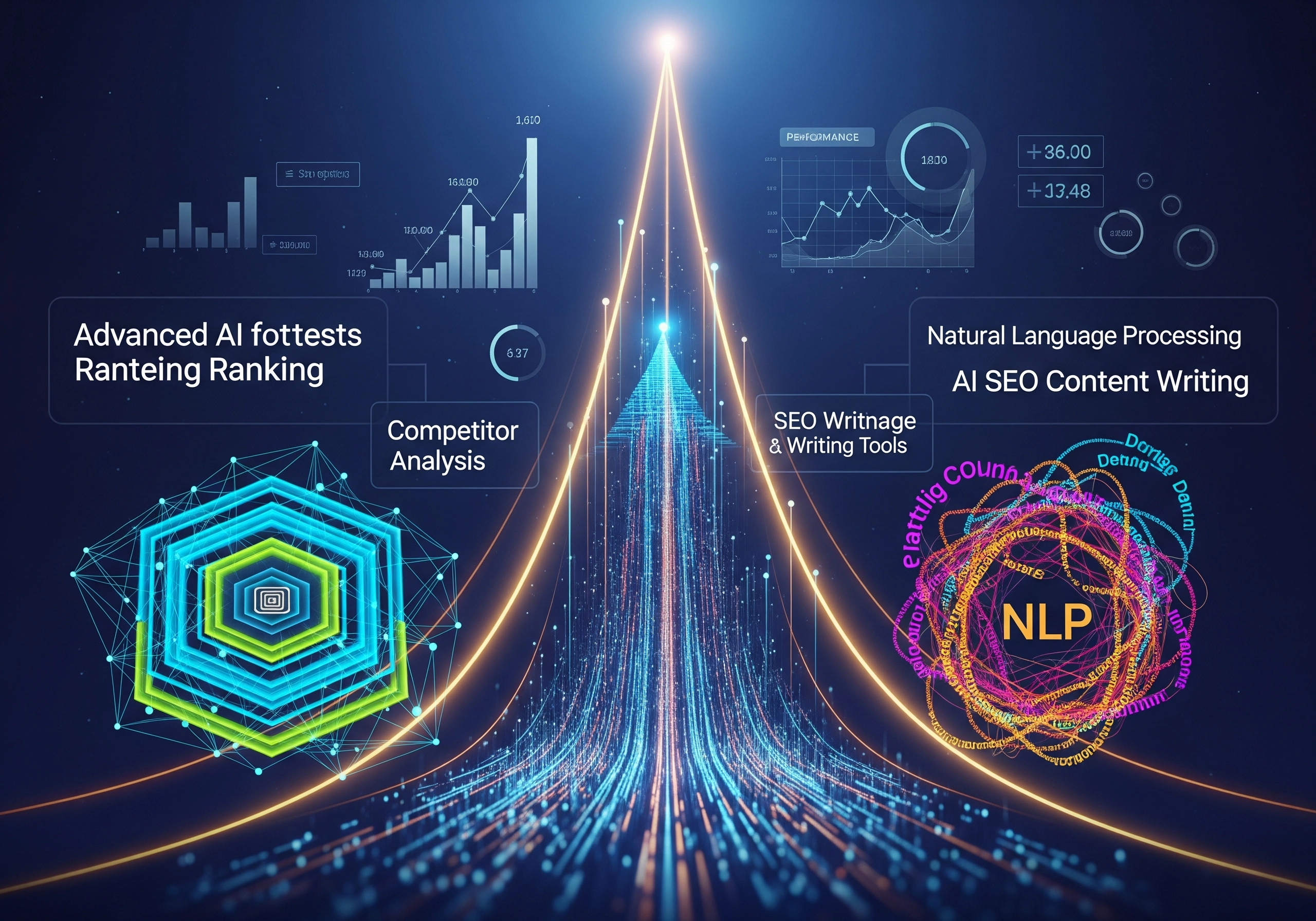
Unlocking top search engine rankings in today’s competitive digital landscape demands more than basic keyword stuffing; it requires a sophisticated approach powered by advanced artificial intelligence (AI). Modern AI SEO tools move beyond simple metrics, integrating deep learning to interpret search intent, predict trends, and fine-tune content for maximum impact. These powerful features equip content creators with unparalleled insights, transforming speculative strategies into data-driven decisions.
AI-Driven Competitor Analysis for Strategic Advantage
Traditional competitor analysis often involves manual review, which is time-consuming and prone to human bias. Advanced AI, however, automates this process by sifting through vast datasets of competing content, analyzing their ranking factors, backlink profiles, semantic keyword usage, and even user engagement signals. It identifies not just what competitors are doing, but why their content performs well.
This deep dive reveals critical gaps in your own content strategy and pinpoints opportunities to outmaneuver rivals. AI can map out competitor content clusters, predict their next moves, and highlight underserved niches that your content can dominate. AI transforms competitive insights into actionable content strategies, providing a clear roadmap to dominance. By understanding the intricate mechanics of top-ranking pages, AI helps you reverse-engineer success and build content designed to win.
AI’s advanced competitor analysis provides a strategic blueprint, uncovering opportunities traditional methods often miss, ensuring your content is always a step ahead.
Natural Language Processing (NLP) for Semantic Superiority
Beyond simple keyword research, advanced Natural Language Processing (NLP) is a game-changer for content optimization. Instead of just checking for keyword density, NLP helps AI understand the nuances of language, context, and semantic relationships within your content and across the web. This means your AI tool can suggest not just primary keywords, but entire clusters of semantically related terms, phrases, and entities that Google’s algorithms expect to see.
NLP-powered features also assess readability, sentiment, and the overall coherence of your text, ensuring it aligns with user intent and demonstrates expertise, experience, authoritativeness, and trustworthiness (E-E-A-T). It can identify jargon, suggest simpler phrasing, and even recommend structuring adjustments to enhance user experience. NLP ensures your content speaks the search engine’s language and resonates deeply with the user’s intent. This semantic richness is crucial for ranking highly in an era where search engines prioritize comprehensive, contextually relevant content.
NLP-driven suggestions refine content for optimal semantic relevance and user engagement, directly impacting search visibility and user satisfaction.
Intelligent Content Performance Tracking and Adaptive Optimization
Creating great content is only half the battle; understanding its ongoing performance and adapting accordingly is paramount. Advanced AI SEO tools offer intelligent content performance tracking that goes far beyond basic traffic and ranking reports. They continuously monitor how your content, and specifically individual blog analysis elements, performs against target keywords, user engagement metrics, and conversion goals.
These systems can detect subtle shifts in search trends or algorithm updates, providing real-time alerts and actionable recommendations for optimization. For instance, if a piece of content starts to slip in rankings, AI can analyze dozens of variables—from new competitor content to changes in user behavior—and suggest precise edits, new sections, or even entirely new content angles. Continuous AI-powered blog analysis closes the loop between content creation and sustained ranking success. This adaptive optimization ensures your content remains relevant and highly ranked over time, maximizing its long-term value.
AI-driven performance tracking offers a continuous feedback loop, identifying what resonates and guiding iterative content improvements to maintain peak performance.
What Are the Pitfalls to Avoid When Using AI for SEO?
While ai seo tools offer unprecedented efficiency and scale, a blind reliance on their capabilities can quickly lead to counterproductive outcomes. The allure of rapid content generation can mask critical flaws, transforming a powerful asset into a liability if not wielded with precision and strategic insight.
Over-Automation and the Erosion of Originality
The most significant pitfall is the temptation to over-automate, allowing AI to churn out content without adequate human oversight. This often results in generic, repetitive, or bland material that lacks a unique voice or perspective. When every piece of content sounds similar, it fails to differentiate your brand, alienating readers and eroding trust.
Authenticity is non-negotiable for lasting SEO success.
Such content struggles to resonate with target audiences and, more importantly, fails to demonstrate the Experience, Expertise, Authoritativeness, and Trustworthiness (E-E-A-T) that Google increasingly prioritizes. The goal isn’t just content production; it’s the creation of valuable content that solves user problems and establishes authority.
The Google Detection Dilemma and Quality Thresholds
Google has been clear: content written by humans, for humans, remains the gold standard. While AI-generated content isn’t inherently penalized, content that lacks value or is produced purely for search engine manipulation can be. The risk isn’t just about detection; it’s about failing to meet the elevated quality signals that Google’s algorithms now prioritize.
Using ai seo tools to simply fill pages with mediocre text is a short-sighted strategy that will ultimately backfire. The focus must always be on delivering superior user experience and genuine insight.
Misguided Optimization: Keyword Stuffing and Inaccuracy
Another common mistake involves poor prompting or an over-reliance on AI for optimization without human context. This can lead to outdated SEO tactics like keyword stuffing, where AI might over-optimize for exact match phrases, making the content feel unnatural and forced. Similarly, AI models can sometimes generate content with factual inaccuracies or perpetuate biases present in their training data. Without diligent fact-checking and editing, this misinformation can severely damage credibility.
Effective AI integration demands human expertise to guide its output and ensure accuracy, relevance, and adherence to best SEO practices.
Neglecting Human Oversight and Brand Voice
Perhaps the most critical pitfall is the neglect of human oversight. AI can be a brilliant co-pilot, but it cannot fully replicate the nuances of human creativity, empathy, or strategic thinking. Allowing AI to dictate the entire content creation process risks diluting your brand’s unique voice and personality. This leads to a disconnect with your audience, as the content lacks the human touch that fosters connection and loyalty.
Human editors are essential for refining AI output, infusing it with brand-specific insights, ensuring cultural relevance, and upholding the high standards of quality that define a truly successful SEO strategy.
Ready to elevate your SEO content? Explore how GenWrite can automate your blog creation and supercharge your organic traffic.
People Also Ask
How does AI change the landscape of SEO writing?
AI is transforming SEO writing by shifting from manual effort to an augmented intelligence approach. It enhances efficiency, precision, and scale in content creation, allowing human writers to focus on strategy, creativity, and E-A-T signals. AI doesn’t replace writers but elevates their role to editors and strategists.
Why is it crucial to integrate AI into an SEO content strategy?
Ignoring AI in SEO content strategy is a significant oversight. AI dramatically increases efficiency and content production scale, enabling faster research, drafting, and optimization. Its precision in aligning content with search intent leads to improved organic traffic and a stronger competitive edge, making AI integration essential for modern SEO success.
What specific methods do AI SEO tools use to optimize content?
AI SEO tools go beyond basic keyword matching. They analyze search intent, semantic relevance, content structure, on-page elements, and technical health. AI helps create comprehensive, user-satisfying content and continuously improves it, ultimately boosting search engine performance and user acquisition.
What are the key steps for guiding AI to produce excellent SEO content?
Effective AI guidance for SEO excellence involves setting clear objectives, performing semantic keyword mapping, creating structured content blueprints, and defining E-E-A-T parameters. AI content generation is an iterative process that requires human oversight for refinement and feedback to ensure alignment with brand goals.
Can AI truly produce content that feels human-written for SEO?
AI excels at drafting and optimization, but human refinement is crucial for adding nuance, brand voice, and strategic insight. While AI can augment content creation significantly, it cannot fully replace the essential human elements needed for truly engaging, authoritative, and well-ranking content.
What are the main risks or pitfalls when using AI for SEO?
Key pitfalls include over-automation leading to a lack of originality, and failing to meet Google’s quality thresholds. Misguided optimization like keyword stuffing and factual inaccuracies are also risks. Human oversight remains indispensable for maintaining brand voice, ensuring accuracy, and achieving genuine SEO success.