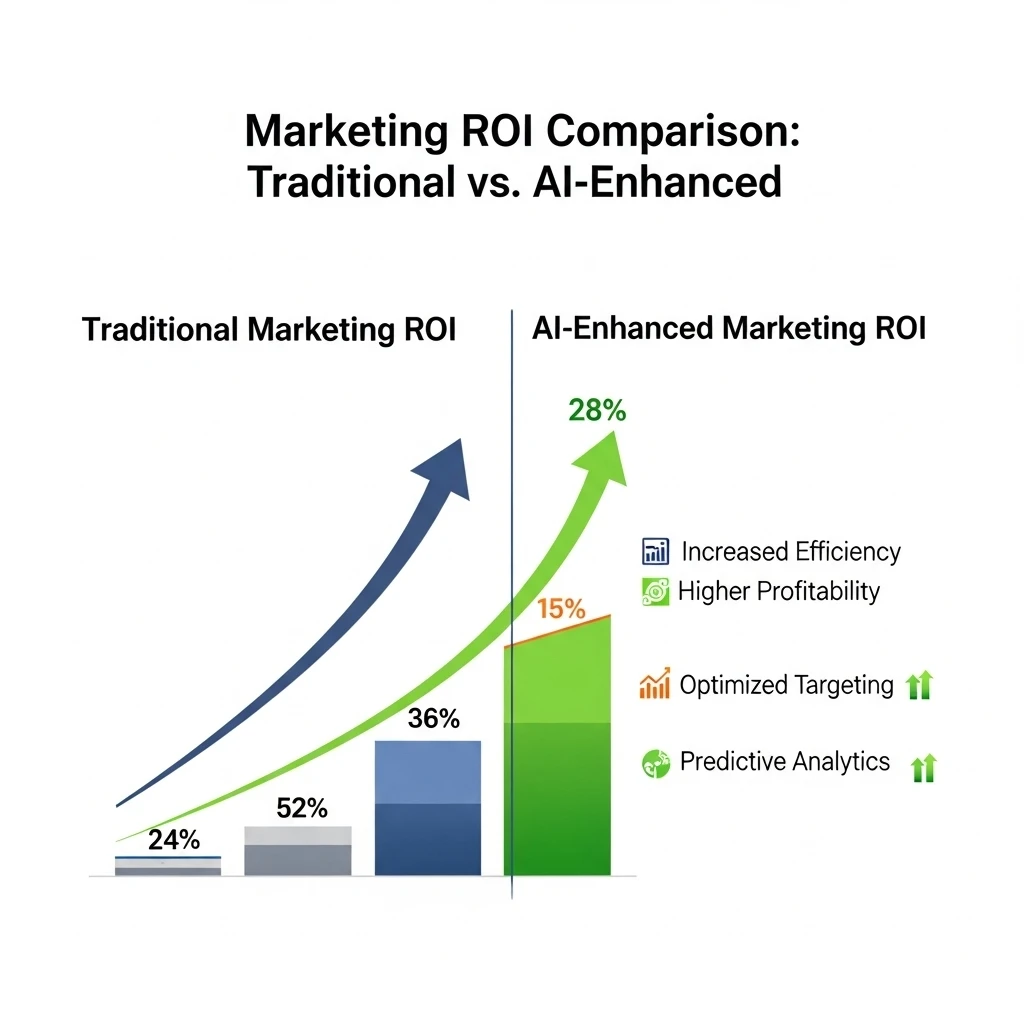
Will AI SEO Tools Surpass Traditional Methods for Fast Google Rankings in 2026?
Is Traditional SEO Becoming Obsolete in the AI-Dominated Search Landscape of 2026?

The question of whether traditional SEO is becoming obsolete in the rapidly evolving, AI-dominated search landscape of 2026 is one that frequently arises in industry discussions. For many, the sheer pace of technological advancement, particularly in artificial intelligence, suggests a radical shift is underway. With the AI in SEO market projected to skyrocket from $1.4 billion in 2023 to an estimated $12.6 billion by 2032, it’s clear we’re witnessing a seismic change.
Traditional SEO, with its focus on keyword density, manual link building, and meticulous on-page optimization, isn’t disappearing entirely. Instead, it’s undergoing a profound transformation. The foundational principles remain crucial, but the methods and tools we use to execute them are dramatically different. AI is not replacing SEO; it’s supercharging it.
Modern AI tools for SEO can automate up to 80% of tasks, from keyword research and content creation to technical audits. These sophisticated platforms analyze millions of data points in moments, identifying patterns and opportunities that would take human analysts weeks. This capability is precisely how these AI SEO tools contribute to achieving fast Google rankings.
Consider platforms like GenWrite, which embody this evolution by automating the entire blog creation process with an acute focus on SEO optimization. Such tools integrate keyword research, competitor analysis, and content structuring, streamlining workflows that once required immense manual effort. This isn’t about abandoning best practices but enhancing them through automation and data-driven insights.
Instead of obsolescence, we’re seeing an imperative for adaptation. The future lies in a hybrid approach, where human strategic oversight guides powerful AI capabilities to drive superior search performance. To truly outperform competitors, embracing how AI SEO tools achieve faster Google rankings is no longer optional; it’s essential for sustained visibility.
What Defines AI SEO, and How Does It Fundamentally Differ from Conventional SEO Practices?
The landscape of search engine optimization is undergoing a profound transformation, shifting from purely manual, reactive approaches to data-driven, proactive strategies powered by artificial intelligence. This evolution defines AI SEO: the strategic application of AI and machine learning algorithms to automate, optimize, and enhance every facet of search engine visibility.
At its core, AI SEO leverages advanced algorithms to analyze massive datasets, far beyond human capacity. This includes everything from predicting search trends and identifying high-value keywords to understanding user intent with unprecedented accuracy. The goal is not just to rank higher, but to deeply understand and anticipate what search engines, and more importantly, human users, truly value.
The Core Principles of AI Search Optimization
AI search optimization isn’t merely about using a few new tools; it represents a fundamental shift in methodology. It operates on principles of continuous learning, predictive analytics, and automation. Imagine a system that can process millions of data points, identify intricate patterns, and then recommend or even execute optimizations in real-time. This is the power AI brings.
- Automated Research: AI excels at keyword research, uncovering latent semantic relationships and long-tail opportunities that might be missed by manual efforts. It can also perform exhaustive competitor analysis.
- Content Generation & Optimization: Tools like GenWrite, an AI blog generator, use AI to create high-quality, SEO-friendly content, optimize existing pieces for target keywords, and even suggest structural improvements for better readability and engagement. This significantly streamlines content automation.
- Technical SEO Audits: AI-powered systems can swiftly identify technical errors, crawl budget issues, and site speed bottlenecks across vast websites, providing actionable insights for immediate resolution.
- Predictive Analytics: Beyond current performance, AI can forecast future trends, helping strategists adapt before shifts occur, rather than reacting after the fact.
AI SEO helps us move from guesswork to granular, data-backed certainty.
Traditional SEO vs AI: A Methodological Divide
The fundamental difference between traditional SEO vs AI lies in their operational paradigms. Traditional SEO, while still valuable, often relies on human intuition, manual data collection, and retrospective analysis.
| Feature | Traditional SEO | AI SEO |
|---|---|---|
| Data Analysis | Manual, limited scope, retrospective | Automated, massive scale, real-time, predictive |
| Task Execution | Labor-intensive, time-consuming | Automated, efficient, scalable |
| Strategy | Rule-based, experience-driven | Data-driven, algorithmically optimized, adaptable |
| Insight Depth | Surface-level patterns, human interpretation | Deep semantic understanding, complex pattern recognition |
| Adaptability | Slower to react to algorithm changes | Rapid adaptation through machine learning |
While traditional methods are foundational, AI SEO optimization tools amplify their effectiveness. They take the proven principles of SEO and supercharge them with computational power, allowing for a level of precision and scale previously unattainable. For businesses aiming to achieve significantly faster Google rankings, embracing these advanced AI SEO tools is becoming less of an option and more of a necessity. For a deeper dive into this, explore how AI SEO tools achieve faster Google rankings.
By automating repetitive tasks and providing deeper insights, AI allows human SEO experts to focus on higher-level strategy and creative problem-solving. It’s a partnership that maximizes efficiency and impact. This fusion is essential for staying competitive in a search landscape increasingly shaped by sophisticated algorithms and user intent.
Why Has Generative Engine Optimization (GEO) Become a Game-Changer for Search Visibility in 2026?
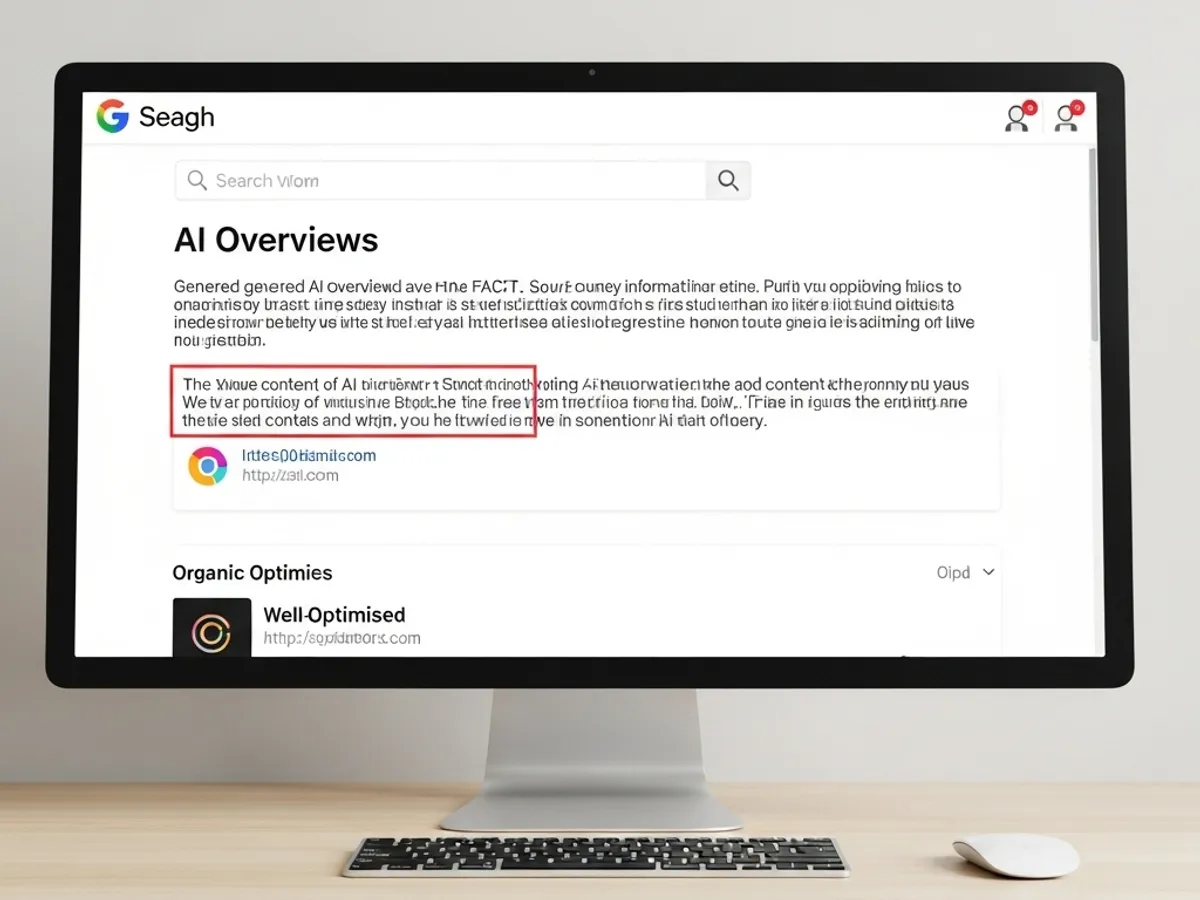
The landscape of search has irrevocably shifted. Where once the coveted “blue links” were the sole prize, users now encounter AI-generated summaries and direct answers. This evolution demands a new optimization paradigm, one that moves beyond mere ranking to influence the very responses AI search engines provide.
What is Generative Engine Optimization (GEO)?
Generative Engine Optimization (GEO) is the strategic approach to making content not just discoverable, but selectable by advanced AI models that power search. It’s about optimizing content so it’s deemed authoritative, relevant, and trustworthy enough to be directly quoted or summarized within AI Overviews and other AI-generated search responses.
This isn’t just about showing up; it’s about being the answer.
Unlike traditional SEO, which primarily aimed for organic rankings on a results page, GEO focuses on shaping the source material that AI uses to synthesize information.
The Rise of AI Overviews and AI Search Engines
The introduction of AI Overviews in major search engines signifies a pivotal moment. Users are increasingly presented with concise, AI-curated answers at the top of their search results, often before they even see traditional organic listings.
For content creators, this means the competition isn’t just for a click, but for inclusion in the AI’s knowledge base. AI search engines are not just indexing pages; they are interpreting, understanding, and generating new content based on what they find.
Traditional SEO vs. GEO: A Fundamental Shift
The distinction between traditional SEO and Generative Engine Optimization is profound. Traditional SEO optimized for algorithms designed to rank pages based on relevance, authority, and technical factors to drive clicks to a website.
GEO, however, optimizes for generative AI models that prioritize clarity, factual accuracy, semantic completeness, and direct answerability. Your content must be structured in a way that an AI can easily digest and confidently use as a source.
| Aspect | Traditional SEO | Generative Engine Optimization (GEO) |
|---|---|---|
| Primary Goal | Rank for clicks (blue links) | Become AI source, generate AI Overviews, direct answers |
| Content Focus | Keywords, backlinks, technical health | Semantic depth, factual accuracy, answerability, structured data |
| User Interaction | Click-through to website | Direct answer in SERP, potential follow-up questions, source citation |
| Optimization For | Ranking algorithms | Generative AI models’ comprehension and synthesis capabilities |
How AI Tools Drive GEO Success
Achieving success in this new GEO landscape necessitates sophisticated tools. Platforms like GenWrite are specifically designed to meet these evolving demands. By automating keyword research, analyzing competitor content, and structuring your articles for optimal semantic depth, an AI SEO content generator prepares your content to be consumed and utilized by AI search engines.
This ensures your content is not only ranked well but also used as a source for AI-generated answers, increasing visibility. The strategic implementation of an AI SEO blog writing software is no longer optional; it’s a strategic imperative for gaining traction in AI search engines. For deeper insights into leveraging AI for content generation that ranks, explore how an AI-powered SEO content tool can transform your strategy.
Mastering Generative Engine Optimization is about adapting content creation to directly influence AI-driven search results, moving beyond clicks to become the authoritative source for AI Overviews.
Which Cutting-Edge AI SEO Tools Are Essential for Dominating the 2026 Search Ecosystem?
In the rapidly evolving search ecosystem of 2026, the notion of merely ranking high is being replaced by the imperative of deep relevance and AI-driven visibility. To truly dominate, SEO professionals must equip themselves with a suite of cutting-edge AI SEO tools that transcend traditional capabilities, automating analysis, optimizing content, and predicting search trends.
Comprehensive AI-Powered Analysis Platforms
At the foundation of any robust AI SEO strategy are platforms that offer an expansive view of the search landscape, supercharged by artificial intelligence. Tools like Semrush and Ahrefs have integrated sophisticated AI algorithms to move beyond basic keyword volume, providing predictive insights into search intent, competitive gaps, and emerging topic clusters. They are no longer just data aggregators; they are intelligent analysts.
These platforms leverage machine learning to analyze millions of data points, identifying patterns that would take human analysts weeks or months to uncover. This allows for faster, more accurate keyword research and competitor analysis.
Predictive Keyword Research and Competitor Intelligence
AI-driven features within these comprehensive suites enable an unparalleled depth of understanding. They can predict future search trends, helping strategists get ahead of the curve. For instance, an AI SEO tool can identify long-tail keyword opportunities that are less competitive but highly relevant, guiding content creators toward high-intent queries.
AI-Powered Content Optimization and Creation Tools
The bridge between data and high-ranking content is increasingly built by AI. Tools like Clearscope and Surfer SEO have become indispensable AI SEO optimization tools. They analyze top-ranking content for a given keyword, providing semantic suggestions, readability scores, and content structure recommendations. Their AI models understand not just keywords, but the concepts search engines are looking for.
Optimizing for semantic relevance is key to satisfying AI-driven search algorithms.
This semantic analysis ensures that content is comprehensive, authoritative, and truly answers user queries, aligning perfectly with Google’s increasing focus on user-centric, high-quality information. For content creation, platforms such as Writesonic and Jasper have emerged as powerful AI SEO blog writing software. They can generate outlines, draft sections, and even produce entire articles based on prompts and target keywords, significantly accelerating the content production cycle. This is particularly crucial when scaling content efforts.
The Rise of End-to-End Content Automation: GenWrite
While individual tools excel in specific areas, the future of dominating the 2026 search ecosystem lies in integrated, automated solutions. This is where platforms like GenWrite shine. As an advanced AI blog generator, GenWrite automates the entire blog creation process from start to finish. It conducts keyword research, analyzes competitor content, adds relevant links and images, and even publishes the content, all while ensuring SEO optimization and alignment with LLM guidelines. This holistic approach makes GenWrite an essential AI-powered SEO content tool for any business aiming to boost website rankings and traffic efficiently. To learn more about how AI SEO blog writing software can transform your content strategy, consider reading our guide on Boost Website Rankings: AI Content vs. Manual SEO in 2026.
Data Aggregation and Custom Strategy Development
Beyond content, specialized tools like DataforSEO offer robust APIs for extracting vast amounts of search data, enabling developers and advanced SEOs to build custom AI models and applications. This level of granular data access empowers bespoke strategies tailored to unique market niches.
The synergistic use of these AI SEO tools amplifies human expertise, not replaces it.
By leveraging these essential AI SEO optimization tools, businesses can not only keep pace with the rapid changes in search but actively shape their visibility in the generative AI era. For marketing agencies looking to scale their operations with intelligent automation, exploring strategies detailed in Scaling Content with AI: An Agency’s Guide to Smarter SEO in 2026 can provide further insights into maximizing the potential of these powerful platforms.
How Are AI Tools Reshaping Content Creation and Optimization for Higher Rankings?
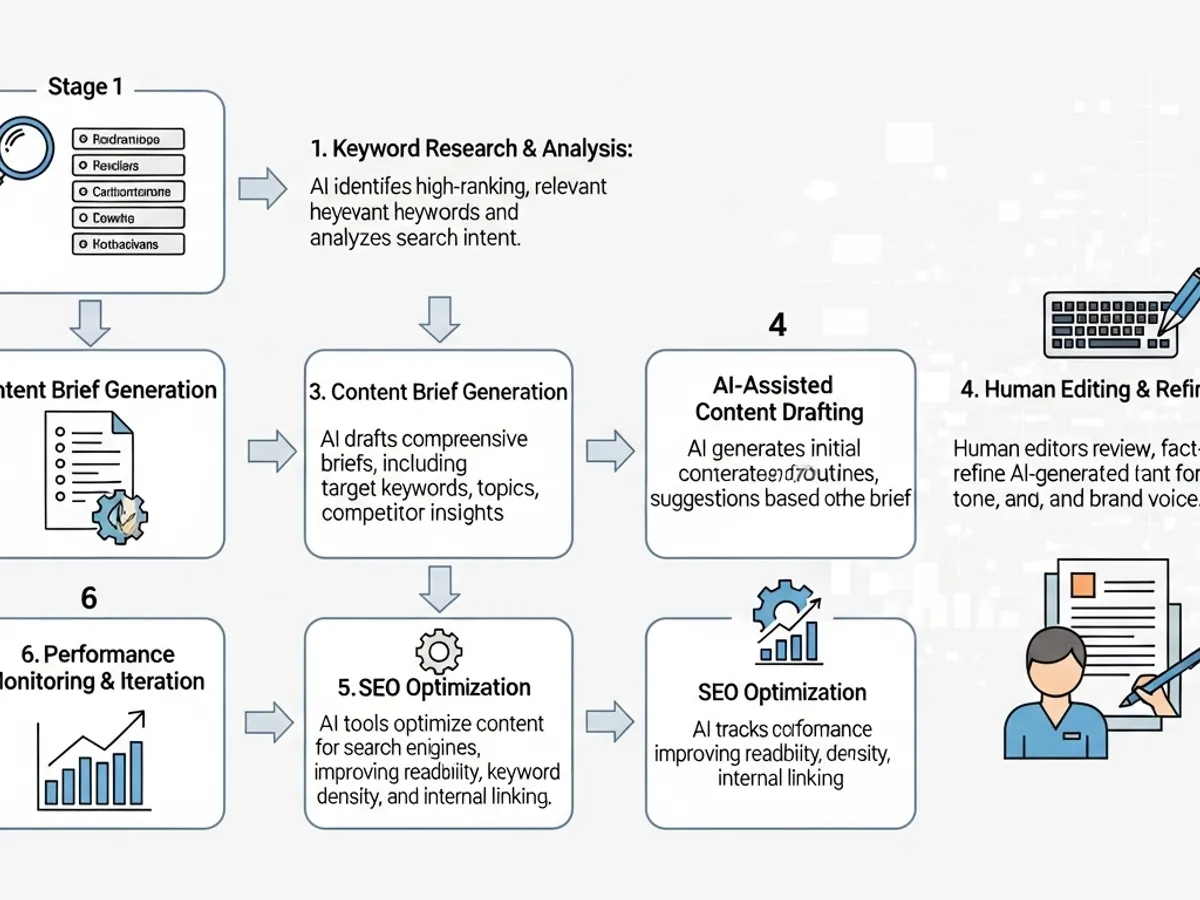
The landscape of content creation and optimization has undergone a profound transformation, moving from laborious manual processes to highly efficient, AI-driven workflows. What once took weeks of meticulous research and drafting can now be accomplished in a fraction of the time, all while achieving superior ranking potential. This shift isn’t just about speed; it’s about precision and strategic depth.
Automating Foundational Research and Strategy
At the outset of any content project, the most critical steps involve understanding audience needs and competitive landscapes. AI tools now excel at this, automating tasks that were historically time-consuming and prone to human bias. They perform extensive keyword research, identifying high-value terms and semantic clusters that resonate with user intent.
AI analyzes millions of data points to uncover opportunities human analysts might miss.
Furthermore, AI-powered platforms conduct deep content gap analysis, pinpointing exactly where your content falls short compared to top-ranking competitors. This allows creators to focus on topics that genuinely add value and fill informational voids, rather than generating redundant material. This strategic insight is a game-changer for securing higher rankings.
Streamlining Content Generation and Structure
Once research is complete, the actual writing process benefits immensely from AI SEO writing software. These tools don’t just generate text; they help structure content in a way that search engines and users prefer. They can generate detailed outlines, suggesting headings, subheadings, and key points that cover a topic comprehensively.
For instance, an AI SEO software for content writing can draft initial content blocks, summarize complex information, and even suggest relevant internal and external links. This frees up human writers to focus on refining the narrative, adding unique insights, and ensuring brand voice consistency. The collaboration between human and AI leads to faster production cycles without sacrificing quality.
Optimizing for E-E-A-T and User Experience
Achieving high rankings in today’s search environment demands content that demonstrates Experience, Expertise, Authoritativeness, and Trustworthiness (E-E-A-T). This is where content optimization with AI truly shines. AI tools can analyze existing content for factual accuracy, readability, and depth, suggesting improvements to enhance its E-E-A-T signals.
AI helps ensure content is not only rich in keywords but also semantically complete and user-friendly. It can identify areas where more detailed explanations are needed or where jargon might alienate readers. Tools like GenWrite, for example, automate the end-to-end blog creation process, ensuring that every piece of content is thoroughly optimized for search engines and large language models (LLMs) from the ground up, incorporating relevant links and competitor analysis. You can learn more about how GenWrite facilitates SEO optimization for blogs and automated on-page SEO writing.
By leveraging AI at every stage—from keyword identification to content structuring and final optimization—businesses can produce high-quality, relevant content at scale, significantly improving their chances of achieving and maintaining top search engine rankings.
Can AI Truly Outperform Human SEO Experts in Crafting Winning Strategies?
The question of whether AI can truly outperform human SEO experts in crafting winning strategies is a nuanced one, often sparking debate. While AI tools have undeniably transformed the landscape, the reality points towards a powerful synergy rather than outright replacement.
Where AI Dominates: Speed, Scale, and Data
AI’s strength lies in its ability to process and analyze vast quantities of data at speeds impossible for humans. We’ve seen that AI-driven SEO tools can analyze millions of data points, uncovering patterns and insights that would take human analysts weeks or months. This is critical for tasks like comprehensive keyword research, competitor analysis, and identifying technical SEO issues across large websites. Automation is another key advantage; AI can automate up to 80% of routine SEO tasks, freeing up valuable human time.
AI excels in efficiency and data-driven insights, making it an indispensable asset for foundational SEO tasks.
Companies leveraging AI for SEO have reported an average increase of 46.9% in organic traffic within the first year, a testament to its operational power. This efficiency means faster identification of opportunities and quicker execution of tactics.
The Irreplaceable Edge of Human Expertise
Despite AI’s prowess, human SEO expertise remains paramount for strategic thinking, creativity, and understanding the subtle nuances of user intent. AI can tell us what is trending, but a human expert interprets why and how to best capitalize on that trend in a brand-specific, ethical manner. Strategic planning, risk assessment, and adapting to Google’s increasingly complex, user-centric algorithm updates still require human judgment. Moreover, crafting compelling narratives, understanding psychological triggers, and ensuring content resonates deeply with an audience’s emotions are areas where human creativity consistently outperforms algorithms.
Human insight provides the strategic direction, ethical oversight, and creative spark that AI cannot replicate.
Nuanced understanding of brand voice, market positioning, and the ability to pivot strategies based on qualitative feedback or unforeseen market shifts are uniquely human capabilities. Over-reliance on AI without human oversight can lead to generic content, algorithmic bias, or even penalties from search engines if manipulative practices are unintentionally adopted.
The Collaborative Advantage: A Hybrid AI SEO Strategy
The most effective approach isn’t AI versus humans, but AI with humans. A hybrid AI SEO strategy leverages AI tools for automation, data analysis, and efficiency, while reserving human expertise for high-level strategy, creative direction, ethical considerations, and complex problem-solving. This collaboration maximizes both efficiency and effectiveness.
For instance, AI tools can generate content drafts, but human editors refine them for originality, tone, and strategic alignment. Tools like GenWrite exemplify this hybrid model, automating keyword research, content creation, and SEO optimization to produce high-quality, SEO-friendly content, but always with the understanding that human oversight ensures strategic coherence and brand voice. This collaborative framework ensures content is not only optimized for search engines and large language models (LLMs) but also resonates authentically with the target audience.
Combining AI’s analytical power with human strategic vision creates a superior, future-proof SEO strategy.
What are the Risks and Ethical Considerations of Over-Reliance on AI for Google Rankings?

The Double-Edged Sword of AI in SEO
While AI SEO tools promise unparalleled efficiency and insights, an over-reliance on them presents significant risks that can undermine long-term search visibility. The allure of automated success can sometimes overshadow the critical need for human oversight and ethical considerations.
True AI success in SEO demands a strategic human hand.
Eroding Content Quality and Originality
One primary concern with excessive AI dependence is the potential degradation of content quality and originality. If AI is merely prompted to generate high volumes of content without sufficient human refinement, the result can be generic, repetitive, or even factually inaccurate material. Google’s algorithms increasingly prioritize helpful, user-centric content that demonstrates experience, expertise, authoritativeness, and trustworthiness (E-E-A-T). Content churned out by AI without human nuance often fails to meet these high standards, leading to diminishing returns rather than improved rankings.
Navigating Google’s Guidelines and Algorithmic Bias
Relying too heavily on AI for all SEO tasks, particularly content creation and link building, introduces the risk of inadvertently violating Google’s Webmaster Guidelines. Google explicitly warns against automatically generated content designed solely to manipulate search rankings. Future Google algorithm changes are constantly refining how quality and intent are perceived, making purely automated, manipulative tactics highly susceptible to penalties. Furthermore, AI models can sometimes inherit and perpetuate biases present in their training data, leading to algorithmic bias in keyword targeting or content generation that may not truly serve diverse audiences.
Ethical AI SEO isn’t just about avoiding penalties; it’s about building genuine value.
The Peril of Manipulation and Loss of Human Insight
The drive for fast rankings can tempt some to use AI for manipulative practices, such as keyword stuffing or generating low-quality backlinks at scale. This approach is inherently unsustainable and directly contravenes the spirit of ethical AI SEO. Moreover, an over-reliance on AI can stifle the human creativity, strategic thinking, and empathy crucial for understanding complex user intent. While tools like GenWrite automate the end-to-end blog creation process, ensuring SEO optimization and adherence to guidelines, they are most effective when guided by human strategy. We believe AI should augment, not replace, the nuanced understanding human experts bring to SEO.
Over-reliance on AI in SEO risks not only Google penalties but also a loss of authentic connection with the audience. A balanced approach, integrating AI’s power with human ethical judgment and strategic oversight, is paramount for sustainable success.
How Can Businesses Master the Hybrid Approach: Combining AI and Traditional SEO for Unrivaled Success?
The quest for unparalleled search visibility in 2026 isn’t about choosing between AI and traditional SEO; it’s about seamlessly integrating both. Businesses poised for unrivaled success understand that a hybrid SEO strategy is the only sustainable path forward. This approach leverages the raw power of artificial intelligence for efficiency and scale, while retaining the indispensable strategic depth and human nuance that only expert practitioners can provide.
The Synergy of Automation and Expertise
Purely traditional SEO, while foundational, struggles to keep pace with the sheer volume of data and the speed of algorithm changes in today’s digital landscape. Conversely, an over-reliance on AI without human oversight risks generic content and algorithmic penalties. The hybrid model elegantly resolves this dilemma.
True mastery lies in orchestrating AI for what it does best, freeing human experts for higher-order thinking.
AI excels at automating repetitive tasks, processing vast datasets, and identifying patterns that are invisible to the human eye. This includes comprehensive keyword research, competitor analysis, technical SEO audits, and even initial content generation. It allows teams to scale operations and gain insights with unprecedented speed.
Crafting Your Hybrid SEO Strategy
To effectively combine AI and traditional SEO, businesses should adopt a structured approach:
1. AI-Driven Data Synthesis and Analysis
Begin by deploying SEO AI tool solutions to gather and analyze data. This means using AI for:
- Keyword Discovery: Identifying high-potential keywords, semantic clusters, and long-tail opportunities faster than manual methods. Tools like GenWrite can automate keyword research and competitive analysis, pinpointing gaps and opportunities.
- Content Audits: Rapidly assessing existing content for SEO performance, identifying areas for optimization, and predicting content decay.
- Technical SEO: Automated crawling, error detection, and recommendation generation for site structure, speed, and mobile-friendliness.
2. Human-Centric Strategy and Refinement
Once AI provides the data and initial outputs, human SEO experts step in. Their role is critical for:
- Strategic Direction: Interpreting AI insights to develop overarching strategies aligned with business goals and brand voice. This includes understanding nuanced user intent and market trends that AI might miss.
- Content Elevation: Refining AI-generated content to ensure E-E-A-T (Experience, Expertise, Authoritativeness, Trustworthiness), originality, and creative storytelling. This involves infusing genuine human perspective and insight.
- Ethical Oversight: Ensuring all AI outputs adhere to Google’s guidelines, brand values, and ethical considerations, preventing issues like algorithmic bias or manipulative tactics.
- Link Building & Relationship Management: While AI can identify opportunities, the relationship-driven aspect of high-quality link building still requires human interaction and negotiation.
3. Iterative Optimization with AI Assistance
Implement an agile feedback loop. Use AI to monitor performance metrics, track ranking changes, and identify new opportunities, then leverage human experts to interpret these findings and adjust the hybrid SEO strategy accordingly. This continuous cycle ensures adaptation and sustained growth.
This collaborative model, where AI handles the heavy lifting of data and basic generation, and humans provide the strategic intelligence and creative polish, is how businesses will achieve superior and sustainable ranking performance. Tools like GenWrite are designed precisely for this, acting as an AI blog generator that automates the end-to-end process, enabling teams to focus on the strategic elements that truly differentiate their content and drive traffic generation.
What Does the Future Hold: AI’s Continued Evolution and Its Impact on SEO Beyond 2026?
The landscape of search engine optimization is in a state of perpetual transformation, with artificial intelligence serving as the primary catalyst. Looking beyond 2026, the future of SEO AI promises an even deeper integration of machine learning, natural language processing, and predictive analytics, fundamentally reshaping how businesses connect with their audiences.
Anticipating the Next Wave of AI Search
We anticipate a shift towards even more sophisticated, personalized search experiences. Imagine search engines that not only understand queries but also anticipate user needs based on their digital footprint, generating highly relevant, multimodal responses. This represents the next evolution of evolving AI search, moving beyond simple answer generation to proactive information delivery.
Algorithmic changes will likely reward content that demonstrates deep expertise, unique insights, and genuine value, validated by user engagement patterns that AI can meticulously track. Content that simply regurgitates information will struggle to gain traction.
The imperative is clear: content must be tailored for both human understanding and AI interpretation.
Preparing for Future AI SEO Trends
Businesses must begin to future-proof their SEO strategies now. This involves not just optimizing for existing algorithms, but building a robust content infrastructure capable of adapting to unforeseen AI advancements. Key areas of focus include:
- Intent-Driven Content Creation: Beyond keywords, understanding the deeper why behind a search query becomes paramount. AI will excel at discerning subtle intent.
- Semantic Richness and Authority: Content must be semantically rich, covering topics comprehensively and authoritatively, signaling expertise to sophisticated AI models.
- Structured Data and Knowledge Graphs: The continued importance of structured data will allow AI to better understand and categorize content, contributing to a more accurate knowledge graph.
- Ethical AI Content Practices: As AI becomes more prevalent, ethical considerations around bias, originality, and transparency will gain even greater scrutiny from search engines.
This necessitates a proactive stance, where content creators aren’t just reacting to algorithm updates but are actively shaping their digital presence for an AI-first world.
The Indispensable Role of Advanced AI Tools
Navigating this complex future requires advanced tools that can keep pace with the rapid evolution. Platforms like GenWrite will become indispensable for automating the end-to-end content creation process, from advanced keyword research to comprehensive competitor analysis and optimized content generation. By leveraging such AI SEO tools, businesses can ensure their content remains competitive, aligns with search engine guidelines, and is primed for optimal performance in an AI-driven search ecosystem.
Staying competitive means embracing the strategic application of AI, not shying away from it.
The businesses that thrive beyond 2026 will be those that view AI not as a threat, but as an unparalleled opportunity to innovate their SEO strategies, ensuring their content is not just found, but truly resonates in an increasingly intelligent search environment.
Will You Adapt or Be Left Behind: The Imperative of Embracing AI in Your SEO Strategy?
The digital landscape is shifting at an unprecedented pace, demanding a fundamental re-evaluation of how businesses approach online visibility. We’ve explored how traditional SEO is not obsolete, but rather evolving, enhanced by the transformative power of artificial intelligence. The question facing every organization today isn’t if AI will impact their search presence, but how quickly they will integrate it.
The Inevitable Rise of AI in SEO
AI’s role in optimizing for search engines has moved beyond theoretical discussions to become a practical necessity. The market for AI in SEO, valued at $1.4 billion in 2023, is projected to skyrocket to $12.6 billion by 2032. This exponential growth underscores a clear industry direction: AI is no longer a luxury, but a core component of a competitive SEO strategy 2026.
Ignoring AI is no longer an option; it’s a strategic misstep.
Companies embracing AI are already seeing significant returns, with reports of an average 46.9% increase in organic traffic within the first year. This efficiency gain stems from AI’s ability to automate up to 80% of routine SEO tasks—from keyword research to content creation and link building—freeing human experts to focus on high-level strategy and creative oversight. This blend of machine efficiency and human ingenuity forms the bedrock of a successful hybrid approach.
Embracing Generative Engine Optimization (GEO)
Our discussion on Generative Engine Optimization (GEO) highlighted a critical evolution: optimizing not just for blue links, but for AI-driven answers and summaries. This paradigm shift requires content that is not only discoverable but also authoritative enough to be selected and synthesized by AI models. Mastering GEO means ensuring your content is future-proofed for the generative search landscape.
The Imperative of AI SEO Adoption
The choice is clear: commit to AI SEO adoption or risk falling behind. The blend of AI’s analytical power and human strategic insight creates a formidable competitive advantage. This hybrid model allows businesses to leverage advanced AI tools for SEO for data analysis and automation, while maintaining the critical human touch for creativity, ethical considerations, and nuanced strategic direction.
A proactive approach to AI integration defines market leaders.
For businesses seeking to thrive in this new era, platforms like GenWrite offer a powerful solution. As an AI blog generator, GenWrite automates the end-to-end blog creation process, providing SEO optimization by researching keywords, analyzing competitors, and crafting high-quality, AI-friendly content. This streamlines workflows, allowing teams to focus on strategy rather than manual tasks, ultimately driving traffic and improving rankings. To explore how GenWrite can transform your content strategy and enhance your SEO strategy 2026, visit GenWrite.
Final Thoughts for 2026 and Beyond
The future of SEO is collaborative, intelligent, and continuously evolving. Businesses that actively integrate AI into their processes, using it to augment human capabilities rather than replace them, will be the ones that achieve sustainable success. It’s about adaptation, strategic foresight, and the willingness to embrace the tools that will define the next generation of search. The time to adapt is now.
Ready to dominate search in 2026? Discover how AI-powered content automation can accelerate your rankings. Explore the future of SEO with GenWrite.
People Also Ask
Will traditional SEO methods become completely obsolete by 2026?
Traditional SEO methods are not expected to become entirely obsolete but will evolve significantly. AI enhances SEO by automating complex tasks and providing deeper insights, making traditional methods more efficient when integrated with AI tools. The focus will shift towards a hybrid approach that leverages the strengths of both.
What is Generative Engine Optimization (GEO) and why is it important?
Generative Engine Optimization (GEO) is an evolution of SEO focused on optimizing content for AI-driven search engines and generative AI outputs. Its importance lies in ensuring your content is not only discoverable by traditional search but also authoritative enough to be selected and cited by AI models in their responses, increasing visibility in the new search era.
Can AI SEO tools completely replace human SEO experts?
While AI SEO tools can automate many tasks and outperform humans in data processing speed, they cannot fully replace human SEO experts. Human intuition, creativity, strategic thinking, and the ability to understand nuanced user intent remain crucial. The most effective strategy involves a hybrid approach where AI augments human expertise.
What are the primary risks of relying too heavily on AI for SEO?
Over-reliance on AI for SEO can lead to risks such as algorithmic bias, producing content that lacks originality or a unique human touch, and potentially violating search engine guidelines if AI is used for manipulative practices. Maintaining human oversight is essential to mitigate these risks and ensure sustainable success.
How can businesses effectively combine AI and traditional SEO strategies?
Businesses can master a hybrid approach by using AI tools for data synthesis, keyword research, and content generation automation. Human experts should then focus on strategic direction, refining AI-generated content for quality and E-E-A-T, ethical considerations, and building genuine topical authority. This synergy maximizes efficiency and effectiveness.
Which AI SEO tools are recommended for 2026?
Essential AI SEO tools for 2026 include comprehensive platforms like Semrush and Ahrefs for analysis, content optimization tools such as Surfer SEO and Clearscope, and AI writing assistants like Jasper.ai. Tools offering end-to-end automation, like GenWrite, are also becoming crucial for efficient, SEO-optimized blog creation.