Boost Website Rankings: AI Content vs. Manual SEO in 2026
What Defines the SEO Battleground: AI-Powered Content vs. Human Expertise in 2026?

The SEO landscape in 2026 is no longer a simple game of keywords and backlinks. It has evolved into a dynamic battleground where the efficiency of artificial intelligence (AI) clashes with the nuanced insight of human expertise. This isn’t just about incremental improvements; we’re witnessing a fundamental shift in how we approach website rankings and digital visibility. The AI in SEO market, projected to hit $12.6 billion by 2028, clearly signals a profound transformation.
For years, manual optimization has been the bedrock of effective SEO. Human specialists meticulously crafted content, performed keyword research, and built strategies, relying on intuition and experience. However, the advent of sophisticated AI has introduced a new paradigm. AI can automate up to 80% of routine SEO tasks, freeing up valuable human capital for more strategic endeavors. This speed and scalability are undeniable advantages that traditional methods simply cannot match, as discussed in Manual vs. AI Content: What Drives Faster Google Rankings in 2026?.
The core question isn’t whether AI can do SEO, but how well it can truly compete with, or even surpass, human specialists in generating high-quality content that ranks. Can an AI SEO blog writing software like GenWrite produce content that resonates with both search engine algorithms and human readers, fulfilling Google’s increasing emphasis on E-E-A-T (Experience, Expertise, Authoritativeness, and Trustworthiness)? This is the crux of the debate that defines the current SEO environment. To explore this further, consider Mastering SEO: Is AI-Driven Content the Key to Rapid Google Rankings?.
The future of website rankings hinges on intelligent integration, not outright replacement.
While AI-powered tools excel at data analysis, identifying trends, and rapidly generating content ideas, human expertise remains crucial for injecting creativity, contextual understanding, and a unique voice. We’ve seen AI-optimized content improve website rankings by an average of 45% in studies, demonstrating its immense potential. Yet, avoiding generic content and maintaining originality often still requires a human touch.
At GenWrite, our focus is on leveraging AI to streamline the end-to-end blog creation process, ensuring SEO optimization without sacrificing quality. We believe the most effective approach combines AI’s unparalleled efficiency with human oversight, creating a powerful synergy. This hybrid strategy allows businesses to scale their content efforts, conduct in-depth keyword research, and analyze competitor content with unprecedented speed, all while maintaining the high standards expected by both users and search engines.
It’s clear that understanding this interplay between AI capabilities and human strategic input is paramount for anyone aiming to dominate search results in the coming years.
What is Generative Engine Optimization (GEO) and How Does it Redefine Ranking Strategies?
The landscape of search engine optimization is undergoing its most profound transformation yet, driven by the pervasive integration of artificial intelligence into search algorithms. No longer is it enough to simply optimize for keywords; we must now optimize for the generative AI models that interpret and present information.
Defining Generative Engine Optimization (GEO)
Generative Engine Optimization (GEO) isn’t just a new buzzword; it’s the strategic imperative for anyone aiming to boost website rankings in 2026. GEO is the practice of creating and optimizing content specifically for AI-driven search engines and large language models (LLMs). It moves beyond traditional keyword matching to focus on semantic understanding, contextual relevance, and the ability of content to satisfy complex, conversational queries that AI excels at processing.
GEO demands content that speaks directly to AI’s interpretative capabilities.
This means understanding how AI processes information, identifies patterns, and evaluates content for relevance, authority, and trustworthiness (E-E-A-T). It’s a shift from simply providing answers to anticipating questions and framing information in a way that AI can easily synthesize and present.
The Redefinition of Ranking Strategies
Traditional SEO often focused on technical aspects and exact-match keywords. While these remain important, GEO adds a critical layer: the semantic depth and natural language quality of your content. AI-powered search engines prioritize content that demonstrates a holistic understanding of a topic, not just a collection of keywords.
From Keywords to Contextual Comprehension
Instead of just targeting a single keyword, GEO strategies emphasize covering an entire topic cluster comprehensively. This ensures your content provides rich, interconnected information that AI can draw upon to answer multifaceted user queries. It’s about building a web of knowledge that AI can confidently pull from.
AI SEO optimization tools are no longer optional; they are foundational.
These sophisticated platforms help analyze search intent, identify semantic gaps, and even assist in generating content structured for AI consumption. Tools like GenWrite, an AI-powered tool for content automation and SEO, are specifically designed to meet these evolving demands, ensuring your content is not only high-quality but also optimized for generative AI models.
The Emergence of AI in Search
Google’s continuous algorithm updates, particularly since 2025, have placed an increased emphasis on E-E-A-T and the overall quality of user experience. This means content must be genuinely helpful, accurate, and authoritative to stand a chance.
AI doesn’t just read words; it understands concepts, nuances, and relationships between ideas. This is why AI tools for SEO are becoming indispensable. They allow us to reverse-engineer what AI in search values, enabling us to create content that resonates with these advanced systems.
If you’re looking to enhance your website rankings by leveraging AI, understanding the capabilities of an AI SEO blog generator is crucial. Tools that can automate keyword research, content generation, and optimization, like those compared in articles such as Beyond Basics: Comparing AI SEO Blog Generators for Quality, Speed, and ROI, provide a significant competitive edge.
GEO fundamentally redefines ranking strategies by making content that is inherently AI-friendly a prerequisite for visibility. It shifts the focus from merely being found to being truly understood and valued by intelligent search systems.
How Do AI Content Generators Revolutionize the Production of SEO-Optimized Blogs?
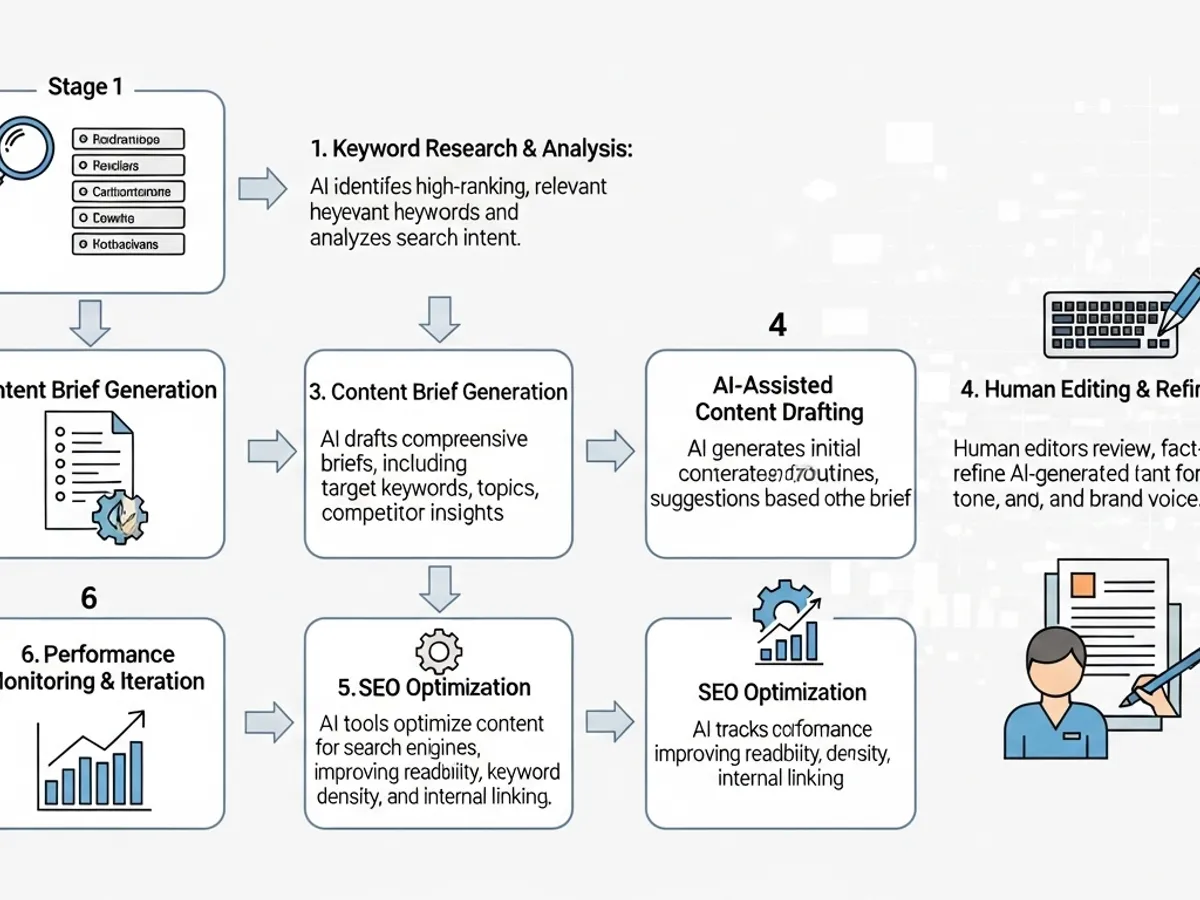
The landscape of content creation for SEO has undergone a profound transformation, moving from laborious manual processes to highly efficient, AI-driven workflows. This shift is powered by sophisticated AI SEO blog generator tools that are fundamentally reshaping how we approach digital content. They aren’t just speeding up writing; they’re embedding SEO best practices directly into the content generation process.
The Mechanics of AI-Driven SEO Content Creation
Modern SEO content automation tools leverage advanced algorithms to perform tasks that once took hours or days for human teams. They analyze vast datasets, identify trending topics, and even predict content performance based on current search engine algorithms. This predictive capability allows for a more strategic approach to content, ensuring relevance and visibility.
AI writing tools don’t simply generate text; they understand the nuances of search intent and semantic relationships. This means they can:
- Conduct in-depth keyword research: Identifying primary keywords, long-tail variations, and semantic clusters that resonate with target audiences and align with what search engines like Google are looking for.
- Analyze competitor content: Dissecting top-ranking articles to understand structure, topics covered, and content gaps that can be leveraged.
- Craft comprehensive content outlines: Ensuring logical flow and coverage of all essential points required for E-E-A-T (Experience, Expertise, Authoritativeness, and Trustworthiness).
- Generate high-quality, relevant copy: Producing articles that are not only grammatically correct but also engaging and information-rich.
- Optimize on-page elements: Automatically integrating keywords into titles, meta descriptions, headings, and body text for maximum impact.
- Suggest and integrate internal/external links: Building a robust linking profile that enhances authority and user experience.
- Incorporate relevant images and multimedia: Enhancing engagement and breaking up text, crucial for modern content consumption.
This holistic approach ensures that every piece of content is engineered for discoverability from the ground up.
The Impact on Content Teams and Website Rankings
For content teams, the revolution is clear: scalability and efficiency. Instead of spending valuable time on repetitive research and drafting, human experts can focus on strategy, creative oversight, and nuanced brand messaging. This hybrid approach — where AI handles the heavy lifting and humans provide the strategic direction — is proving to be incredibly powerful. In fact, studies show AI-optimized content can improve website ranking by an average of 45%.
AI’s ability to process and act on real-time data means content can be continually optimized and updated, maintaining its ranking power longer. This is a significant advantage over traditional methods, which often fall behind algorithm updates. To see how AI SEO software compares to traditional methods for speed and effectiveness, explore Outrank Rivals: AI SEO Software vs. Traditional Methods for 2026 Speed.
When we look at solutions like GenWrite, we see these capabilities in action. As an advanced AI SEO blog generator, GenWrite automates the entire end-to-end blog creation process, from initial keyword research and competitor analysis to adding relevant links and images, and finally, automatically publishing blogs. This enables users to significantly increase website traffic and organic reach, aligning content with both search engine guidelines and LLMs. Understanding how to choose the best AI blog generator becomes critical for maximizing ROI.
AI content generators are not just tools; they are strategic partners, empowering businesses to produce high-quality, SEO-optimized content at a scale previously unimaginable, freeing human talent for higher-value tasks.
Can Manual SEO Still Compete with the Speed and Scale of AI Optimization?
The rapid ascent of AI-powered optimization tools has fundamentally shifted the landscape of digital marketing. When we look at the sheer velocity and volume that AI can achieve—automating keyword research, competitor analysis, and even content generation at scale—it’s natural to question the role of traditional, manual optimization. Can human effort truly compete with algorithms that process billions of data points in moments?
While AI offers unparalleled speed and efficiency, especially in handling repetitive tasks, the answer isn’t a simple “no.” The enduring value of manual SEO lies precisely where AI currently reaches its limits: in the realm of nuanced understanding, strategic foresight, and genuine human connection. Human judgment remains irreplaceable for true website rankings impact.
Consider Google’s increasing emphasis on E-E-A-T (Experience, Expertise, Authoritativeness, and Trustworthiness). While AI-powered SEO content tools can certainly structure content to appear authoritative, the actual experience and expertise must originate from a human source. A tool like GenWrite can generate a blog post rapidly, but a human expert’s unique insights, anecdotal evidence, and deep understanding of a subject are what truly resonate with an audience and build credibility. This is where manual oversight ensures the AI-generated output is not just optimized, but genuinely valuable.
Where Manual SEO Still Excels
- Deep Audience Empathy: Understanding the subtle psychological triggers and pain points of an audience goes beyond data analysis. It requires human intuition.
- Strategic Content Gaps: Identifying unique content angles or market niches that AI might overlook because they aren’t directly represented in existing data.
- Brand Voice & Storytelling: Crafting a distinctive, authentic brand voice and weaving compelling narratives that foster emotional connections. AI can mimic, but human creativity defines.
- Ethical & Contextual Review: Ensuring content is not only accurate but also ethically sound, unbiased, and sensitive to cultural nuances.
- Adaptability to Unforeseen Changes: Quickly pivoting strategy based on real-world events, societal shifts, or unexpected algorithm updates that go beyond predictable patterns.
The most effective approach isn’t a competition, but a collaboration. Instead of viewing it as manual SEO versus AI, we should see it as manual SEO with AI. We leverage AI-powered SEO content tools like GenWrite to automate the time-consuming tasks of content production, keyword integration, and initial optimization. This frees up human specialists to focus on the higher-level strategic thinking, creative direction, and quality control that ultimately drives superior website rankings and builds lasting audience trust.
By combining AI’s efficiency for tasks like bulk blog generation and link building with human strategic input, we achieve a powerful synergy. This hybrid model ensures content is both scalable and deeply impactful. For a deeper dive into how AI aids human strategy, explore how an AI content generator for SEO can be an ultimate solution.
This approach allows us to capitalize on AI’s speed while preserving the human touch that makes content truly stand out in a crowded digital world.
Which AI SEO Tools are Shaping the Future of Website Rankings in 2026?
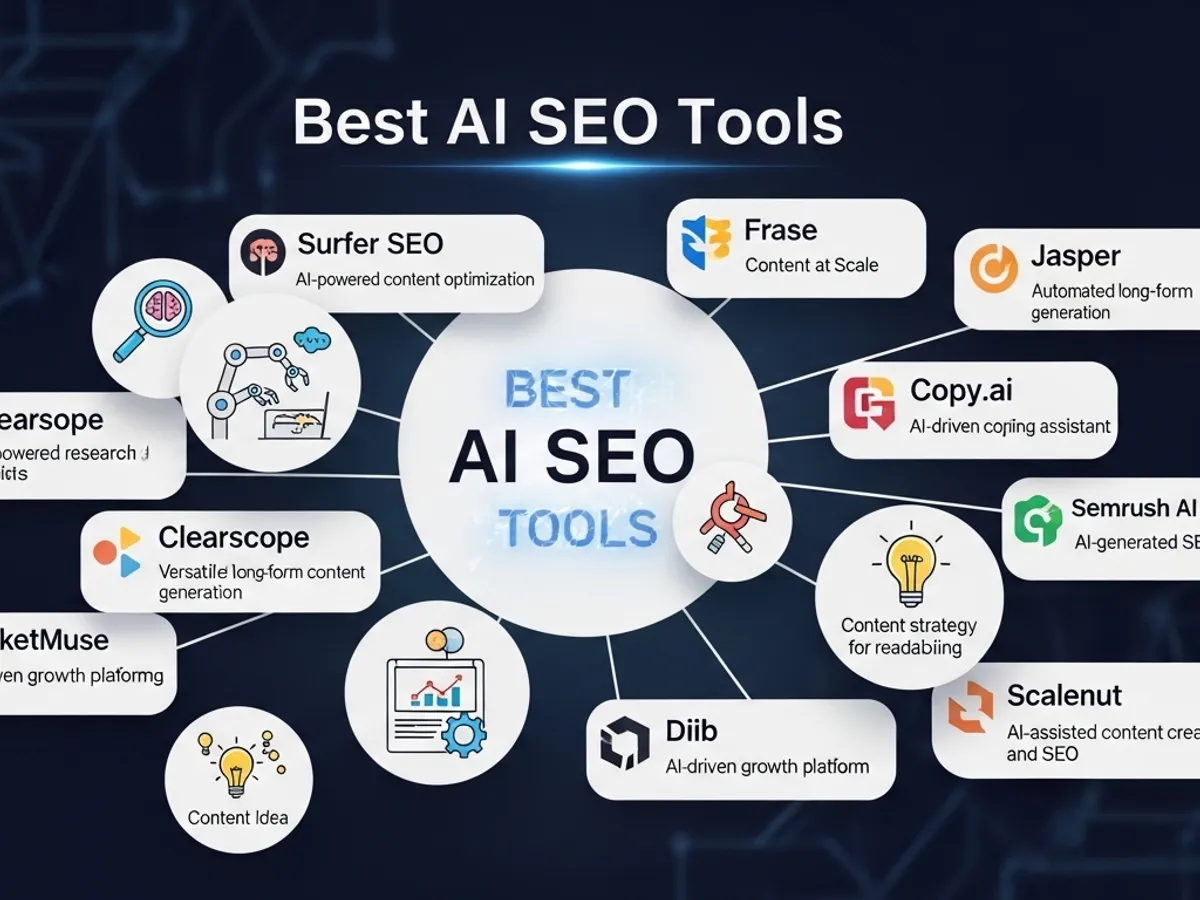
The landscape of search engine optimization is undergoing a profound transformation, driven by the rapid advancements in artificial intelligence. By 2026, AI SEO optimization tools are no longer just an advantage; they are a fundamental requirement for maintaining and boosting website rankings. As I see it from my vantage point at GenWrite, the evolution is not just about automation, but about intelligent, data-driven strategy.
The Rise of Intelligent Content Generation & Optimization
One of the most impactful categories of AI tools reshaping SEO is intelligent content generation. These platforms move beyond simple text generation, now offering nuanced capabilities that align with E-E-A-T principles. They are AI SEO blog writing software designed to produce not just volume, but quality content that resonates with both human readers and sophisticated algorithms.
Tools in this space, like GenWrite, are leading the charge. They integrate deep keyword research, competitor analysis, and semantic understanding to craft articles that are not only optimized for specific queries but also rich in context and authority. This allows content teams to scale their output significantly without sacrificing the depth required for 2026 search engines. High-quality, SEO-friendly content is now achievable at unprecedented speeds.
These AI tools are critical for creating content that performs well in an increasingly AI-driven search environment.
Advanced Keyword Research and Semantic Mapping
The days of simple keyword stuffing are long gone. Modern AI tools for SEO excel at uncovering intricate keyword clusters, understanding user intent, and mapping semantic relationships that humans might miss. They analyze vast datasets to identify not just the primary keywords, but also related entities and long-tail opportunities that signal comprehensive topic coverage.
This functionality is crucial for Generative Engine Optimization (GEO), ensuring that content is built on a foundation of genuine relevance and anticipated user queries. By identifying what search engines and users truly value, these tools help define content strategies that target high-intent traffic. Understanding the ‘why’ behind a search is as important as the ‘what’.
Proactive Technical SEO and Performance Monitoring
Beyond content, AI is revolutionizing the technical backbone of SEO. AI SEO optimization tools continuously crawl and analyze websites, identifying potential technical issues like broken links, slow page load times, and indexing errors before they significantly impact rankings. These systems can predict algorithm shifts and recommend preemptive adjustments, moving from reactive problem-solving to proactive optimization.
Some platforms even incorporate AEO (Algorithmic Engine Optimization) tracking, monitoring how content performs across various AI-driven search modalities, including voice search and multimodal AI. This holistic approach ensures websites are not just optimized for traditional web search but for the evolving digital ecosystem. Staying ahead means anticipating algorithmic changes, not just reacting to them.
The Hybrid Advantage: AI and Human Synergy
Ultimately, the future of website rankings in 2026 hinges on a collaborative approach. While SEO AI software for content writing like GenWrite can automate up to 80% of SEO tasks—from generating blog ideas and performing competitor analysis to adding relevant links and images, and even auto-publishing to WordPress—human oversight remains essential. The strategic direction, ethical considerations, and the final touch of human creativity ensure that content maintains its originality and credibility.
This hybrid strategy allows businesses to leverage AI’s speed and analytical power while retaining the unique insights and judgment of human experts. Tools like GenWrite streamline your workflow, enabling you to focus on strategy and impactful content that truly boosts website rankings and organic reach, as detailed in our guide on how to pick the best SEO writing tools for content that ranks in 2025. The most effective strategy combines AI’s efficiency with human ingenuity.
What Are the Unseen Challenges and Ethical Considerations of Relying Heavily on AI for SEO?
While the promise of AI for SEO, particularly through tools like GenWrite, offers unprecedented efficiency and scale, it’s crucial to examine the less-discussed challenges and ethical tightropes we navigate. The sheer power of AI writing tools can sometimes obscure fundamental concerns about content quality, authenticity, and the potential for unintended biases within our digital ecosystems.
The Quality Conundrum: Generic Content vs. Human Nuance
One of the most pressing concerns revolves around content quality. While AI excels at synthesizing information and adhering to structural requirements, the output can sometimes feel generic or lack genuine insight. The nuance, emotional resonance, and unique perspective that define truly compelling content often prove elusive for AI, leading to content that, while technically optimized, fails to connect deeply with readers.
This creates a clear tension in the AI content vs manual SEO debate. Human writers bring lived experience and contextual understanding, critical for fulfilling Google’s E-E-A-T (Experience, Expertise, Authoritativeness, and Trustworthiness) guidelines. An over-reliance on automated generation without rigorous human review risks diluting brand voice and undermining long-term audience trust.
Authenticity remains paramount for lasting SEO success.
Algorithmic Biases and Misuse Potential
Another significant challenge lies in algorithmic bias. AI models, by nature, learn from vast datasets. If these datasets contain inherent biases—whether in language, representation, or even historical ranking patterns—the SEO content automation tools built upon them can inadvertently perpetuate or amplify these biases in the generated content. This could lead to skewed information, unfair representation, or a lack of diversity in search results, impacting user experience and societal discourse.
The potential for misuse is also a stark reality. The ability to rapidly generate vast amounts of content, while a boon for legitimate marketers using platforms like GenWrite for efficient, quality content creation, also presents a risk for those seeking to manipulate search rankings. Mass-produced, low-quality content, or even deceptive narratives, could theoretically flood the internet, making it harder for high-quality, authoritative sources to surface.
The Erosion of Human Touch and Ethical Considerations
The drive for automation can inadvertently diminish the human element that often differentiates exceptional content. While AI can handle keyword research, link integration, and structural optimization, the strategic oversight, creative storytelling, and empathetic understanding of an audience’s true needs are still best provided by human experts. The ethical imperative is to ensure that AI serves as an assistant, enhancing our capabilities, rather than replacing the critical thinking and creativity that define effective SEO.
A thoughtful blend of AI efficiency and human judgment is non-negotiable.
Ultimately, while tools like GenWrite empower us to scale content creation and optimize for search engines more effectively, we must remain vigilant. The unseen challenges of maintaining quality, mitigating bias, and preserving ethical standards demand a continuous commitment to human oversight and a clear understanding of AI’s capabilities and limitations.
How Can You Craft a Hybrid Strategy: Marrying AI Efficiency with Human Ingenuity for Peak Performance?

The question isn’t whether to choose AI or human expertise for SEO; it’s how to seamlessly integrate both to achieve unparalleled performance. We’re moving beyond a binary choice into an era where a hybrid strategy is not just advantageous, but essential for superior website rankings in 2026 and beyond.
Leveraging AI as Your Efficiency Engine
Artificial intelligence excels at the heavy lifting—the data-intensive, repetitive tasks that can overwhelm human teams. Think of AI as your scalable assistant, ready to process vast amounts of information and generate initial outputs with incredible speed.
- Data Analysis & Keyword Research: AI tools can swiftly analyze market trends, identify high-potential keywords, and uncover competitor strategies. This provides a robust foundation for your content strategy.
- Content Generation & Optimization: An AI SEO blog writing software like GenWrite can automate the end-to-end blog creation process. It researches keywords, adds relevant links and images, analyzes competitor content, and even auto-publishes. This dramatically accelerates content production, allowing you to scale your efforts without compromising on initial SEO optimization.
- Technical SEO Audits: AI can quickly scan your site for technical issues, broken links, or indexing problems, flagging them for human review. This ensures your site’s infrastructure is sound, a critical factor for search engine visibility.
AI handles the scale and speed; humans provide the depth and direction. This division of labor frees up valuable human resources for more strategic undertakings.
Empowering Human Ingenuity: The Strategic Architect
While AI provides efficiency, human ingenuity delivers the nuanced understanding, creative flair, and strategic oversight that truly differentiates content. This is where manual optimization remains indispensable.
- Strategic Direction: Humans define the overarching content strategy, align it with business goals, and identify unique angles that resonate deeply with the target audience. AI can’t replicate true strategic foresight or brand voice.
- E-E-A-T Enhancement: Google’s increasing emphasis on E-E-A-T (Experience, Expertise, Authoritativeness, and Trustworthiness) cannot be fully automated. Human writers infuse content with genuine insights, personal anecdotes, and unique perspectives that build credibility and trust.
- Content Refinement & Empathy: While AI generates drafts, human editors refine them for tone, emotional resonance, and narrative flow. They ensure the content speaks authentically to readers, addresses their pain points, and offers truly valuable solutions.
- Ethical Considerations & Bias Mitigation: Human oversight is crucial for identifying and mitigating potential biases in AI-generated content, ensuring accuracy, fairness, and ethical integrity.
Human experts ensure the content isn’t just optimized, but genuinely impactful and trustworthy. This combination drives long-term success for website rankings.
The Hybrid Model in Practice
Imagine a workflow where GenWrite efficiently produces a well-researched, SEO-optimized draft for a blog post. Your human content strategist then reviews this draft, infusing it with unique insights, refining the narrative, and adding a distinct brand voice. They might adjust the call to action, integrate specific case studies, or rephrase sections to enhance emotional connection.
This collaborative approach allows you to publish high-quality, SEO-friendly content at a volume previously unimaginable, while maintaining the human touch that builds audience loyalty and drives conversions. It’s about letting AI perform its best as a tool, while empowering humans to focus on their highest-value contributions.
Why is Continuously Adapting Your SEO Strategy Crucial in the Rapidly Evolving AI Landscape?
The digital world, particularly the search landscape, is in a constant state of flux, driven significantly by the rapid advancements in artificial intelligence. What worked for website rankings last year, or even last quarter, might be entirely obsolete today. This relentless evolution makes continuous adaptation of your SEO strategy not just beneficial, but absolutely critical for sustained online visibility.
Why the AI Landscape Demands Agile SEO
Google’s algorithm updates are no longer incremental; they are increasingly focused on understanding content with a sophistication that mirrors human cognition, emphasizing principles like E-E-A-T (Experience, Expertise, Authoritativeness, and Trustworthiness). This shift means that generic, keyword-stuffed content, once a common tactic, is now actively penalized. Search engines, powered by advanced AI, are looking for genuinely valuable, contextually rich information.
Stagnant SEO is a death sentence in the age of AI-driven search.
We’ve seen the rise of Generative Engine Optimization (GEO), where content must be optimized not just for human readers, but also for the underlying Large Language Models (LLMs) that power search results. This requires a dynamic approach to keyword research, content structure, and even the subtle nuances of tone and intent.
Embracing AI Tools for SEO Adaptation
Successfully navigating this evolving landscape means embracing AI tools for SEO. These tools are no longer just an advantage; they are a necessity for staying competitive. They allow us to monitor algorithmic changes, analyze competitor strategies at scale, and identify emerging search trends with unprecedented speed.
Consider how AI SEO optimization tools can rapidly:
- Identify new semantic keyword clusters that reflect evolving user intent.
- Analyze content gaps against top-ranking pages.
- Predict the impact of potential content changes.
- Automate repetitive tasks, freeing human experts for strategic oversight.
This isn’t about replacing human strategists, but augmenting their capabilities. The sheer volume and speed of data generated by AI-powered search demand equally sophisticated tools to interpret and act upon it.
The Role of Continuous Evaluation and Refinement
An adaptive SEO strategy is built on a foundation of continuous evaluation and refinement. This means regularly auditing your content performance, experimenting with new optimization techniques, and closely watching how AI tools for SEO evolve. What worked last month might need tweaking this month as new AI models are deployed and search behaviors shift.
Your SEO strategy must be a living, breathing entity, not a static document.
Platforms like GenWrite exemplify how AI can facilitate this adaptation. By automating end-to-end blog creation, including keyword research, competitor analysis, and content optimization, it allows teams to quickly generate and test high-quality content that aligns with current search engine guidelines. This agile approach to content creation and optimization is essential for maintaining strong website rankings and organic reach in a world where AI dictates the pace of change.
What Real-World Success Stories Illustrate the Power of AI-Enhanced SEO in 2026?
The transition from theoretical discussions about AI’s potential in SEO to tangible, real-world success stories is now evident. By 2026, we’re seeing clear patterns where strategic AI integration isn’t just a competitive edge; it’s a fundamental driver of enhanced website rankings. These aren’t just isolated incidents; they represent a growing trend of businesses leveraging intelligent automation to outperform competitors.
EcoTech Solutions: Scaling Content for Niche Dominance
EcoTech Solutions, a medium-sized e-commerce business specializing in sustainable home goods, faced a common challenge: how to generate a massive volume of high-quality, SEO-optimized content for thousands of unique products and related queries. Their manual content creation efforts were slow, expensive, and couldn’t keep pace with market demand or Google’s ever-increasing appetite for detailed, authoritative information.
They implemented an AI SEO blog generator, akin to what GenWrite offers, to automate much of their content production. This wasn’t about replacing writers entirely, but about giving them a superpower. The AI system researched long-tail keywords, analyzed competitor content, and generated initial drafts for product guides, comparison articles, and informative blogs at an unprecedented scale. Human experts then refined these drafts, ensuring E-E-A-T (Experience, Expertise, Authoritativeness, and Trustworthiness) and brand voice.
The result? Within nine months, EcoTech saw a 60% increase in organic traffic. Their new content achieved first-page website rankings for hundreds of specific product-related queries, driving significant sales growth. AI scales content production without sacrificing quality, when guided correctly. This allowed their small team to focus on strategic content pieces that truly differentiate the brand.
Insightful Analytics Inc.: Precision Content for Complex SaaS
Insightful Analytics Inc., a B2B SaaS company, struggled to convey the nuanced benefits of their advanced data visualization platform through SEO-friendly content. Their existing content was often too technical for top-of-funnel users and lacked the semantic depth Google’s algorithms now demand.
They adopted sophisticated SEO AI software for content writing to transform their content strategy. This software performed deep semantic analysis, identified content gaps their human team had missed, and provided real-time optimization suggestions during the writing process. It helped them restructure existing whitepapers and case studies into accessible, blog-style content, ensuring it aligned with specific user search intent and Google’s E-E-A-T guidelines.
Outcome: Insightful Analytics achieved a 40% improvement in conversion rates from organic search traffic. Their targeted, AI-refined content secured top-3 website rankings for high-value transactional keywords, directly impacting their lead generation. AI provides the data-driven precision, humans provide the strategic narrative. The blend of AI’s analytical power with human subject matter expertise proved invaluable.
Local Flavors Magazine: Empowering Niche Publishers
Local Flavors Magazine, a digital publication covering regional cuisine and culture, operated with a lean editorial team. They faced immense pressure to publish fresh content daily while also ensuring it ranked well in local search results against larger, more resourced competitors.
Their solution involved a hybrid model where an AI SEO blog generator handled routine tasks like event listings, restaurant news summaries, and initial drafts for seasonal guides. This freed their human journalists to conduct in-depth interviews, write unique feature stories, and capture the local essence that AI alone couldn’t replicate. The AI also powered weekly technical SEO audits, proactively identifying and fixing issues that could hamper their website rankings.
Impact: Local Flavors saw a 25% increase in local search traffic and cemented its position as the authoritative digital voice for regional culinary experiences. The AI handled approximately 80% of the repetitive, data-intensive SEO tasks, allowing the human team to focus on creativity and community engagement. These examples underscore that AI isn’t just hype; when integrated strategically, it’s a powerful accelerator for achieving superior website rankings and business objectives, particularly when paired with human expertise.
What’s the Future Verdict: Will AI Overtake Manual SEO Entirely, or Will Collaboration Prevail?
The debate around whether AI will entirely eclipse manual SEO has been a central theme, but the verdict, as we’ve explored, leans heavily towards collaboration. While AI’s capacity for data analysis, automation, and rapid content generation is undeniable, the nuanced understanding and strategic depth of human expertise remain irreplaceable for achieving top-tier website rankings.
AI excels at identifying patterns, optimizing for keywords, and streamlining repetitive tasks—automating up to 80% of routine SEO efforts. Tools like GenWrite, for instance, demonstrate how an AI blog generator can automate research, content creation, and publishing, significantly boosting efficiency and traffic generation. This level of content automation is a game-changer for scalability.
However, the human element—our ability to grasp complex user intent, infuse creativity, and ensure content adheres to the critical E-E-A-T (Experience, Expertise, Authoritativeness, and Trustworthiness) principles—provides the essential strategic oversight. Manual optimization is not disappearing; it’s evolving into a more strategic role, guiding AI to produce truly impactful and trustworthy content.
The future of AI content vs manual SEO isn’t a zero-sum game. It’s a powerful synergy where AI handles the heavy lifting of data processing and content generation, while human experts focus on strategic direction, quality control, and ethical considerations. This hybrid approach ensures that content doesn’t just rank, but genuinely connects and builds trust with audiences.
Ultimately, the most successful strategies for boosting website rankings in 2026 and beyond will be those that master the art of integrating AI’s efficiency with human ingenuity. It’s about leveraging advanced AI SEO tools to amplify human capabilities, rather than replacing them. This collaboration will undoubtedly prevail, leading to more sophisticated, effective, and ethically sound SEO practices.
Ready to dominate search results in 2026? Discover how GenWrite can automate your blog creation and SEO optimization, blending AI efficiency with human ingenuity for peak performance.
Frequently Asked Questions about AI vs. Manual SEO
What is Generative Engine Optimization (GEO)?
Generative Engine Optimization (GEO) is an SEO evolution focused on optimizing content specifically for AI-driven search engine algorithms. It emphasizes semantic understanding and contextual relevance for Large Language Models (LLMs), moving beyond traditional keyword stuffing to create content that AI search engines can deeply comprehend and rank highly.
Can AI content truly match human creativity and E-E-A-T?
While AI can generate content rapidly and analyze vast data, it currently struggles to replicate the nuanced creativity, genuine experience, and ethical judgment that human experts bring. Google’s emphasis on E-E-A-T (Experience, Expertise, Authoritativeness, Trustworthiness) means that AI-generated content often requires human oversight to ensure authenticity and credibility.
What are the main advantages of using AI SEO tools?
AI SEO tools offer significant advantages in speed, scalability, and data analysis. They can automate tasks like keyword research, content optimization, and competitor analysis, freeing up human SEO specialists to focus on strategy, creativity, and quality control. Tools like AI blog generators can also help produce content in bulk efficiently.
Is manual SEO still relevant in 2026?
Yes, manual SEO remains highly relevant, particularly in areas requiring strategic thinking, empathy, understanding of complex user intent, and creative content development. While AI excels at repetitive tasks and data processing, human insight is crucial for crafting compelling narratives and ensuring content resonates deeply with audiences.
What is the best SEO strategy for 2026?
The most effective SEO strategy for 2026 is a hybrid approach that marries AI efficiency with human ingenuity. Leverage AI tools for automation and data-driven insights, but ensure human experts provide strategic direction, creative input, quality assurance, and ethical oversight to achieve superior website rankings and build audience trust.
How do AI content generators impact SEO?
AI content generators revolutionize SEO by enabling rapid creation of optimized blog posts and website copy. They streamline the content production process, making it easier to scale efforts and maintain a consistent publishing schedule. However, it’s crucial to use them as tools that assist human writers, rather than as complete replacements, to ensure quality and originality.