
Which AI SEO Tools Offer the Strongest Boost to Your 2026 Search Rankings?
How Is AI Radically Reshaping SEO and Search Rankings by 2026?
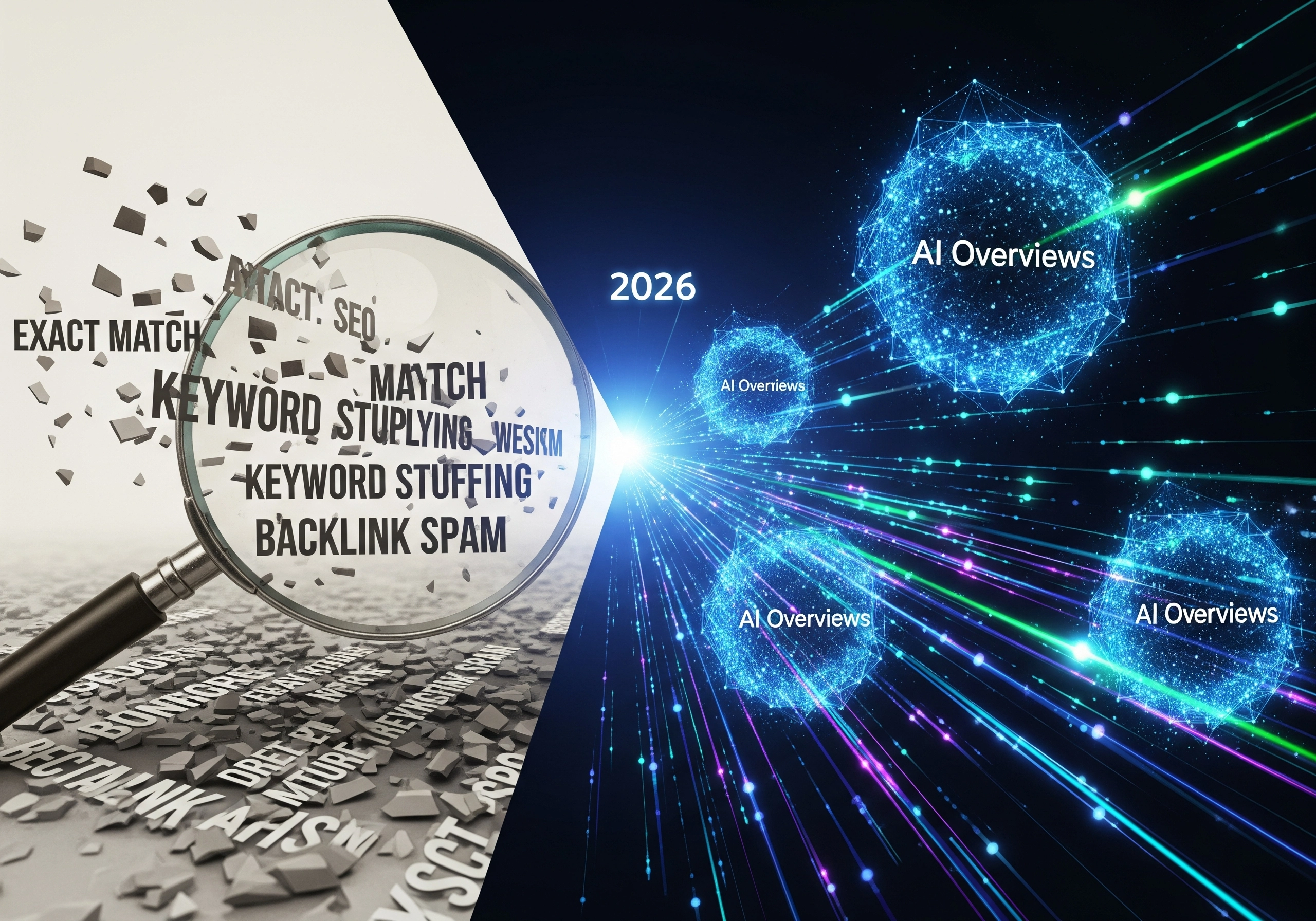
The landscape of search engine optimization (SEO) is undergoing a profound transformation, driven almost entirely by the rapid advancements in artificial intelligence. By 2026, the traditional playbook for ranking will be largely obsolete, replaced by a nuanced understanding of user intent, contextual relevance, and the intricate workings of AI-powered search. This isn’t just an evolution; it’s a radical reshaping of how content achieves visibility and impact.
The Pivotal Shift: From Keywords to Intent and AI Overviews
For years, SEO professionals meticulously optimized for keywords, carefully crafting content to match specific search queries. While keywords still hold some sway, the focus has dramatically shifted. Google’s Search Generative Experience (SGE) and similar AI tools are now generating conversational answers directly within the search results, fundamentally changing the user journey. This means the goal is no longer just to rank on page one, but for your content to be reliably cited and integrated into these AI Overviews.
Content must now be optimized for AI comprehension, not just human readability.
This new paradigm demands a different approach to content creation and strategy. It’s about building topic authority and providing comprehensive, authoritative answers that AI models can easily interpret and trust. The ability of an AI to synthesize information from your content directly impacts its visibility in these rich, generative results.
Why Traditional SEO Alone Falls Short in the AI Era
The sheer volume of data, the speed of algorithm changes, and the complexity of user intent analysis have simply outpaced traditional, manual SEO methods. The effectiveness of content is no longer solely measured by its keyword density but by its contextual relevance and its ability to answer complex queries comprehensively. AI is now powering nearly every aspect of SEO, demanding a proactive and adaptive strategy.
This is where advanced AI SEO Tools become indispensable. They can analyze vast amounts of data instantly, identify ranking volatility, and adapt strategies in real-time, providing a significant competitive advantage. Tools that automate complex research, competitor analysis, and content optimization are no longer a luxury but a necessity.
Embracing the Future: AI SEO Tools 2026 and Beyond
The next few years will see a complete integration of AI into every facet of the SEO workflow. We’re moving towards Generative Engine Optimization (GEO) and Answer Engine Optimization (AEO), where content is designed to be easily digestible and citable by AI models. This includes optimizing for AI Overviews and ensuring your content can feed into conversational search experiences effectively. Platforms like GenWrite’s AI blog generator exemplify this shift, automating the end-to-end blog creation process with a strong focus on SEO optimization and alignment with LLMs.
By leveraging sophisticated AI SEO Tools 2026, businesses can automate audits, streamline content workflows, and achieve up to a 45% faster time-to-publish. This leads to measurable traffic gains within six months by creating content optimized not just for search engines, but for the AI that powers them.
What Core Capabilities Define a Top-Tier AI SEO Tool for Future Success?
The seismic shift in search, driven by advancements like Google’s Search Generative Experience (SGE), demands a new breed of AI SEO tools. No longer is it enough to simply match keywords; success in 2026 and beyond hinges on understanding user intent, context, and the ability to be cited by AI models. To truly boost rankings, a top-tier AI SEO tool must possess core capabilities that transcend traditional optimization.
AI-Powered Content Creation and Optimization
At the forefront is the ability to generate and refine content that resonates with both human readers and AI algorithms. This isn’t just about churning out text; it’s about crafting authoritative, semantically rich content designed for AI consumption. By 2026, AI will power nearly every aspect of SEO, requiring content that AI can easily interpret and cite, moving beyond basic keyword stuffing. High-performing tools automate the entire content lifecycle, from ideation to final draft.
Automated content creation is no longer a luxury; it’s a necessity for competitive edge.
For instance, an AI blog generator or AI SEO blog writing software needs to analyze competitor content, identify semantic gaps, and produce articles that address comprehensive topic clusters. This capability ensures that content is not only relevant but also structured in a way that facilitates understanding for AI Overviews and featured snippets. If you’re new to this, a deeper dive into how these tools function can be found in our Beginner’s Guide to Smart Content: Unpacking AI SEO Blog Writing in 2026.
Deep Semantic SEO and Topic Authority Building
Future-proof AI SEO tools move beyond individual keywords to embrace semantic SEO. They excel at identifying entire topic clusters and conceptual entities, helping you build genuine topic authority. This means analyzing complex relationships between terms, understanding nuanced user queries, and ensuring your content covers a subject exhaustively.
Tools like GenWrite are designed to help you achieve this by providing robust keyword research and competitor analysis. They don’t just find keywords; they map out the entire semantic landscape of a topic, allowing for the creation of content that Google’s AI can recognize as truly authoritative. This is crucial for Generative Engine Optimization (GEO) and Answer Engine Optimization (AEO), where AI models seek comprehensive answers.
Real-time Data Analysis and Adaptive Strategy
In a rapidly evolving search landscape, static strategies are obsolete. A leading AI SEO tool must offer real-time auditing and the ability to adapt strategies on the fly. This includes detecting ranking volatility, identifying algorithm shifts, and providing actionable insights to adjust content or technical SEO elements immediately.
The best tools act as an agile co-pilot, constantly optimizing your path to visibility.
Such tools can analyze vast amounts of data instantly, far beyond human capacity, giving businesses a significant competitive advantage. This real-time feedback loop ensures that your SEO optimization efforts remain aligned with Google’s dynamic algorithms and user intent. The ability to automate audits and content workflows can lead to up to a 45% faster time-to-publish and measurable traffic gains within six months.
Comprehensive On-Page and Technical SEO Automation
While content is king, its technical foundation must be impeccable. Top AI SEO tools integrate capabilities for automated on-page optimization, suggesting improvements for internal linking, meta descriptions, schema markup, and image optimization. They also extend to technical SEO, identifying crawl errors, site speed issues, and mobile-friendliness.
This holistic approach ensures that your content is not only semantically rich but also technically sound, making it easily discoverable and indexable by search engines. For agencies looking to scale their efforts, leveraging these comprehensive SEO AI tools is explored in Scaling Content with AI: An Agency’s Guide to Smarter SEO in 2026.
Link Intelligence and Relationship Building
Beyond content, link building remains a critical ranking factor. A sophisticated AI SEO tool provides deep link intelligence, analyzing backlink profiles, identifying high-quality link opportunities, and even predicting the impact of potential links. This capability helps build a robust and relevant backlink portfolio, a key signal of authority for both traditional search and AI models.
By integrating these core capabilities, AI SEO tools empower businesses to navigate the complexities of an AI-first search world. They transform the daunting task of staying relevant into an efficient, data-driven process, ensuring content is not just seen, but cited and trusted by the AI systems shaping our digital future. Ignoring these advancements means falling behind, as traditional SEO blogs often struggle to keep pace with the demands of the modern web, a challenge that SEO content automation tools are specifically designed to overcome.
Can Generative Engine Optimization (GEO) & Answer Engine Optimization (AEO) Become Your Ranking Superpower?

The landscape of search is rapidly evolving, driven by the pervasive integration of artificial intelligence. As we approach 2026, the focus for SEO professionals isn’t just about ranking on a traditional search results page; it’s about optimizing for a new era where AI models synthesize information and deliver direct answers. This shift introduces two critical concepts: Generative Engine Optimization (GEO) and Answer Engine Optimization (AEO).
The Rise of Generative Engine Optimization (GEO)
Generative Engine Optimization (GEO) is about structuring and presenting your content so that large language models (LLMs) can easily understand, process, and generate accurate, comprehensive responses based on it. It’s no longer enough to simply match keywords; the content must be a reliable source for an AI to draw upon.
Content that is clear, factual, and well-structured is prime for GEO.
Think of it as optimizing for the AI’s ‘understanding.’ This means using clear headings, concise paragraphs, and a logical flow that AI can parse efficiently. If your content is ambiguous or poorly organized, AI models will struggle to extract the necessary information, reducing its chances of being cited.
Mastering Answer Engine Optimization (AEO)
Complementary to GEO, Answer Engine Optimization (AEO) specifically targets the increasing prevalence of AI Overviews and conversational search. Instead of a list of blue links, users are often presented with a direct, synthesized answer. AEO ensures your content is the source for these concise, authoritative answers.
AEO transforms your content into the definitive response for user queries.
This demands precision. Your content needs to provide direct, unambiguous answers to common questions. It’s about being the most relevant and trustworthy AI citation for a specific query, often appearing as a featured snippet or within an AI-generated summary. This requires a deep understanding of user intent and the ability to deliver information succinctly.
Why GEO and AEO Are Your New Ranking Superpowers
The shift to GEO and AEO is not a trend; it’s a fundamental change in how search engines operate. With AI powering nearly every aspect of SEO by 2026, content that fails to meet these new standards risks becoming invisible. Google’s algorithms are increasingly relying on AI for understanding contextual search and user intent prediction.
Traditional SEO often falls short in the face of AI-driven search.
Many SEO blogs struggle to adapt to these rapid changes, focusing on outdated strategies. To truly boost rankings, content needs to be authoritative, structured, and easily digestible by AI, making it ripe for citation. This is precisely where AI SEO tools come into play.
AI SEO Tools: The Engine Behind Your GEO & AEO Strategy
Optimizing for GEO and AEO manually can be an overwhelming task. This is where AI SEO tools become indispensable. They offer capabilities that human analysis alone cannot match, from instant data analysis to identifying ranking volatility.
These tools can:
- Analyze User Intent: Decipher the nuances of queries to help you craft direct, satisfying answers.
- Structure Content for AI: Recommend optimal content structures, headings, and formatting that AI models prefer.
- Identify AI Citation Opportunities: Pinpoint gaps where your content can become the definitive source for an AI-generated answer.
- Automate Optimization: Tools like GenWrite, an AI blog generator, automate the end-to-end blog creation process, ensuring content is optimized for these new paradigms from inception. For instance, our AI SEO content generator helps with SEO content optimization that aligns with search engine guidelines and LLMs, making your content more likely to be an AI citation.
Leveraging AI tools is crucial for staying ahead in the race for AI Overviews and conversational answers.
By integrating advanced AI SEO tools into your workflow, you can move beyond traditional keyword matching. You’re not just creating content for human readers, but for the sophisticated AI models that will determine your visibility. This allows you to generate high-quality, SEO-friendly content that aligns with both human and AI search behaviors, ensuring your brand is consistently cited and discovered.
Which AI SEO Tools Excel in AI-Driven Content Creation and Optimization?
The landscape of content creation and optimization has been fundamentally reshaped by AI, moving beyond simple keyword stuffing to a sophisticated understanding of user intent and AI model interpretability. As we approach 2026, the focus is on creating content that not only ranks on traditional search engine results pages (SERPs) but also gets cited and understood by AI Overviews and conversational AI models.
The Imperative for AI-Driven Content Optimization
Traditional content strategies, often reliant on manual research and fragmented toolsets, are struggling to keep pace. The sheer volume of data required to understand evolving search algorithms and the nuanced demands of AI models necessitates a new approach. AI SEO Tools are no longer a luxury; they are essential for competitive advantage.
These tools analyze vast datasets, predict ranking volatility, and guide content creators toward strategies that resonate with both human readers and artificial intelligence. This shift is critical for content to be recognized and prioritized in the age of Generative Engine Optimization (GEO) and Answer Engine Optimization (AEO).
Leading AI Tools for Content Creation and Optimization
Several platforms have emerged as frontrunners, each offering unique strengths in AI content generation and optimization.
SurferSEO: Precision On-Page Optimization
SurferSEO stands out for its data-driven approach to on-page optimization. It analyzes top-ranking content for a given keyword, providing a detailed roadmap of what your content needs to include to compete. This extends beyond keywords to semantic terms, content structure, and word count recommendations.
- Content Editor: Offers real-time feedback on content as it’s being written, ensuring alignment with ranking factors. It suggests keywords, headings, and NLP entities to include.
- Audit Tool: Identifies gaps in existing content, making it easier to update and improve older articles for better performance.
- Keyword Research: Helps uncover long-tail keywords and content ideas that align with user intent.
This level of precision ensures content is not just keyword-rich, but contextually relevant and semantically complete, making it highly valuable for Content Optimization AI.
Writesonic: Accelerating AI Content Generation
For sheer velocity in content creation, Writesonic is a powerful ally. It leverages advanced AI models to generate various forms of content, from blog posts and articles to ad copy and product descriptions. Its strength lies in providing a strong starting point, drastically reducing the time spent on drafting.
- AI Article Writer: Generates full-length articles based on a brief, allowing creators to focus on refining and adding unique insights.
- Content Templates: Offers a wide array of templates for different content types, streamlining the creation process.
- Paraphrasing and Expanding: Helps repurpose existing content or develop ideas further, ensuring fresh perspectives and comprehensive coverage.
While AI-generated content still requires human oversight for accuracy and brand voice, tools like Writesonic provide an invaluable first draft, accelerating the content pipeline significantly.
MarketMuse: Building Topic Authority and Semantic Depth
MarketMuse focuses on comprehensive content strategy by analyzing your entire content inventory against your target audience’s needs. It identifies content gaps, clusters related topics, and helps you build authoritative content hubs. This approach is crucial for semantic SEO and establishing expertise in the eyes of AI models.
- Content Audits: Provides a holistic view of your content’s performance and identifies areas for improvement or expansion.
- Topic Modeling: Helps understand the semantic relationships between keywords and topics, guiding the creation of interconnected content.
- Content Briefs: Generates detailed outlines for writers, ensuring every piece contributes to overall topic authority.
MarketMuse helps shift the focus from individual articles to a cohesive content strategy that answers user queries comprehensively, a key requirement for AI systems aiming to provide definitive answers.
The Integrated Advantage with GenWrite
While specialized tools excel in specific areas, the future demands an integrated solution that automates the entire content lifecycle. This is where platforms like GenWrite come into play. As an AI blog generator, GenWrite automates the end-to-end blog creation process, from keyword research and competitor analysis to content automation and publishing. Our platform is designed to provide high-quality, SEO-friendly content that aligns with search engine guidelines and Large Language Models (LLMs).
Automating the content workflow frees up valuable time for strategic oversight and expert refinement.
This allows businesses to scale their content efforts efficiently, ensuring that every piece is optimized for both traditional search and AI models, contributing to traffic generation. For insights into why many SEO blogs struggle and how AI offers solutions, explore how AI tools provide solutions in 2026.
By leveraging tools like SurferSEO for optimization, Writesonic for generation, and MarketMuse for strategic insights, and integrating them into an overarching automated framework like GenWrite, businesses can truly excel in the AI-driven content landscape.
How Do AI Platforms Enhance Keyword Research and Intent Analysis for 2026?

The days of simply chasing high-volume keywords are rapidly fading. By 2026, the landscape of search will be dominated by AI, making traditional keyword research insufficient. AI platforms aren’t just speeding up old processes; they’re fundamentally redefining how we understand search intent and optimize content.
Beyond Volume: Understanding True Search Intent
Historically, keyword research involved compiling lists and checking search volume. Today, AI Keyword Research goes far deeper. It moves beyond surface-level queries to decode the underlying psychological need or question driving a user’s search. Google’s algorithms, increasingly reliant on AI, are already adept at understanding contextual search and user intent prediction.
AI transforms keyword research from a quantitative exercise into a qualitative insight generation engine.
This shift means your content isn’t just targeting words; it’s targeting minds. AI SEO tools analyze vast datasets—including user behavior, SERP features, and conversational patterns—to anticipate what users really want, even if their query is ambiguous. This deep understanding is critical for optimizing for AI Overviews and conversational search.
The Power of Keyword Clustering
One of the most significant enhancements offered by SEO AI Tools is advanced keyword clustering. Instead of optimizing for individual keywords in isolation, AI groups semantically related terms and phrases into comprehensive topics. This ensures content fully addresses a user’s intent across all possible related queries.
For instance, an AI tool won’t just tell you to target “best coffee maker.” It will cluster that with “top-rated espresso machines,” “drip coffee reviews,” and “how to choose a coffee brewer,” recognizing they all stem from a similar informational or transactional need. This holistic approach builds topic authority, a key factor for ranking in an AI-driven search world.
Predictive Analytics for Future-Proofing Content
AI doesn’t just analyze the present; it predicts the future. By identifying emerging trends and shifts in search behavior, these platforms offer predictive insights that allow content creators to get ahead of the curve. This means optimizing for topics and questions that are gaining momentum, rather than just reacting to what’s already popular.
Anticipating search trends provides a distinct competitive advantage in a rapidly evolving digital ecosystem.
This predictive capability is invaluable for strategic content planning. It helps us understand where user interest is heading, enabling the creation of evergreen content that remains relevant. Search intent prediction isn’t just about what’s being searched now, but what will be searched next.
Automating the Deep Dive with GenWrite
Integrating these advanced AI capabilities into your workflow is no longer optional. Tools like GenWrite exemplify this evolution by automating the entire process, from in-depth keyword research and keyword clustering to search intent prediction. We built GenWrite to move beyond simple keyword matching, enabling the creation of high-quality, SEO-friendly content that aligns with search engine guidelines and Large Language Models (LLMs).
By leveraging AI SEO Tools like GenWrite, you can ensure your content is not only discoverable but also highly citable by AI models. This automation frees up valuable time, allowing you to focus on refining your message rather than getting lost in manual data analysis. Traditional approaches often fall short, struggling to keep pace with algorithmic changes and the sheer volume of data, which is precisely why platforms offering AI SEO blog writing software are becoming indispensable. Discover how AI tools provide solutions to these challenges by exploring how they can revolutionize your content strategy.
What Are the Best AI SEO Tools for Comprehensive Auditing and Technical SEO Automation?
The complexity of technical SEO has grown exponentially, moving far beyond simple sitemap submissions and meta tags. Today, maintaining optimal site health and crawlability requires constant vigilance and deep analytical insight, a task that has become virtually impossible without advanced AI. This is where AI SEO Auditing tools emerge as indispensable, transforming a traditionally laborious process into a streamlined, proactive strategy.
The Evolution of Technical Audits with AI
Traditional website audits often involved manual checks and siloed tools, leading to incomplete pictures and delayed issue resolution. However, the landscape has shifted dramatically. By 2026, AI-powered systems can analyze vast amounts of data instantly, identifying ranking volatility and adapting strategies in real-time. This allows for a proactive approach to site health, predicting potential issues before they impact performance.
AI transforms reactive troubleshooting into proactive optimization.
These sophisticated online AI SEO tools don’t just flag errors; they interpret their impact and often suggest precise, actionable solutions. This level of insight is crucial when Google’s algorithms increasingly rely on AI for understanding contextual search and user intent.
Core Capabilities of Advanced Technical SEO AI
Modern AI SEO tools excel at a range of technical auditing tasks that were once time-consuming and prone to human error. They provide a comprehensive scan of your digital footprint, ensuring that your site is not only crawlable but also optimized for the sophisticated demands of current and future search engines.
Real-time Site Health Monitoring
AI systems continuously monitor critical technical elements, from server response times to broken links and redirect chains. They can detect subtle anomalies that might indicate a larger problem, offering predictive insights into potential crawl budget issues or indexing problems. This real-time feedback loop is essential for maintaining a robust online presence.
Schema Markup & Structured Data Validation
With the rise of AI Overviews and rich snippets, correct schema markup is more vital than ever. Technical SEO AI tools automatically validate your structured data, ensuring it’s correctly implemented and easily digestible by AI models. This enhances the likelihood of your content being cited and featured in conversational search results.
Performance Optimization & Core Web Vitals
User experience is a direct ranking factor. AI auditing tools analyze Core Web Vitals (CWV) and other performance metrics, pinpointing bottlenecks in page load speed, interactivity, and visual stability. They offer recommendations for code optimization, image compression, and server-side improvements, directly contributing to better search rankings and user satisfaction.
Integrating Auditing Insights for Content Excellence
While dedicated auditing tools pinpoint technical flaws, the real power comes from integrating these insights into your content strategy. A technically sound website provides the perfect foundation for high-performing content. This is where platforms like GenWrite shine. By automating the end-to-end blog creation process, GenWrite ensures that the content produced is not only SEO-optimized but also aligned with a healthy, crawlable site structure. It leverages robust data to create high-quality, AI-friendly content that meets search engine guidelines and LLMs, ensuring your efforts in technical optimization are amplified by compelling content. If your current content creation process is falling short, exploring AI SEO blog writing software can provide a significant competitive edge by providing scalable, data-driven solutions that drive superior organic performance. Learn more about how AI tools address these challenges and improve your content strategy here.
By uniting comprehensive AI SEO Auditing with intelligent content automation, businesses can achieve a synergistic effect, driving measurable traffic gains and solidifying their position in the evolving search landscape.
Which AI SEO Solutions Offer Robust Competitive Analysis and Link Intelligence?

In the rapidly evolving landscape of AI SEO, understanding your competitors isn’t just an advantage—it’s a survival imperative. The days of simply guessing what works are over. Today, sophisticated AI-powered platforms offer unparalleled insights into rival strategies, backlink profiles, and content opportunities, enabling you to make data-driven decisions that propel your rankings.
The Power of Competitive AI SEO
Competitive AI SEO transcends traditional competitor analysis by leveraging machine learning to process vast datasets. It identifies patterns in successful content, optimal keyword usage, and effective link acquisition strategies that human analysts might miss. This isn’t about mere observation; it’s about predictive intelligence.
AI tools can dissect competitor websites, not just for keywords, but for intent matching, content structure, and how they address user queries. This granular understanding allows us to reverse-engineer success and build superior strategies.
Leading Solutions for Deep Competitive Insights
When it comes to robust competitive analysis, a few platforms stand out, particularly with their evolving AI capabilities.
Ahrefs AI: Unpacking Backlink and Content Gaps
Ahrefs, a long-standing leader in backlink analysis, is increasingly integrating AI to refine its offerings. While it doesn’t have a singular “Ahrefs AI” product, its core tools are now infused with AI-driven insights.
- Backlink Profile Analysis: AI algorithms help identify not just the quantity but the quality and relevance of competitor backlinks, flagging toxic links and uncovering high-authority domains that link to your rivals.
- Content Gap Analysis: AI can quickly scan competitor content for topics and keywords they rank for that you don’t, pinpointing underserved areas with high potential.
- SERP Feature Monitoring: The platform uses AI to track how competitors appear in rich snippets, featured answers, and other AI Overviews, which is crucial for Generative Engine Optimization (GEO).
Understanding competitor link strategies is vital for building your own authoritative profile.
These AI-enhanced features provide a comprehensive view of how competitors are building authority and attracting traffic, allowing for more strategic content and outreach efforts.
Semrush AI Toolkit: Comprehensive Competitive Intelligence
Semrush offers a comprehensive Semrush AI Toolkit that integrates AI across many of its competitive features, from keyword research to content optimization. Its strength lies in providing a holistic view of the competitive landscape.
- Competitive Positioning: AI-driven reports analyze competitor keyword portfolios, organic traffic trends, and paid ad strategies, offering insights into their market share and growth.
- Content Strategy: The Semrush Content Marketing Platform uses AI to evaluate competitor content for readability, tone, and semantic completeness, helping you create more engaging and effective pieces.
- Domain vs. Domain Comparison: AI highlights the precise differences in organic performance, keyword targeting, and backlink profiles between your site and up to five competitors, making strategy adjustments much clearer.
Semrush’s AI-powered competitive tools empower you to not just react to competitors, but to anticipate their moves and proactively carve out your market niche.
The Revolution of Link Intelligence AI
Link intelligence AI goes beyond simply listing backlinks; it analyzes the context, relevance, and authority of linking domains with unprecedented precision. This allows for more effective and ethical link building strategies.
AI can predict which types of content are most likely to attract high-quality backlinks, assess the true value of a potential linking opportunity, and even identify new, untapped link prospects based on semantic relationships. This is crucial for navigating the complexities of Google’s algorithms, which increasingly prioritize natural, authoritative link profiles.
Leveraging AI Insights for Content Automation
At GenWrite, we understand that competitive analysis and link intelligence are not just theoretical exercises. They are foundational to creating content that truly ranks. Our platform integrates these insights to inform its automated blog creation process.
By analyzing competitor content and identifying gaps using similar AI principles, GenWrite ensures that every piece of content it generates is not only optimized for target keywords but also strategically positioned to outperform rivals. This automation extends to identifying relevant internal and external linking opportunities, leveraging the power of Link intelligence AI to build a robust and authoritative content structure. We focus on providing high-quality, SEO-friendly content that aligns with search engine guidelines and LLMs, ensuring your content is citable by AI models.
The synergistic combination of competitive intelligence and AI-powered content creation is the future of SEO.
AI SEO solutions like Ahrefs AI and Semrush AI Toolkit, coupled with automation platforms like GenWrite, are indispensable for anyone serious about dominating search rankings in 2026 and beyond. They transform competitive analysis from a laborious task into a strategic advantage, ensuring your content is always a step ahead.
Can AI SEO Tools Effectively Track and Boost Your Brand’s Presence in AI Overviews and Conversational Search?
The landscape of search is fundamentally changing. No longer is success solely defined by securing a top spot on a ten-blue-link results page. With the rise of AI Overviews and conversational search, the challenge for brands shifts to ensuring their content is not just found, but actively cited and synthesized by artificial intelligence.
This new paradigm demands specialized tools capable of providing AI Overviews tracking and insights into Brand visibility AI within these evolving interfaces.
Navigating the AI-Driven Search Frontier
Traditional SEO tools, while powerful for organic rankings, often fall short when attempting to measure a brand’s presence within generative AI responses. These new AI-powered summaries and direct answers don’t always offer a clear click-through path back to a website. Instead, they present a distilled answer, often drawing from multiple sources without explicit attribution visible to the user.
This necessitates a new breed of AI SEO tools that can monitor the entire AI-generated response ecosystem. They analyze where and how a brand’s content contributes to an AI Overview or conversational answer, even if it’s simply a factual snippet.
Specialized Tools for AI Citation Tracking
Tools like Rankscale.ai are emerging to address this precise need. They focus on understanding the nuances of AI-generated content, providing insights into:
- Citation Frequency: How often your brand or content is referenced in AI Overviews.
- Sentiment Analysis: The tonality and context in which your brand is mentioned.
- Missing Opportunities: Identifying queries where your competitors are cited, but your brand isn’t, despite having relevant content.
- Content Gaps: Pinpointing areas where AI models lack sufficient authoritative information, presenting a chance for your brand to fill that void.
Understanding these metrics is crucial for adapting your content strategy to the demands of AI. It’s about moving beyond keywords to semantic relevance and trust.
Being cited by AI is the new organic ranking metric.
Optimizing for Conversational Search SEO
Conversational search SEO extends beyond just AI Overviews. It encompasses voice search, chatbots, and other interactive AI agents. For your brand to thrive in these environments, content must be structured, factual, and directly answer user queries comprehensively. AI models prioritize clarity, authority, and conciseness.
This is where an AI-powered tool like GenWrite becomes invaluable. We understand that for content to be citable by AI, it needs to be high-quality, SEO-friendly, and align with the guidelines of both search engines and Large Language Models (LLMs). GenWrite automates the creation of blog content that is:
- Semantically Rich: Optimized not just for keywords, but for topic authority and comprehensive coverage.
- Factually Accurate: Built on thorough research to ensure reliability, a critical factor for AI citation.
- Structured for AI: Using clear headings, bullet points, and concise language that AI models can easily process and synthesize.
By leveraging GenWrite’s SEO optimization capabilities for your blog content, you are proactively preparing your brand for the future of search. Our platform helps you generate content that is naturally poised to be picked up and referenced by AI Overviews and conversational AI, expanding your brand’s presence beyond traditional SERP listings. It’s about building a digital footprint that AI trusts and utilizes, ensuring your message reaches users through every new search interface. Learn more about how we optimize content for search engines and LLMs on our SEO Content Optimization Tool page.
Ultimately, the ability to track and boost your brand’s visibility in AI Overviews and conversational search is not just about adopting new tools, but about fundamentally rethinking how content is created and optimized for an AI-first world. Specialized tracking tools provide the data, while sophisticated content creation platforms like GenWrite provide the means to act on those insights.
What Are the Emerging Trends and Future Capabilities in AI SEO for the Next Decade?

The landscape of search engine optimization is poised for a dramatic transformation over the next decade, driven by accelerating AI advancements. We’re moving beyond simple keyword matching to an era where AI understands context, intent, and even emotion. This shift demands a proactive approach, leveraging Future AI SEO Tools that anticipate these changes, rather than merely reacting to them.
The Rise of Multimodal SEO
One of the most significant AI SEO Trends on the horizon is the evolution towards Multimodal SEO. Currently, search largely revolves around text. However, as AI capabilities in image recognition, natural language processing, and audio analysis mature, search engines will interpret and rank content across various formats—text, image, video, and audio—holistically.
Optimizing for multimodal search means considering how your brand appears not just in written articles but also in visual search results, voice assistant answers, and even augmented reality experiences. This requires a deeper integration of visual descriptions, accurate transcriptions for audio and video, and contextual metadata that helps AI connect disparate content types to user queries.
Emotion-Based Ranking and Hyper-Personalization
Imagine a search engine that understands not just what you’re looking for, but how you feel about it. Emotion-based ranking metrics are emerging as a powerful concept. AI models are becoming sophisticated enough to infer user sentiment and emotional state from search queries and past interactions. This allows for hyper-personalized results that resonate on a deeper, more emotional level.
Content that evokes genuine connection, trust, or inspiration will gain a significant advantage. This moves us beyond traditional engagement metrics like bounce rate to nuanced analyses of how content impacts user psychology. Brands will need to craft narratives that align with specific emotional needs, making authenticity and storytelling paramount.
Autonomous AI Agents for Continuous Optimization
The next frontier for SEO teams involves Autonomous AI agents. These sophisticated agents will not just analyze data; they will execute and adapt strategies independently. Picture an AI agent that continuously monitors search algorithm updates, performs real-time competitive analysis, identifies new keyword opportunities, and even generates content variations based on performance data—all without direct human intervention for every step.
These agents will utilize advanced Future AI SEO Tools to manage entire campaigns, from initial research to ongoing optimization. Their ability to process vast datasets instantly and make adaptive changes offers a competitive edge that traditional, human-led processes simply cannot match. This means SEO professionals will transition from executioners to strategists, overseeing and guiding these powerful AI entities.
How Autonomous Agents Will Operate:
- Real-time Auditing: Constantly scanning websites for technical issues, content gaps, and opportunities.
- Predictive Strategy: Foreseeing algorithm shifts and user intent changes to adjust campaigns proactively.
- Content Generation & Optimization: Leveraging AI platforms, much like our own AI blog generator at GenWrite, to create and refine content for optimal AI citation and user engagement.
- Link Intelligence Automation: Identifying and pursuing high-quality backlink opportunities autonomously.
The future of SEO is less about manual tasks and more about strategic oversight of intelligent systems.
This evolving landscape places a premium on tools that can not only generate content but also ensure it’s structured, factual, and semantically rich enough for AI models to interpret and cite. Platforms like GenWrite are designed precisely for this purpose, providing SEO optimization that aligns with current and future AI requirements, ensuring your content is ready for the decade ahead.
How Can Businesses Integrate AI SEO Tools Without Replacing Human Expertise?
The narrative that AI will simply replace human expertise in SEO is a significant oversimplification. Instead, the future of high-performing SEO hinges on a powerful synergy: Human-AI collaboration. AI SEO tools are not designed to usurp the strategic mind of an SEO professional but to augment it, transforming tedious tasks into actionable insights and scaling efforts beyond human capacity.
AI’s strength lies in its ability to process vast datasets at lightning speed. It can identify patterns in search queries, analyze competitor strategies, and even predict ranking volatility with remarkable accuracy. This level of data analysis is crucial, especially as Google’s algorithms increasingly rely on AI for understanding contextual search and user intent prediction, as we’ve noted will be standard by 2026.
The Strategic Advantage of AI Augmentation
Integrating AI SEO tools means shifting focus from repetitive, manual tasks to higher-level strategic thinking. For example, while AI can generate content drafts, it’s the human SEO professional who infuses that content with unique brand voice, creative flair, and nuanced understanding of audience psychology. They guide the AI, ensuring its outputs align with overarching business goals and ethical considerations.
AI acts as a force multiplier, not a substitute.
Consider the complexity of modern SEO: the rise of Generative Engine Optimization (GEO) and Answer Engine Optimization (AEO) demands content that AI models can easily interpret and cite. AI tools can analyze search intent, optimize for AI Overviews, and ensure content structure is primed for conversational search. However, the initial strategic direction—what topics to cover, what unique angles to pursue, how to differentiate a brand—still originates from human insight.
Redefining the Role of SEO Professionals
The integration of AI SEO tools redefines the SEO professional’s role from a tactical executor to a strategic architect. Rather than spending hours on keyword research spreadsheets or manual technical audits, professionals leverage AI to automate these processes. This frees them to focus on:
- Interpreting complex data: AI provides the raw insights; humans translate them into strategic decisions.
- Crafting compelling narratives: AI can write, but humans tell stories that resonate emotionally.
- Building brand authority: Ensuring content reflects deep expertise and trust.
- Ethical oversight: Guiding AI to produce content that is accurate, unbiased, and aligned with brand values.
- Adapting to emerging trends: Continuously learning and applying new AI capabilities and search paradigm shifts.
This partnership allows businesses to achieve up to 45% faster time-to-publish for automated audits and content workflows, leading to measurable traffic gains within six months. It’s about working smarter, not just harder.
GenWrite: Empowering Human-Led SEO Strategy
Platforms like GenWrite exemplify this Human-AI collaboration. GenWrite, an advanced AI blog generator, automates the end-to-end blog creation process, handling keyword research, competitor analysis, and even suggesting relevant links and images. This automation provides a robust foundation, allowing SEO professionals to dedicate their expertise to refining content, ensuring brand alignment, and developing sophisticated SEO strategy AI.
AI handles the mechanics; humans provide the mastery.
By leveraging tools that automate content creation and optimize for SEO, professionals can focus on the unique elements that only human creativity and strategic thinking can provide. This collaborative approach ensures that while AI provides the boost, human expertise remains the guiding force, leading to truly impactful and sustainable search rankings.

The Best AI SEO Tools for a Holistic Ranking Boost in 2026
To secure a dominant position in organic search in 2026, modern marketing teams must move away from manual workflows and deploy the best ai seo tools available. Implementing highly sophisticated ai tools for seo is no longer optional; it is essential to scale high-quality content production, automate complex keyword clustering, and align with evolving search engine algorithms.
Comparison of the Top Holistic AI SEO Platforms for 2026
To help you immediately identify the right solution for your workflow, this comparison highlights key features, pricing, and pros/cons for the market’s leading platforms:
| Tool | Primary Use Case | Key Features | Pricing | Pros & Cons |
|---|---|---|---|---|
| Semrush | Competitive Intelligence & Keyword Research | Predictive analytics, automated keyword clustering, competitor gap analysis | Starts at $139.95/mo | Pros: Industry-leading database, robust competitor tracking. Cons: Steep learning curve, expensive for small teams. |
| Surfer SEO | On-Page Semantic Optimization | Real-time NLP analysis, content scoring, structural recommendations | Starts at $89/mo | Pros: Highly intuitive editor, precise keyword density guidelines. Cons: Lacks deep backlink or technical site audit features. |
| BrightEdge | Enterprise Performance & Forecasting | Opportunity forecasting, real-time intent mapping, share of voice tracking | Custom pricing (Enterprise) | Pros: Unmatched enterprise scaling, automated anomaly detection. Cons: High cost, complex onboarding process. |
| GenWrite | End-to-End Content Automation | Fully automated keyword research, semantic writing, automatic link insertion, direct CMS publishing | Flexible plans tailored for scale | Pros: Automates the entire workflow from research to publishing. Cons: Best suited for content-heavy strategies. |
Deep Dive: Selecting the Best AI SEO Tools for Your 2026 Strategy
To truly understand how these ai seo tools can transform your organic search performance, let’s analyze their specific strengths and how they fit into a modern SEO strategy.
Semrush: Enterprise-Grade Competitive Intelligence & Clustering
Semrush remains an industry standard, but its integrated ai seo tools have significantly elevated its capabilities for 2026. By combining predictive analytics with automated keyword clustering, it allows marketing teams to map out entire topical authorities in minutes rather than days.
Surfer SEO: Real-Time On-Page Semantic Optimization
For on-page optimization, Surfer SEO is indispensable. It analyzes search engine results pages (SERPs) in real-time to provide precise semantic recommendations, ensuring your content aligns perfectly with search intent and conversational queries. Utilizing these best ai seo tools ensures your content remains highly competitive in search results.
BrightEdge: Enterprise-Scale Intent Mapping
BrightEdge excels at the enterprise level by transforming search data into actionable business intelligence. Its AI engine maps consumer intent in real-time, allowing large organizations to target high-value search trends before competitors can react. It is one of the most powerful enterprise-grade ai tools for seo on the market today.
GenWrite: The Ultimate Platform for End-to-End Content Automation
While traditional analytical platforms identify opportunities, executing those insights at scale remains a major bottleneck. This is where GenWrite redefines the workflow. As a highly sophisticated AI blog generator, it automates the entire content lifecycle:
- Automated Keyword & Competitor Research: Scans the SERPs to identify high-value opportunities.
- Semantic Optimization: Structures content to be highly readable for both human audiences and search engine algorithms.
- Full Lifecycle Automation: Generates comprehensive articles, inserts relevant internal/external links, adds optimized images, and publishes directly to your CMS.
By integrating these features, GenWrite serves as one of the best ai seo tools available, allowing strategic teams to focus on high-level growth while AI manages the execution.
Why Are These AI SEO Tools Non-Negotiable for 2026 Search Dominance?
The landscape of search is undergoing a profound transformation, making the adoption of advanced AI SEO tools not just beneficial, but fundamentally non-negotiable for anyone aiming to secure top 2026 Search Rankings. The shift is driven by Google’s increasingly sophisticated algorithms and the rise of AI Overviews, which demand a new approach to content and optimization.
The Imperative for Competitive Advantage
In an era where AI powers nearly every aspect of SEO, relying on traditional methods is akin to bringing a knife to a gunfight. AI SEO tools offer an unparalleled competitive advantage by analyzing vast datasets instantly, identifying subtle ranking volatilities, and adapting strategies in real-time. This agility is critical; companies automating audits and content workflows have already reported up to a 45% faster time-to-publish and measurable traffic gains within six months. Without these capabilities, businesses risk being left behind as competitors leverage AI for superior visibility.
Staying competitive means embracing real-time adaptation and data-driven insights.
Optimizing for the AI-First Future of Search
By 2026, the goal isn’t merely to rank on a page; it’s to have your content cited by AI. Google’s Search Generative Experience (SGE) and similar AI models are creating conversational answers, directly influencing how users consume information. This necessitates a strategic focus on Generative Engine Optimization (GEO) and Answer Engine Optimization (AEO).
SEO AI Tools are purpose-built to navigate this new paradigm, ensuring your content is structured, factual, and easily interpretable by AI models. They analyze search intent beyond keywords, optimizing for context and user experience, which is paramount for appearing in AI Overviews and featured snippets. My experience developing tools like GenWrite, which automates blog creation while focusing on SEO optimization, shows how crucial it is to align content with these AI-driven standards. Learn more about how we achieve this at GenWrite.
Efficiency, Scale, and Strategic Focus
One of the most compelling arguments for AI SEO Tools is their ability to automate labor-intensive tasks. From deep keyword research and competitor analysis to content creation and internal linking, AI can handle the heavy lifting. This frees up human experts to focus on higher-level strategy, creative direction, and ethical oversight, rather than repetitive manual processes.
AI empowers SEO professionals to elevate their strategic impact.
Tools like GenWrite exemplify this by automating the end-to-end blog creation process, researching keywords, adding relevant links and images, and even publishing blogs directly. This not only boosts efficiency but also ensures consistency and adherence to best practices for search engines and large language models (LLMs).
The Cost of Inaction
The choice isn’t whether to adopt AI, but when. Delaying the integration of SEO AI Tools means missing out on crucial opportunities for growth and increased organic reach. The gap between those who leverage AI and those who don’t will only widen, making it progressively harder to catch up. For any business serious about dominating 2026 Search Rankings, these tools are no longer optional—they are the essential foundation for future success.
Ready to dominate 2026 search rankings? Automate your end-to-end blog creation with AI and gain a competitive edge. Explore how GenWrite can revolutionize your SEO strategy today.
Frequently Asked Questions about AI SEO Tools
How will AI change SEO by 2026?
By 2026, AI will be integral to SEO, shifting focus from keyword matching to understanding user intent and context. Tools will need to optimize content for AI citation within features like Google’s Search Generative Experience (SGE) and AI Overviews.
What are the key features of effective AI SEO tools?
Top AI SEO tools offer AI-powered content creation, deep semantic analysis, real-time data insights, technical SEO automation, and link intelligence. They help in generating content that AI models can easily interpret and cite, ensuring better visibility.
What is Generative Engine Optimization (GEO) and Answer Engine Optimization (AEO)?
GEO and AEO are evolutions of SEO focused on optimizing content for AI-driven search results. GEO emphasizes content that AI can generate answers from, while AEO focuses on content that AI models can easily cite and present as direct answers, crucial for AI Overviews.
Can AI SEO tools help with AI Overviews and conversational search?
Yes, specialized AI SEO tools are essential for optimizing content to be cited in AI Overviews and conversational search results. They help ensure your content is semantically rich, factually accurate, and structured in a way that AI can easily process and present.
How can businesses integrate AI SEO tools without losing human expertise?
AI SEO tools should augment human expertise, not replace it. Businesses can leverage AI for data processing, task automation, and content generation, freeing up SEO professionals to focus on strategic planning, creative narrative, and ethical oversight.
What are the risks of relying solely on AI for SEO?
Relying solely on AI poses risks such as content inaccuracy, algorithmic bias, and a potential lack of authentic brand voice. Human oversight is critical for maintaining content quality, ethical standards, and strategic direction to ensure genuine, high-value content.