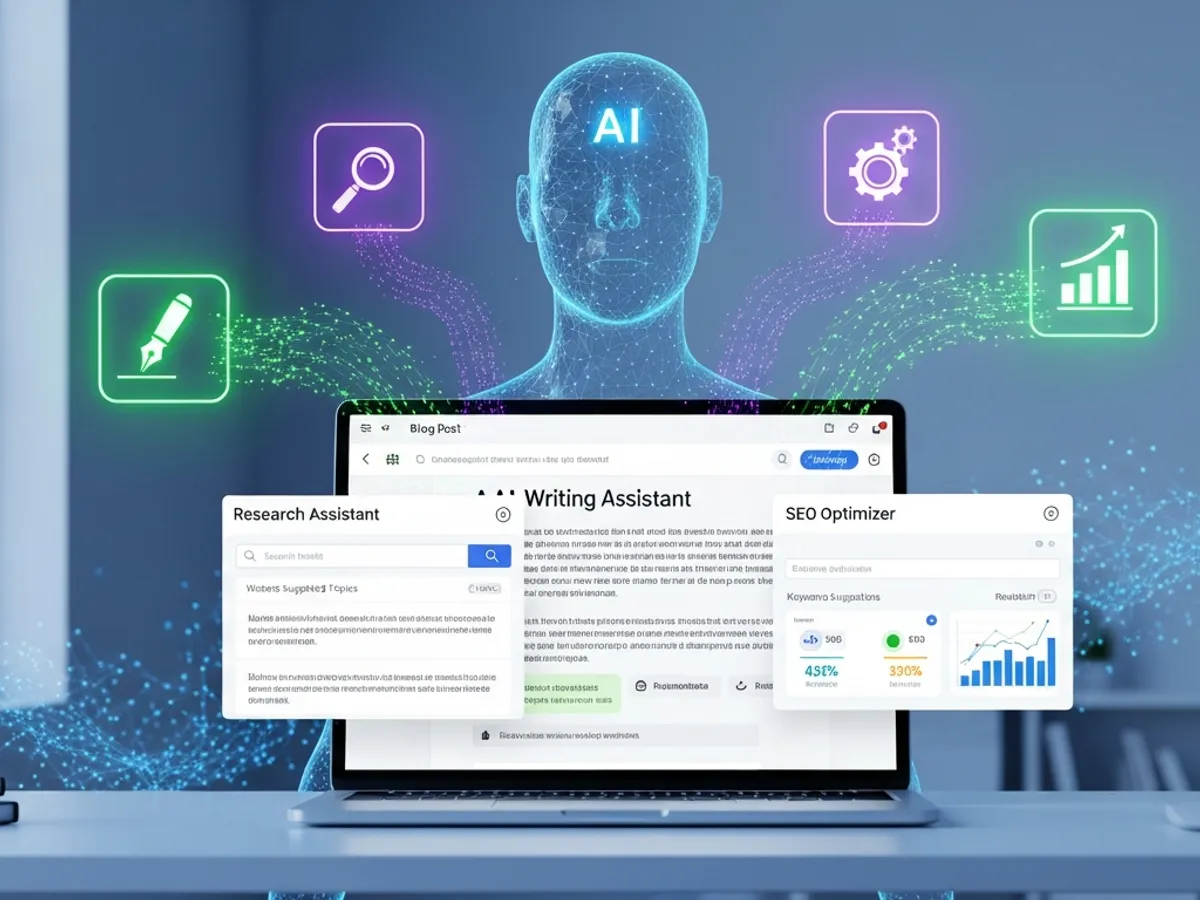
Beginner’s Guide to Smart Content: Unpacking AI SEO Blog Writing in 2026
What Exactly is AI SEO Blog Writing and Why Does it Matter Now?
The rules of engagement for online visibility have fundamentally shifted. In an era where digital noise is at an all-time high, simply creating content is no longer enough. We must create smart content.
Defining AI SEO Blog Writing in 2026
AI SEO blog writing is the strategic integration of artificial intelligence (AI) tools to automate, optimize, and scale the entire content creation and search engine optimization (SEO) process. It moves beyond simple text generation, encompassing AI-powered research, keyword analysis, content structuring, and even automated publishing. Think of it as having a highly efficient, data-driven content team working tirelessly to ensure every piece of content is primed for discovery.
This isn’t about replacing human creativity; it’s about augmenting it. An advanced AI SEO content generator doesn’t just write; it analyzes vast datasets, predicts search trends, and identifies semantic gaps that human writers might miss. This enables content that resonates deeply with user intent, whether they’re searching on traditional search engines or interacting with AI-powered conversational interfaces.
Why AI SEO Matters Now
In 2026, the digital landscape demands this evolution. The market for AI in SEO is projected to reach an astounding $12.6 billion by 2028, reflecting a fundamental change in how we approach content. AI can now automate up to 80% of routine SEO tasks, freeing up marketers to focus on strategy and creativity. This isn’t just about speed; it’s about precision. AI-powered tools can analyze over 200 ranking factors in real-time, offering insights that are impossible to derive manually.
AI-optimized content can improve organic traffic by up to 2x within six months.
This transformative power is why adopting an SEO AI tool is no longer optional. It’s a necessity for maintaining a competitive edge. The sheer volume of data and the complexity of modern search algorithms mean that manual SEO methods are increasingly being surpassed. Organizations that embrace AI for their content strategies can reduce production costs by up to 60%, channeling resources into other vital areas. This shift allows for the creation of higher-quality, more relevant content at an unprecedented scale, ensuring your message reaches the right audience at the right time. To understand just how far AI has come, consider whether AI SEO tools will surpass traditional methods for fast Google rankings in 2026. The answer, for many, is a resounding yes.
For businesses looking to truly boost website rankings, a blend of AI and human expertise is proving to be the most potent strategy. It’s no longer a question of AI content vs. manual SEO in 2026, but rather how they can symbiotically elevate your digital presence. Tools like GenWrite exemplify this by automating the end-to-end blog creation process, focusing on SEO optimization, keyword research, and relevant link integration to increase website traffic and organic reach.
How Has AI Revolutionized Content Creation and SEO by 2026?
By 2026, the landscape of content creation and SEO has undergone a profound transformation, moving far beyond the rudimentary text generation capabilities of earlier AI models. What we’re witnessing today is a revolution where AI is no longer just a tool for automating basic tasks, but a strategic partner capable of deep understanding and proactive optimization.
Early AI implementations often focused on simple article spinning or basic keyword insertion. However, the sophisticated AI SEO optimization tools available now leverage advanced machine learning to genuinely understand complex topics, dissect competitor strategies, and precisely align content with evolving search intent. This shift has redefined how we approach digital publishing.
The Era of Semantic Understanding
Modern AI models delve into the semantic nuances of a topic, grasping not just keywords, but the underlying concepts and relationships users are searching for. This allows tools like GenWrite to generate content that’s not only grammatically sound but also contextually rich and highly relevant. They analyze vast datasets to identify patterns in successful content, ensuring that what you publish resonates deeply with your target audience.
AI-driven content goes beyond surface-level keyword matching to capture true user intent.
This capability is critical in an era where Google’s AI-driven search algorithms prioritize high-quality, user-focused content. Our approach at GenWrite, for instance, focuses on using AI to build content that satisfies both traditional SEO metrics and the sophisticated understanding of Large Language Models (LLMs).
Automated Research and Competitor Analysis
One of the most significant advancements lies in AI’s ability to conduct exhaustive research and competitor analysis at scale. Instead of manual hours spent poring over SERP results, AI tools for SEO can analyze hundreds of ranking factors in real-time. They identify content gaps, pinpoint top-performing keywords used by competitors, and even suggest optimal content structures that are proven to rank.
This analytical prowess frees up marketers and content strategists from tedious data collection, allowing them to focus on higher-level strategy and creative refinement. The market reflects this value, with the AI in SEO market projected to reach $12.6 billion by 2028, underscoring its growing importance.
Impact on Publishing Speed and Organic Growth
The most tangible impact of this revolution is on publishing speed and organic growth. AI can automate up to 80% of SEO tasks, dramatically reducing the time it takes to go from idea to published, optimized content. This acceleration means businesses can produce a higher volume of quality content consistently, feeding the search engines with fresh, relevant information.
AI-powered SEO platforms like GenWrite integrate seamlessly into marketing workflows, offering capabilities from keyword research to automated internal linking and image addition. This comprehensive approach is why studies show AI-optimized content can improve organic traffic by up to 2x within six months, and reduce content production costs by up to 60%. Leveraging AI SEO writing software not only increases efficiency but also directly translates into faster Google rankings and a stronger competitive edge.
The ability to rapidly deploy highly optimized content is a game-changer for organic visibility.
Platforms that act as AI-powered SEO content tools now offer end-to-end automation, allowing for bulk blog generation and automated posting, which is essential for scaling content efforts effectively. To truly outperform competitors, understanding how these tools achieve faster Google rankings is paramount. You can explore more about how AI helps agencies scale content for smarter SEO in 2026, or dive deeper into how AI SEO tools achieve faster Google rankings by 2026. For a detailed comparison of quality, speed, and ROI from various AI SEO blog generators, further resources are available.
Which AI SEO Tools Are Essential for Your Blog in 2026?
By 2026, the landscape of blog creation and SEO has been irrevocably shaped by artificial intelligence. What was once a slow, manual process of keyword research, content drafting, and painstaking optimization has transformed into a streamlined, data-driven workflow. The question isn’t whether to use AI, but which AI SEO tools are truly indispensable for your blog’s success.
The Evolving Toolkit: Generalists vs. Specialists
The market for AI SEO blog writing software is booming, projected to reach $12.6 billion by 2028. This growth has led to a proliferation of tools, broadly categorized into generalist AI writing assistants and specialized SEO optimization platforms. Each serves a distinct purpose, yet the most effective strategies often involve a blend.
AI tools are not just for content generation; they are strategic partners for achieving top organic rankings.
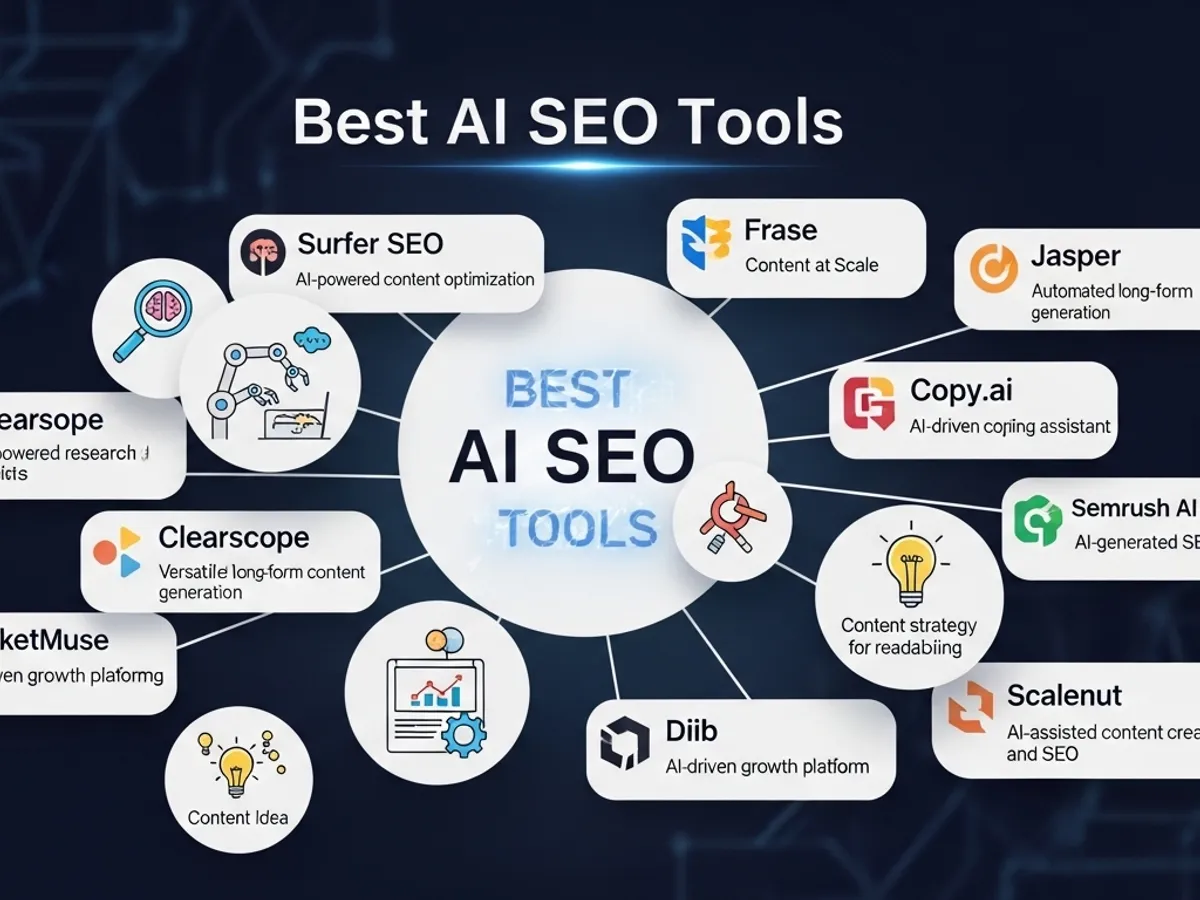
Generalist AI SEO content generator tools, like Jasper or Copy.ai, excel at brainstorming ideas, generating initial drafts, and helping overcome writer’s block. They are fantastic for rapid content production across various formats. However, their primary strength lies in content creation rather than deep SEO analysis.
On the other hand, AI SEO optimization tools such as Semrush, Ahrefs, or Surfer SEO provide robust features for keyword research, competitor analysis, backlink monitoring, and on-page optimization. These are crucial for understanding search intent and ensuring your content aligns with what search engines—and users—are looking for. They analyze hundreds of ranking factors in real-time, offering insights that would be impossible to gather manually.
The Rise of Integrated AI Blog Writing Solutions
While combining multiple tools can be effective, the future points towards integrated platforms that offer end-to-end automation. This is where solutions like GenWrite truly shine. Instead of juggling different subscriptions and workflows, a platform like GenWrite consolidates critical functions into one cohesive system.
GenWrite is an AI blog generator designed specifically for comprehensive SEO optimization. It doesn’t just write; it automates the entire blog creation process from initial keyword research to final publication. This includes:
- Advanced Keyword Research: Identifying high-potential keywords and semantic clusters.
- Competitor Analysis: Understanding what’s working for others in your niche.
- Content Generation: Crafting high-quality, SEO-friendly articles that align with search engine guidelines and LLMs.
- Relevant Linking & Images: Automatically adding internal links, external references, and optimizing images.
- On-Page SEO Automation: Ensuring every piece of content is technically sound and perfectly optimized.
- Automated Publishing: Integrating directly with platforms like WordPress for seamless publishing.
Integrated platforms significantly reduce content production costs, often by up to 60%, while boosting efficiency.
This kind of SEO blog writing AI capability streamlines workflows, allowing marketers and content creators to focus on strategy and refinement rather than repetitive tasks. It’s about achieving significant scale and consistent quality, a necessity for any agency looking to remain competitive. For a deeper dive into scaling content efficiently, explore “Scaling Content with AI: An Agency’s Guide to Smarter SEO in 2026” which details how such tools revolutionize agency operations.
Selecting Your Essential AI Toolkit
Choosing the right AI writing tool for your blog in 2026 boils down to your specific needs and budget. Consider these factors:
- Your Primary Goal: Are you focused purely on content volume (generalist AI writing), deep SEO insights (specialist SEO tools), or an integrated, automated workflow (platforms like GenWrite)?
- Integration Needs: How well does the tool integrate with your existing tech stack?
- Ease of Use: A powerful tool is only effective if your team can master it quickly.
- Content Quality & Control: Can the AI learn and maintain your brand voice, and how much human oversight is required?
- Pricing Model: Does it offer a scalable solution for your content demands?
For most blogs aiming for consistent growth and high rankings, a hybrid approach or an all-in-one AI blog writer like GenWrite provides the most strategic advantage. It combines the generative power of AI with the precise optimization capabilities needed to thrive in an AI-driven search landscape, ensuring your content not only gets created but gets seen.
How Can You Select the Best AI Writing Software for Your Specific Needs?
Navigating the expanding landscape of AI tools for SEO can feel overwhelming. With projections indicating the AI in SEO market will hit $12.6 billion by 2028, the sheer volume of options demands a strategic approach to selection. Rather than simply picking the most popular AI SEO writing software, I advise our users to begin by identifying their specific content bottlenecks and growth objectives.
Pinpointing Your Content Bottlenecks
Before diving into features, consider where your current content workflow falters. Are you struggling with consistent content ideation, or is the research phase too time-consuming? Perhaps your existing content isn’t ranking, indicating a gap in SEO optimization or search intent alignment. Understanding these pain points is the first critical step.
A clear problem definition guides your AI tool selection.
For example, if keyword research and competitor analysis consume too much time, you need an AI-powered SEO content tool that excels in these areas, not just basic text generation.
Beyond Basic Text Generation: Essential AI Capabilities
Many tools promise to write content, but true value comes from a more holistic approach to content creation and optimization. Effective AI SEO writing software should offer advanced functionalities that go far beyond simple draft generation:
- SERP Analysis & Competitor Insights: Look for tools that can analyze search engine results pages (SERPs) to understand top-ranking content, identify gaps, and provide data-driven outlines.
- Semantic Keyword Research: The ability to uncover not just primary keywords, but also semantic variants and long-tail opportunities, is paramount for modern SEO.
- Search Intent Alignment: A robust SEO AI tool should help you understand and target the specific intent behind user queries, ensuring your content truly resonates.
- Media & Internal Linking Integration: Automating the addition of relevant images, videos, and strategic internal links can significantly enhance content quality and user experience.
These capabilities differentiate a basic AI writer from a comprehensive AI blog generator that truly optimizes for organic reach.
Leveraging Free Trials and Integration Potential
Once you have a shortlist, always utilize free trials. This hands-on experience is invaluable for assessing ease of use, output quality, and how well the tool integrates with your existing tech stack. Consider whether the AI writing tool can seamlessly connect with your content management system or other marketing platforms.
For instance, an AI-powered solution like GenWrite automates the end-to-end blog creation process, from keyword research and competitor analysis to adding links and images, and even auto-publishing. It’s designed to provide high-quality, SEO-friendly content that aligns with search engine guidelines and LLMs, making it a powerful solution for traffic generation.
Test drive before you commit; compatibility is key.
Evaluating user reviews and case studies can also offer practical insights into a tool’s real-world performance and support. By focusing on your specific needs and thoroughly vetting capabilities, you can select the best AI-powered SEO content tools to drive significant growth.
What Best Practices Ensure High-Quality AI-Generated Blog Content?
The promise of AI for content creation is immense, yet the true value lies not just in generation speed, but in ensuring exceptional quality. In an era where AI can automate up to 80% of SEO tasks, establishing robust AI blog writing best practices is paramount to stand out. It’s about leveraging AI as a powerful co-pilot, not a replacement for strategic thinking.
Crafting the Intelligent Brief
The foundation of high-quality AI-generated content begins long before the AI even starts writing: it starts with the brief. A vague prompt yields generic output. Instead, provide detailed instructions encompassing target audience, desired tone, key messages, specific keywords, and competitor insights. Think of it as programming your AI for success.
A precise brief is your AI’s compass in the vast sea of information.
For instance, tools like GenWrite excel when fed rich, granular data. This allows the AI to not only generate content but also to research keywords, analyze competitor content, and structure posts with relevant links and images, all while adhering to your specific parameters. This level of input ensures the AI produces content that is highly relevant and strategically aligned.
The Indispensable Role of Human Oversight
Despite AI’s advancements, human oversight in AI content remains non-negotiable. While AI can draft, research, and optimize, the nuanced understanding of brand voice, complex ethical considerations, and real-world accuracy demands a human touch. Fact-checking is critical; AI can sometimes hallucinate or present outdated information as fact.
Editors must refine for clarity, flow, and most importantly, authenticity. This ensures the content resonates with readers and accurately reflects your brand’s expertise. It’s about transforming raw AI output into a polished, authoritative piece that truly serves your audience.
Optimizing for E-E-A-T in AI SEO
Google’s emphasis on E-E-A-T (Experience, Expertise, Authoritativeness, and Trustworthiness) is more crucial than ever for E-E-A-T AI SEO. While AI can gather facts, it cannot inherently convey experience or establish authority. That’s where human input shines.
- Experience: Integrate personal anecdotes, case studies, or unique insights that only a human expert can provide.
- Expertise: Ensure the content reflects deep knowledge, citing credible sources and demonstrating a comprehensive understanding of the topic.
- Authoritativeness: Link to your own authoritative content or reputable external sources, showcasing a well-researched and supported narrative.
- Trustworthiness: Maintain factual accuracy, transparency, and a consistent, reliable brand voice across all content.
By actively infusing these elements, you elevate the AI SEO content quality beyond mere keyword stuffing. This strategic blend of AI efficiency and human intelligence is what ultimately drives organic traffic and builds lasting audience trust.
How Do You Implement a Successful AI Blog Writing Workflow, Step-by-Step?
Implementing a successful AI blog writing workflow isn’t about replacing human effort; it’s about augmenting it to achieve unparalleled efficiency and scale. By 2026, the competitive landscape demands a structured approach to leverage AI’s capabilities for content that truly ranks. This isn’t just about generating text; it’s about a strategic AI content workflow that blends automation with human intelligence for superior results.
Phase 1: Strategic Blueprinting and Foundation
Before diving into content creation, a solid foundation is essential. Think of this as your strategic blueprint for getting started AI blog writing effectively.
1. Performance Audit & Goal Setting
Begin by auditing your existing content performance. What topics resonate? Where are your ranking gaps? Use data to define clear, measurable goals for your AI-powered content. This might include specific traffic increases, keyword rankings, or lead generation targets. Understanding your current state informs your future direction.
2. Defining Your AI Content Strategy
Next, articulate your AI content strategy. This involves identifying content types best suited for AI assistance (e.g., informational articles, product comparisons) and those requiring more human nuance. Establish guidelines for tone, style, and brand voice that your AI tools will adhere to. Remember, AI learns from input, so clear instructions are paramount.
Phase 2: AI-Powered Content Creation and Refinement
With a strategy in place, the focus shifts to leveraging AI for content generation and ensuring it meets high quality standards.
3. Advanced Keyword & Topic Research
Utilize AI tools to conduct in-depth keyword research, identify semantic clusters, and analyze competitor content. This goes beyond simple keyword volume, focusing on user intent and emerging trends. Tools like GenWrite, for instance, excel at this, automatically identifying high-potential keywords and analyzing SERP competition to inform your content plan. AI-driven research uncovers opportunities human analysis might miss.
4. Content Outlining & First Draft Generation
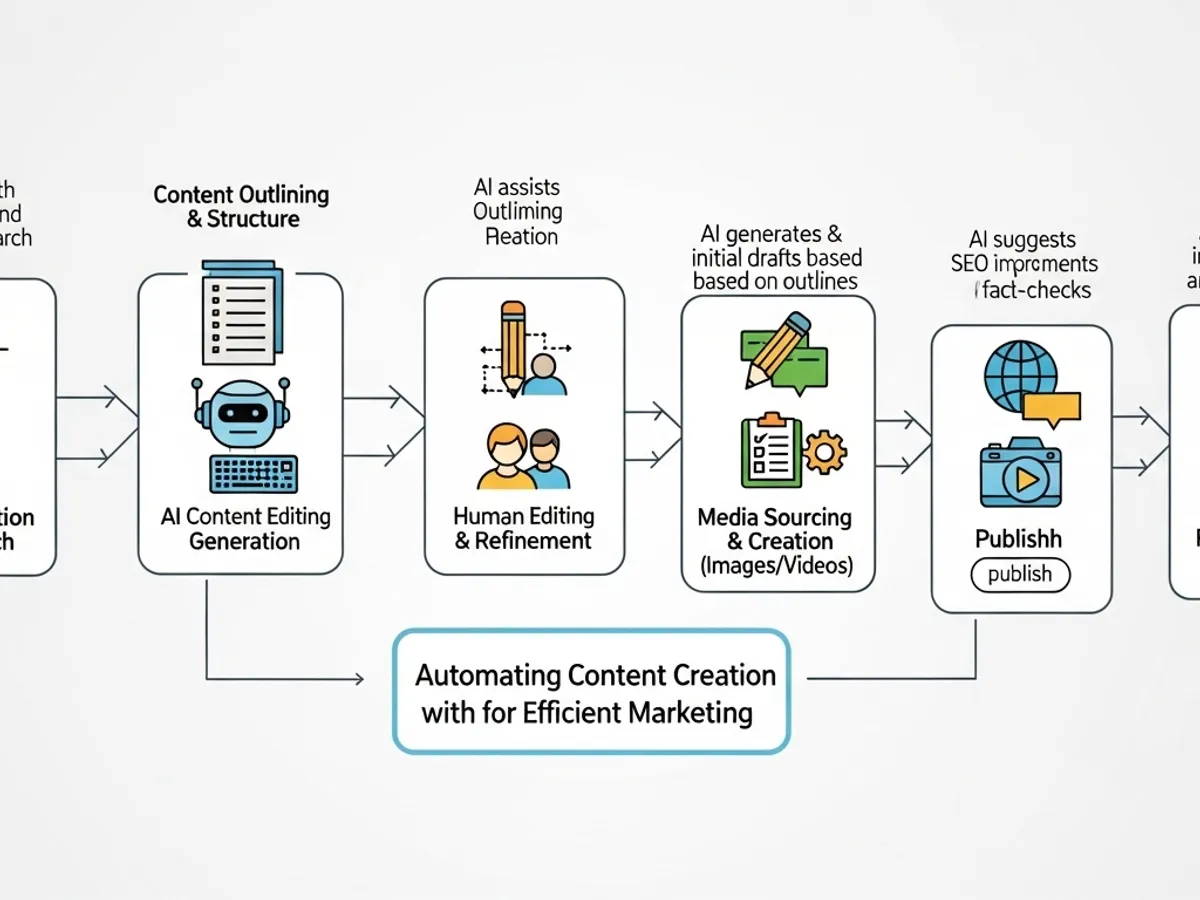
Feed your research findings and a detailed brief into your AI writing assistant. The AI should generate a comprehensive outline and a first draft, incorporating keywords, headings, and a logical flow. This is where the efficiency of the AI content workflow truly shines, dramatically reducing the time spent on initial content production.
5. Human Editing & Brand Voice Infusion
This is a critical step where human expertise becomes indispensable. Review the AI-generated draft for accuracy, factual correctness, and adherence to your brand’s unique voice. Refine phrasing, add expert insights, and ensure the content flows naturally. AI provides the clay; humans sculpt it into art.
Phase 3: Optimization, Publication, and Iteration
The final phase ensures your AI-assisted content performs optimally and continuously improves.
6. Comprehensive AI SEO Implementation
Beyond basic keyword placement, optimize your content for technical SEO factors. This includes internal linking strategies, meta descriptions, image alt text, and structured data. Platforms like GenWrite automate much of this AI SEO implementation, ensuring every piece is technically sound and ready to rank. Focus on readability and user experience alongside search engine signals.
7. Publication & Distribution
Publish your optimized content. Integrate your AI workflow with your CMS for seamless posting. Many advanced platforms offer features like WordPress auto-posting, simplifying the distribution step. Leverage social media and email newsletters to amplify reach and drive initial traffic.
8. Performance Monitoring & Iterative Refinement
The work doesn’t stop at publication. Continuously monitor your content’s performance using analytics tools. Track rankings, organic traffic, engagement metrics, and conversion rates. Use these insights to refine your AI content strategy, adjust your prompts, and iterate on your workflow. This feedback loop is vital for long-term success, ensuring your AI-powered content continually improves and adapts to algorithm changes.
What’s the Secret to Optimizing AI-Generated Content for Both Traditional and AI Search Engines?
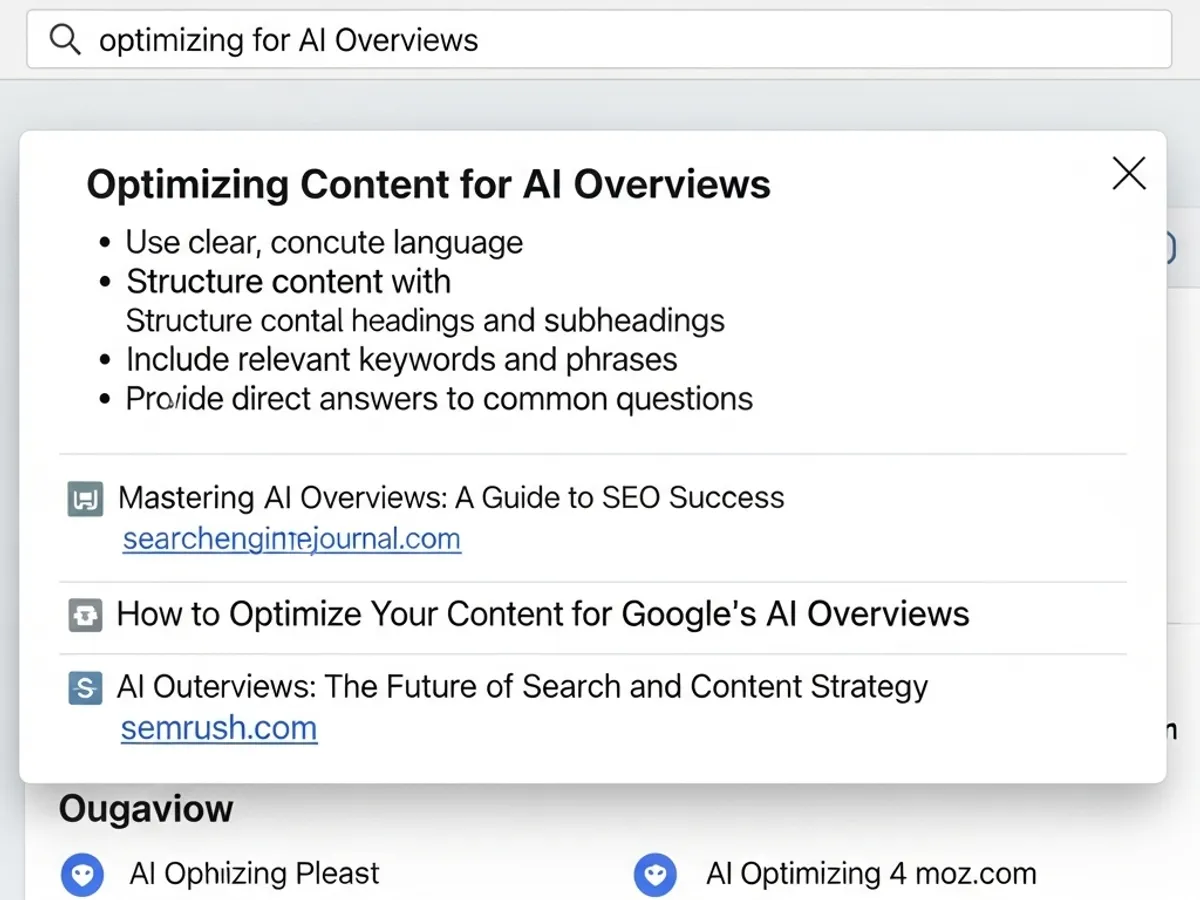
The digital landscape of 2026 presents a fascinating, yet complex, challenge for content creators: optimizing AI-generated content not just for traditional search engine results pages (SERPs) but also for the burgeoning world of AI answer engines. It’s no longer enough to rank highly on Google’s blue links; our content must also be readily digestible and authoritative enough for platforms like Google’s AI Overviews, ChatGPT, and Perplexity.
The Dual Mandate: Traditional SEO Meets LLM Visibility
Traditional search engine optimization (SEO) still hinges on foundational principles: understanding user intent, integrating semantic keywords, ensuring technical soundness, and building a strong backlink profile. For AI-generated content, this means ensuring the output isn’t just coherent, but also factually accurate and structured for crawlability. High-quality, user-focused content remains paramount, regardless of its origin.
However, the rise of large language model (LLM) visibility introduces a new layer of complexity. AI answer engines prioritize direct, concise answers, often synthesizing information from multiple sources. This demands content that is not only comprehensive but also precise and easily extractable. Our content needs to answer questions directly, with clear definitions and contextual relevance.
Optimizing for AI Answer Engines
To ensure your AI-generated content shines in these new environments, focus on a few critical areas:
- Clarity and Conciseness: AI models favor information that is straightforward and to the point. Avoid jargon where possible, or define it immediately.
- Structured Data: Leverage headings, bullet points, and tables to make information easily scannable and digestible for AI summarization.
- Semantic Depth: Go beyond surface-level keyword stuffing. Create content that thoroughly covers a topic, demonstrating expertise and authority. This deep semantic understanding is crucial for
LLM visibility. - Factual Accuracy: AI answer engines are designed to provide reliable information. Any factual errors in your AI-generated content can severely hinder its adoption by these systems.
Effectively optimizing for both traditional and AI search engines requires a nuanced approach, blending classic SEO with AI-specific content strategies.
Leveraging AI SEO Optimization Tools for Comprehensive Tracking
Navigating this dual optimization challenge necessitates sophisticated AI SEO optimization tools. These tools are evolving rapidly to provide insights beyond traditional SERP rankings. They now need to track how well your content performs in AI answer engines, analyzing factors like snippet inclusion, direct answer prominence, and the overall coherence of AI-generated summaries derived from your content.
Tools like GenWrite are at the forefront of this evolution. They automate the end-to-end blog creation process, focusing on AI search engine optimization by researching keywords, analyzing competitor content, and generating high-quality, SEO-friendly content that aligns with both traditional search engine guidelines and LLMs. GenWrite helps ensure your content is not only discoverable but also synthesizable by AI, boosting your LLM visibility.
The secret lies in a unified strategy that values both human-like readability and machine-friendly extractability.
This holistic approach ensures that your content, whether consumed by a human user on a traditional SERP or processed by an AI for a direct answer, consistently delivers value and authoritative insights. It’s about creating content that is robust enough for any search interface.
Can AI Truly Understand and Maintain Your Unique Brand Voice?
The question of whether artificial intelligence can truly grasp and replicate the unique nuances of a brand’s voice is a valid one that often arises. While AI doesn’t possess human intuition or emotional intelligence, its capacity for pattern recognition and learning makes it an invaluable asset in maintaining AI brand voice consistency across all content.
The Foundation: Your Digital Brand Playbook
The journey begins not with the AI, but with a meticulously crafted brand voice guide. This isn’t just a document; it’s your digital brand playbook, outlining everything from tone, style, and terminology to specific phrases to use or avoid. When fed this comprehensive guide, advanced AI models can learn the intricacies of your brand’s communication style.
Think of it as training an incredibly fast and accurate apprentice. The better the training data – your existing high-quality, on-brand content – the more proficient the AI becomes. This process allows for the systematic creation of consistent brand content AI that resonates with your audience while staying true to your identity.
Training AI for Voice and Personalization
Modern AI SEO writing software is no longer just about generating grammatically correct text. These sophisticated platforms are designed to ingest and interpret brand guidelines, allowing them to output content that aligns with specific stylistic requirements. They learn from examples, recognizing the cadence, vocabulary, and even the subtle humor or gravitas that defines your brand.
Beyond just voice, this training extends to AI content personalization. The AI can adapt not only to your brand but also to specific audience segments or platforms, adjusting its output while preserving the core brand identity. This means content can feel tailored to the reader, enhancing engagement without compromising consistency.
Human oversight remains the ultimate guardian of brand authenticity.
While AI can mimic and extrapolate, it still requires human editors to review, refine, and provide feedback. This iterative process allows the AI to continuously improve its understanding and application of your brand voice, turning it into a powerful extension of your content team. Tools like GenWrite, for instance, are specifically engineered to internalize these nuances, acting as a sophisticated AI blog generator that automates content creation while respecting established brand parameters. By providing clear guidelines and consistent feedback, you can leverage AI to not only understand but also effectively maintain your unique brand voice at scale, ensuring every piece of content reinforces your brand’s identity.
How Long Does It Take to See SEO Results from AI-Powered Blog Content?
One of the most common questions we encounter revolves around the AI SEO results timeline: how quickly can you expect to see tangible improvements in rankings and traffic once you integrate AI into your content strategy? While the core principles of SEO remain consistent—it’s a long-term investment, not a quick fix—AI significantly alters the velocity at which those results can manifest.
Traditionally, achieving noticeable organic growth through SEO can take anywhere from three to six months, sometimes even longer, depending on your niche, competition, and content consistency. This timeline accounts for Google’s indexing processes, algorithm adjustments, and the slow build of authority. However, AI doesn’t magically bypass these fundamental search engine behaviors; instead, it supercharges your ability to meet and exceed them.
How AI Accelerates Organic Growth
The real power of fast content production AI lies in its efficiency and precision. AI tools can automate up to 80% of typical SEO tasks, freeing up valuable human capital for strategic oversight and refinement. This automation spans everything from in-depth keyword research and competitor analysis to drafting content and optimizing it for search intent.
AI allows for a much shorter feedback loop in your content strategy.
By drastically reducing content production costs—by up to 60%—AI enables a higher volume of high-quality, optimized content to be published consistently. This consistent influx of semantically rich, user-focused content gives search engines more opportunities to discover and rank your pages. We’ve observed that AI-optimized content can improve organic traffic by up to 2x within six months, a direct testament to this accelerated process.
Maximizing Your AI Blog Writing ROI
To truly maximize your AI blog writing ROI, consistency and quality are paramount. Tools like GenWrite act as an AI blog generator, automating the end-to-end process from keyword research and competitor analysis to adding relevant links and images, and even auto-publishing. This comprehensive approach ensures that every piece of content is not just generated quickly, but also strategically optimized from the outset.
By leveraging AI to handle the heavy lifting of content creation and optimization, you can compress the typical SEO timeline. While significant results still require sustained effort, AI enables you to achieve those milestones faster, making your SEO investment more efficient and impactful over time.
Embracing the Future: Your Next Steps in AI SEO Blog Writing for 2026
Having navigated the intricacies of AI SEO blog writing throughout this guide, it’s clear that the digital landscape for 2026 demands a proactive, intelligent approach. The journey from traditional content creation to one augmented by artificial intelligence isn’t just an evolution; it’s a necessary transformation for sustained online visibility and growth. Embracing the future of AI SEO means unlocking unparalleled efficiency and strategic depth.
Charting Your Course with AI: Immediate Actionables
The most critical AI blog writing next steps involve a commitment to continuous adaptation. The digital realm, particularly with AI’s rapid advancements, rarely stands still. Your strategy should reflect this dynamic environment.
1. Prioritize Continuous Learning and Experimentation
Stay updated on the latest AI models and SEO algorithm changes. Google’s AI-driven search algorithms are increasingly sophisticated, rewarding high-quality, user-focused content. Experiment with new AI SEO content generator tools and features, understanding their strengths and limitations. What works today might be refined tomorrow.
The agility to learn and adapt is your most valuable asset in the AI era.
2. Implement a Hybrid Workflow
While AI can automate up to 80% of SEO tasks, human oversight remains indispensable. Leverage AI for data analysis, keyword research, and initial content drafts, then infuse your unique brand voice and expert insights. This hybrid model ensures both efficiency and authenticity, maintaining the high-quality standards that search engines and users demand.
3. Leverage an Advanced AI Content Generator
To truly implement a smart content strategy and stay ahead in the future of AI SEO, leveraging a robust AI SEO content generator is critical. Platforms like GenWrite, designed for end-to-end content automation, empower you to research, create, and optimize with unprecedented efficiency. Explore how GenWrite can transform your workflow and boost your traffic generation by visiting GenWrite’s official website.
The Path Forward: Smart Content and Sustained Growth
By adopting these AI blog writing next steps, you’re not just keeping pace; you’re setting the pace. The benefits—from reducing content production costs by up to 60% to potentially doubling organic traffic within six months—are too significant to ignore. The future of AI SEO is here, and it’s about making every piece of content smarter, more targeted, and more impactful.
It’s time to move from understanding to implementation. Start integrating these strategies today to build a resilient, high-ranking smart content strategy for your brand in 2026 and beyond.
Ready to elevate your content strategy with AI? Explore how GenWrite can automate your blog creation and boost your organic reach.
Frequently Asked Questions about AI SEO Blog Writing
What is AI SEO blog writing and why is it important?
AI SEO blog writing uses artificial intelligence tools to create, optimize, and analyze blog content for search engines. It’s crucial in 2026 for efficiency, staying competitive, and leveraging data-driven strategies in a crowded digital space.
How does AI change content creation and SEO?
AI revolutionizes content by automating research, drafting, and optimization. For SEO, it offers advanced keyword analysis, predictive ranking insights, and automated link-building, significantly accelerating organic growth.
What are the key AI SEO tools for bloggers in 2026?
Essential tools include AI writing assistants for drafting, specialized SEO platforms for analysis, and AI-powered keyword research tools. Integrated solutions like GenWrite offer a comprehensive approach to content automation and SEO.
How can I ensure AI-generated content maintains my brand voice?
Provide AI tools with detailed brand guidelines and train them on your existing content. While AI can learn and replicate nuances, human oversight remains vital to ensure authenticity and consistency.
When can I expect to see SEO results from AI-powered content?
SEO is a long-term strategy, but AI can accelerate results. With consistent AI-assisted content creation and optimization, noticeable improvements in rankings and traffic can typically be seen within 3-6 months.
How do I optimize AI content for both traditional and AI search engines?
Optimize by focusing on user intent, semantic keywords, natural language, and user experience. Ensure content is mobile-friendly and structured for clarity. AI SEO optimization tools are essential for tracking performance across evolving search platforms.