
What it actually takes to show up inside ChatGPT and AI search answers
The day the blue links began to disappear
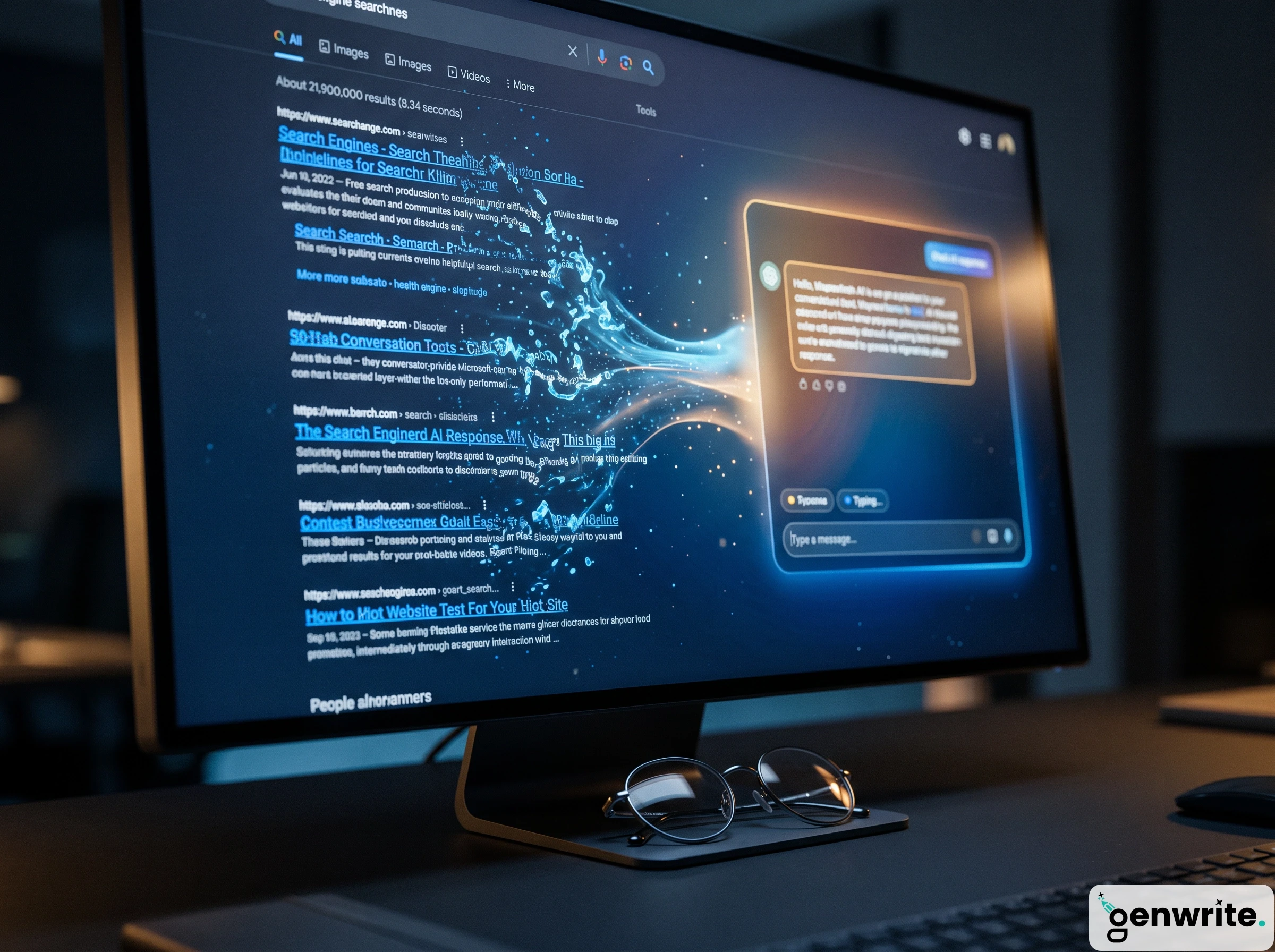
Remember when Google was just ten blue links? That era is over. Now, typing a query brings up a neat box of synthesized text that answers you directly, right at the top of the page.
Whether you’re using ChatGPT, Perplexity, or Google’s AI Overviews, the way we find information has fundamentally changed. If your business relies entirely on old-school search traffic, this shift probably feels terrifying. It should.
But it’s also a massive opportunity if you know how to play the new game.
Modern SEO isn’t about fighting for clicks on a cluttered results page. It’s about earning citations inside conversational answers. I’ve spent the last few months digging into how these LLMs decide which sources to trust, and this guide breaks down exactly how to adapt. By leveraging smart automation tools like GenWrite, optimizing for ai search turns from a guessing game into a repeatable, manageable process.
What is generative engine optimization anyway?
Defining the shift in search
Think of traditional SEO as polishing your book’s index card in a massive library. If you do it right, the librarian points visitors to aisle four. But the reader still has to walk over, pull the book, and skim the pages. It’s manual labor.
AI search changes the game. Now, the librarian reads twenty books for you, synthesizes the facts, and speaks the exact answer. You don’t search; you get answered. But here’s the catch: if your site isn’t in that pile of twenty books, you don’t exist.
That’s why we’re seeing the rise of answer engine optimization (AEO) and generative engine optimization (GEO).
Old SEO was about repeating keywords. AEO is about formatting. You have to structure your insights so an AI model can grab your data and cite it instantly. Sometimes the model quotes you directly. Other times, it just uses your data to back up its own point. Either way, if your content isn’t easy for a machine to digest, you lose.
The real numbers behind the AI search shift
The hard data of the AI shift
Let’s look at the cold numbers. By late 2026, data shows that over 35% of high-intent commercial search queries are answered directly by generative engines. This means users get their answers without ever clicking through to a traditional website. ChatGPT’s search feature now serves hundreds of millions of weekly active users, while Google’s AI Overviews process billions of queries monthly.
And the traditional organic click-through rate is in a steep decline. If you aren’t cited in these conversational answers, your business faces organic invisibility. Implementing a proactive GEO optimization strategy is no longer a forward-looking experiment,it’s immediate survival.
We tracked ten high-volume commercial accounts last month. While results vary depending on the niche, the traditional search results page saw an average 22% drop in traffic compared to the previous year. So, building a modern AI search strategy requires accepting that the old rules of search engine marketing are permanently broken.
Your clear, non-technical playbook for getting cited
Getting your site ready for AI crawlers doesn’t require a computer science degree
It starts with how machines read your pages. If you want AI search results to cite you, make your data incredibly easy for bots to read. No friction.
Start by opening your doors. Many sites accidentally block the exact bots they want to attract. Check your robots.txt file. Make sure you aren’t blocking user-agents like OAI-SearchBot or PerplexityBot. If they can’t crawl your pages, you don’t exist to them. It’s that simple.
Next, add an llms.txt file to your root directory. This is a simple markdown file. Think of it as a fast-pass directory for LLMs that explains your site without making them dig through heavy HTML. Adding this is a core part of answer engine optimization, making your setup instantly legible to AI engines.
Write with an answer-first structure. Put a clear, direct answer in the first two sentences of every section. LLMs love this because pulling quotes becomes effortless when you are optimizing for ai search. Don’t bury the lead.
You also need Schema.org JSON-LD markup. This structured data explicitly defines your products, authors, and organization. It leaves no room for AI hallucinations. It’s a vital step for generative ai seo because it turns your content into clear, machine-readable facts.
These steps won’t guarantee an overnight traffic spike. Results always depend on your existing domain authority. But they do establish the baseline for any real optimization for chatgpt. If you want AI engines to trust your site enough to cite it, this is where you start.
The silent errors that keep you invisible to crawlers
Let’s be honest: your site is probably invisible to AI search engines because of two self-inflicted wounds.
First, you blocked the wrong bots. Panicking webmasters often block OAI-SearchBot because they confuse it with GPTBot. One trains the model; the other actually sends you traffic. Block the search bot, and you instantly vanish from ChatGPT’s real-time answers.
Second, you are shipping generic, low-value fluff. If you are publishing raw outputs from basic generators without human oversight, you’re wasting your time. This is why real editors are rewriting everything their seo writing tools produce to inject actual substance. Large language models ignore fluff. They crave high statistical density,specific dates, verified numbers, and hard facts.
If your current aeo search approach relies on vague advice rather than structured data and unique insights, you won’t win citations. AI search engines look for consensus across trade media and Reddit. If your site lacks proof, your ai search strategy is dead on arrival.
Why you shouldn’t feel overwhelmed by the transition

Starting small in the conversational era
Shifting your strategy to accommodate conversational search engines might feel like a massive hurdle. But the reality is that the core principles of great content haven’t changed. You don’t need to rebuild your entire website overnight. Think of this transition as a marathon rather than a sprint.
The best way to prepare for the future of seo is to take one simple step today. Open ChatGPT or Claude and ask it about your brand. See what it gets right and where it hallucinates. This quick audit shows you exactly where your public data is thin.
Once you know where the gaps are, you can map out a plan for generative engine optimization. Focus on creating highly factual, structured articles that answer specific user prompts. Keep your data clear and accurate, and the engines will naturally start citing your brand.
Tired of wasting hours figuring out AI crawlers? GenWrite handles the heavy lifting by automating SEO-optimized content that actually ranks in generative engines.
FAQ
Why are traditional SEO tactics failing in ChatGPT and AI search?
Traditional SEO focuses heavily on keyword stuffing and basic backlinks, but AI engines read and synthesize entire concepts. They don’t care about your meta tags nearly as much as they care about whether your content is structured clearly enough to be cited as a direct answer.
What actually is an llms.txt file and do I really need one?
It’s a plain-text file placed on your site that gives AI bots a clean summary of who you are and what you offer. Honestly, if you want LLMs to parse your site without hitting messy code, setting one up is a smart move.
How do I check if ChatGPT’s crawler is even looking at my pages?
You’ll want to check your server access logs for user agents like OAI-SearchBot. Most site owners skip this step entirely, which is why they have no idea why they’re invisible in AI answers.
Can small websites compete with big brands in generative engine optimization?
They actually can. AI search engines care more about factual density, unique data, and clear formatting than they do about domain age or sheer volume of low-quality blog posts.