
What actually happens to your crawl budget when you use an AI seo content generator?
The unexpected link between content velocity and crawler fatigue

Imagine getting your hands on a new AI writer. You click a button and suddenly have 150 articles ready to publish. It feels like a superpower, so you upload them all at once, expecting a massive traffic spike. Instead, nothing happens. The silence is deafening. Your new pages aren’t even getting indexed.
You just hit a technical wall: crawl budget.
Think of Googlebot as a busy mail carrier with thousands of houses to visit every single day. If you suddenly build a massive apartment complex overnight, they can’t inspect every single room on day one. They have to pace themselves. That’s essentially how crawl budget seo works.
When you dump hundreds of pages onto your site at once, Googlebot gets overwhelmed and backs off to keep your server from crashing. It’s a safety feature. If your server response time slows down by even a fraction of a second, the bot simply cuts its visit short and leaves.
This doesn’t mean you should abandon automation entirely. You just have to be smart about your deployment. Using a dedicated AI SEO content generator lets you schedule your publishing schedule naturally. Instead of dumping a massive library of content online at 3 AM, you can drip-feed those articles over weeks. This steady, predictable pace keeps search bots returning to your site without triggering any alarms.
Naturally, your hosting setup plays a massive role here. A cheap shared hosting plan will trigger crawler fatigue much faster than a robust cloud setup. Ultimately, content velocity is a powerful tool, but uncontrolled speed will break your indexing before it ever builds your traffic.
Crawl capacity vs. crawl demand: the two forces dictating your site’s visibility
Google doesn’t look at your site as a single, endless bucket of attention. Instead, it manages your crawl budget seo using two distinct forces: crawl capacity and crawl demand. If you’re scaling up production with an AI blog generator, understanding how these two forces interact is the difference between getting indexed or getting ignored.
The technical limit: crawl capacity
Think of crawl capacity as your server’s physical tolerance. It is the maximum number of simultaneous connections Googlebot can make without slowing down your site for real human users. Google monitors your server’s response times closely. If your server starts lagging,say, taking more than 200 milliseconds to load a page,Googlebot backs off. It reduces its crawl rate to protect your user experience.
The desire limit: crawl demand
Crawl demand is a completely different beast. This is how much Google actually wants to crawl your pages, regardless of your server’s speed. Demand is driven by two main triggers: popularity and freshness. Popular pages that get shared and linked to require frequent crawls. Similarly, Google wants to keep its index fresh, so it recrawls pages that change often.
But here is the catch. If you publish hundreds of low-value, repetitive pages, Google’s algorithms quickly realize the content lacks unique value. The demand drops to zero. Your server might be lightning-fast, but Googlebot simply chooses not to visit.
How they clash
This doesn’t always hold true for every site, as highly authoritative domains can sometimes get away with weaker content temporarily. But for most sites, massive automated publishing without quality control triggers a sharp drop in demand. You might have the server capacity to handle millions of hits, but without genuine demand, your newly generated pages will sit in the dark, unvisited and unindexed.
Why does mass-producing AI articles trigger the dreaded ‘Discovered – currently not indexed’ queue?

Ever opened Google Search Console only to see a massive list of pages stuck in the “Discovered – currently not indexed” queue? Why does this happen the second you publish a batch of automated posts? It’s a frustrating bottleneck.
When Googlebot finds a new link, it notes it down. But does it crawl it? Not always. Crawling costs Google real money in server power, so why waste resources on generic text? If you use basic SEO content writing tools that churn out repetitive fluff, Google’s algorithms spot the pattern instantly. They know your new pages look exactly like a million other articles already clogging the web.
How does Google know your page is low quality before even crawling it? It looks at your site’s history. If your last fifty automated posts offered zero unique value, why would Googlebot expect the fifty-first to be any different? It’s a predictive filter. It saves crawl resources for sites that actually earn them.
So what does the crawler do? It walks away. Your URL sits in the “discovered” queue, waiting for a crawl that might never come. That’s a strained crawl budget in action.
How do you break out of this indexing purgatory? The secret isn’t to abandon automation. It’s to use smarter systems. Basic tools create flat text that lacks semantic depth. But what happens when you use advanced seo friendly article writing tools that analyze competitor gaps, insert real-time data, and add unique insights? Googlebot sees immediate value.
Why risk your site’s reputation on low-effort spam? When your content actually answers search intent with fresh data, Googlebot happily spends its limited budget. Why not shift from raw volume to smart, automated value?
The messy overlap: do AI training bots consume your Googlebot crawl budget?
How AI training bots differ from search crawlers
We need to separate search crawlers from training scrapers. Googlebot visits your site to index your pages for search results. On the other hand, AI training bots like GPTBot, ClaudeBot, and CCBot only want your data to train their models. They don’t send you direct search traffic.
But here is where it gets messy. Google itself complicates this. According to Google’s own documentation, their AI crawler Google-Extended shares the same crawl capacity as Googlebot. If Google’s AI scraper is busy sucking up your content to train Gemini, it can directly limit how fast Googlebot indexes your new pages. This shared bottleneck is a major factor in managing your overall crawl budget seo strategies.
The hidden impact on your server speed
Non-Google bots can be even more aggressive than search engines. They often hit your host in intense burst patterns, scraping thousands of pages in a few seconds. This heavy traffic spike can easily slow down your server’s response times.
In fact, these bursts often end up slowing down your server’s response times by 200 to 400 milliseconds. When your server slows down, Googlebot backs off to avoid crashing your site. So, those greedy AI scrapers are indirectly choking your search visibility by making your site look slow and unresponsive.
You don’t have to let these bots run wild. Many creators block aggressive training bots in their robots.txt file while keeping the doors open for search crawlers. When using a modern seo writer ai tool like GenWrite, you want to make sure your hosting can handle the traffic. This preparation is especially important if you are optimizing for answer engine optimization to capture traffic from AI search engines. Sometimes, blocking GPTBot is the smartest move to save your server’s breath for Google. The evidence here is mixed, but keeping your server fast is always a winning play.
Your top technical questions about AI content generation and crawling answered

Let’s clear up the confusion. I get asked these technical questions all the time by publishers who want to scale up their sites safely. Here’s what you actually need to know about automation and crawling.
Does Google block websites just for using an AI writer?
No. Google doesn’t block or penalize your site just for using an ai seo writer. The truth is that Google AI content penalty guidelines show that the search engine cares about quality, not who wrote the text. If your content helps the reader, it crawls and indexes normally.
How does publishing frequency affect how often Googlebot visits?
When you publish more often, Googlebot notices and visits more frequently to find new pages. But there’s a catch. If those new pages lack depth or contain duplicate information, Googlebot eventually slows down its visits to save its own resources.
Can an ai seo generator hurt my crawl budget?
It can if you publish thousands of poor pages overnight. This massive spike overwhelms your server and triggers a crawl slowdown. Using a smart tool like GenWrite helps you publish highly optimized posts at a steady, safe pace that doesn’t scare off search bots.
How do I know if my site is suffering from crawl issues?
Check your Google Search Console. Look at the “Crawl stats” report under settings. If you see a sudden spike in server errors or a drop in crawled pages, your host might be struggling to keep up with the bots.
Do AI content tools trigger automated crawl blocks?
No. Crawl blocks happen due to bad server setups, slow page load times, or robots.txt mistakes. Search engines don’t block crawls based on whether you used a machine to draft the text. They only care if the page actually loads quickly.
What is the best seo ai writer practice to avoid indexing issues?
The best practice is to always review your drafts. Make sure your best seo ai writer matches your brand voice, includes actual facts, and answers the user’s search intent directly. This keeps your quality high enough to earn indexing.
Does duplicate AI content waste my crawl budget?
Yes. If you generate five articles that all say the exact same thing, Googlebot wastes precious time crawling them. It might get frustrated by the lack of unique value and stop crawling your new pages altogether.
Can Google detect AI writing and stop crawling my site?
Google focuses on the value of the page, not detector scores. If your page helps the reader, Googlebot will crawl and rank it. It doesn’t matter if you used automation.
Should I limit how many pages I publish each day?
There’s no hard limit, but your server capacity matters. If you host on a cheap shared plan, publishing 100 articles a day might crash your site when Googlebot comes to visit. Start slow and scale up.
Does adding links inside AI content help with crawl budget?
Yes, absolutely. Internal links help Googlebot discover new pages on your site much faster. If your automation tool automatically links your posts together, it makes the crawler’s job much easier.
Can slow image loading on AI posts slow down crawling?
Yes. If your pages are bloated with massive uncompressed images, Googlebot will spend too much time waiting for your pages to load. This eats up your crawl budget quickly.
The real tax of low-quality automation: duplicate content and shallow pages
Let’s be real: most cheap generators spit out absolute garbage. They churn out articles that look okay at a glance but have zero substance underneath. If you rely on subpar seo content writing tools, you get shallow pages that just parrot existing search results. Googlebot isn’t stupid. It spots this lack of depth instantly.
It gets worse. Many tools straight-up invent facts, fake quotes, or hallucinate statistics. If you aren’t using the best seo ai writer to keep your data accurate, search engines will quickly flag your domain as untrustworthy. Once Google decides your site is a source of flat, inaccurate noise, it stops wasting resources on you. Your crawl demand plummets. Your indexing rates tank. Just like that.
This drag doesn’t stop at your new AI pages, either. It actively drags down your high-performing, human-written articles too. Think about it. Why would a bot waste its limited crawl budget scanning a site clogged with repetitive fluff? It won’t.
Sure, basic seo friendly article writing tools let you publish faster. But speed is worthless when your organic visibility dies. If you feed search engines junk, they will eventually ignore your entire domain. You are trading your site’s long-term health for a temporary spike in content volume. That’s a losing bet. Every single time.
How to fix your publishing workflow to keep Googlebot happy
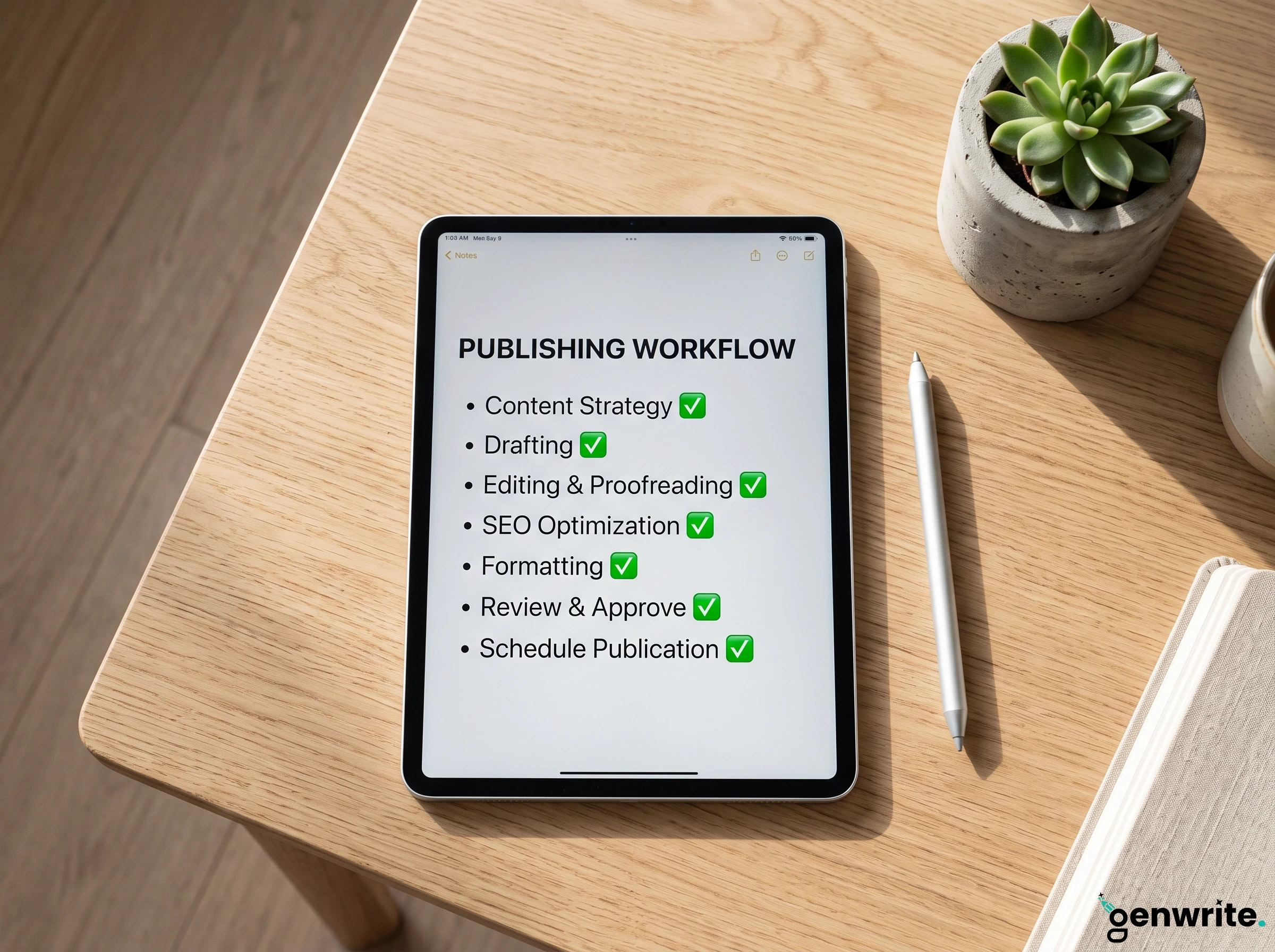
Starting a high-speed publishing engine requires a shift in how you manage your site. If you keep doing everything by hand, your growth’s going to stall. Shifting your team from manual drafting to an editorial editing desk protects your site health. And you can see how this shift keeps your team’s efficiency high in our guide on agency content automation. It’s all about working smarter, not harder.
Steps to optimize your site for Googlebot
To keep search crawlers happy while using an ai seo content generator, you need to clean up your technical setup. Here’s how to keep things running smoothly.
- First, speed up your server response times. Googlebot leaves quickly if your server’s taking too long to load your pages, which limits how many pages it can crawl.
- Second, delete or merge thin content pages that don’t help your readers. If a page has no traffic and no useful info, it’s just wasting your crawl budget.
- Third, fix soft 404 errors immediately. Sometimes a page is missing, but your server tells bots it’s still active, causing bots to waste time on dead ends.
- Fourth, keep your XML sitemap clean. Only list your most important, high-quality pages, and use your robots.txt file to block bots from messy search filter pages.
Using a smart seo writer ai like GenWrite helps you create drafts automatically. But you still need to act as the human editor to ensure every page shines before Google visits. Sometimes, even the best setups hit temporary indexing delays, but these steps keep your technical foundation strong and healthy.
Tired of wasting crawl budget on bloated pages? GenWrite handles technical SEO and smart publishing schedules so your best content actually gets indexed.
FAQ
Does publishing AI articles too fast hurt your site’s indexing?
When you flood your site with hundreds of pages overnight, Googlebot gets overwhelmed. It’ll frequently throttle your crawl budget, leaving your best content sitting in the dreaded ‘Discovered – currently not indexed’ queue.
How do search engines calculate your crawl budget?
Google looks at two main things: crawl capacity, which is how much your server can handle without crashing, and crawl demand, which is how popular or frequently updated your pages are.
Are AI training crawlers eating up my Googlebot resources?
They definitely can. If your server is constantly wasting CPU cycles serving scrapers and training bots, it won’t have enough juice left for Googlebot to crawl your actual money pages.
What’s the easiest way to fix crawl budget issues on bloated blogs?
You’ll want to prune thin or duplicate pages, block unnecessary scrapers in your robots.txt file, and slow down your publishing velocity so Google can actually keep up.