
What happens to your agency margins when you stop writing every blog manually?
The silent margin killer inside your agency retainer
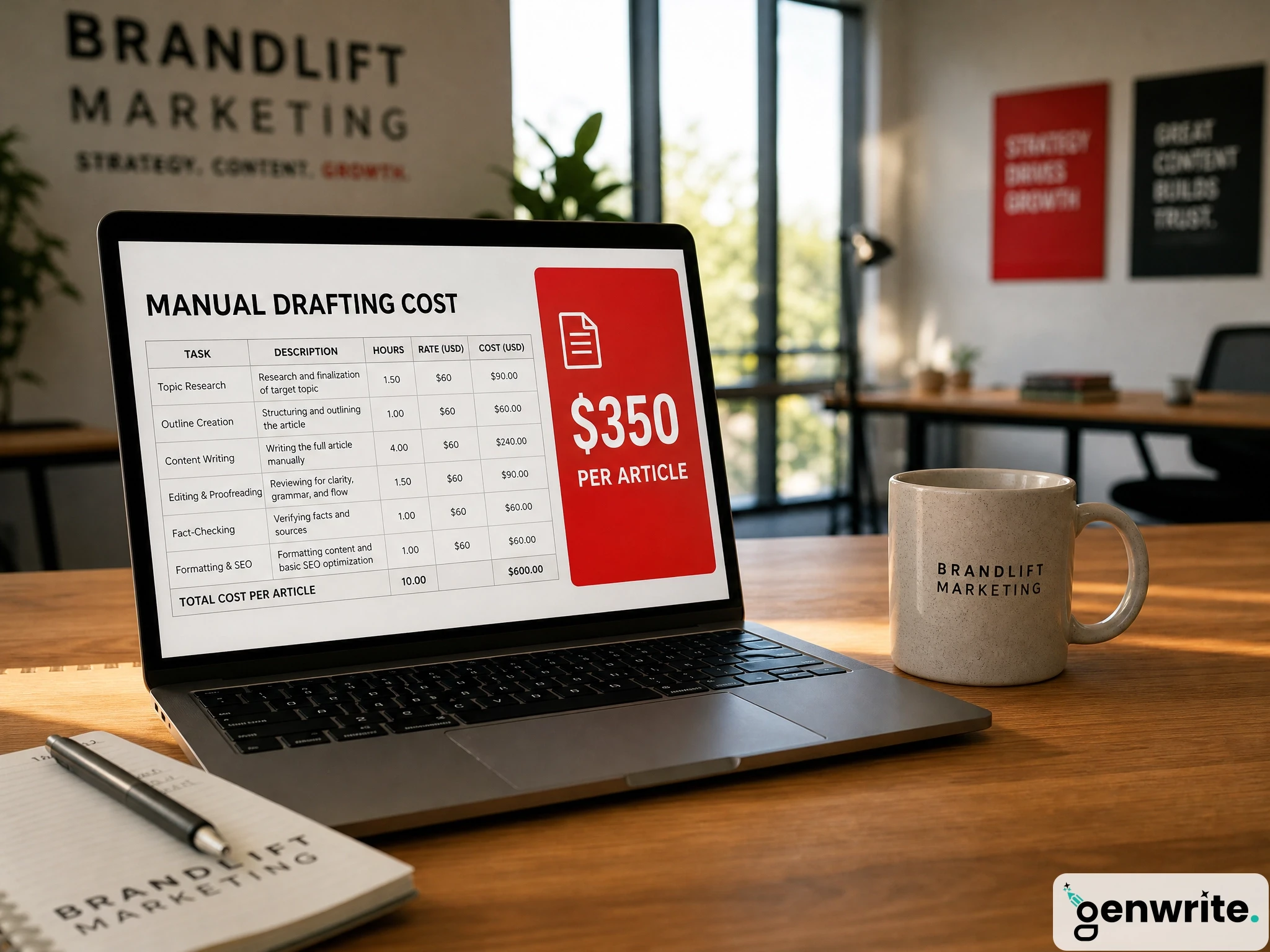
I remember staring at our agency’s Q3 spreadsheet, trying to figure out why a $5,000 monthly retainer felt so tight. It made no sense. Our software stack was lean, and office rent was fixed. The real culprit? We were trapped in an endless, exhausting cycle of paying freelance writers to draft basic, 800-word informational articles from scratch.
We spent weeks polishing introductory guides. The irony is that search engines now instantly summarize those exact guides anyway. Because of AI-driven search, old-school SEO plays are losing ground to modern answer engine optimization strategies. Think about it. If your team spends twenty hours researching and writing a piece that Google condenses into a single zero-click answer, your agency margins are bleeding out.
The math of manually scaling agency content just doesn’t work anymore. Once you factor in the endless back-and-forth edits, missed deadlines, and rising freelance rates, you realize you aren’t actually selling strategy. You’re just running an expensive, low-margin translation service.
Why paying $400 for a single blog post ruins your math
The raw math of manual content production
Let’s look at the numbers. In 2026, hiring a competent freelance writer costs between $300 and $750 per article. When you package this into an $8,000 to $12,000 monthly client retainer, you are likely delivering just eight posts. That is nearly $1,000 per asset once you add internal management overhead.
Your account managers spend an extra two to three hours weekly chasing drafts, managing revisions, and correcting tone. This invisible labor eats away at your marketing agency margins until your actual profitability drops to a fraction of the paper estimate. If you’re still tracking these campaigns using outdated keyword dashboards, the situation is even worse. Agencies must move past old-school reporting because legacy SEO platforms are failing modern marketing agencies in an era dominated by AI-driven search models.
By shifting to programmatic workflows, your cost per post drops from $400 to under $10. The ai writing ROI isn’t just about saving writer fees; it’s about reclaiming hundreds of billable hours spent on manual coordination. If your agency’s math relies on human-only drafting, you’re running on borrowed time.
Shifting your team from writers to editors
Transitioning your team from writers to editors
Transitioning your agency to automated blog writing doesn’t mean firing your creative team. It actually means changing their day-to-day focus. Instead of staring at a blank Google Doc for four hours, your writers become skilled editors.
But there’s a massive trap here. If you just set a cheap seo writer ai on autopilot, you’ll see bounce rates spike as readers spot the repetitive, robotic patterns. We’ve seen agencies lose client trust overnight because they skipped the human review step. Moving to automated drafting requires a structured human-in-the-loop review process to protect quality.
First, have your team verify all facts and statistics to ensure the software didn’t hallucinate numbers. Next, they should inject specific client anecdotes, case studies, and brand voice to make the piece feel authentic. Finally, they can polish the formatting by breaking up long paragraphs and inserting custom internal links.
By using blogging automation software to handle the first 80% of the draft, your team spends 15 minutes polishing instead of 3 hours writing. That’s how you scale agency content automation to dozens of pages without sacrificing the quality clients pay for.
What actually happens to your balance sheet when manual writing ends
Let’s look at the numbers. A typical manual blog post costs an agency roughly $150 to $300 in writer fees and project management overhead. If you charge your client $400, your gross margin hovers around a modest 25% to 50%. That math makes scaling agency content a painful, cash-strapped endeavor.
But when you switch to an automated workflow paired with human editors, the unit economics shift dramatically. The software cost per draft drops to single digits. Even with an editor spending 30 minutes polishing the output, your total cost per piece plummets to under $30. Suddenly, your marketing agency margins jump to 80% or higher.
This shift directly impacts your automated blogging ROI. Instead of burning cash on raw drafting, you reinvest those savings into quality control and strategic depth. The trick is avoiding the trap of basic seo content writing tools that generate thin, repetitive text. By using an advanced pipeline that focuses on semantic structure, you get the volume your clients want without risking their search rankings. It turns content from a variable cost center into a highly profitable, scalable service.
Building a pipeline that ships dozens of pages, not just four
Scaling past the four-blog bottleneck
Most agency retainers cap output at four articles a month. Why? Because manual drafting, internal linking, and meta-tagging eat up your budget, leaving you with razor-thin margins. Swapping manual workflows for programmatic SEO tools changes this dynamic completely. By connecting structured database inputs directly to automated writing pipelines, you can easily push dozens of targeted search landing pages every single week.
But writing the text is only half the battle. If your team still spends hours manually updating titles, fixing broken links, and mapping internal anchors, the system breaks. You need an automated seo optimization workflow. This setup delivers pre-optimized pages directly to your CMS, which eliminates the post-publish bottleneck entirely.
This shift turns your content team into system operators. They stop babysitting freelance writers. Instead, they focus on template design, database verification, and pipeline oversight. You get a predictable engine for scaling agency content without hiring extra account managers or blowing your overhead. The math always beats manual writing, regardless of your niche.
How to test the automation waters without breaking your workflow

Do not blow up your entire content department overnight. That just leads to missed deadlines and pissed-off clients who notice the sudden shift in tone. Start small. Pick one low-risk client or use your own agency’s blog as a test dummy. Use an AI blog generator to handle the initial research and first draft. Then, have your writers edit. They should focus on verifying facts, sharpening the hook, and injecting actual brand personality rather than staring at a blank page. Your agency content automation metrics will look completely different once draft times drop from hours to minutes. This keeps your quality high while proving the actual automated blogging ROI to the people holding the purse strings. Sure, highly technical niches still need heavy human input. But offloading the repeatable 80% of your grunt work to software frees up your team for high-value tasks like strategy and client management. Stop wasting expensive human hours on basic drafts. Start scaling.
Tired of wasting billable hours on manual drafting? GenWrite handles automated SEO research and publishing so your team can focus on strategy.
FAQ
How much does manual blog writing actually cost an agency?
When you factor in briefing, writing, editing, and client revisions, most manual blog posts cost between $250 and $400 each. That labor drain destroys your gross margins on standard monthly retainers.
Will clients notice if we switch to automated blogging software?
They won’t notice lower quality, because you’re replacing raw generation with human editorial oversight. Your team spends their time polishing insights instead of staring at blank pages.
Can small agencies realistically compete using programmatic SEO tools?
That’s honestly where smaller teams win. Automated pipelines let a three-person shop publish the same volume of targeted content that usually requires a ten-person content department.
What happens to our current freelance writers during the transition?
You don’t fire them; you upgrade their job descriptions. They transition from spending hours drafting mediocre first versions to acting as high-level editors who inject brand voice.