
Why most seo content writing tools fail at building genuine topical authority
The shallow surface trap of modern search generation

Most writers treat modern SEO writing tools like magic phrase generators. You type in a keyword, hit a button, and expect traffic to flood your site. It doesn’t work that way. Sure, the resulting article might look okay at first glance, but readers will bounce within seconds because the text lacks real substance. If you’ve ever checked your analytics after putting a cheap seo writer ai on autopilot, you’ve seen this disaster firsthand. Search engines track those rapid exits, and they quickly stop ranking pages that swap genuine insights for generic filler.
Marketing teams often buy into generic AI platforms hoping for a shortcut to the top of search results. They expect automated software to build their industry authority overnight, but true topical authority isn’t about stringing related keywords together in a neat little list. It requires a deep, connected web of ideas that actually answers what a human reader is searching for. When you rely on basic tools, you just get repetitive paragraphs that say absolutely nothing new.
We have to look past word counts and figure out why standard generation software fails at this level. We’ll break down how these platforms handle research, why superficial keyword stuffing ruins your search rankings, and what you should do instead. The goal is simple: we want to scale your publishing schedule without destroying your user experience. While results vary by niche, the underlying search mechanics remain identical for almost every site on the web. When you focus on semantic depth instead of raw volume, you avoid the traps that sink automated sites and build content that actually ranks.
Mapping the landscape of automated generation platforms
How automated generation platforms actually stack up
The market is crowded with tools claiming to write flawless, search-optimized blogs. But look under the hood. These platforms are built on completely different architectures. They don’t use the same data inputs, and because their underlying architectures vary so wildly, they certainly don’t deliver the same performance on live search engine results pages. We can group these systems into three tiers based on how they process search data.
The three tiers of automated writing software
First are basic keyword wrappers. These are simple interfaces built directly on top of public AI models like GPT-4. You type in a keyword, and the tool spits out generic text. They’re cheap. They’re fast. That makes them popular for hobbyists who just need raw text volume. However, because they don’t analyze live search results or competitor data, the resulting content feels hollow and outdated.
Next up: traditional SEO suites with bolted-on AI features. These are the legacy dashboards we’ve used for a decade to track keywords and audit site health. Lately, they’ve added simple AI generation buttons to their editors. While their historical database is deep, their actual writing workflows are clunky. Many busy teams now realize that these legacy SEO platforms are failing modern marketing agencies because they treat AI generation as a secondary add-on rather than a core, automated engine.
Finally, we have context-aware SEO AI writers. These next-generation platforms are built from the ground up for modern search dynamics. Instead of guessing what to write, a context-aware seo friendly article writing tools pipeline actively scans live search engine results. It analyzes what your top competitors are doing right now, finds their content gaps, and builds an optimized outline before writing a single sentence. This approach serves growing brands and agencies that need their content to earn real topical authority.
In the end, your choice depends on whether you want raw volume or actual search rankings. If you need content that satisfies search engines and human readers alike, a dedicated seo ai writer is the only way to build real topical authority over time.
Feature matrix: where generic software falls apart
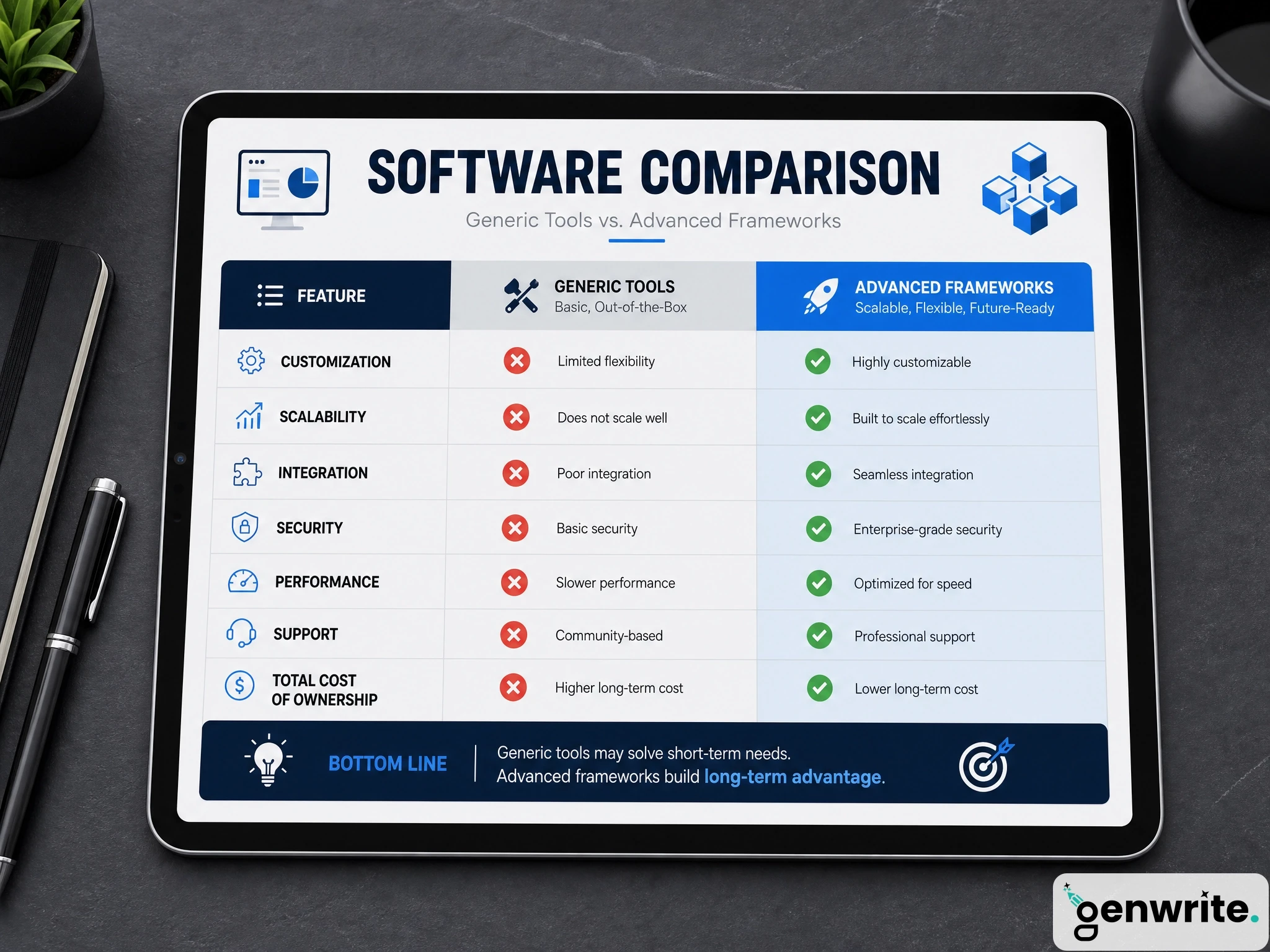
Most tools promise high rankings but treat your content like isolated islands. You feed them a single keyword, they spit out a generic draft, and that’s it. It’s a broken approach. Search engines don’t judge pages in a vacuum anymore; they look at your entire site to see if you actually know your stuff. Without deep, logical connections between your posts, your visibility will tank.
Relying on a basic seo content creator usually leaves you with articles that regurgitate the same surface-level facts. There’s no structural web holding them together. If you want real topical authority, your software has to treat your site as an interconnected network of information, not just a random list of blog posts.
| Feature | Generic SEO Writers | Advanced Authority Builders |
|---|---|---|
| Keyword Strategy | Single-keyword focus (creates isolated pages) | Semantic clustering (groups related topics together) |
| Internal Linking | None, or manual links you have to add yourself | Automated linking based on context and relevance |
| Research Depth | Scrapes top 3 Google results and rewrites them | Contextual depth mapping to find missing information |
| Content Freshness | Relies on outdated training data | Real-time search analysis and competitor checks |
What do these features actually mean for your traffic? Take semantic clustering. It’s just a fancy way of saying “grouping related ideas.” Instead of publishing five separate posts that repeat the same basic points, an advanced system maps out a web of articles that support each other. This proves to search engines that you’ve covered every angle of a topic.
Then there’s internal linking. Most basic software completely ignores this, leaving you to manually insert links later. Advanced tools handle this automatically, connecting new articles to your existing content. It keeps readers on your site longer and helps search crawlers index your pages much faster.
To be fair, basic tools have their place. If you just need a quick, simple page for a local event, a single-keyword generator does the job. But if you’re trying to build a lasting brand that ranks for competitive terms, you need a system that actively maps out the content gaps in your niche.
Finding the best ai writer for seo comes down to choosing a system that builds these connections automatically. Without that integration, you’re just throwing random pages at the wall and hoping something sticks.
Weighing the speed against structural integrity
Let’s look at the hard truth. Most publishers think they only have two choices: blast out hundreds of cheap, generic AI articles, or spend thousands of dollars on manual writers who produce one piece a week. Both paths have massive flaws. If you choose wrong, you waste either your budget or your time.
Fast, generic AI generation: The cheap speed trap
Generic tools spit out articles in seconds. They are cheap, but they lack depth. They scrape the top results, rewrite them, and call it a day. This approach fails because search engines can spot copycat content instantly. You end up with hundreds of pages that index but never rank.
- Strengths: High volume, low cost, fast output.
- Weaknesses: Zero unique insights, terrible on-page SEO, and a high risk of getting hit by search engine updates.
Slow, manual expert publishing: The growth bottleneck
On the other hand, hiring human experts to write every single word is incredibly slow. It takes days to research, write, and manually optimize a single post. If you rely solely on this, you’ll never publish enough to build topical authority. Plus, manual optimization is prone to human error.
We wrote about how automated seo optimization can fix this exact bottleneck, freeing up your team to focus on strategy rather than fixing broken links.
Finding the middle ground
The real battle in modern seo and content creation is about balance. A basic ai seo content writer leaves your site looking like a spam farm because it ignores competitor context. But staying purely manual means your competitors will out-publish you ten times over. Many teams try to compromise by editing generic AI drafts manually, but this often takes longer than writing from scratch.
The smart play isn’t choosing between fast or slow. It’s using automated workflows that analyze competitors, build real internal links, and format posts perfectly before they go live. That is how you scale without losing your integrity.
Choosing your approach based on architectural maturity

Your choice of publishing setup depends on how mature your website is. If you are launching a brand-new site, your immediate goal is testing. You need to see if search engines will index your pages at all. In this early sandbox phase, basic seo content writing tools can help you put up simple pages quickly to see what sticks.
But this fast-and-loose approach has a short shelf life. As your site matures, simply churning out single articles with basic seowriting ai templates won’t cut it anymore. Search engines look for deep topical networks. If your articles don’t link to each other in a smart way, your rankings won’t climb.
The early-stage sandbox
When you have zero domain authority, you need to find out what search engines think of your site. Fast drafting tools help you test different niches. You aren’t building a forever library yet. You are just checking if the doors are open, so speed matters more than perfect structure.
The scaling authority brand
Once you get some traffic, your strategy must change. You cannot rely on isolated, flat articles. You need a system that builds clusters,groups of articles that thoroughly cover a single topic from every angle. If you write about “email marketing,” you also need articles on subject lines, deliverability, and list building.
At this stage, you must focus on on-page structure. Many teams waste valuable traffic by targeting transactional intent keywords on weak headers that do not match what users actually want. A mature architecture connects these high-intent pages to your supporting guides automatically.
If you want to build a site that lasts, choose an automated system that thinks about your entire site structure, not just the single document you are writing right now.
Two paths to page one: what actually survived recent algorithm updates
I recently watched two different marketing teams take completely opposite paths to rank for high-intent search terms. One survived the latest algorithm shakeups, while the other didn’t make it.
The first team, a mid-sized e-commerce brand, went all-in on pure volume. They used basic, legacy seo friendly article writing tools to churn out 150 blog posts in just three weeks. Their strategy relied entirely on chasing individual, low-difficulty keywords. Every post lived on its own island, completely disconnected from the others. For a month, they celebrated a 30% jump in organic traffic. But then Google rolled out a core update. Their traffic plummeted by 80% overnight because their site lacked a clear, interconnected structure.
Now, compare that to a small software startup we worked with. Instead of spamming keywords, they focused on semantic mapping. They used GenWrite to build a tight, automated silo of just 12 articles. Each piece of content answered a specific, highly detailed sub-topic. Instead of leaving these posts isolated, they automatically linked them together to form a solid, logical web of information.
But did it actually work? Yes, and the results were night and day. When the same algorithm update wiped out their competitor, this startup actually saw their impressions climb. By treating search engines like semantic spiders that look for relationships between ideas, they proved their topical authority. They didn’t need a thousand pages. They just needed a cohesive map.
The lesson here is simple. The best ai writer for seo isn’t the one that writes the fastest or the longest text. It’s the tool that helps you build a logical, structured library of content that search engines can actually understand.
Building a resilient publishing stack that compounds over time

Choosing a system that compounds
Building real authority isn’t about dumping thousands of generic words onto your site. It is about creating a network of helpful answers. If your pages don’t connect, readers leave, and search engines ignore you.
Many teams make the mistake of measuring success by the sheer volume of drafts. But search engines now look for deep, connected networks of information. If you use a basic seo ai writer, you often get isolated articles that don’t talk to each other. I’ve seen companies publish fifty articles in a single week, yet their traffic flatlined because those pages lacked internal links and competitor insights. They spent money on words but gained zero authority.
To build a resilient publishing stack, you need a system that thinks like a digital marketer. That means your tool must handle keyword research, analyze competitor gaps, and insert relevant images automatically. For example, using an advanced AI blog generator with auto-publishing capabilities allows you to focus on high-level strategy while the software handles the tedious linking and formatting. This shifts your focus from counting words to building actual authority.
Choosing the right tool comes down to how much manual work you want to eliminate. A simple seo content creator might help you write a single paragraph, but it won’t map out your entire topical structure. Now, this doesn’t mean AI does all the thinking for you,results will always vary based on how well you understand your target audience. But automating the setup gives you a massive head start.
So, stop looking at word count as your primary metric. Focus instead on platforms that connect the dots between research, creation, and publishing. That is how you build a site that grows over time and stays ahead of the competition.
Tired of wasting hours fixing shallow AI drafts? GenWrite builds deep semantic webs that actually rank.
FAQ
Why do most AI content platforms fail to rank long term?
They focus heavily on keyword density rather than building an actual web of related concepts. Search engines can spot thin content pretty quickly when it lacks real topical depth and entity connections.
How does semantic mapping change your search rankings?
Semantic mapping connects related subtopics together so search engines view your site as a true subject expert. It’s not about stuffing one keyword twenty times; it’s about answering every possible angle a reader might have.
Can automated tools ever build genuine topical authority?
Most generic tools can’t because they just spin basic articles. However, advanced platforms like GenWrite handle deep keyword research and interlinking automatically to build actual authority.
What happens to websites hit by recent algorithm updates?
Sites relying on surface-level keyword stuffing usually drop off the first page overnight. Google’s core updates specifically target content that lacks original insight and semantic depth.