Unleash Website Potential: Essential AI SEO Software for 2026 Rankings
What is the AI Revolution in SEO and Why is it Non-Negotiable for 2026?

The landscape of search engine optimization (SEO) is no longer just evolving; it’s undergoing a fundamental revolution, powered by artificial intelligence (AI). What was once a tactical game of keywords and backlinks has transformed into a strategic imperative centered on understanding complex user intent and anticipating future search behaviors. The question isn’t if you should adopt AI SEO, but how quickly you can integrate it before your competitors leave you behind.
Why AI is Redefining SEO for 2026
By 2026, search engines will be profoundly different. Advanced AI models are already interpreting user intent at a granular level, considering context, sentiment, and even multimedia elements far beyond traditional keyword matching. This AI search evolution means that yesterday’s strategies are quickly becoming obsolete.
Ignoring AI is a direct path to obsolescence in the competitive digital arena.
Recent data underscores this urgency: Gartner predicts a stark 25% drop in organic traffic by 2026 for websites that fail to adapt to AI-driven optimization. This isn’t just a trend; it’s a critical inflection point. Furthermore, the rise of AI summaries in search results has led to a 34-46% decline in click-through rates, while zero-click searches now account for an estimated 69% of all queries. This shift demands a radical rethink of how we approach visibility and engagement.
The Non-Negotiable Imperative of AI SEO
AI SEO tools leverage artificial intelligence, machine learning (ML), and natural language processing (NLP) to automate and enhance nearly every facet of the SEO process. They move beyond simple keyword analysis, enabling predictive optimization and delivering content intelligence that manual methods simply cannot match. For instance, these tools can analyze competitor content, identify emerging ranking opportunities, and even adapt to algorithm changes in real-time.
AI-driven insights offer an unparalleled competitive edge, turning data into actionable strategy.
This integration is crucial for maintaining relevance. As the digital sphere becomes more sophisticated, so too must our approach to content. For instance, GenWrite is designed to automate the entire blog creation process, focusing on SEO optimization by researching keywords, analyzing competitors, and adding relevant links and images. It ensures your content aligns with both current search engine guidelines and the nuances understood by large language models (LLMs).
Adapting to the AI-Mediated Search Landscape
The shift to SEO 2026 also introduces new dynamics for areas like international SEO. AI-mediated search emphasizes entity clarity and local authority signals, moving beyond simple
How Do AI SEO Tools Actually Work to Augment Search Performance?
The perceived magic behind the augmentation of search performance by AI SEO tools isn’t magic at all; it’s the sophisticated application of data science, particularly through Machine Learning (ML) and Natural Language Processing (NLP). These technologies form the bedrock, enabling tools to move beyond simple keyword matching to genuinely understand and predict search engine behavior.
Machine Learning: The Brain Behind Predictive Optimization
At its core, Machine Learning (ML) in SEO is about pattern recognition and predictive analytics. AI models are fed vast datasets, including top-ranking content, search engine results pages (SERPs), user engagement metrics, and even historical algorithm updates. Through this continuous ingestion of data, the ML algorithms learn to identify correlations and causal relationships that human analysts might miss.
ML algorithms empower AI SEO tools to:
- Identify Ranking Patterns: Pinpoint commonalities among high-ranking pages for specific queries.
- Predict Algorithm Shifts: Analyze historical data to forecast potential changes in search engine ranking factors.
- Optimize Content Strategy: Suggest topics and content structures with the highest probability of ranking.
This predictive capability is crucial for staying ahead in a dynamic SEO landscape.
Natural Language Processing: Understanding the Human Element of Search
If ML is the brain, then Natural Language Processing (NLP) in SEO is the ability to understand language, context, and intent. As search engines like Google become increasingly sophisticated at interpreting natural language, NLP tools are essential for aligning content with how users actually search and what they genuinely seek. It’s no longer just about keywords; it’s about semantic relevance and comprehensive topical authority.
NLP functionalities allow AI SEO tools to:
- Decipher Search Intent: Distinguish between informational, navigational, commercial, and transactional queries.
- Analyze Content Semantics: Understand the meaning and context of words and phrases within your content and across competitor pages.
- Identify Entity Relationships: Recognize and connect key entities (people, places, things, concepts) within text, mirroring how modern search engines process information.
Understanding user intent is paramount in today’s search landscape, as AI-powered search results prioritize relevance over keyword stuffing.
How AI SEO Tools Translate Technology into Actionable Insights
Combining ML and NLP, AI SEO functionalities provide a comprehensive approach to augmenting search performance. These tools operate through several critical mechanisms:
Data Ingestion and Competitive Analysis
AI SEO tools continuously crawl and analyze millions of data points—from competitor backlinks and keyword performance to content gaps and technical SEO issues. They can process this data at a scale impossible for human teams, identifying opportunities and threats with unprecedented speed. For example, an AI might analyze thousands of competing articles to identify an underserved subtopic that could drive significant traffic.
Content Generation and Optimization
This is where the direct impact on content creation becomes evident. AI doesn’t just suggest keywords; it guides the entire content lifecycle. Tools can assist with keyword research, generate outlines, write drafts, and optimize existing content for semantic relevance, readability, and authority. They can even identify internal linking opportunities, which is a major factor for content discoverability.
AI-driven content optimization ensures your content resonates with both users and search engines.
Real-time Adaptation and Performance Monitoring
The SEO landscape is ever-changing, with algorithm updates occurring frequently. AI SEO tools monitor these shifts and provide real-time recommendations, allowing businesses to adapt quickly. They track performance metrics, identify declining rankings, and suggest immediate adjustments to content or technical configurations. This continuous feedback loop ensures sustained visibility.
This is precisely where tools like GenWrite shine, by automating the entire blog creation process from keyword research and competitor analysis to content optimization and even publishing. GenWrite leverages these advanced AI and ML capabilities to ensure that every piece of content is not only SEO-friendly but also aligns with evolving search engine guidelines and large language models (LLMs).
By integrating these advanced AI functionalities, modern platforms like GenWrite ensure that businesses can generate high-quality, SEO-optimized content at scale, significantly boosting website traffic and organic reach. For a deeper dive into selecting the right tools, consider exploring how to choose the best AI SEO tool for Google rankings in 2026. Understanding these underlying mechanisms helps demystify why AI-powered solutions are quickly becoming non-negotiable for achieving high rankings in 2026, as traditional methods often fall short in the face of AI-mediated search environments.
What Are the Real-World Impacts of AI on Search Visibility and User Intent in 2026?

The landscape of search visibility is undergoing an unprecedented transformation, driven by the pervasive integration of Artificial Intelligence. By 2026, the real-world impacts of AI on search engine results pages (SERPs) and how users interact with them will fundamentally redefine what it means to rank. This profound AI search impact demands a strategic re-evaluation of traditional SEO methodologies, pushing businesses to embrace advanced solutions for sustained relevance.
The Rise of AI Search Summaries and Zero-Click Searches
One of the most immediate and tangible shifts is the proliferation of AI search summaries. These condensed, AI-generated answers appearing directly in search results are designed to satisfy user queries without the need for a click. While this offers immense convenience for users, it simultaneously presents a significant challenge for website owners and content creators.
AI search summaries have already led to a substantial 34-46% decline in click-through rates. This isn’t a minor fluctuation; it’s a fundamental recalibration of how value is extracted from organic search, forcing a re-think of content’s primary purpose.
We are witnessing a rapid acceleration of zero-click searches, with estimates suggesting they now account for as much as 69% of all queries. This trend underscores a critical shift: users are increasingly finding answers directly on the SERP, bypassing traditional website visits and directly impacting traffic generation for many sites.
Implications for Organic Traffic
This trend means that even if your content ranks highly, the direct traffic it receives can diminish significantly. Content that once drove thousands of clicks might now only contribute to an AI search summary, effectively siphoning off the traffic it would traditionally generate. Gartner predicts a sobering 25% drop in organic traffic for sites that fail to adapt to this AI-driven search optimization by 2026. This stark forecast highlights the urgency for businesses to evolve their SEO strategies.
Adapting to AI search summaries requires a fundamental shift: from merely ranking to becoming the authoritative source AI models cite. This strategic pivot necessitates leveraging advanced AI SEO optimization tools that can analyze and predict AI’s content preferences, ensuring your content is structured and optimized for AI comprehension and citation. Such tools are crucial for maintaining visibility in an AI-dominated search environment.
Evolving User Intent Analysis: Beyond Keywords
Beyond direct summaries, AI’s deeper AI search impact lies in its evolving capacity for user intent analysis. Search engines are no longer just matching keywords; they are interpreting context, sentiment, and the true underlying need behind a query with unprecedented sophistication. Advanced AI models consider a multitude of signals, including multimedia content, brand reputation, and cross-platform interactions, to understand what a user really wants to achieve. This holistic approach moves far beyond simple keyword density.
This means content strategies must evolve from broad keyword targeting to hyper-specific, context-rich narratives that satisfy complex user journeys. For international SEO, this also introduces new dynamics, emphasizing entity clarity and local authority signals to prevent AI models from collapsing multilingual content into generic semantic representations. Crafting such nuanced, high-quality content at scale is made significantly more efficient and effective with specialized AI SEO blog writing software, allowing for precise targeting of diverse user intents.
The Challenge of Granular Intent
Traditional SEO tools often struggle to grasp this granular level of intent, relying heavily on keyword volume and basic semantic analysis. Content that is merely keyword-optimized or broadly themed will increasingly fail to resonate with the sophisticated user intent analysis performed by modern AI, leading to diminished visibility and engagement. This necessitates a move towards highly specific, contextually rich content that directly addresses the nuanced needs of users, anticipating their questions and providing comprehensive answers. This complex task is significantly aided by advanced AI SEO tools, which can uncover hidden intent signals and guide content creation for optimal AI comprehension.
How Can AI Tools Elevate Content Creation and Optimization for Rank-Worthy Articles?
The landscape of content creation is no longer a realm of creative guesswork; it has transformed into a strategic, data-driven endeavor, profoundly shaped by artificial intelligence. By 2026, content that fails to leverage AI for both creation and optimization will struggle to capture visibility, facing challenges from rapidly evolving search engine algorithms that prioritize deep semantic understanding and user intent. This shift mandates a new approach, where AI tools become indispensable for crafting rank-worthy articles.
AI-Powered Keyword Research and Topic Clustering
Gone are the days of simply targeting high-volume keywords. Modern SEO, powered by AI, delves into the intricate web of user intent. Tools now analyze vast datasets to identify not just keywords, but entire semantic clusters and related entities that address comprehensive user queries. This allows for the creation of content that truly satisfies the user’s information needs, anticipating follow-up questions and covering related subtopics.
AI transforms keyword research from a simple list to a strategic roadmap for content authority.
By understanding these clusters, content creators can build topical authority more efficiently. This approach ensures that every piece of content contributes to a broader, interconnected knowledge base on your site, signaling to search engines that you are a comprehensive resource for a particular subject. This is a critical step in effective AI content optimization.
Automating Content Brief Generation for Precision
Once target topics and semantic clusters are identified, generating a detailed content brief becomes the next crucial step. Manually compiling competitive analysis, word counts, desired headings, and keyword placement is time-consuming and prone to oversight. AI tools excel here, automating the generation of comprehensive content briefs.
These AI-driven briefs analyze top-ranking competitors for a given query, extracting optimal structures, suggested word counts, entity mentions, and questions to answer. This provides a clear, actionable blueprint for writers, ensuring that the content is not only well-structured but also highly relevant and competitive from its inception. This level of precision is why advanced solutions like GenWrite integrate competitor analysis directly into their automated blog creation process.
Elevating Writing with AI Assistance and Real-Time Optimization
With a robust brief in hand, the writing process itself benefits immensely from AI. An AI writing assistant can help draft initial outlines, generate sections of text, or even create full drafts, drastically reducing the time spent on repetitive tasks. However, the true power lies in real-time optimization.
Tools like Surfer SEO and Clearscope provide live feedback as content is being written. They analyze the text against top-ranking articles, suggesting missing keywords, recommending optimal word count adjustments, and identifying opportunities for improved readability and comprehensiveness. This iterative feedback loop ensures that content is optimized during creation, rather than as a post-writing chore.
Real-time AI feedback is like having an SEO expert looking over your shoulder as you write.
This continuous refinement is crucial for creating articles that are not only informative but also perfectly aligned with search engine expectations. This is where the vision of a tool like GenWrite shines, as it automates the end-to-end blog creation process, integrating SEO optimization directly into the content generation, making every article rank-ready. It helps overcome the common pitfalls of traditional SEO blogs, as discussed in Why Most SEO Blogs Fall Short and How AI Tools Provide Solutions in 2026.
The Iterative Loop of AI Content Performance
The role of AI doesn’t end with publishing. Post-publication, AI tools continue to monitor content performance, providing insights into areas for further optimization. This includes identifying new keyword opportunities, analyzing user engagement metrics, and recommending updates based on algorithm shifts or competitor movements. This ensures that content remains fresh, relevant, and continues to perform well over time.
Leveraging AI throughout the content lifecycle—from initial research and content briefs to writing and ongoing optimization—is no longer optional. It’s the standard for achieving and maintaining high rankings in the competitive digital landscape of 2026 and beyond. Integrating powerful AI SEO tools into your workflow is paramount for success, as highlighted in Which AI SEO Tools Offer the Strongest Boost to Your 2026 Search Rankings?. Tools like GenWrite exemplify this by providing a comprehensive, automated solution for businesses aiming to increase website traffic and organic reach through high-quality, SEO-friendly content.
What AI-Powered Tools Excel at Competitive Analysis and Identifying Ranking Opportunities?
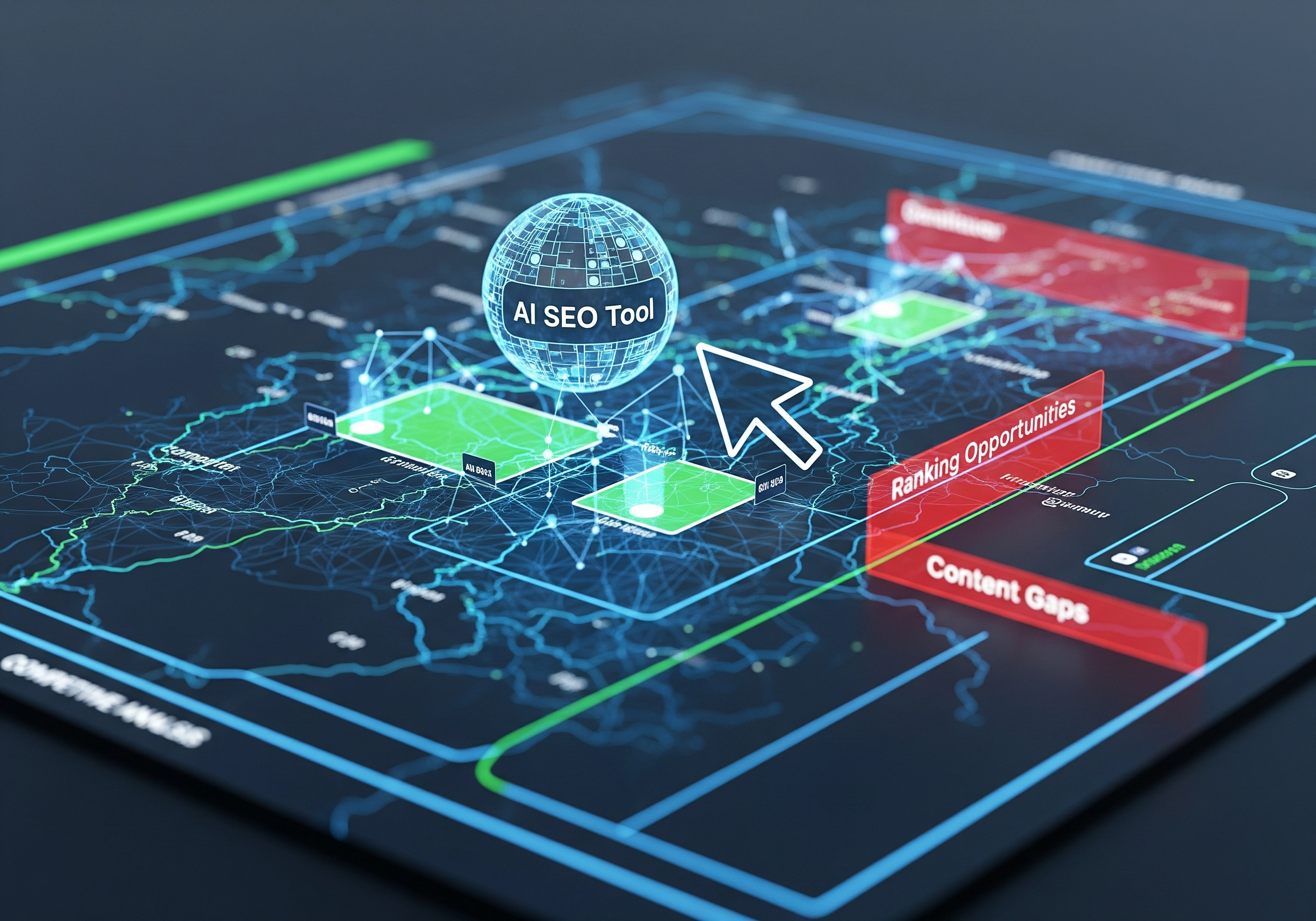
The competitive landscape of 2026 SEO demands far more than manual analysis. As search engines evolve with advanced AI models, relying on traditional competitor reviews simply isn’t enough to secure top ranking opportunities. We need tools that can process vast datasets, identify nuanced patterns, and predict shifts in search intent at a speed and scale impossible for human teams alone.
The AI Edge in Competitive Intelligence
AI-powered tools revolutionize AI competitor analysis by moving beyond surface-level metrics. They perform deep dives into competitor strategies, analyzing everything from their top-performing content and backlink profiles to their semantic keyword clusters and user engagement signals. This allows us to understand not just what competitors are doing, but why it’s working—or failing.
AI tools provide a panoramic view of the competitive landscape, revealing hidden strengths and weaknesses.
These sophisticated platforms can track shifts in competitor content strategy, detect new topic clusters they are targeting, and even forecast potential algorithm impacts on their visibility. This predictive capability is a game-changer for staying ahead.
Precision in Content Gap Analysis
One of the most powerful applications of AI in this domain is content gap analysis. Traditional methods often identify missing keywords, but AI tools go further. They pinpoint semantic gaps—entire topics or sub-topics that competitors are neglecting or underperforming on, even if they’re covered by broad keywords. This allows us to uncover truly underserved niches and high-potential ranking opportunities.
AI can analyze:
- SERP feature dominance: Which competitors own which rich results or featured snippets.
- Audience intent coverage: Where competitors fail to fully address user queries within their content.
- Semantic topic clusters: Gaps in related concepts that, if covered, could boost authority.
Such precise insights enable the creation of highly targeted content that fills specific voids in the market, directly addressing what users are searching for but aren’t finding adequately.
From Insights to Action: Leveraging AI Tools
While established platforms like Semrush and Ahrefs offer robust competitive features, specialized AI tools are emerging to provide even more granular insights. For instance, platforms akin to RivalFlow AI (a hypothetical name for an advanced AI competitive intelligence tool) could offer hyper-focused analysis on specific market segments or emerging search trends, delivering an unparalleled competitive edge.
Once these ranking opportunities and content gaps are identified through detailed AI competitor analysis, the next critical step is content creation. This is where a tool like GenWrite becomes indispensable. GenWrite automates the entire blog creation process, transforming competitive insights into high-quality, SEO-optimized articles. It leverages the data from your content gap analysis to generate content briefs, draft articles, and ensure they are aligned with SEO optimization best practices, including relevant internal and external linking. By streamlining the workflow from research to publication, GenWrite ensures you can quickly capitalize on identified opportunities. You can explore how GenWrite aids in SEO optimization for blogs and AI keyword research to turn competitive intelligence into tangible results.
AI transforms competitive analysis from a reactive audit to a proactive strategy.
By embracing these AI-powered tools, we move beyond simply reacting to competitor moves. We gain the intelligence to anticipate market shifts, identify profitable ranking opportunities, and consistently produce content that secures and maintains top positions in 2026 and beyond.
How Can AI Automate and Streamline Technical SEO for Enterprise-Level Websites?
For enterprise-level websites, the sheer scale of technical SEO challenges can be daunting. We’re talking millions of URLs, constant content updates, and an ever-evolving digital landscape. Manually addressing issues like broken links, optimizing meta tags, or implementing structured data across such a vast architecture is not just inefficient—it’s virtually impossible.
This is where AI technical SEO becomes not just beneficial, but absolutely indispensable. AI-powered tools provide the automation and precision needed to manage the complexities of large-scale sites, ensuring they remain discoverable and crawlable by search engines.
The Scale Challenge: Manual vs. Automated Technical SEO
Traditional technical SEO relies heavily on human analysis and repetitive tasks. For a small business site, this might be manageable. However, for a major e-commerce platform or a global news outlet, the manual approach leads to bottlenecks, errors, and missed opportunities. The volume of data points—from crawl logs to server performance metrics—simply overwhelms human capacity.
AI transforms technical SEO from a reactive chore into a proactive, continuous optimization loop.
AI systems can process vast datasets in real-time, identifying patterns and anomalies that indicate underlying technical issues. This allows for swift identification and often, automated remediation, far exceeding the speed and accuracy of human teams alone.
Automating Schema Markup for Enhanced Visibility
One of the most significant advancements brought by AI technical SEO is in schema markup automation. Structured data is crucial for helping search engines understand content context, leading to rich snippets and improved visibility. However, manually implementing and maintaining schema across thousands of product pages, articles, or local business listings is a colossal task.
Tools like Alli AI exemplify how artificial intelligence can simplify this. They can analyze page content, identify entities, and automatically generate the appropriate schema markup, ensuring it’s valid and up-to-date.
This automated approach ensures consistency and accuracy, reducing the risk of errors that could lead to penalties or missed opportunities for enhanced search result features.
Intelligent Detection and Fixing of Broken Links
Broken links (404 errors) degrade user experience and signal to search engines that a site might not be well-maintained. On an enterprise site, internal and external links break constantly due to content updates, page removals, or external site changes. Manually auditing and fixing these is a continuous, labor-intensive process.
AI-driven platforms can continuously crawl a website, identify broken links in real-time, and even suggest appropriate redirects or replacement URLs. Some advanced systems can learn from past fixes and predict potential future link decay, allowing for preventative measures.
Site-Wide Meta Tag Optimization at Scale
Meta titles and descriptions are vital for attracting clicks from search results. Crafting compelling, keyword-rich, and unique meta tags for every page on an enterprise site is an enormous undertaking. Many large sites resort to generic, template-based meta tags, which often underperform.
AI tools offer sophisticated site-wide optimization of meta tags. They can analyze content, understand search intent, and generate unique, optimized meta titles and descriptions for entire categories of pages or even individual URLs. These tools can also monitor performance and suggest improvements based on click-through rates and keyword rankings.
By leveraging AI, enterprises can ensure their meta tags are always fresh, relevant, and aligned with current search trends, a task that would be impossible to manage manually. This level of automation frees up valuable human resources, allowing SEO teams to focus on strategic initiatives rather than repetitive tasks.
Here at GenWrite, we understand the power of automation in scaling SEO efforts. Just as our platform automates end-to-end blog creation, from keyword research to content optimization, AI for technical SEO similarly streamlines the foundational elements that ensure content is not just excellent, but also perfectly accessible and understood by search engines.
Why is AI Essential for Predictive Analytics and Real-Time SEO Adaptation?

In the relentlessly shifting landscape of search engine optimization, reactivity is no longer a viable strategy. As search engines increasingly rely on advanced AI models to interpret user intent and rank content, the ability to anticipate changes and adapt instantly becomes paramount. By 2026, AI predictive SEO is not just an advantage; it’s a fundamental requirement for maintaining visibility.
The Power of Predictive Analytics in SEO
Traditional SEO often involves looking at past data to inform future decisions. However, AI elevates this to a new level through advanced predictive analytics. AI algorithms can analyze vast datasets—including historical ranking fluctuations, emerging search trends, and even public sentiment—to forecast potential algorithm shifts and market demand before they fully materialize. This allows strategists to move from a reactive stance to a proactive one.
Anticipating the future of search is critical for sustained organic growth.
This foresight is crucial. For instance, anticipating a surge in a particular topic’s popularity or an upcoming algorithm update allows for strategic content adjustments, ensuring your site remains aligned with future search intent. Such forward-thinking optimization helps mitigate the risk of falling behind, a concern amplified by Gartner’s prediction of a 25% drop in organic traffic for non-AI-adapted sites by 2026.
Real-Time Adaptation to Algorithm Changes
The era of waiting months to understand the impact of a Google update is over. The pace of change demands real-time SEO adaptation. AI tools continuously monitor performance metrics, keyword rankings, and algorithm signals, identifying anomalies or shifts almost instantaneously. This real-time feedback loop is essential for immediate adjustments.
When a minor algorithm tweak occurs, AI can pinpoint exactly which pages or content pieces are affected and suggest precise optimizations. This could range from modifying meta descriptions to re-optimizing paragraph structures for better contextual relevance. It’s about making surgical, data-driven changes in the moment.
Immediate insights enable immediate action, safeguarding your search visibility.
This agility is what empowers effective SEO algorithm adaptation. Instead of costly, broad-stroke overhauls, AI facilitates nuanced, continuous optimization that keeps pace with search engine evolution.
How AI Fuels Proactive SEO Strategies
The convergence of predictive analytics and real-time adaptation culminates in truly proactive SEO strategies. Instead of merely chasing keywords, AI helps you understand the deeper semantic connections and user intent that search engines prioritize. This understanding informs not only what content to create but also how to structure it for maximum impact, especially in a world increasingly dominated by zero-click searches and AI summaries.
Tools like GenWrite exemplify this shift, offering robust AI predictive SEO capabilities that automate the end-to-end blog creation process. By analyzing competitor content and performing advanced keyword research, GenWrite helps forecast content opportunities and optimize articles for future search landscapes. This means content is not only generated efficiently but also strategically positioned for long-term ranking success.
AI transforms SEO from a guessing game into a precise, data-driven science.
By leveraging AI, teams can dedicate more time to strategic planning and less to manual data analysis. This allows for a focus on high-value tasks, ensuring that every piece of content is a step towards dominant online presence. The ability to predict, adapt, and optimize in real-time is the cornerstone of successful SEO in 2026 and beyond.
How Do AI Link-Building Tools Revolutionize Backlink Acquisition?
Traditional backlink acquisition has long been a labor-intensive endeavor, often characterized by tedious manual research, generic outreach, and inconsistent results. However, as the SEO landscape rapidly evolves towards 2026, AI link building is fundamentally reshaping this process, transforming it from a chore into a highly efficient, data-driven strategy. The shift is monumental: AI-powered tools now automate the most time-consuming aspects, allowing strategists to focus on high-value relationships rather than repetitive tasks.
The AI Revolution in Prospect Identification
The initial hurdle in any link-building campaign is identifying relevant, high-authority websites that align with your content. Manually sifting through countless sites to find suitable prospects is a monumental task. This is where AI tools step in, leveraging advanced algorithms to analyze vast datasets and pinpoint ideal targets.
AI systems can rapidly evaluate:
- Relevance: How closely a site’s content and audience align with yours.
- Authority Metrics: Domain Authority (DA), Page Authority (PA), Trust Flow (TF), and Citation Flow (CF) to assess link quality.
- Niche Overlap: Identifying sites within your specific industry or tangential areas that would benefit from your content.
- Link Profile Gaps: Analyzing competitor backlink profiles to uncover opportunities they are exploiting.
Tools like Apify, for instance, excel at web scraping and data extraction, enabling marketers to gather comprehensive lists of potential link targets based on specific criteria. This capability goes far beyond simple keyword searches, allowing for nuanced analysis of site content, structure, and audience demographics. Automated prospect identification ensures you’re targeting the most impactful opportunities.
Intelligent Contact Extraction and Personalization at Scale
Once a list of prospects is generated, the next challenge is finding the right contact information and crafting compelling outreach messages. This is another area where AI link-building tools shine, moving beyond the limitations of manual searches and generic email templates.
AI algorithms can:
- Identify Key Decision-Makers: Locate specific individuals responsible for content or editorial decisions, rather than generic info@ addresses.
- Extract Verified Contact Information: Utilize various data sources to find accurate email addresses, social media profiles, and other communication channels.
- Analyze Content for Personalization Cues: Scan a prospect’s website or recent articles to identify topics, pain points, or unique angles that can be referenced in outreach.
This intelligence fuels hyper-personalized outreach at scale. Instead of sending hundreds of identical emails, AI tools help craft messages that resonate with the recipient. For example, platforms like Postaga integrate AI to personalize email subject lines and body content based on the prospect’s website and previous interactions, significantly boosting response rates. This level of backlink automation transforms impersonal blasts into genuine, relationship-building communications, echoing the efficiency GenWrite brings to content creation by automating research and optimization.
The Modern AI-Driven Outreach Workflow
The synergy of AI across prospect identification, contact extraction, and personalized outreach creates a streamlined, highly effective link-building framework:
- Targeted Prospecting: AI sifts through millions of websites, identifying those with high domain authority and thematic relevance.
- Deep Data Mining: Tools extract crucial data points, including contact details and content insights, to inform outreach strategy.
- Contextualized Outreach: AI assists in generating personalized email drafts, referencing specific articles or shared interests to capture attention.
- Performance Monitoring: AI tracks open rates, reply rates, and link acquisition success, providing data to continuously refine future campaigns.
This integrated approach ensures that every step of the link-building process is optimized for efficiency and impact. AI-driven outreach tools are not just about sending more emails; they’re about sending the right emails to the right people at the right time. By leveraging these sophisticated platforms, businesses can significantly improve their success rates in acquiring high-quality backlinks, directly contributing to improved search rankings and increased organic traffic by 2026. Just as AI automates end-to-end blog creation and SEO optimization, tools like Postaga and Apify streamline the critical task of link acquisition, making it a powerful component of your overall digital strategy. To learn more about how AI can transform your content strategy, explore GenWrite’s offerings in SEO optimization for blogs.
What AI Strategies are Crucial for International SEO in 2026?
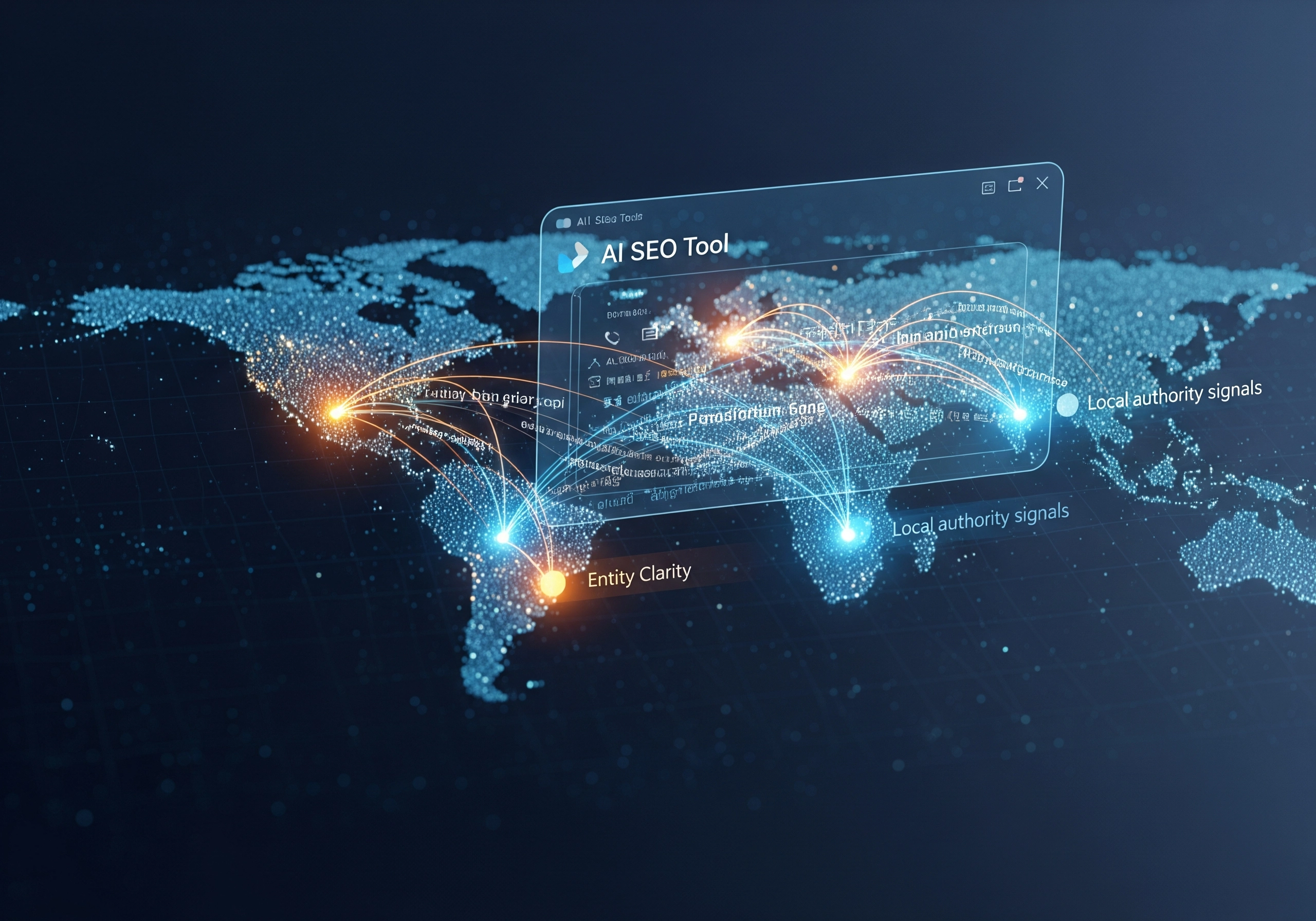
As search engines become increasingly sophisticated, mastering international SEO AI in 2026 requires a strategic approach that leverages artificial intelligence to navigate linguistic and cultural nuances. While AI can process vast amounts of multilingual data, its interpretation isn’t always a direct translation of human intent. This presents unique challenges and opportunities for global brands aiming to rank effectively across diverse markets.
The Nuance of AI Multilingual Content Interpretation
AI models excel at identifying patterns across languages, but they can sometimes collapse distinct cultural contexts into shared semantic representations. This means that content optimized for a Spanish audience in Spain might be interpreted similarly to content for a Mexican audience by an AI, potentially diluting localized relevance. The strategy here is to go beyond mere translation; it’s about ensuring entity clarity for each target market.
Entity clarity refers to how precisely an AI understands the specific entities (people, places, organizations, concepts) within a given cultural and linguistic context. For international SEO, this means structuring content and using metadata that clearly defines entities relevant to each locale. For instance, a local business reference in Argentina needs to be distinct from one in Chile, even if both speak Spanish.
Building Local Authority with AI Signals
AI is also being trained to recognize signals of local authority. This goes beyond simple geotargeting. Search engines use AI to assess a website’s perceived relevance and trustworthiness within a specific region. This involves analyzing local citations, regional link profiles, user engagement patterns from that specific country, and even sentiment analysis of local reviews.
Key AI Strategies for International SEO in 2026:
- Localized Entity Recognition: Ensure your content clearly defines entities specific to each target region. Use structured data to reinforce these distinctions.
- Culturally-Aware AI Training: Where possible, feed AI models with culturally specific data sets to improve their understanding of local nuances.
- Regional Engagement Analysis: Monitor how users in different countries interact with your content. AI can help identify discrepancies in engagement that signal a need for localization.
- Sentiment-Aligned Content: Utilize AI tools to analyze local sentiment and tailor messaging accordingly, moving beyond literal translation.
Crucially, avoid ‘translation-only localization.’ Simply translating content and assuming AI will handle the rest is a mistake. AI models can identify that two pieces of content are linguistically similar but may miss the deeper cultural or regional intent. This can lead to content that is technically present but fails to resonate locally, ultimately hindering international SEO AI performance.
For businesses like GenWrite, which focus on automated content creation, understanding these AI-driven dynamics is paramount. Ensuring that AI blog generator outputs are not only linguistically correct but also semantically and culturally appropriate for each target market will be key to driving genuine traffic and achieving high rankings globally. By focusing on entity clarity and robust local authority signals, businesses can harness AI’s power for truly effective international SEO in 2026 and beyond.
Can AI Tools Drive Cost-Efficiency Without Compromising Depth and Quality?
The notion that cutting costs in SEO inevitably leads to compromised quality is a deeply ingrained belief. For years, businesses faced a stark choice: invest heavily in agency retainers and large in-house teams or settle for basic, often ineffective, optimization. However, the rise of AI SEO solutions is fundamentally challenging this paradigm, demonstrating that cost-efficiency and high-quality, in-depth results are not mutually exclusive.
The AI Equation: Efficiency Meets Efficacy
My experience has shown that the true power of AI in SEO lies in its ability to automate repetitive, time-consuming tasks that previously demanded significant human capital. Think about keyword research, competitive analysis, content brief generation, and even technical SEO audits. These aren’t just sped up; they’re executed with a level of data analysis and pattern recognition that far exceeds manual capabilities.
AI allows businesses to do more with less, without sacrificing depth.
This automation translates directly into SEO cost efficiency. Instead of needing a large team for initial research and content structuring, a lean team can leverage AI to generate robust outlines and data-driven insights. This frees up human experts to focus on strategic thinking, creative refinement, and adding the nuanced, human touch that truly elevates content.
Navigating Pricing Models for Optimal Value
When evaluating affordable AI SEO tools, understanding their pricing models is crucial. Most operate on a subscription basis, often tiered by features, usage limits (e.g., keyword checks, content analyses, generated words), or the number of users. For smaller businesses or startups, identifying tools that offer comprehensive features within a reasonable monthly budget is key.
Consider the “cost per insight” or “cost per optimized piece of content” rather than just the monthly fee. A slightly more expensive tool that delivers significantly better results and automation can quickly pay for itself.
Best Value Tools: SE Ranking and NeuronWriter
In my assessments, several platforms stand out for delivering exceptional value without breaking the bank. For a more comprehensive suite, SE Ranking offers a robust platform that includes keyword research, competitor analysis, site auditing, and content marketing tools, often at a more accessible price point than some of its enterprise-level competitors. It’s an excellent choice for businesses looking for an all-in-one affordable AI SEO solution.
When the focus shifts specifically to content optimization, NeuronWriter emerges as a powerful contender. It’s designed to help users create SEO-friendly content by analyzing top-ranking articles and providing suggestions for keywords, structure, and readability. This specialized focus makes it one of the top budget AI tools for content creators aiming to maximize their on-page SEO without a massive investment.
Both SE Ranking and NeuronWriter exemplify how targeted AI application can democratize advanced SEO practices. They offer sophisticated capabilities that were once exclusive to high-budget operations.
How AI Tools Optimize Resource Allocation
The real magic happens when AI tools enable smarter resource allocation. Instead of spending hours manually compiling data, AI provides instant insights. This means:
- Faster Content Production: Tools like
GenWriteautomate the end-to-end blog creation process, from keyword research and competitor analysis to adding relevant links and images, significantly reducing the time and effort required to produce high-quality, SEO-optimized content. Visithttps://genwrite.co/to see how it works. - Targeted Strategy: AI identifies the most impactful SEO opportunities, ensuring resources are directed where they will yield the highest ROI.
- Reduced Labor Costs: Automating tasks means smaller teams can achieve the output of larger ones, making advanced SEO accessible to more businesses.
AI doesn’t just cut costs; it redefines where and how value is created.
By leveraging AI blog generator tools and other AI SEO tools, businesses can shift their focus from manual grunt work to strategic oversight and creative input. This balance ensures that while efficiency soars, the depth, quality, and unique voice of your content remain paramount, aligning perfectly with search engine guidelines and LLMs. The result is better rankings, increased organic traffic, and a stronger online presence, all achieved with enhanced SEO cost efficiency.
How to Select the Right AI SEO Software Stack for Your Specific Needs?

Navigating the expansive landscape of AI SEO tools can feel overwhelming, especially when every solution promises to be the definitive answer. Yet, the real power lies not in finding a universal tool, but in curating an AI SEO software selection that precisely aligns with your unique operational needs and strategic objectives. This isn’t about simply adopting the latest trend; it’s about building a robust and effective custom SEO workflow.
Defining Your Strategic Needs
Before diving into features, it’s crucial to understand your baseline. What are your specific business goals? Are you an e-commerce giant aiming for product visibility, a content publisher focused on long-tail keywords, or a local business targeting hyper-local search? Each scenario demands a different emphasis from your SEO tool stack.
Your website’s type and scale also dictate requirements. An enterprise site with millions of pages will prioritize tools for technical SEO automation and large-scale content auditing, while a small business blog might focus on content generation and keyword research. Understanding these foundational elements is the first step in choosing AI tools wisely.
A tailored approach ensures every tool actively contributes to your bottom line.
For instance, if your primary goal is to scale content production while maintaining SEO quality, an AI blog generator like GenWrite, which automates keyword research, competitor analysis, and content creation, becomes invaluable. It ensures your output aligns with search engine guidelines and LLMs, saving significant time and resources.
Assessing Team Expertise and Budget Realities
Consider the existing skill set within your team. Do you have SEO specialists who can leverage advanced analytics, or do you need tools that offer more guided, intuitive workflows? AI tools can bridge skill gaps, but they still require a human touch for strategy and refinement.
Budget is another critical factor. The market offers a spectrum from free basic tools to enterprise-level platforms. It’s not just about the upfront cost, but the long-term return on investment (ROI). Evaluate how a tool’s capabilities translate into tangible gains: increased traffic, higher rankings, or reduced operational costs.
- Team Expertise: Match tool complexity to current skill levels, or invest in training.
- Budget Allocation: Prioritize tools that offer the highest ROI for your specific goals.
This careful assessment prevents overspending on features you won’t use or underspending on critical functionalities.
All-in-One Platforms vs. Specialized Tools
This is a common crossroads in AI SEO software selection. All-in-one platforms, like Semrush or Ahrefs, offer a broad suite of features covering everything from keyword research to backlink analysis. They provide convenience and often a unified data view.
Specialized tools, on the other hand, excel in a particular niche. For example, a dedicated content optimization tool like Surfer SEO or NeuronWriter might offer deeper insights into content structure and NLP-driven recommendations. Similarly, an AI blog generator like GenWrite focuses intently on automating blog creation and SEO optimization, providing a highly specialized solution for content teams.
The best approach often involves a hybrid model, combining core all-in-one capabilities with specialized tools for specific, high-impact tasks.
For example, you might use a comprehensive platform for broad competitive analysis and then integrate a specialized AI writing tool like GenWrite for efficient content generation. This creates a powerful custom SEO workflow that leverages the strengths of both types of solutions.
Ultimately, choosing AI tools requires a strategic blend of self-assessment, market understanding, and a clear vision for your SEO future. By methodically evaluating your goals, team, budget, and the unique strengths of various tools, you can build an SEO tool stack that drives tangible results in the evolving 2026 search landscape. This isn’t just about tools; it’s about creating a smarter, more efficient way to achieve digital dominance.
What is the Future of AI in SEO and How Can You Stay Ahead in 2026 and Beyond?
The landscape of search engine optimization is less a static map and more a rapidly evolving digital frontier, constantly reshaped by artificial intelligence. By 2026 and beyond, the future of AI SEO isn’t merely about adopting tools; it’s about fundamentally rethinking our approach to search visibility. We are moving toward an era where AI doesn’t just assist but actively predicts and personalizes, demanding a more strategic, human-centric response.
Anticipating AI SEO Trends 2026 and Beyond
Looking ahead, AI’s role will deepen considerably. We anticipate search engines becoming even more sophisticated in understanding context, sentiment, and intent across diverse content formats. Multimodal search, integrating text, image, audio, and video, will become standard, requiring content strategies that are equally diverse. AI will drive hyper-personalization, tailoring search results not just to keywords, but to individual user behavior, location, and past interactions.
Staying ahead in SEO means embracing these shifts from reactive optimization to proactive, predictive strategies. Those who adapt early will gain a significant competitive advantage.
The Indispensable Role of Human-AI Collaboration
Despite the power of AI, human ingenuity remains the ultimate differentiator. The most successful SEO strategies in the coming years will be born from robust human AI collaboration. AI excels at data analysis, pattern recognition, and automation. It can identify gaps, generate content outlines, and even draft initial pieces, as tools like GenWrite demonstrate by automating the end-to-end blog creation process. However, the nuance of brand voice, creative storytelling, ethical considerations, and strategic foresight are uniquely human domains.
Where Human Expertise Shines
- Strategic Vision: Defining overarching goals and understanding the why behind search intent.
- Creative Content: Injecting personality, empathy, and unique perspectives that resonate deeply with audiences.
- Ethical Oversight: Ensuring AI use aligns with brand values and avoids manipulative or low-quality practices.
- Adaptation & Interpretation: Learning from AI insights and translating them into actionable, human-led initiatives.
Continuous Learning and Adaptation: Your 2026 SEO Imperative
To navigate this evolving landscape, continuous learning isn’t just an advantage; it’s a necessity. The rapid pace of AI development means that yesterday’s best practices might be today’s outdated tactics. Regularly engaging with new research, testing emerging AI tools, and participating in expert communities are crucial.
Embrace an agile mindset; iterate, test, and refine your AI-driven SEO strategies.
For instance, platforms like GenWrite empower this adaptive approach. By handling the heavy lifting of keyword research, competitor analysis, and automated content generation, it frees up valuable human time. This allows you to focus on the higher-level strategic thinking, creative refinement, and ethical stewardship that truly define a successful AI SEO strategy for 2026 and beyond. The goal isn’t to replace humans with AI, but to augment human potential, allowing us to achieve unprecedented levels of efficiency and impact in our SEO efforts.
Ready to harness the power of AI for your SEO strategy? Explore how GenWrite can automate your blog creation and optimize for top 2026 rankings.
Frequently Asked Questions about AI SEO Software
Why is AI SEO software crucial for 2026 rankings?
AI SEO software is crucial for 2026 because search engines are increasingly relying on advanced AI models. These tools help analyze nuanced user intent, adapt to rapid algorithm changes, and optimize content more effectively than manual methods, which is essential to combat declining organic traffic and rising zero-click searches.
How do AI SEO tools improve search visibility?
AI SEO tools improve search visibility by leveraging machine learning and NLP to analyze vast datasets, identify content gaps, predict search trends, and suggest optimizations. They can also assist in creating more contextually relevant and engaging content that aligns with AI-driven search engine algorithms, leading to better rankings.
Can AI tools help with content creation for SEO?
Yes, AI tools significantly enhance content creation for SEO. They assist with keyword research, topic clustering, generating content briefs, optimizing existing content for target keywords, and even drafting outlines or initial content pieces, ensuring content is data-driven and rank-worthy.
What role do AI SEO tools play in competitive analysis?
AI SEO tools excel at competitive analysis by identifying content gaps, analyzing competitor strategies, and uncovering ranking opportunities that traditional methods might miss. This allows businesses to move from reactive auditing to proactive strategy development, staying ahead in the competitive search landscape.
Are AI SEO tools cost-effective for businesses?
AI SEO tools can drive significant cost-efficiency by automating repetitive tasks, freeing up human resources for strategic initiatives. While initial investment is required, the gains in efficiency, speed, and improved ROI through better organic performance often make them a worthwhile investment. Tools like SE Ranking and NeuronWriter offer good value.
How do AI tools handle international SEO challenges?
For international SEO in 2026, AI tools help by ensuring ‘entity clarity’ for distinct markets and assessing ‘local authority signals.’ They can also help avoid pitfalls like ‘translation-only localization,’ ensuring content resonates effectively across different linguistic and cultural contexts.