
Choosing the Best AI SEO Tool for Google Rankings in 2026: A Modern Perspective
Why Must SEO Strategies Evolve for Google’s AI-Driven Landscape in 2026?

The landscape of online visibility is undergoing a seismic shift, driven by Google’s relentless push into artificial intelligence. By 2026, the familiar terrain of search engine optimization (SEO) will be virtually unrecognizable, demanding a radical evolution in our strategies.
Traditional SEO, focused heavily on keyword density and link building, simply won’t cut it anymore. We’re moving beyond simple search result pages (SERPs) to an AI-driven search ecosystem where user intent, context, and semantic understanding reign supreme.
The AI Transformation of Google Search
Google’s core algorithms are now deeply infused with AI models that interpret user queries with unprecedented nuance. This extends across its entire ecosystem, from Search Generative Experience (SGE) and AI Overviews to Discover and Maps.
These systems are designed to understand not just what users type, but why they’re searching and what underlying needs they have. This foundational change means the goal of SEO is no longer just ranking for keywords, but becoming the definitive answer source.
From Keywords to Context: Generative and Answer Engine Optimization
The rise of AI-powered search mandates a shift from traditional keyword matching to a sophisticated understanding of context and entities. This is where concepts like Generative Engine Optimization (GEO) and Answer Engine Optimization (AEO) become critical.
GEO focuses on optimizing content to be understood and synthesized by generative AI models, making your information a prime candidate for AI Overviews. AEO, on the other hand, ensures your content directly answers complex user questions, often anticipating follow-up queries.
Your content must be structured to provide clear, concise, and comprehensive answers, not just keyword-rich text.
The Challenge of Increased Complexity
Ranking in this new environment is significantly more complex. Google’s AI can process millions of data points, including user behavior, location, and desired outcomes, making the search results highly personalized and dynamic. This rapid data processing means SERPs can change hundreds of times a day, making traditional, manual SEO methods obsolete.
Furthermore, the prevalence of voice-based searches, projected to exceed half of all online searches by 2026, underscores the necessity of optimizing for conversational language and nuanced queries. Our content needs to speak naturally to both humans and AI.
The Indispensable Role of AI SEO Tools
Given this complexity, AI SEO tools are no longer a luxury; they are a necessity for achieving meaningful Google Rankings. These tools leverage machine learning (ML) and natural language processing (NLP) to automate and enhance critical SEO activities.
They can understand search intent beyond simple keywords, optimize content specifically for AI Overviews, and detect ranking volatility in real-time. Crucially, they help identify semantic gaps and recommend entity relationships, building true topical authority instead of relying on outdated keyword stuffing.
As an advocate for efficient content creation, I’ve seen firsthand how AI-powered platforms can streamline this new reality. Tools like GenWrite’s AI SEO content generator automate keyword research, competitor analysis, and content optimization, ensuring your blogs align with search engine guidelines and large language models (LLMs).
The future of SEO is a human-AI hybrid, combining AI’s analytical power with human creativity and strategic oversight.
Without adopting these advanced tools and evolving our approach, businesses risk being entirely overshadowed. The top fold of search results will increasingly be dominated by AI-generated answers, pushing traditional organic links further down the page. To succeed, we must embrace this transformation and leverage the capabilities of modern AI SEO tools to navigate the AI-driven landscape effectively.
What Exactly Constitutes an AI SEO Tool, and How Does It Enhance Traditional SEO?
The term “AI SEO tool” is thrown around frequently, but what truly elevates a software solution beyond basic automation into the realm of artificial intelligence? It’s more than just a fancy label; it signifies a fundamental shift from reactive, keyword-focused tactics to proactive, intent-driven strategies. An AI SEO tool leverages sophisticated algorithms to understand, predict, and optimize for the complexities of modern search engines.
The Core Components of AI-Powered SEO
At its heart, an AI SEO tool integrates several critical technological components:
- Machine Learning (ML): This is the brain, allowing the tool to learn from vast datasets, identify intricate patterns, and continuously improve its recommendations without explicit programming. For instance, ML can predict ranking volatility by analyzing millions of SERP changes, giving you a crucial early warning system.
- Natural Language Processing (NLP): This empowers the tool to understand human language beyond just keywords. NLP deciphers search intent, analyzes content for semantic relevance, and identifies entities (people, places, things) that Google’s algorithms now prioritize. This is vital for optimizing content for evolving features like AI Overviews.
- Predictive Analytics: By combining ML and NLP, AI tools can forecast future trends, anticipate algorithm shifts, and recommend strategic adjustments before they become critical. This proactive capability is a game-changer for staying ahead in a volatile search landscape.
AI SEO tools go beyond simple automation; they offer intelligent analysis and strategic foresight.
Beyond Traditional SEO Software: Understanding Context and Intent
Where traditional SEO software might offer keyword tracking and basic site audits, SEO AI tools delve much deeper. They don’t just tell you what keywords you’re ranking for; they uncover why you’re ranking, or more importantly, why you’re not. This involves:
- Semantic Understanding: Instead of merely matching keywords, AI understands the topical authority you need to build around a subject. It identifies semantic gaps and suggests related concepts to cover comprehensively.
- User Intent Analysis: AI deciphers the true goal behind a user’s query—whether they’re looking for information, a transaction, or navigation. This enables content optimization that genuinely answers user needs, which is crucial for Google’s AI-driven ecosystem, including SGE (Search Generative Experience).
- Entity Recognition: Modern search engines connect entities to build a comprehensive knowledge graph. AI tools can identify key entities within your content and across the web, helping you optimize for these relationships and boost your overall authority.
This intelligent analysis allows for optimization that resonates with both human users and advanced AI models. Learn more about how these tools can boost your search rankings in Which AI SEO Tools Offer the Strongest Boost to Your 2026 Search Rankings?.
How AI SEO Tools Enhance Traditional SEO Efforts
AI doesn’t replace traditional SEO; it supercharges it. The enhancements are profound:
- Accelerated Data Processing: AI can analyze millions of data points—keyword fluctuations, competitor actions, user behavior shifts—in near real-time. This speed is indispensable when SERPs can change hundreds of times a day.
- Optimizing for AI Overviews and GEO: With generative AI dominating top search results, AI SEO tools help structure content for direct answers, summaries, and citations within AI Overviews, crucial for Generative Engine Optimization (GEO).
- Content Creation and Optimization: Tools like GenWrite exemplify this by automating end-to-end blog creation. They perform keyword research, analyze competitor content, suggest optimal content structures, and even add relevant links and images, ensuring high-quality, SEO-friendly content that aligns with LLMs. This automation frees up human experts to focus on strategy and creativity.
- Proactive Strategy Recommendations: Instead of reacting to drops in rankings, machine learning SEO provides actionable insights to pre-empt issues and capitalize on emerging opportunities, transforming your SEO from reactive to predictive.
By embracing AI SEO tools, businesses can transition from simply chasing keywords to strategically building topical authority and truly understanding user intent, securing a competitive edge in the AI-first search landscape of 2026.
How Will AI-Powered SEO Become Indispensable for Securing Top Google Rankings by 2026?

The landscape of search engine optimization is undergoing a profound transformation, driven by Google’s relentless push into artificial intelligence. By 2026, the question won’t be whether to adopt AI for SEO, but how deeply it’s integrated into every facet of your strategy. This isn’t just an evolution; it’s a fundamental shift towards an AI-first search ecosystem where traditional methods alone will simply not suffice for securing top Google Rankings 2026.
Anticipating Ranking Fluctuations with AI
One of the most critical advantages of AI-powered SEO lies in its predictive capabilities. Google’s AI models, including those powering Search Generative Experience (SGE) and AI Overviews, are constantly learning and adapting. This means ranking factors can shift rapidly, sometimes hundreds of times a day. Traditional SEO tools, often reliant on historical data, struggle to keep pace.
AI SEO tools, however, leverage machine learning (ML) and predictive analytics to analyze vast datasets in near real-time. They can detect emerging patterns, anticipate ranking volatility, and even forecast shifts in user intent before they fully manifest.
Staying ahead requires a system that learns as fast as Google’s algorithms do.
This proactive insight allows businesses to adjust their content and technical SEO strategies dynamically, protecting their search visibility against sudden changes. It’s about moving from reactive fixes to predictive optimization.
Optimizing for AI Overviews and Generative Search
With AI Overviews poised to dominate the top fold of search results, optimizing specifically for these generative responses becomes paramount. This goes far beyond keyword density; it demands a deep understanding of context, entities, and user intent.
AI SEO tools are indispensable here. They help identify the semantic relationships and entity structures that Google’s AI models prioritize. Instead of merely matching keywords, these tools assist in crafting content that directly answers complex queries, providing comprehensive and authoritative information that an AI Overview can readily synthesize.
This shift moves us towards Generative Engine Optimization (GEO) and Answer Engine Optimization (AEO), where content is structured not just for human readers but also for AI comprehension. Tools like an AI SEO content generator can analyze top-ranking AI Overviews and suggest content refinements to increase the likelihood of your content being featured. If you’re looking to scale your content creation for this new era, understanding how to leverage AI SEO blog writing software is crucial.
Building Topical Authority with AI
Google’s AI-driven search prioritizes expertise, authoritativeness, and trustworthiness (E-A-T). Building topical authority AI means demonstrating comprehensive knowledge across a specific subject area, rather than targeting isolated keywords. AI SEO tools are uniquely positioned to facilitate this.
They analyze your content gaps, identify related sub-topics, and map out entire topic clusters that need to be covered to establish you as a definitive source. By understanding semantic connections and entity graphs, these tools help you structure your content strategy to systematically build authority. For instance, an AI blog generator like GenWrite can automate the end-to-end blog creation process, researching keywords, analyzing competitor content, and suggesting relevant links to build out these topic clusters efficiently.
AI enables a strategic, holistic approach to content that Google’s algorithms reward.
This moves SEO away from mere keyword stuffing towards creating rich, interconnected knowledge hubs that resonate with both users and sophisticated AI systems.
Handling Accelerated SERP Changes
The pace of change on search engine results pages (SERPs) is accelerating, driven by Google’s continuous AI model updates. AI SEO tools are essential for managing this velocity. They can process millions of data points—from keyword fluctuations and competitor actions to user behavior shifts—in fractions of a second.
This rapid analysis capability allows for agile SEO strategies. When a competitor launches a new product or a trending topic emerges, AI tools can quickly identify the opportunity or threat, enabling immediate adjustments to your content and linking strategies. This is crucial for maintaining competitive edge, especially as more than half of all online searches are projected to be voice-based by 2026, requiring optimized conversational language.
The Human-AI Hybrid Approach: The Future of SEO
Ultimately, the indispensability of AI-powered SEO by 2026 doesn’t mean replacing human expertise. Instead, it signifies a powerful human-AI hybrid approach. AI handles the data processing, pattern recognition, and automation of repetitive tasks, freeing up human strategists for creativity, storytelling, and nuanced decision-making.
Tools like GenWrite exemplify this synergy. They automate content research, keyword optimization, and even internal linking, allowing content creators to focus on crafting truly engaging and original narratives. This ensures that while AI provides the efficiency and data-driven insights, the content remains helpful, accurate, and people-first—a core requirement for Google’s guidelines on AI-assisted content. For agencies looking to scale content production efficiently while maintaining high quality, such SEO AI tools are invaluable.
By embracing Best AI SEO Tools, businesses can not only secure but also sustain top Google Rankings in the dynamic, AI-driven landscape of 2026 and beyond. Integrating AI into your SEO strategy is no longer optional; it’s a strategic imperative for digital survival and growth.
What Key Features Should You Prioritize When Selecting a Cutting-Edge AI SEO Tool?
Selecting the right AI SEO Tool features for your strategy in 2026 is no longer about simply automating tasks; it’s about choosing a partner that elevates your entire content ecosystem. With Google’s algorithms increasingly relying on AI to understand intent and context, your tool must do the same. This means moving beyond basic keyword research to sophisticated analysis that mirrors how search engines now evaluate content.
Prioritizing Intent Matching and NLP Scoring
The first critical feature to prioritize is a tool’s ability to accurately interpret user intent. Traditional SEO tools often focused on exact keyword matches. However, in an AI-driven search landscape where SGE and AI Overviews dominate, understanding the why behind a query is paramount. A cutting-edge AI SEO tool should leverage advanced Natural Language Processing (NLP) to decipher complex queries and map them to relevant content.
True intent matching moves beyond keywords to understand user needs and search context.
Beyond intent, look for robust content scoring AI capabilities. This means the tool shouldn’t just suggest keywords, but analyze your content for semantic completeness, entity coverage, and topical authority. It should provide actionable feedback on how well your content aligns with what Google’s AI models deem comprehensive and helpful. Tools like GenWrite, for instance, utilize sophisticated NLP to ensure your blog posts are not only keyword-rich but contextually relevant and aligned with modern search intent, making it a powerful AI SEO blog writing software.
AI Visibility Tracking and Crawl Depth Capabilities
In 2026, visibility isn’t just about ranking on the first page of organic results. It encompasses appearances in AI Overviews, SGE results, Discover feeds, and even voice search answers. Your chosen tool must act as an AI visibility tool, offering comprehensive tracking across these diverse Google surfaces. This allows you to understand where your content is gaining traction and where opportunities lie for optimization.
Furthermore, assess the tool’s crawl depth and technical SEO capabilities. While AI primarily focuses on content and intent, foundational technical SEO remains vital. A powerful AI tool should be able to identify deep-seated technical issues that hinder discoverability by AI crawlers, such as broken links, indexing problems, or suboptimal site structure. It should help you fix issues that prevent Google’s AI from fully understanding and indexing your content.
Seamless Integration and the Human Touch
Data silos are the enemy of effective SEO. Therefore, prioritize tools that offer seamless integration with essential platforms like Google Search Console (GSC) and Google Analytics 4 (GA4). These integrations provide a holistic view of your performance, allowing the AI tool to pull real-time data on impressions, clicks, user behavior, and conversions directly from the source. This data fusion empowers the AI to make more accurate recommendations and track the true impact of its optimizations.
Integration with GSC and GA4 provides the bedrock for data-driven AI SEO decisions.
Finally, and perhaps most crucially, consider the ‘human-in-the-loop’ aspect. While AI excels at data analysis and automation, human creativity, empathy, and strategic oversight are irreplaceable. The best SEO tool selection will offer features that assist human content editors, rather than replacing them entirely. This means providing AI-generated outlines, competitive analysis, and content drafts, but always allowing for human review, refinement, and injection of unique insights. This hybrid approach ensures content is not only optimized for search engines but also resonates deeply with human readers, maintaining the helpful, original, and people-first content Google values. For those looking to streamline their content creation process, exploring an AI SEO content generator like GenWrite can provide a significant advantage by automating research and drafting, freeing up valuable human time for strategic refinement and creative input. You can learn more about how AI tools provide solutions to common SEO blog shortcomings at Why Most SEO Blogs Fall Short and How AI Tools Provide Solutions in 2026.
When evaluating AI SEO Tool features, remember that the goal is not just efficiency but effectiveness in a rapidly evolving search landscape. Choose a solution that empowers both AI and human intelligence.
Can AI Tools Truly Automate Complex SEO Tasks, and What Are Their Limitations?

The promise of AI SEO automation often sounds like a complete takeover of complex tasks, freeing up marketers entirely. While AI tools are incredibly powerful and have redefined efficiency, the reality is more nuanced. They excel at specific, data-intensive aspects of SEO, but the human element remains irreplaceable for true strategic depth and creative resonance.
Where AI Automation Shines Brightest
AI’s strength lies in its ability to process, analyze, and generate insights from vast datasets at speeds impossible for humans. This capability translates directly into significant advantages for complex SEO tasks:
- Data Analysis and Pattern Recognition: AI can track millions of data points, identify ranking volatility, and analyze competitor actions almost in real-time. This allows for proactive adjustments rather than reactive fixes. For instance, an AI writing SEO tool can rapidly analyze top-ranking content for semantic gaps and entity relationships, ensuring your content is comprehensively covered.
- Technical SEO Audits: Tools leveraging technical SEO AI can crawl sites, identify critical issues like broken links, crawl budget inefficiencies, core web vitals problems, and indexation errors with remarkable accuracy and speed. They flag issues that might take a human auditor days to uncover.
- Content Generation & Optimization: From generating initial content drafts and blog outlines to optimizing existing pieces for semantic relevance and topical authority, AI tools are game-changers. They can conduct exhaustive keyword research, cluster related topics, and even suggest internal linking opportunities. This is precisely where platforms like GenWrite automate the end-to-end blog creation process, ensuring SEO optimization from the ground up.
AI drastically reduces the time spent on repetitive tasks, allowing SEOs to focus on higher-level strategy.
The Inherent Limitations and the Human Imperative
Despite their impressive capabilities, AI tools operate based on algorithms and existing data. They lack the nuanced understanding, emotional intelligence, and genuine creativity that define truly impactful content and strategy. Here’s where human oversight remains critical:
- Strategic Nuance and Innovation: AI can optimize for existing patterns, but it cannot invent a groundbreaking content strategy or understand the subtle shifts in human culture that dictate future trends. Human strategists identify unique angles and craft narratives that resonate deeply.
- Ethical Considerations and Brand Voice: Ensuring content aligns with brand values, maintains an authentic voice, and adheres to ethical guidelines requires human judgment. Google’s stance on AI-assisted content is clear: it must be helpful, original, accurate, and people-first, with essential human review.
- Complex Intent and Empathy: While AI can understand search intent beyond keywords, it struggles with highly subjective or emotionally charged queries. Crafting content that truly empathizes with user pain points and provides genuinely insightful solutions often requires human intuition.
The Power of the Human-AI Hybrid Approach
The most effective strategy isn’t full automation, but a symbiotic relationship: human-in-the-loop SEO. This approach leverages AI for its unparalleled efficiency and data processing power, while reserving human intellect for creativity, strategic decision-making, and quality assurance.
For example, while GenWrite can generate an SEO-optimized blog post, a human editor refines the narrative, adds unique insights, injects brand personality, and ensures factual accuracy and flow. This iterative process combines the best of both worlds: AI handles the heavy lifting, and humans provide the finesse and strategic direction. To learn more about this blend of efficiency and quality, explore our guide on AI SEO blog writing software.
The future of SEO isn’t AI replacing humans, but AI empowering humans to achieve more.
This balance is crucial for staying competitive and ensuring that content not only ranks but genuinely connects with an audience. Marketing agencies, in particular, can significantly scale content with AI by adopting this hybrid model, enhancing their output without compromising on quality or strategic insight.
Beyond Keywords: How Do AI Tools Optimize Content for Semantic Search and AI Overviews?
The era of simple keyword stuffing is unequivocally over. Google’s evolution, particularly with its AI-powered ecosystem including AI Overviews, demands a far more sophisticated approach to content. We’re no longer just trying to match words; we’re aiming to match intent, context, and the intricate web of related concepts. This is where advanced AI SEO tools become indispensable, transforming content optimization from a rudimentary task into a deeply intelligent process.
Embracing Semantic Search with AI
At its core, semantic search is about understanding the meaning behind a query, not just the keywords used. Traditional SEO often focused on single keywords; modern semantic SEO tools delve into the relationships between words, concepts, and user intent. They leverage natural language processing (NLP) to analyze entire topics, identifying semantic gaps and opportunities that human analysis might miss.
AI SEO tools are now the compass guiding us through Google’s semantic maze.
These tools help build comprehensive topical authority rather than merely chasing high-volume keywords. They map out the entire knowledge domain around a subject, ensuring our content covers all relevant sub-topics and questions, making it a truly authoritative resource in Google’s eyes.
The Power of Entity Optimization
Google’s understanding of the world is built on entities – specific people, places, organizations, and concepts. When Google processes a query, it’s connecting these entities to provide the most relevant information. Entity optimization is about explicitly signaling these entities within your content, helping search engines accurately categorize and understand your subject matter.
AI tools excel here. They can scan vast amounts of data to identify crucial entities related to your core topic, suggesting how to integrate them naturally and consistently. For example, if you’re writing about “machine learning,” an AI tool might highlight related entities like “neural networks,” “deep learning,” “artificial intelligence,” and key researchers in the field. This goes beyond simple synonym usage, building a rich, interconnected semantic network that aligns with Google’s Knowledge Graph.
Optimizing for Conversational Search and AI Overviews
With over half of all online searches expected to be voice-based by 2026, conversational search SEO is no longer optional. People speak differently than they type, often asking full questions. AI SEO tools are designed to understand these conversational patterns, helping you structure content that directly answers questions in a natural, fluid way.
This capability is particularly vital for AI Overview optimization. Google’s AI Overviews aim to provide direct, synthesized answers right at the top of the search results. Our content needs to be structured in a way that allows Google’s AI to easily extract these answers. AI tools analyze existing AI Overviews for similar queries, identifying common question patterns, ideal answer lengths, and entity prominence. They then guide content creators, like through the capabilities of a tool such as GenWrite, to craft content that’s primed for direct answers.
Content optimized for AI Overviews provides concise, authoritative answers that Google’s AI can readily synthesize.
Such tools can suggest specific headings, bullet points, and direct answer snippets that increase the likelihood of your content being featured in an AI Overview. This shift from traditional ranking to becoming the source for a direct answer fundamentally changes how we approach content creation. GenWrite is designed to automate this end-to-end blog creation process, ensuring content is not just keyword-rich but semantically robust and optimized for these advanced search features. You can explore how it helps with your content strategy at GenWrite’s SEO content optimization tool.
What Role Does Predictive Analytics Play in Future-Proofing Your SEO Strategy with AI?

The rapidly evolving digital landscape, particularly with Google’s shift towards an AI-driven ecosystem, demands more than just responsive SEO. It requires foresight. This is where predictive analytics becomes an indispensable component of any robust AI SEO strategy, transforming our approach from reactive adjustments to proactive leadership.
Predictive analytics in SEO utilizes advanced machine learning (ML) models to analyze vast datasets—historical trends, real-time search queries, competitor movements, and user behavior patterns—to forecast future outcomes. It moves beyond simply reporting what has happened; it aims to predict what will happen. For us, this means anticipating shifts in search intent, emerging topical authority, and even potential algorithm updates.
Anticipating the Future with Data Analysis SEO
How do these sophisticated AI tools, like GenWrite, leverage predictive analytics to future-proof SEO? They operate on several critical fronts:
Forecasting Search Trends and User Intent
AI doesn’t just see current popular keywords; it identifies subtle signals indicating where user interest is moving. By analyzing language patterns in queries, content consumption trends, and even social media discussions, predictive analytics SEO can identify emerging topics and evolving user intent long before they become mainstream. This allows us to create content that meets future demand.
Staying ahead means optimizing for tomorrow’s questions, not just today’s.
For example, if voice search continues its projected growth to over half of all online searches by 2026, predictive models can help us understand the conversational language and question structures that will dominate, informing our content creation for natural language processing (NLP) optimization.
Predicting Algorithm Changes and Ranking Volatility
Google’s algorithms are in constant flux, with hundreds of updates occurring annually. Predictive analytics can detect early indicators of these changes by monitoring:
- Ranking Fluctuations: Unusual or widespread shifts across various keyword clusters or industries.
- SERP Feature Dominance: Changes in the prevalence of AI Overviews, SGE results, or other rich snippets.
- Content Performance Anomalies: Unexpected drops or surges in traffic for certain content types.
By identifying these patterns, AI SEO tools can alert us to impending shifts, allowing for proactive adjustments to our content and technical SEO strategies. This foresight is crucial for maintaining Google Rankings in a dynamic environment.
Proactive Opportunities and Threat Detection
The power of predictive analytics extends to identifying untapped opportunities and mitigating potential threats:
- Content Gap Identification: AI can predict new semantic gaps where content is lacking but demand is growing, enabling us to be first movers in nascent niches.
- Competitor Strategy Anticipation: By analyzing competitor content and ranking patterns, predictive models can forecast their next strategic moves, allowing us to build a more resilient
AI SEO strategy. - Optimizing for AI Overviews: As AI-generated results increasingly dominate the top fold of search results, predictive models can help identify the optimal content structures and entity relationships needed to secure a prominent spot.
The GenWrite Advantage in Predictive SEO
At GenWrite, we understand that efficiency in content creation is paramount. Our platform leverages predictive analytics SEO to automate crucial steps, from in-depth keyword research that anticipates future trends to crafting content optimized for emerging search behaviors. This means you’re not just creating content; you’re creating future-proof content that aligns with where Google is heading.
Predictive analytics empowers humans, not replaces them, by providing the data-driven foresight needed for strategic content decisions.
While AI provides the data-driven insights and automated execution, the human element remains vital. We interpret these predictions, refine the strategy, and ensure the content maintains authenticity and creativity. This human-AI hybrid approach, powered by data analysis SEO, is the cornerstone of successful future-proofing SEO in the age of AI.
Which Top AI SEO Tools Are Leading the Way for Google Rankings in 2026?
The landscape of search engine optimization is transforming at an unprecedented pace, driven by Google’s pervasive integration of artificial intelligence across its ecosystem. As we accelerate toward 2026, the question isn’t whether to use AI in SEO, but which AI SEO Tools 2026 will truly lead the charge in securing top Google rankings. The answer lies in platforms that move beyond basic keyword analysis, embracing semantic understanding, predictive analytics, and content generation tailored for AI-driven search.
Evolving with AI: The Core Function of Leading Tools
The most effective Top AI SEO Tools for 2026 are those leveraging machine learning (ML) and natural language processing (NLP) to decipher user intent, optimize for AI Overviews, and build robust topical authority. These aren’t just incremental improvements; they represent a fundamental shift from traditional SEO’s reactive nature to a proactive, data-driven strategy. They process millions of data points near-instantly, anticipating shifts that human analysts simply cannot.
Staying competitive means adopting tools that can keep pace with rapidly changing SERPs.
Content Optimization Powerhouses
For content creators and strategists, tools specializing in semantic and entity optimization are paramount. These platforms ensure content isn’t just keyword-rich but contextually relevant and structured for direct answers in AI Overviews.
- SurferSEO: Excels in content optimization, guiding users on keyword density, NLP-driven suggestions, and content structure based on top-ranking pages. Its AI capabilities help refine articles for semantic relevance, ensuring alignment with user intent beyond surface-level keywords.
- MarketMuse: Focuses on building topical authority through content planning and gap analysis. It uses AI to identify missing topics, suggest content briefs, and measure content performance against competitors, thereby strengthening an entire content cluster.
- Frase.io: Combines AI-powered content research, writing, and optimization, creating detailed content briefs and helping generate outlines that satisfy search intent. It’s particularly strong in identifying questions users ask around a topic, perfect for conversational search.
- Clearscope: Leverages advanced NLP to provide highly specific recommendations for content optimization, scoring content based on relevance and comprehensiveness against top-performing articles. It ensures your content speaks Google’s language.
These platforms are crucial for optimizing beyond keywords, focusing on the nuanced semantic relationships that Google’s AI values.
All-in-One Platforms with Enhanced AI Toolkits
While specialized tools address specific needs, all-in-one platforms are integrating advanced AI features to offer comprehensive solutions for Online AI SEO Tools management. These suites provide a holistic view, combining data analysis, competitor insights, and content optimization.
- Semrush (AI Toolkit): This industry giant has heavily invested in AI, offering features like AI content generation, topic research, and SEO writing assistants. Its AI Toolkit helps analyze trends, predict keyword performance, and automate parts of the content creation workflow.
- Ahrefs (AI Enhancements): Known for its backlink analysis, Ahrefs is increasingly integrating AI to refine keyword research, identify content gaps, and analyze SERP features more deeply. Its AI-driven insights help uncover hidden opportunities and optimize for emerging search behaviors.
These comprehensive platforms are adapting quickly, providing the broad functionality needed to manage complex SEO strategies in an AI-first world.
Specialized Functions: The Rise of Generative SEO and Answer Engine Optimization
The future of SEO tools also lies in highly specialized AI applications, particularly those addressing Generative Engine Optimization (GEO) and Answer Engine Optimization (AEO). These tools are designed to optimize content not just for traditional search results, but for the direct answers and generative outputs provided by AI Overviews and similar features.
AI enables autonomous agents to analyze, optimize, and even generate content at scale, a critical advantage for traffic generation.
This is where tools like GenWrite shine. As an AI blog generator, GenWrite exemplifies the cutting edge of AI SEO tool comparison. It automates the end-to-end blog creation process, from keyword research and competitor analysis to writing, link building, and even WordPress auto posting. GenWrite’s focus on creating high-quality, SEO-friendly content that aligns with search engine guidelines and LLMs positions it as a key player for businesses aiming to increase website traffic and organic reach efficiently. By leveraging AI to understand context and intent, GenWrite ensures content is not only optimized for semantic search but also structured to perform well in generative AI responses, making it an indispensable part of a modern SEO strategy.
The Indispensable Human-AI Synergy
Ultimately, the leading AI SEO Tools 2026 all underscore a critical principle: the human-AI hybrid approach. While AI excels at data processing, pattern recognition, and automation, human creativity, storytelling, and strategic oversight remain essential. The best tools empower SEO professionals, allowing them to focus on high-level strategy and authenticity while AI handles the heavy lifting of analysis and initial content drafts. These tools are not replacements but powerful co-pilots in navigating the complexities of an AI-driven search landscape.
Are There Specialized AI SEO Tools for Unique Business Needs Like Local SEO or E-commerce?
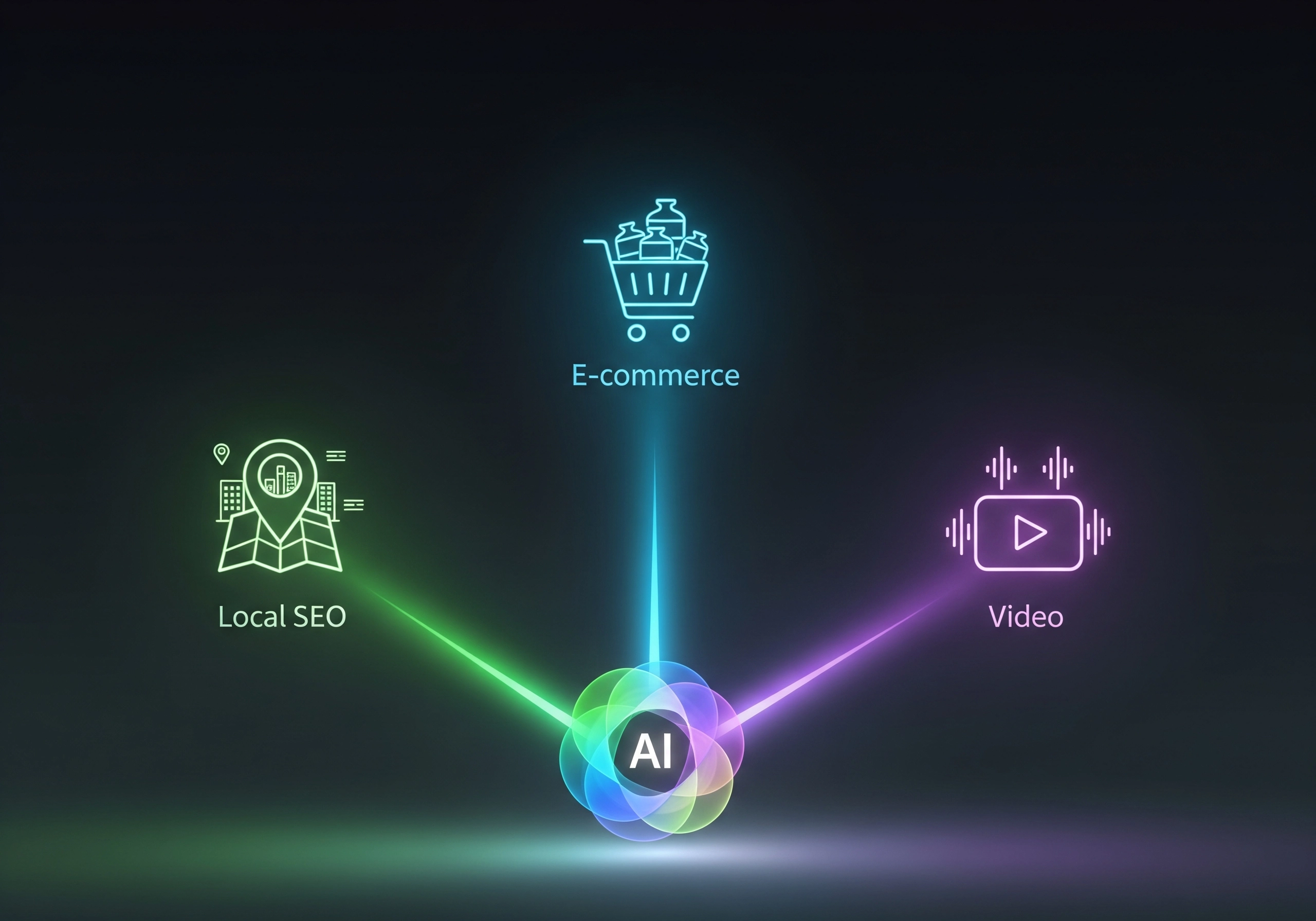
While the broader discussion around AI SEO tools often centers on general website optimization, the reality is that many businesses operate within highly specialized niches. A generic AI solution rarely addresses the granular challenges faced by a local restaurant, an e-commerce giant, or a video content creator. This shift necessitates a deeper dive into specialized AI SEO tools designed to tackle unique ranking hurdles.
The Precision of Local SEO AI
For businesses relying on geographical proximity, the stakes are incredibly high. Local SEO AI tools leverage advanced algorithms to understand hyper-local search intent, a critical factor for appearing in Google Maps and local pack results. They go beyond simple keyword targeting, analyzing local citations, managing online reviews, and optimizing Google Business Profiles.
These tools can, for instance, identify gaps in your local listing information, suggest optimal categories, and even analyze sentiment from customer reviews to recommend improvements. The goal is to ensure that when a user searches “coffee shops near me,” your business is not only visible but also compelling.
Local search requires an AI that understands community context, not just keywords.
E-commerce SEO AI: Navigating Vast Inventories
E-commerce platforms face a distinct set of SEO challenges: managing thousands of product pages, dynamic content, and complex internal linking structures. E-commerce SEO AI tools are engineered to streamline these operations, transforming what would be a monumental manual task into an automated, data-driven process.
These specialized AI solutions can:
- Automate Product Description Generation: Crafting unique, SEO-friendly descriptions for an entire catalog. This is a powerful application, freeing up content teams for strategic tasks.
- Optimize Product Schema Markup: Ensuring rich snippets appear in search results, improving click-through rates.
- Enhance Internal Linking: Suggesting optimal internal links between related products and categories to boost topical authority and user experience.
- Identify Keyword Gaps: Analyzing competitor product pages and search queries to uncover untapped keyword opportunities.
By leveraging e-commerce SEO AI, businesses can ensure that every product and category page is optimized for discoverability, driving sales and organic traffic.
Elevating Visibility with Video SEO AI
With video content consumption soaring, optimizing for platforms like YouTube and Google Video results is paramount. Video SEO AI tools specialize in understanding the spoken word and visual context within videos, a capability traditional SEO tools lack.
These tools can automatically:
- Generate Accurate Transcriptions: Making video content searchable and accessible.
- Extract Key Topics and Entities: Identifying the core themes discussed in a video to optimize titles, descriptions, and tags.
- Suggest Chapter Markers: Improving user experience and discoverability within longer videos.
- Analyze Viewer Engagement: Providing insights into what keeps audiences watching, informing future content strategy.
AI is unlocking the hidden SEO potential within video content, making it as discoverable as text.
The Advantage of Niche AI SEO Tools
The emergence of niche AI SEO tools underscores a critical evolution in the SEO landscape. While broad AI platforms offer comprehensive features, these specialized tools provide depth and precision tailored to specific industry needs. They integrate unique data sources and algorithms pertinent to their niche, offering insights and automation that general tools simply cannot replicate.
For instance, while a general-purpose AI SEO tool can assist with keyword research, a local SEO AI will prioritize geo-specific terms and local intent. Similarly, an e-commerce SEO AI will understand product variations and seasonal demand in a way a content-focused AI might not.
At GenWrite, we understand the need for targeted, high-quality content that aligns with specific business goals. Our AI blog generator automates the creation of SEO-optimized articles, which can be tailored to support specific niche strategies—whether it’s generating location-specific guides for local businesses or detailed product reviews for e-commerce. By focusing on content automation and SEO optimization, we empower businesses to build topical authority efficiently, complementing the specialized efforts of these niche AI SEO tools. Explore how GenWrite can streamline your content strategy and enhance your online visibility at https://genwrite.co/.
How Can You Seamlessly Integrate AI SEO Tools into Your Existing Workflow for Maximum Impact?
Integrating AI SEO tools isn’t just about adopting new software; it’s about strategically re-engineering your existing processes for maximum impact. The goal is a seamless transition that enhances your team’s capabilities, not complicates them. As Google’s algorithms become increasingly AI-driven, a well-defined AI SEO workflow becomes paramount for staying competitive and securing top rankings.
Charting Your Current SEO Workflow
Before you can effectively integrate new tools, you must first understand your current operational landscape. Begin by meticulously mapping out your existing SEO processes, from keyword research and content creation to technical audits and performance analysis. Identify the specific touchpoints where manual effort is high, or data processing is slow.
Pinpoint bottlenecks where human limitations hinder speed or scale. These areas represent prime opportunities for AI SEO implementation to deliver immediate value. Understanding your current state is the first step to a smarter future.
Strategic Integration Points for AI Tools
Once you’ve identified pain points, strategically introduce AI where it can offer the greatest leverage. For instance, AI excels at rapid data processing—analyzing millions of data points, tracking keyword fluctuations, and monitoring competitor actions in near real-time. This frees your team from mundane tasks.
Consider using AI for initial keyword clustering, topic modeling, and competitive content analysis. Tools like GenWrite, for example, automate much of the end-to-end blog creation process, handling keyword research, competitor analysis, and even content generation. This allows your team to focus on refining the AI’s output and adding unique strategic insights.
Prioritize areas where AI can accelerate data analysis and content generation, transforming your AI SEO workflow.
Empowering Your SEO Team with AI
Successful integrating AI SEO hinges on your team’s readiness and ability to adapt. It’s crucial to invest in comprehensive training that reframes AI not as a replacement, but as a powerful co-pilot. Teach your SEO team how to leverage AI tools for deeper insights, faster execution, and enhanced creativity.
Foster a culture of experimentation and continuous learning. Define clear roles where AI handles data-heavy, repetitive tasks, while human experts focus on strategy, nuanced content refinement, and ensuring brand voice. AI elevates the human role, freeing teams for strategic thinking.
Ensuring Quality and Control of AI Outputs
While AI can generate vast amounts of content and insights, human oversight remains non-negotiable. Implement robust quality control checks for all AI-generated outputs. This includes fact-checking, editing for brand voice and tone, and ensuring the content is truly helpful, original, and people-first, as Google guidelines emphasize.
Establish clear guidelines for human editors to refine AI-drafted content, adding the unique creativity and storytelling only humans can provide. This human-AI hybrid approach ensures accuracy and authenticity. A robust review process is crucial for maintaining content quality and brand integrity.
Measuring ROI and Iterative Optimization
Finally, establish clear metrics to track the return on investment (ROI) of your AI SEO implementation. Monitor key performance indicators (KPIs) such as organic traffic growth, ranking improvements for target keywords, engagement rates, and conversion metrics.
Use this data to continuously refine your AI SEO workflow. Embrace an iterative approach: test different AI tools or integration strategies, measure their impact, learn from the results, and adapt your processes accordingly. This agile mindset ensures you’re always optimizing for the best possible outcomes. Continuous optimization is the hallmark of effective AI SEO. To streamline your content creation and measure its impact, explore solutions that automate and optimize your blogging efforts, like the AI blog generator from GenWrite.
What Emerging Trends and Future Developments Will Shape AI SEO Technology Beyond 2026?

The landscape of search is never static, but beyond 2026, the pace of change driven by artificial intelligence will accelerate exponentially. We’re moving into an era where AI doesn’t just assist SEO; it fundamentally reshapes it, demanding a proactive approach to evolving search paradigms.
The Rise of Advanced Generative Engine Optimization (GEO)
The current shift to AI Overviews and generative search results is just the beginning. Beyond 2026, Generative Engine Optimization (GEO) will evolve into a sophisticated discipline. This isn’t merely about creating AI-generated content; it’s about optimizing content specifically for large language models (LLMs) that power search engines, ensuring your information is the most authoritative, fact-checked, and contextually relevant source for AI to synthesize.
We anticipate a move towards optimizing for AI’s interpretive capabilities, focusing on structured data, entity relationships, and clear, concise answers that can be easily ingested and re-presented by generative AI. Tools like GenWrite are already laying the groundwork for this by automating content creation with SEO optimization, helping to ensure output aligns with evolving search engine guidelines and LLMs for better discoverability.
Embracing Multimodal Search SEO
By 2026, over half of all online searches are expected to be voice-based, but this is merely one facet of multimodal search SEO. The future will see users seamlessly integrate voice, image, video, and even augmented reality (AR) into their search queries. Optimizing for this means going beyond text.
Visual Search Optimization
Image recognition will become critical. High-quality, contextually rich images with proper alt text and structured data will be paramount. Think about how products are displayed, how infographics convey data, and how these visual assets integrate with textual content.
Voice and Conversational SEO
For voice, the focus will intensify on natural language processing (NLP) and conversational intent. AI SEO tools will need to analyze how users phrase questions verbally versus textually, identifying long-tail, conversational keywords, and optimizing for direct answers. This requires a profound understanding of user intent beyond simple keywords, a strength AI brings to the table.
Optimizing for multimodal search demands a holistic content strategy.
The Dawn of Emotion-Based Ranking Signals
Imagine a search engine that doesn’t just understand what you’re looking for, but how you feel about it. Beyond 2026, we could see the emergence of emotion-based ranking signals. AI models will become adept at interpreting user sentiment, engagement, and even implicit satisfaction from interactions with content.
This means content that evokes positive emotional responses, solves problems efficiently, and provides a truly satisfying user experience might receive a ranking boost. SEO will involve not just technical optimization, but also a deeper psychological understanding of the audience, ensuring content resonates on a human level. It’s about crafting narratives that engage, inform, and delight.
Autonomous AI SEO Agents Take the Reins
The most transformative development might be the rise of autonomous AI SEO agents. These are not just tools that provide recommendations; they are intelligent systems capable of executing entire SEO workflows independently. Picture an AI that can:
- Conduct keyword research and identify semantic clusters
- Analyze competitor strategies
- Draft, optimize, and publish content
- Manage internal and external linking strategies
- Monitor performance and adapt in real-time
This will shift the human role from manual execution to strategic oversight, validation, and creative direction. While GenWrite currently automates the end-to-end blog creation process, including keyword research and content optimization, future autonomous agents will expand this to an even broader range of SEO tasks, adapting to SERP changes instantly. This integration of AI’s efficiency with human creativity defines the future of SEO.
Autonomous AI SEO agents will redefine the daily tasks of SEO professionals, allowing for unprecedented scalability and responsiveness.
The future of AI SEO is not about replacing human expertise, but augmenting it to navigate an increasingly complex, AI-driven search ecosystem. The tools that succeed will be those that empower us to adapt, innovate, and maintain relevance in this rapidly evolving digital landscape.
What is the Definitive Framework for Choosing the Right AI SEO Tool for Your Business?
Navigating the expansive landscape of AI SEO tools can feel like charting unknown waters. With the promise of enhanced Google rankings by 2026, the critical AI SEO tool decision demands a structured approach, moving beyond feature lists to a strategic alignment with your business’s unique trajectory. It’s not about finding the most expensive tool, but the most impactful one for your specific needs.
The Strategic AI SEO Tool Selection Framework
To ensure your investment yields significant ROI AI SEO, we advocate for a definitive framework that considers your operational reality, strategic ambitions, and the evolving AI landscape. This framework empowers you to make an informed choice, transforming a complex decision into a clear path forward.
1. Define Your Core Business & SEO Objectives
Before evaluating any tool, clarify what success looks like for your business in the AI-driven search era. Are you aiming to dominate AI Overviews, improve local search visibility, or dramatically scale content production? Pinpointing your primary SEO challenges—be it content creation bottlenecks, lack of topical authority, or competitive keyword gaps—is the first crucial step.
A tool’s true value emerges only when it directly addresses your most pressing problems.
Consider how an AI tool can help you achieve concrete outcomes like increased organic traffic, higher conversion rates, or reduced content production costs. This clarity forms the bedrock of your choosing AI SEO tool journey.
2. Assess Team Capabilities and Workflow Integration
Even the most advanced AI tool is only as effective as the team using it. Evaluate your team’s current skill set and comfort level with new technologies. Will they require extensive training, or are they ready to integrate AI seamlessly into their daily workflow? The goal is to augment human intelligence, not replace it.
Look for tools that offer intuitive interfaces and robust support, ensuring a smooth transition. Consider how the AI tool will fit into your existing content calendar, keyword research process, or technical SEO audits. A disjointed integration can negate the benefits of even the best AI SEO tools.
3. Evaluate Essential Features and Specialization
Focus on features that directly support your defined objectives. While many tools offer a broad suite, some excel in specific areas. Do you need a tool primarily for content optimization, semantic gap analysis, or predictive analytics? Or perhaps an all-in-one platform for comprehensive SEO management?
For instance, if your primary goal is to scale high-quality, SEO-optimized blog content efficiently, a platform like GenWrite specializes in content automation and SEO optimization, automating the end-to-end blog creation process from keyword research to publishing. This specificity can be a game-changer for content-heavy strategies, providing a tangible ROI AI SEO by saving time and resources.
4. Consider Scalability, Budget, and Return on Investment
Your chosen AI SEO tool should grow with your business. Evaluate its scalability to handle increasing content volumes, more complex keyword strategies, or expanding market reach. Beyond the initial cost, consider the total cost of ownership, including training, integration, and ongoing maintenance.
Crucially, calculate the potential ROI AI SEO. How much time will it save? How much will it increase organic traffic or conversions? A higher-priced tool might offer a better return if it significantly boosts efficiency and results. Look for transparent pricing models and flexible plans that align with your budget and anticipated growth.
5. Pilot, Test, and Iteratively Refine
Before committing to a long-term solution, conduct thorough pilot tests. Leverage free trials or small-scale implementations to see how the tool performs with your actual data and team. Gather feedback, analyze preliminary results, and be prepared to iterate on your selection criteria.
The AI SEO landscape is dynamic; your AI SEO tool decision should reflect that adaptability.
This iterative approach ensures you choose a tool that not only meets your current needs but also positions you for sustained success in Google’s AI-driven search future.
Ready to dominate search results in the AI era? Discover how GenWrite automates end-to-end blog creation with advanced AI for superior SEO and traffic generation.
Frequently Asked Questions about AI SEO Tools
Why is traditional SEO no longer enough for Google rankings in 2026?
Google’s search ecosystem is increasingly powered by AI models that understand intent, context, and desired outcomes. Features like AI Overviews and SGE prioritize direct, synthesized answers, making traditional keyword-focused SEO insufficient for visibility.
How do AI SEO tools differ from traditional SEO software?
AI SEO tools leverage machine learning and NLP to understand semantic relevance, user intent beyond keywords, and optimize for AI-driven features. They offer accelerated data processing, predict ranking shifts, and can help optimize content for AI Overviews, going far beyond basic keyword tracking.
What are the key features to look for in an AI SEO tool?
Prioritize features like intent matching, NLP scoring for semantic relevance, AI visibility tracking, and seamless integration with Google Search Console and GA4. A ‘human-in-the-loop’ aspect for content refinement is also crucial for maintaining quality and authenticity.
Can AI tools fully automate complex SEO tasks?
AI excels at data analysis, technical audits, and content optimization suggestions. However, human oversight remains indispensable for strategic decision-making, creative content development, ethical considerations, and authentic brand voice. A hybrid approach is most effective.
How do AI tools help optimize content for AI Overviews and semantic search?
AI tools analyze search intent, identify semantic gaps, and help structure content for direct answers. They focus on entity optimization and topical authority, ensuring your content is comprehensive and contextually relevant, making it ideal for AI Overviews and direct answer snippets.
What role does predictive analytics play in AI-powered SEO?
Predictive analytics in AI SEO tools helps forecast trends, anticipate algorithm changes, and identify future ranking opportunities. This allows for proactive strategy adjustments, ensuring your SEO efforts remain effective and future-proofed against rapid search engine evolution.