
What happens when your seo writer ai ignores secondary search intent?
The high cost of answering only half the query

I recently watched a friend launch a blog post about setting up a home gym. He used a basic, off-the-shelf AI writer to draft the whole thing. It did okay. The tool listed weights, benches, and floor mats, which covers the primary search intent, which is just the surface-level answer the user wanted. But the post tanked. It got zero traffic because it ignored what happens next in the reader’s mind. That’s the secondary search intent. Once someone knows what gear to buy, they immediately start wondering how much space they actually need, or how to keep heavy iron weights from ruining their hardwood floors.nnMost basic writing tools can’t see past the main keyword. They spit out a flat list and call it a day. When a reader lands on a page like that, they grab their quick answer and immediately bounce to find the rest of the story elsewhere. Google notices. That quick exit signals that your content didn’t actually satisfy the user. It looks like a standard bounce, but it’s really just a failure of depth.nnThat’s why we built GenWrite. We wanted an automated AI blog generator that looks at the whole search picture, not just the top layer. A smart generator should analyze competitor structures to find these hidden, secondary questions before writing even starts.nnIf your tool only answers half the query, you’re paying a high price in lost traffic. Sure, you saved time writing. But you lost the reader because you didn’t answer their next logical question. Sometimes, a single missed subtopic is the only thing keeping you off page one. We have to design content for the entire journey, not just the front door. If we don’t, our competitors will.
Why Google’s modern engines punish single-intent drafts
Google doesn’t match keywords anymore. It parses intent. Years ago, search engines relied on simple indexers to find exact string matches on a page. Today, deep learning models like RankBrain, BERT, and MUM analyze the underlying semantics of a query. They use fan-out query expansion to map out and retrieve related concepts a searcher will likely need next. If your page only answers the surface question, Google’s algorithms flag the content as incomplete.
When a reader lands on a flat, single-intent draft, they quickly realize it lacks depth. They bounce. Our testing shows that ignoring secondary intent spikes bounce rates by 30% to 40%. This immediate exit signals to search algorithms that your page failed to solve the user’s problem. Your rankings drop, no matter how many keywords you stuffed into the body copy.
Many marketing teams still rely on legacy software that cannot predict these multi-layered user journeys. If you’re stuck using legacy seo tools vs ai platforms, your drafts will miss these semantic layers. Traditional systems optimize for keyword density. Modern search engines optimize for semantic completeness.
Your workflow has to change. Modern seo writing tools must look beyond the primary keyword to map out the entire search journey automatically. When MUM processes a query, it expects an ecosystem of related answers. If your draft fails to address those sub-topics, Google finds a competitor who does.
That’s why basic text generators fall short. To survive this shift, you need a smart seo writing ai that builds thorough, multi-intent structures right from the first draft. By addressing the primary search query while answering the user’s next three logical questions, you build high-utility content that search algorithms reward.
What does secondary search intent actually look like in practice?
Let’s compare how a human brain processes a search query versus how a basic ai writer seo tool does it. Take the word “toothache.” When someone types that into Google, they don’t want a biology lesson on dental pulp. They’re hurting. They need relief, and they need it five minutes ago.
A standard generator sees “toothache” and spits out a dry, encyclopedic article on tooth anatomy. It’s useless to someone in pain. A smart seo content creator, however, looks at the wider intent cluster. This means addressing the silent, secondary questions the user is actually asking. Things like “How do I stop this throbbing at home?” or “Is this an emergency room situation?”
We can map these hidden demands using the 3 Cs framework: content type, format, and angle. It’s a simple way to build a page that actually matches what the searcher expects.
| Dimension | Flat AI Output (Literal) | Intent-Optimized Output (Layered) |
|---|---|---|
| Content Type | Informational essay on dental decay. | Problem-solving guide with immediate actions. |
| Content Format | Long blocks of text explaining medical terms. | Bulleted list of home remedies and a warning checklist. |
| Content Angle | “What is a toothache?” | “How to get rid of a toothache tonight.” |
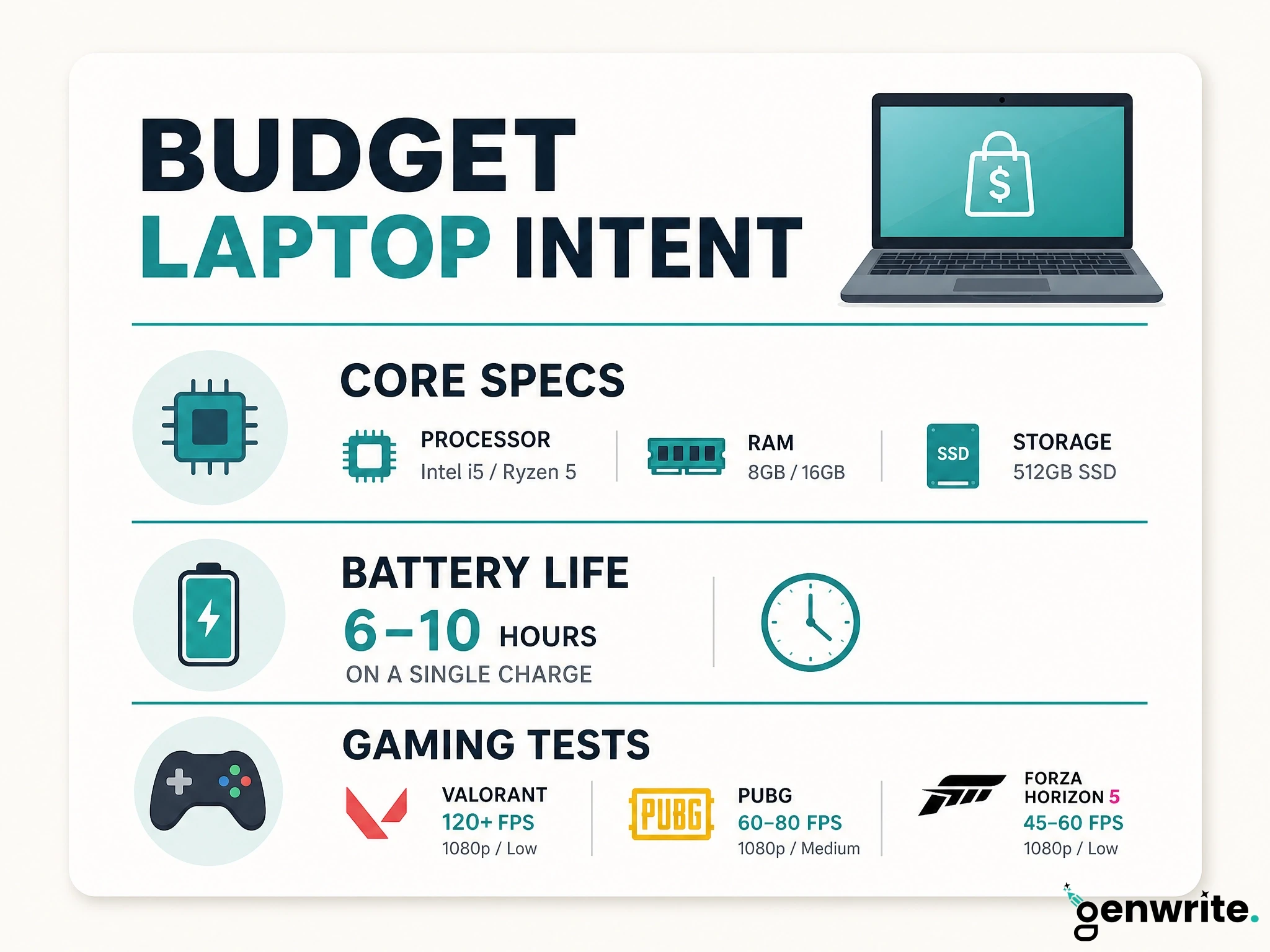
Think about another common search: “best budget laptops.” Obviously, the user wants a cheap computer. That’s the primary intent. But the secondary intent is reassurance. They want to know if a $300 laptop will fall apart in two months, or if it can actually run Zoom and Google Docs at the same time. If your page only lists prices and specs without addressing those quiet anxieties, you’ve missed the entire point of the search.
When your writing software ignores these deeper layers, readers bounce. Fast. I see business blogs fail all the time, and it’s rarely because they lacked keywords. It’s because they answered the wrong question. They gave a textbook to someone who just needed an aspirin.
That’s why we built GenWrite to analyze competitor patterns automatically. Our system looks at what top-ranking pages actually cover so your drafts match what users are looking for. You get content that converts, not just words filling up space on your site.
How cheap optimization engines construct a flat reading experience
Let’s face it. Most cheap AI writers are just fancy autocorrect engines. They look at your primary keyword, spit out five hundred words of generic text, and call it a day. If you use basic seo content writing tools that only count keyword density, you’re building on sand. Basic editors treat writing like a math problem where more repetitions equal a better score.
These basic tools don’t understand why a human is searching. They just see words. For example, if someone searches “how to fix a leaky pipe,” they need a tool list. They also need quick steps and a warning about when to call a plumber. A cheap AI generator might write a beautiful, poetic history of plumbing instead. It sounds nice, but it completely misses what the reader actually needs to solve their problem.
You can’t fix this mismatch by stuffing more keywords into the draft. If the underlying user intent is wrong, the page will fail. Even if you have a massive backlink profile,meaning lots of other websites link to your page,it won’t save you. Google watches how users behave on your site, and user experience signals trump old-school ranking tricks every time.
When readers land on your page and don’t find their answers immediately, they click the back button. This quick bounce tells search engines that your page is useless for that query. Your rankings will drop, and no amount of technical trickery can stop it.
Smart platforms like GenWrite look at the whole picture. They use advanced ai writing seo systems to analyze competitor structures and see what extra questions readers expect you to answer. Sure, these tools don’t work perfectly 100% of the time. But they stop you from publishing empty text that real humans ignore.
How to read the SERP interface to extract hidden user demands

You can find the secret blueprint for your next article right on Google’s search results page. Most basic seo writing tools only look at the primary keyword. But to win today, you need to dig deeper. Here is a simple workflow to decode what searchers actually want.
First, type your main keyword into Google and look at the very top. See those small filter buttons under the search bar? Google puts those there because searchers often want to narrow their focus. If you search “best CRM,” and the filters say “for small business” or “free,” Google is telling you those are major secondary intents. You must include these angles in your draft.
Second, scroll down to the “People Also Ask” (PAA) box. It’s a goldmine. These questions are not random. They’re the exact follow-up questions real people type after reading the main topic. For example, if your main topic is “how to paint a room,” the PAA might ask “do I need primer first?” That’s a clear sign your article needs a section on primer.
Third, look at the top ten organic results. Don’t just look at their titles. Click on them and check their subheadings. What subtopics do they all cover? If eight out of ten competitors have a section on “safety gear,” you can’t leave it out.
Finally, check the bottom of the page for “Related Searches.” These terms show what users search for when their first attempt fails. And they help you find the exact words to use in your subheadings. For instance, a search for “room painting” might show “best paint rollers” at the bottom.
Instead of doing this manually for hours, an advanced ai seo content generator like GenWrite automatically scans these search engine results. It extracts these hidden signals so you don’t have to guess. This ensures your draft covers both the main question and the smaller, hidden needs of your readers.
Rewriting your AI drafts to keep readers on the page
When you get a draft from a standard seo writer ai, it usually answers the main question right away. That is great for primary intent. But if you stop there, readers will bounce because they don’t get the full picture. You need to restructure the draft to handle both the obvious question and the hidden ones.
Start by answering the main search query in your first two paragraphs. Don’t make people scroll. Once that’s done, look at the bottom half of your draft. This is where you inject your own real-world data and personal experiences to build trust. It is also where you should clean up any robotic phrases. If you want a step-by-step guide, you can read about how to optimize AI blog posts so they actually rank well. This step turns flat text into helpful content.
Layering your content
Use the middle and bottom sections of your post to tackle secondary intents. For example, if your main topic is “how to bake sourdough,” the primary intent is the recipe. But the secondary intent might be “what tools do I need?” or “how do I store the bread?” Put these subtopics into clear subheadings. This keeps readers scrolling because you are answering their next three questions before they even have to search again.
And don’t forget to link to your other relevant articles. Clean internal linking helps search engines understand your site structure. Of course, this manual editing process takes some extra time, and traffic results can vary depending on your niche. But a smart seo content creator knows that a little human effort goes a long way. It’ll make your blog feel like it was written by an expert, not just a machine.
Are you ready to optimize for the zero-click era?

What happens when your target audience stops clicking on search results altogether? It’s already happening with the rise of conversational AI bots and instant search summaries. If your current seo writer ai simply stuffs keywords into flat paragraphs, your content will likely be ignored by both humans and machine algorithms.
Are you prepared to adapt your strategy for this new environment? To survive, your content must satisfy both the primary search term and the deeper, secondary questions that users ask. This shift is known as answer engine optimization, and it determines whether AI bots cite your brand or your competitor’s. If you don’t answer the follow-up questions, another site will.
How do we design content for zero-click searches?
The secret lies in structuring your posts so search engines can easily parse your answers. But how do you turn those impressions into actual revenue? You can start by focusing on metadata optimization to target buyers who are ready to make a purchase. Clear headers and direct answers make your site highly readable for both LLMs and human readers.
So, is your current writing process up to the task? Many basic tools fail here because they cannot see the intent behind the query. But when you use an intelligent ai seo content generator like GenWrite, the system automatically maps these secondary intents for you. It builds a complete map of what users actually want to know.
While this approach might not win every single competitive keyword overnight, it’s the most reliable way to build long-term organic traffic. Why settle for half-answered queries when you can capture the entire search journey? It’s time to make your content work harder.
Tired of editing flat AI drafts that miss what searchers actually want? GenWrite handles secondary intent automatically so you don’t have to.
People also ask
What actually is secondary search intent?
It’s the unspoken cluster of follow-up questions users have after typing their initial query. If someone searches for a budget laptop, they’re also wondering about battery life and warranty options, even if those terms aren’t in the main search bar.
Why do basic AI writers miss secondary keywords?
They’re usually trained on the single highest-volume phrase you feed them. They don’t look at the rest of the SERP to see what else users expect to find on the page.
How does Google know if my content ignores secondary intent?
Google watches user behavior signals like pogo-sticking. If a reader lands on your page, doesn’t find their follow-up questions answered, and bounces right back to the search results, it’s a clear red flag.
Can I fix this by just stuffing more keywords into my article?
Honestly, that approach died years ago. You’ll get much better results by addressing related sub-topics naturally rather than cramming awkward phrases into every paragraph.