
Are you ready for ChatGPT to answer your users? What is answer engine optimization and why it matters
The shift to instant answers
The sudden death of the blue link
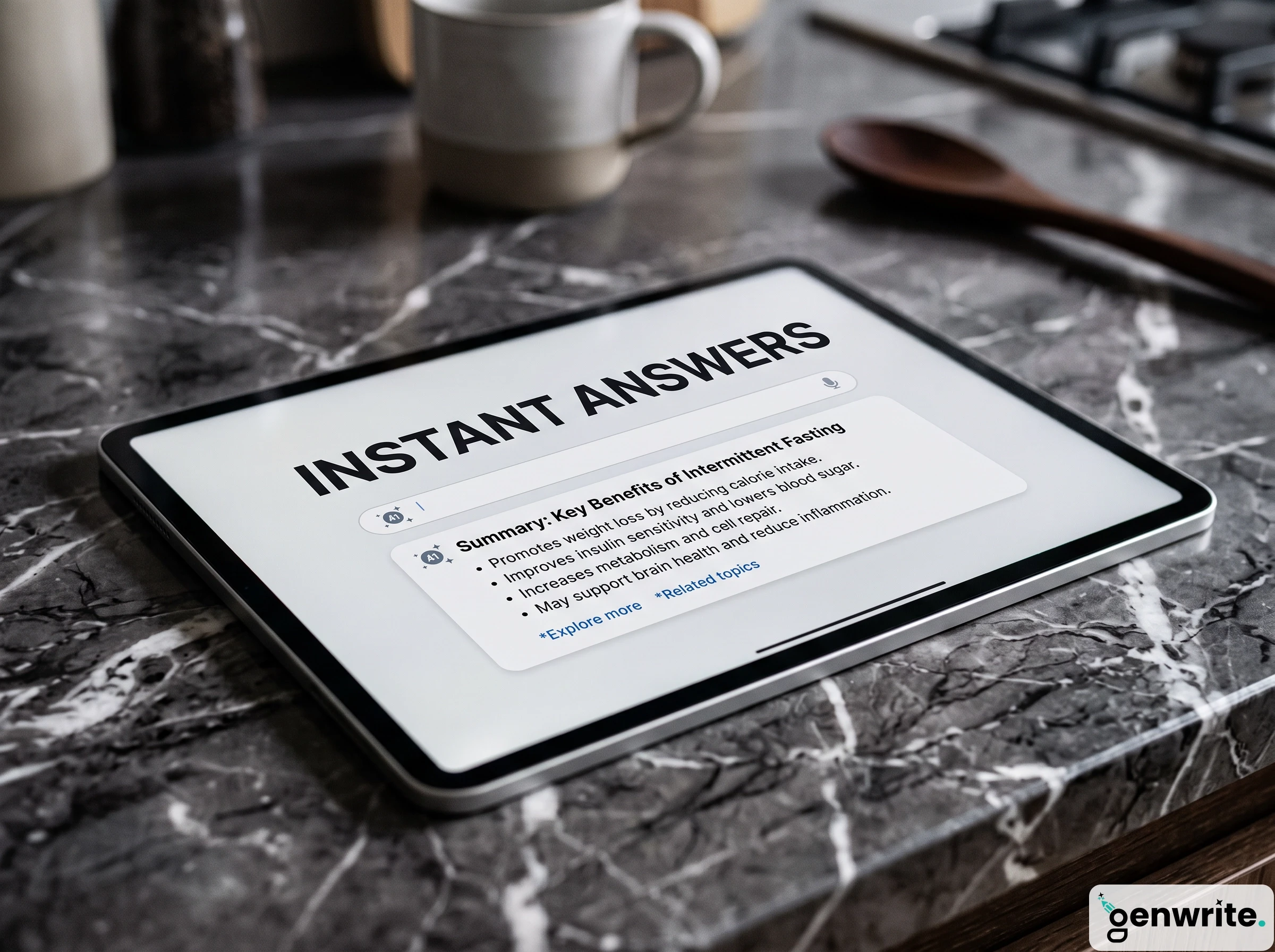
Remember when finding a quick stat meant opening seven different tabs, dodging cookie banners, and scanning endless walls of text? That habit is dying. People don’t want a list of blue links anymore. They just want the answer.
We’re right in the middle of a major shift in how we look things up. Instead of typing awkward, fragmented keywords into Google, we’re talking to tools like ChatGPT, Perplexity, Gemini, and Claude. We ask them weirdly specific questions, make them compare products, and expect a clean summary in seconds. It’s not some future trend. It’s happening right now. For millions of people, a chat box is already the new homepage.
This means traditional SEO isn’t the only game in town anymore. If your content isn’t built to feed these AI models, your brand won’t show up in their replies. It’s that simple.
This is where artificial intelligence search optimization comes in. Instead of tweaking pages for search engine algorithms that rank links, you’re optimizing for models that pull together answers. Sure, these tools still hallucinate and pull from outdated sources. But the direction is clear. Millions of quick queries that used to drive traffic to business blogs are now answered directly inside the chat window. No clicks required.
For marketing teams, this feels terrifying. But it’s actually a massive opportunity. If you shift your focus toward answer engine optimization (AEO), you can make sure your insights are the ones these bots quote. Tools like an AI blog generator can help you structure your articles so they’re easy for both humans and LLMs to digest.
The rules of discovery have changed. If you’re still writing content just to rank on page one of Google, you’re missing the crowd that starts and ends their search in a chat box. It’s time to start writing for the machine readers, too.
What is answer engine optimization?
Defining answer engine optimization
Answer engine optimization (AEO) is the practice of formatting digital content so AI search engines and large language models (LLMs) can parse, trust, and cite it in conversational answers. Traditional SEO targets clicks. AEO targets direct synthesis. Your goal is to feed the response engine itself.
The process relies on aligning web content with retrieval-augmented generation (RAG) pipelines. When a user queries ChatGPT or Perplexity, the engine translates the prompt into semantic vectors, retrieves high-relevance text chunks from its index, and feeds those chunks to the LLM to generate the final output. If your content lacks the structure this pipeline expects, the retriever skips it entirely.
Securing these citations requires high machine-readability. That means deploying clean schema markup, explicit Q&A formatting, and clear entity relationships. Keyword density no longer matters; semantic clarity does. Using an advanced AI blog generator can help structure articles with the precise formatting and schema LLM crawlers require to build their knowledge graphs.
LLMs prioritize processing efficiency. They favor short, declarative statements that require minimal compute to parse. If you hide facts inside dense, winding paragraphs, the retriever will abandon your page for a competitor’s clean table. Structured clarity wins.
Why ranking first on Google is no longer the metric that pays
The illusion of the blue link
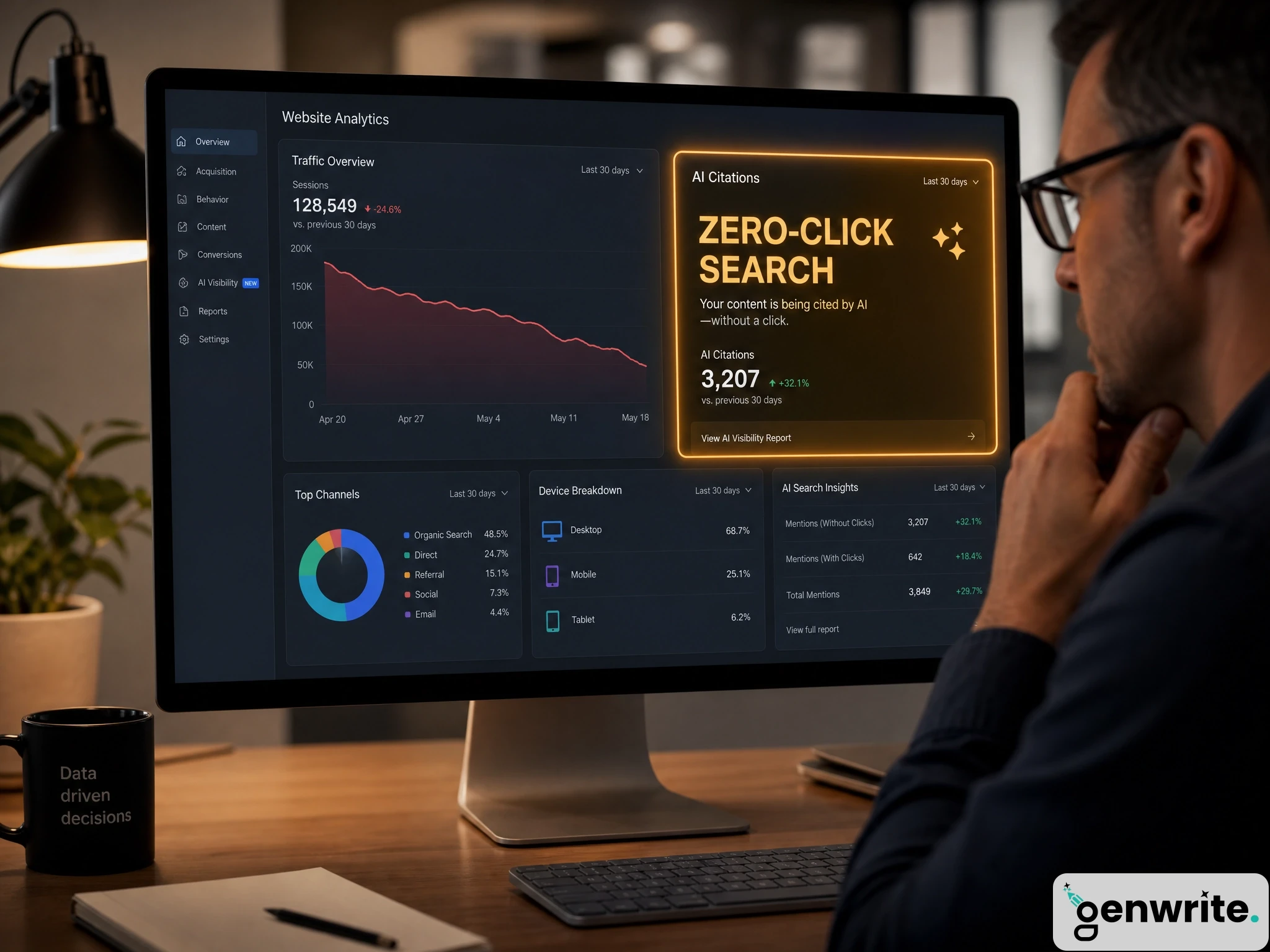
For years, ranking first on Google was the ultimate victory. If you held that top spot, the traffic followed automatically. But that formula’s broken down. Today, securing the top blue link doesn’t guarantee the flood of visitors it once did, because the way people find information has fundamentally shifted.
The numbers tell a stark story. Recent data from SparkToro reveals that nearly 60% of Google searches now end without a single click. Users get their answers directly on the search results page, courtesy of featured snippets, quick-answer boxes, and AI-generated summaries. And this trend is only accelerating. Gartner recently predicted that traditional search engine volume will drop by 25% by 2026 as users migrate to conversational AI chatbots.
This shift means traditional SEO metrics are losing their financial utility. If your audience gets their answer without leaving the search page, your traffic drops even if your rankings remain high. To survive, brands must pivot from classic search optimization to google aeo (Answer Engine Optimization).
But this transition isn’t just about surviving a drop in clicks. It’s about adapting your content engine to feed the models that power these instant answers. If you aren’t optimizing your content for how LLMs parse information, you’ll simply vanish from the conversational loop. Many marketing teams still waste hours manually writing content that search engines ignore, so they aren’t keeping up with the speed of search. Transitioning to modern workflows, such as using an AI blog generator to scale structured, search-ready content, helps bridge this gap quickly.
Of course, this 25% search drop won’t hit every industry with the same intensity. Highly transactional queries and local services will likely retain higher click-through rates for longer. Yet, the informational queries that build early-stage brand awareness are rapidly disappearing behind the AI curtain.
So, how do you measure success when clicks disappear? The new metric is brand share of voice within AI responses. If ChatGPT or Perplexity synthesizes your data to answer a user, you win,even if that user never visits your site. Aligning your strategy with aeo seo principles ensures your brand remains the source of truth that these engines rely on.
The tactical framework for answer extraction
How to optimize for answer engines
AI systems don’t read like humans. Instead of enjoying your prose, they scan for patterns, parse relational data, and isolate dense blocks of text that directly resolve a user’s prompt. If your copy is buried beneath three paragraphs of introduction, the bot will skip it entirely. You need a deliberate structure. Make it easy for the crawler to grab what it needs.
Start every major section with the direct answer in the first two sentences. Don’t save the core takeaway for the end. When you apply this content automation approach across your entire publishing schedule, search agents can instantly extract and cite your definitions. It’s that simple.
Structuring for extraction
We organize our articles around specific question-based subheadings that mirror actual user queries. Follow these with a concise definition or a one-sentence summary. You can expand into the nuance later.
To make this work, place the exact term and its core meaning right below the H3 tag. LLMs also love comparing attributes, pricing, or features in clean markdown tables rather than dense prose, so use tables whenever you can. Finally, keep your sentences short. Break complex thoughts into single-clause statements that are easy for an LLM to tokenize without losing context.
Common structural mistakes
Most writers try to be clever with metaphors before stating the facts. Don’t do that. Conversational search engines prioritize clarity over narrative flair. If a bot cannot parse your point in under two seconds, it defaults to a competitor with a simpler layout. Results vary, but clear formatting almost always beats clever copywriting in modern AI visibility tests.
This means changing how you approach your drafts. You aren’t writing for a linear scroll anymore; you’re writing for an extraction engine. Build modular paragraphs, answer questions immediately, and let the details follow.
How to bridge traditional SEO with conversational AI search
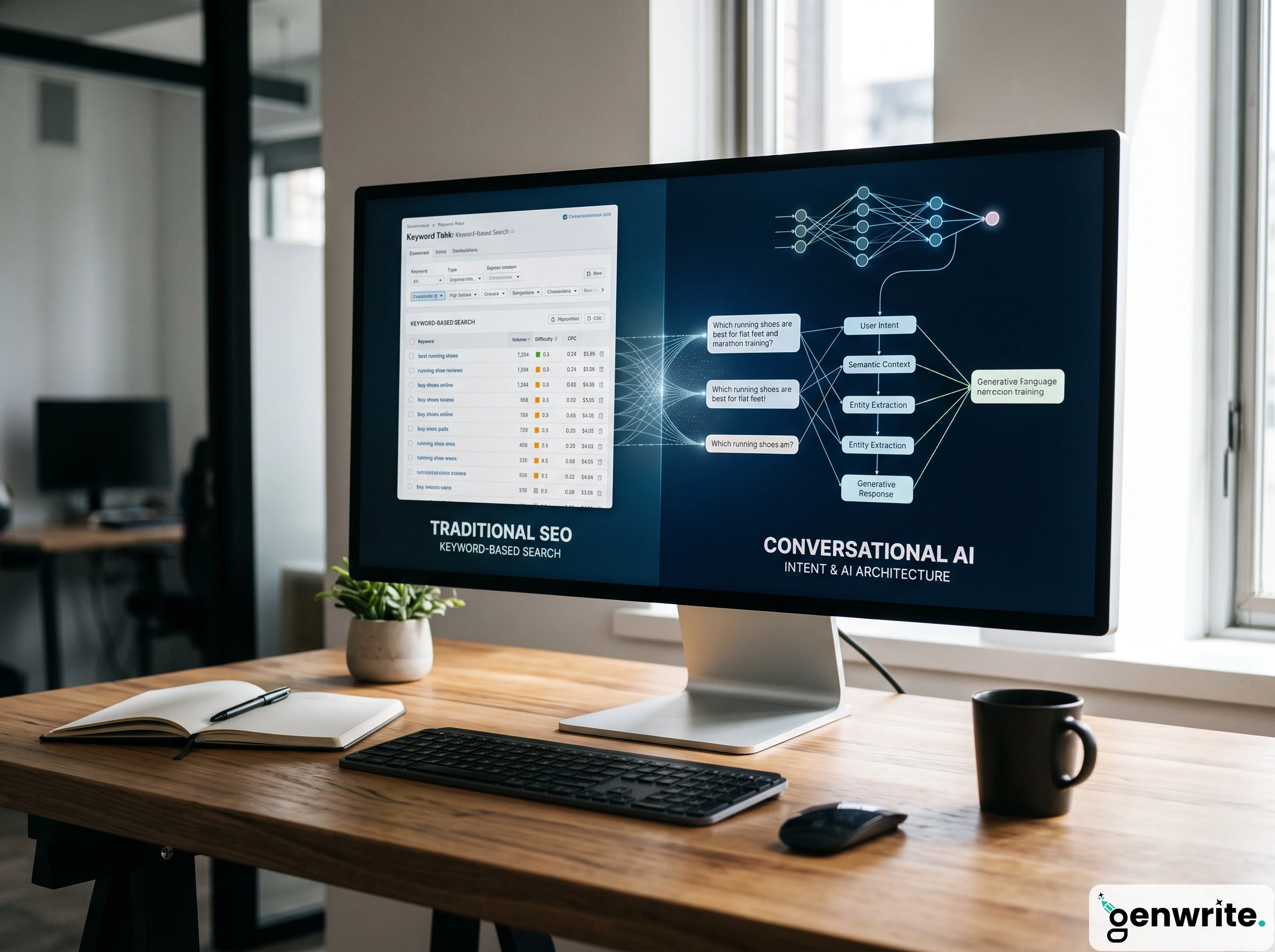
Let’s stop treating Answer Engine Optimization (AEO) and Search Engine Optimization (SEO) like rival sports teams. They aren’t competing; they’re parts of the same machine. If you ignore traditional SEO to chase AI citations, your site’s technical foundation will crumble. Conversely, if you stick solely to standard keyword stuffing, LLMs will completely look past your content.
To win in this new search environment, you have to understand where these two methodologies diverge and where they merge.
| Dimension | Traditional SEO | Conversational AEO |
|---|---|---|
| Primary Target | Keyword-level rankings and CTR | Semantic entity networks and direct citations |
| User Intent | Discovery, browsing, and comparison | Immediate problem-solving and direct answers |
| Success Metric | Organic clicks and impressions | Brand mentions within LLM chat responses |
| Technical Focus | URL hierarchy and page speed | Schema markup and structured Q&A data |
Traditional SEO acts as the physical library. It keeps the books clean, indexed, and easy to find. But AEO is the librarian who reads those books and explains the answers to visitors. Without strong technical SEO, LLM web crawlers cannot parse your site to begin with. Without structured, entity-first AEO, those same crawlers will find your pages but fail to extract your data as a clean, conversational answer.
Building this unified bridge requires a shift in how you produce content. You can’t just target isolated search terms anymore. You have to map out semantic entity networks, answering the secondary and tertiary questions that naturally flow from a main topic. This is where modern ai search engine optimization becomes a necessity.
How do you practically execute this unified seo aeo strategy? It starts with structural clarity. You write for the human first, but you format for the machine. This means using clear, direct headers that match common voice search queries, followed immediately by a single-sentence answer. It also means incorporating detailed schema markup so search bots don’t have to guess what your data means. When you make your data easily digestible for a scraper, you naturally make it more readable for a human visitor too.
This hybrid reality is why lazy, prompt-engineered content fails so spectacularly. If you simply ask a generic chatbot to write an article, it lacks the real-time search data needed to build actual authority. It ends up spitting out generic fluff that satisfies neither Google’s algorithms nor Perplexity’s retrieval models. Many marketing teams fall into this trap, which is why specialized SEO writing tools are replacing basic conversational prompts. Platforms like GenWrite bridge this exact gap by pulling live search intent data and automatically structuring content with schema and clear semantic structures. The goal is to feed both systems simultaneously, ensuring your brand is both clickable on Google and cited in ChatGPT.
The mechanics of AI trust: why bots cite your competitors instead of you
Traditional backlink profiles are losing their grip on search visibility. You built hundreds of directory links and guest posts, yet ChatGPT and Perplexity still cite your competitors for high-intent queries. That frustration stems from a fundamental misunderstanding of how large language models calculate authority. LLMs don’t just count incoming links like older indexers. They map entities, evaluate semantic density, and verify cross-platform mentions across trusted training corpora.
Entity recognition rules this new environment. When an answer engine constructs a response, it looks for verifiable facts tied to a named brand across multiple independent sources. If your brand only exists on your own domain, the model views it with skepticism. It doesn’t matter how high your PageRank was in 2021. If public forums, industry databases, and news aggregators aren’t talking about your specific methodology, you simply do not exist in the model’s weighted probability matrix.
Technical infrastructure also plays a silent role here. Major AI search crawlers like OAI-SearchBot frequently fail to parse heavy client-side JavaScript. If your content is trapped behind complex React hydration layers or slow server responses, the crawler leaves empty-handed. That bottleneck destroys your chances of appearing in conversational answers.
Fixing this requires shifting your content creation strategy away from isolated keyword stuffing and toward clean, machine-readable entity footprints. Bots need clear schema markup, lightning-fast static HTML, and consistent brand mentions where industry experts actually gather. Results vary depending on your niche, but without these structural trust signals, even the best-written guides remain completely invisible to modern search agents.
How top brands are getting named by ChatGPT and Perplexity

The power of the synthetic shortlist
A marketing director at a mid-market SaaS company recently shared a fascinating analytics anomaly with me. They noticed a sudden stream of highly qualified trial signups originating from a single markdown link inside a Perplexity search response. A user had asked, “What is the best budget-friendly CRM that integrates with Slack and has a visual pipeline?”
The engine didn’t just throw a list of blue links at them. It built a clean comparison chart, pulling technical data from three specific blogs and a Reddit thread. The director’s brand was listed second, praised specifically for its Slack integration.
This is how modern buying journeys happen. If you want to know how to optimize for answer engines, you have to study these synthetic shortlists. LLMs don’t guess; they synthesize. They look for highly structured, objective-sounding comparisons. When a brand structures its product pages with clear feature matrices and schema markup, it feeds these engines exactly what they crave.
But there’s a catch. If your product is only mentioned on your own domain, the bots will likely ignore it as biased self-promotion. They trust third-party validation. We’ve observed that the brands winning the conversational search game are those that actively seed their data across review platforms, forums, and partner blogs.
Building a modern answer engine optimization strategy means creating content that anticipates these multi-variable queries. For instance, instead of just writing “Our tool is great,” you publish detailed, head-to-head comparison pages that honestly evaluate pros and cons.
Admittedly, LLM sourcing can be erratic. A bot might occasionally pull a three-year-old pricing tier from an obsolete forum post. But the traffic that does come through these citations is incredibly high-intent. These users aren’t browsing; they are already at the bottom of the funnel, looking for validation to click “buy.”
Why generic chat-based content generation is a silent traffic killer
Open a generic chat window, type a quick prompt, and hit publish. It’s an incredibly tempting workflow when you’re staring at aggressive traffic goals. But shipping raw, unedited machine outputs is the fastest way to tank your organic rankings.
Search engines have grown highly sophisticated at detecting low-effort, repetitive text. When you scale content without editorial oversight, you risk hitting quality thresholds that trigger sudden, devastating drops in visibility. This affects both traditional search and modern conversational interfaces. Modern seo aeo strategies require content that offers genuine depth, not just a rehash of the top three Google results.
The real damage, however, happens at the human level. We have reached a point where audiences can spot generic AI patterns instantly. The reality is that readers’ trust in AI-generated drafts drops rapidly when they encounter flat, passive phrasing that lacks real-world experience. If your content sounds like a textbook written by a committee, users will bounce back to the search results. That signal tells search engines your page doesn’t satisfy the search query.
How do you spot these issues before publishing? Look for predictable sentence structures, overused transition words, and a complete lack of opinion or concrete data. This flat style is typical of basic LLM outputs. To protect your brand, you must learn how to fix robotic drafts by injecting human insights, actual case studies, and unique viewpoints.
Successful artificial intelligence search optimization relies on a hybrid approach. AI should handle the heavy lifting of research, outline generation, and initial drafting, but human editors must direct the final narrative. One honest hedge: this editorial process takes time, and it’ll slow down your publishing velocity. But the alternative is publishing hundreds of pages that get zero impressions because they lack original value.
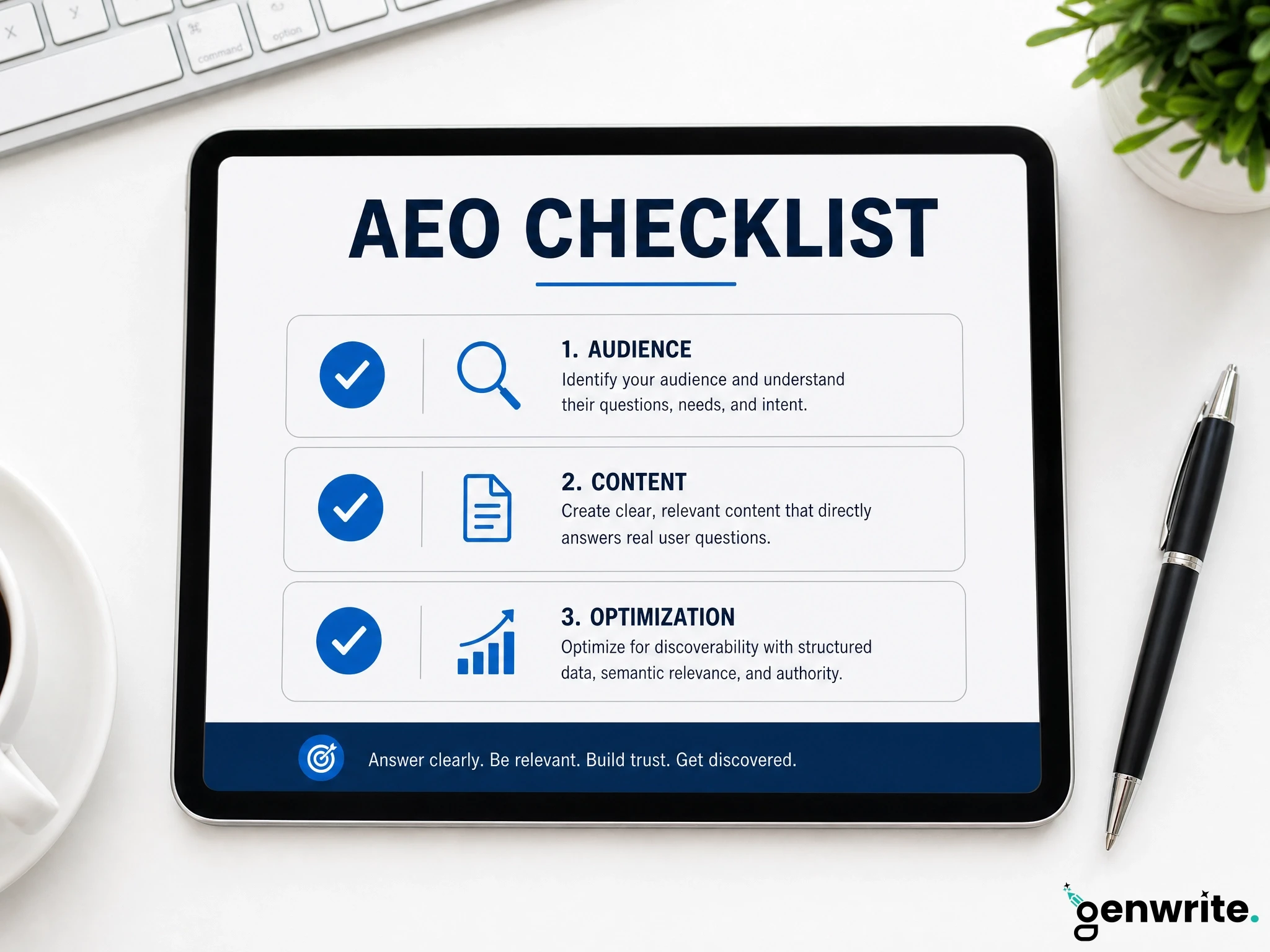
Is your site truly ready for AI crawlers? A quick diagnostics checklist
Are you blocking the very engines you want to rank on?
It’s a common mistake. Brands lock down their robots.txt files to protect their proprietary data, only to realize they’ve accidentally locked out GPTBot, ClaudeBot, and PerplexityBot. If these crawlers can’t read your pages, you simply don’t exist in their latent space. Have you audited your server access logs this month to see which user-agents are actually crawling your site? If you aren’t actively welcoming these agents, you are invisible to conversational search.
Is your entity data explicitly mapped?
Search bots don’t guess; they match entities. If your organization, authors, and core topics aren’t clearly defined in structured JSON-LD schema, you’re leaving your brand footprint to chance. Do you use nested schema to connect your writers’ credentials to their specific areas of expertise? This structured clarity is fundamental when figuring out how to optimize for answer engines that rely on strict relational databases. Without schema, LLMs might misattribute your best insights to a competitor.
How fresh is your indexable content?
Old data gets discarded quickly by modern models. If your highest-traffic pages haven’t been updated in six months, LLMs will favor a competitor with more recent data points. Are you manually reviewing your top-performing articles, or are you deploying AI SEO tools to systematically analyze, refresh, and maintain content accuracy? Static content is dying content in the age of google aeo. You need a systematic way to keep your data current.
Can bots easily parse your page layout?
Messy, deeply nested HTML elements confuse extraction algorithms. Ask yourself: does your page rely on complex JavaScript to load critical text? If a basic text-based browser can’t render your content in under half a second, an AI crawler likely won’t bother parsing it either. Keep your code clean, your tables simple, and your answers highly visible. If a bot has to fight through three layers of pop-ups and lazy-loaded divs, it will move on.
Owning the conversational loop
Taking control of your AI footprint
The transition from blue links to conversational answers isn’t coming next year. It’s happening right now, every time someone asks ChatGPT or Perplexity for a software recommendation or a strategic how-to guide. If your brand isn’t cited in those answers, you simply don’t exist for that user.
Understanding what is answer engine optimization is only the first step. The real work lies in executing a continuous answer engine optimization strategy that feeds these large language models (LLMs) the structured, authoritative data they crave. This means restructuring your existing blog posts, answering direct questions with absolute clarity, and maintaining an active digital footprint that AI scrapers can easily parse.
But let’s be realistic here. Keeping up with these technical formatting requirements manually across hundreds of articles is incredibly exhausting. Results vary based on how frequently crawlers visit your site, and doing this on your own often leads to burnout. That’s where automated workflows become necessary. By using an advanced AI blog generator like GenWrite, you can automate the tedious parts of content creation and SEO optimization while keeping your brand voice intact.
So, where do you go from here? Start by auditing your top three traffic-driving pages. See if they’re directly answering the core questions your users are asking, or if they’re buried under paragraphs of fluff. Don’t wait to fix those pages, then scale your efforts. The conversational shift is a land grab, and the brands that secure their citations today will own the search traffic of tomorrow.
Tired of watching ChatGPT skip your site? GenWrite builds the structural formatting right in so AI search engines actually cite you.
FAQ
How does answer engine optimization differ from traditional SEO?
Traditional SEO focuses on ranking blue links on a search engine results page, while AEO targets getting your content directly summarized by AI models like ChatGPT and Perplexity. It’s less about keyword stuffing and more about structuring data so LLMs can easily parse and cite your exact points.
Why are zero-click searches bad for traditional traffic?
They’re not necessarily bad, but they do mean users get their answers right on the search page without ever visiting your site. Most sites lose top-of-funnel clicks unless they adapt their content to become the cited source inside the AI’s response.
Can I use generic AI tools to scale my AEO content?
Honestly, standard AI tools usually pump out repetitive fluff that search bots ignore. You’ll want structured, highly specific data that proves your brand’s unique authority if you want bots to notice.
What is the fastest way to check if my site is ready for AI crawlers?
Start by auditing your technical markup, ensuring clean heading hierarchies, and checking if your robots.txt file accidentally blocks conversational AI bots from scraping your pages.