
Do readers actually trust drafts generated by a specialized seo writer ai?
The invisible tension in your content strategy

Digital marketing is in a weird spot right now. You can generate a formatted blog post in thirty seconds flat. Yet, readers have never been more skeptical. They spot lazy, robotic writing instantly. And when they do, they leave.
Think about someone looking for honest advice on home security systems. If they land on a page that reads like a dry, robotic instruction manual, they’re gone. They want to hear from a real person who has actually held the camera in their hands and tested it.
This tension is a massive headache if you manage SEO and content. You need volume to rank, sure. But you need trust to turn those clicks into actual customers. If visitors feel like they’re reading a generic template, they won’t buy. Trust takes years to build online, but you can lose it in a single click.
How do you scale up without losing that human connection? It starts by changing how you view the software. A specialized seo writer ai like GenWrite isn’t a replacement for your brain. It’s a highly efficient drafting partner. It handles the tedious setup—like sorting keyword data and structuring the outline—so you can focus on injecting real, lived experience into the piece.
Let’s be honest: some AI drafts fail miserably because people publish them without a single edit. I’ve watched software companies tank their search traffic by dumping thousands of unedited AI pages onto their blogs. It’s painful to watch. But when you treat the machine as a starting point rather than the final word, everything changes. You skip the blank-page anxiety, save hours of time, and still keep your actual brand voice intact.
What the 2026 trust data actually tells us
Let’s look at the numbers. They tell a weird, conflicting story about how we read online today. AI is everywhere, yet human trust has never been more fragile. If you publish raw, unedited drafts, your audience will spot them instantly.
Recent data shows a massive gap between what people say they want and how they actually behave. For instance, a study by Bynder found that 56% of readers actually prefer unlabeled AI content because they like the direct, fluff-free answers. But there is a massive catch. The second a reader suspects a machine wrote the text, 52% of them close the tab. They feel cheated. Klaviyo’s data backs this up, showing that only 13% of consumers completely trust AI-generated copy. That means nearly nine out of ten people are actively skeptical of what they read if it feels even slightly artificial.
The rising tide of reader skepticism
Distrust is growing fast. Research from Fractl reveals that consumer distrust of brands using heavy automation doubled in a single year, climbing from 20% to 40%. People are developing a sharp, almost physical allergy to synthetic text. They spot the repetitive phrases and dry tone instantly.
This skepticism shows up clearly in search results. Graphite analyzed web content and found that 52% of all articles online are now AI-generated. Yet, a massive 86% of first-page Google results are still human-written or heavily edited by real people. Raw machine drafts do not rank well. They just don’t offer enough real-world value.
How do you scale content without losing your audience? It comes down to how you use your software. If you rely on a basic chatbot, your text will sound robotic and push readers away. But if you use the best seo ai writer to handle the initial draft, and then inject human style, you get the best of both worlds.
Using specialized seo writing tools helps you handle the heavy lifting like keyword research, structure, and basic formatting. But you still need a human eye to check the facts and smooth out the tone. The data proves that readers do not hate AI itself. They just hate lazy writing that offers no new insights.
The gap between generic chat windows and dedicated engines
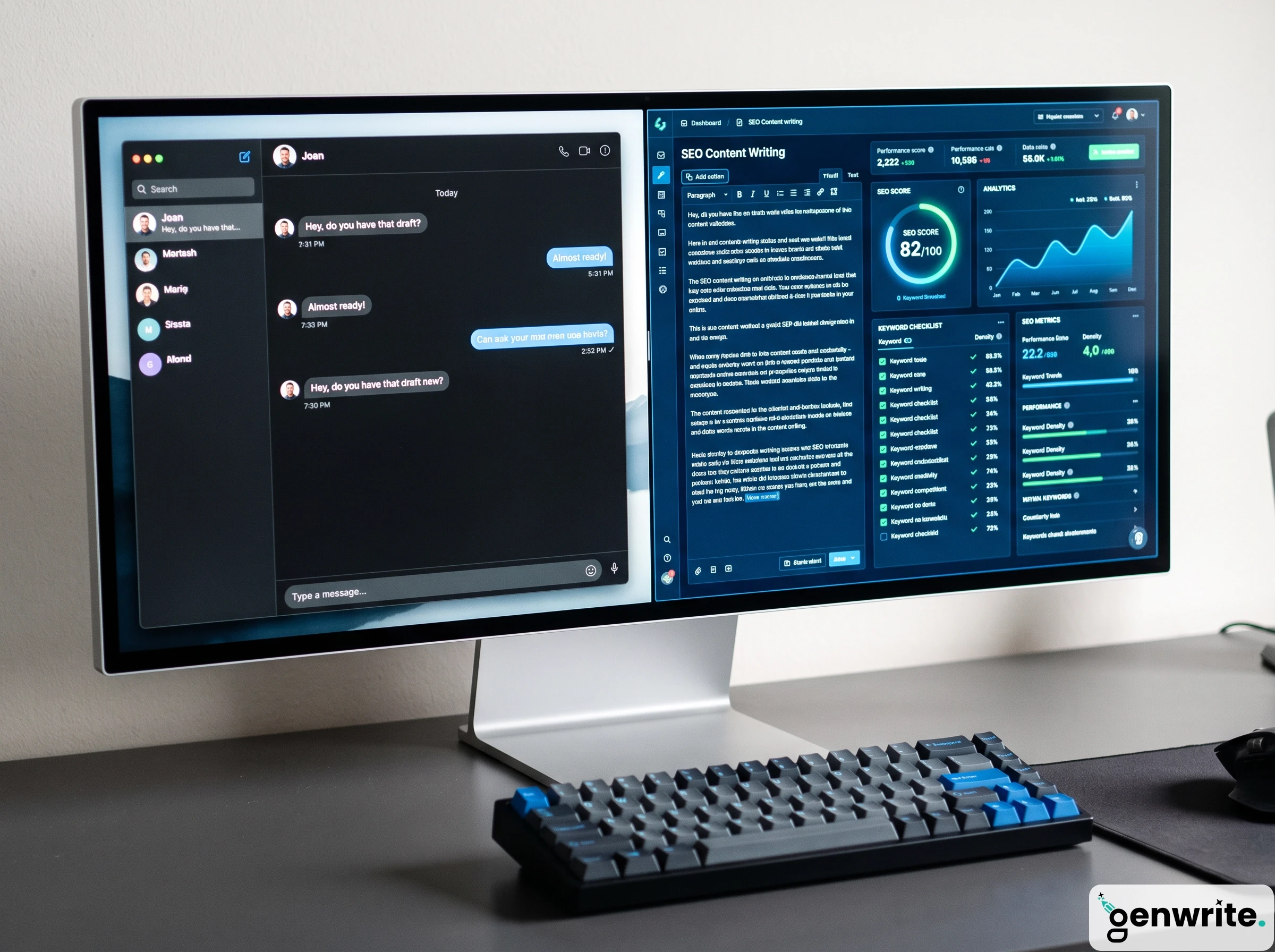
If you’ve ever asked a generic AI chatbot to write a blog post, you know the feeling. The text is perfectly smooth. Yet, it’s completely empty. It relies on predictable phrases and lacks any real-world depth because standard chat tools are built to predict the next logical word, not to analyze search engine results.
Why generic chatbots fall flat on search intent
Using a standard chatbot for content creation is like asking a generalist to do a specialist’s job. It has no idea which keywords your competitors are targeting, or what questions users are actually typing into Google this morning.
A specialized SEO writing AI works differently. It doesn’t guess the next word based on static training data from years ago. Instead, it scans the current search results first, looks at the top ten ranking pages, extracts the exact subtopics readers want, and builds a blueprint before writing a single sentence.
I often see teams struggle with generic drafts that require hours of manual research to fix. If you want to see why this gap exists, it helps to understand how seo writing tools pull live search data to beat basic conversational prompts.
The power of live data integration
Let’s look at a concrete example. Say you’re writing about “best remote team software.” A generic tool might suggest outdated platforms from three years ago. A dedicated AI writing engine does something else. It scans live search results to find new market players, and it builds your draft using fresh, accurate facts.
No tool is perfect, of course. You’ll still need a human eye to polish the transitions. But starting with a data-driven outline saves hours of manual research, giving you a draft that actually respects your reader’s time and matches search intent.
Where the raw machine draft starts to cost you readers
Let’s be honest. If you publish a raw draft straight from an AI, your readers will notice. They won’t name the exact algorithm, but they will feel the lack of human touch. Around 78% of readers say obvious machine writing feels cold and fake. But when you rely solely on a basic seo content creator without human oversight, you risk losing your audience’s trust instantly.
What gives these drafts away? It’s usually the predictable rhythm. Raw machine text loves to use the same sentence length over and over. It relies on lazy transitions and lacks real-world stories. For example, a draft might say “we need to think about user experience” instead of sharing a quick story about how a messy menu ruined a checkout page on an e-commerce site.
To fix this, you need a quick diagnostic routine. Look for words that scream “machine made” like furthermore, moreover, or key phrases that sound too formal. If your text sounds like a dry textbook, it needs a rewrite. You can read more about fixing lazy outputs from your seo writer ai to spot these flat patterns before they reach your site.
Spotting the patterns that kill trust
You can run a quick three-step check on your drafts. First, look at sentence variety. If every sentence has ten words, break them up. Make one short. Then let the next one breathe. This simple change instantly makes your writing sound more human.
Second, swap out abstract claims for concrete details. Instead of saying “Our tool improves speed,” say “Our tool cut loading times from four seconds to one.” This gives the reader proof instead of vague promises.
Third, add your voice. GenWrite helps you automate the bulk of the drafting, but adding a quick personal opinion makes the piece authentic. Results vary depending on your niche, but a human touch always wins. And that’s where your quick edit saves the day.
Navigating Google’s high standards for helpful information
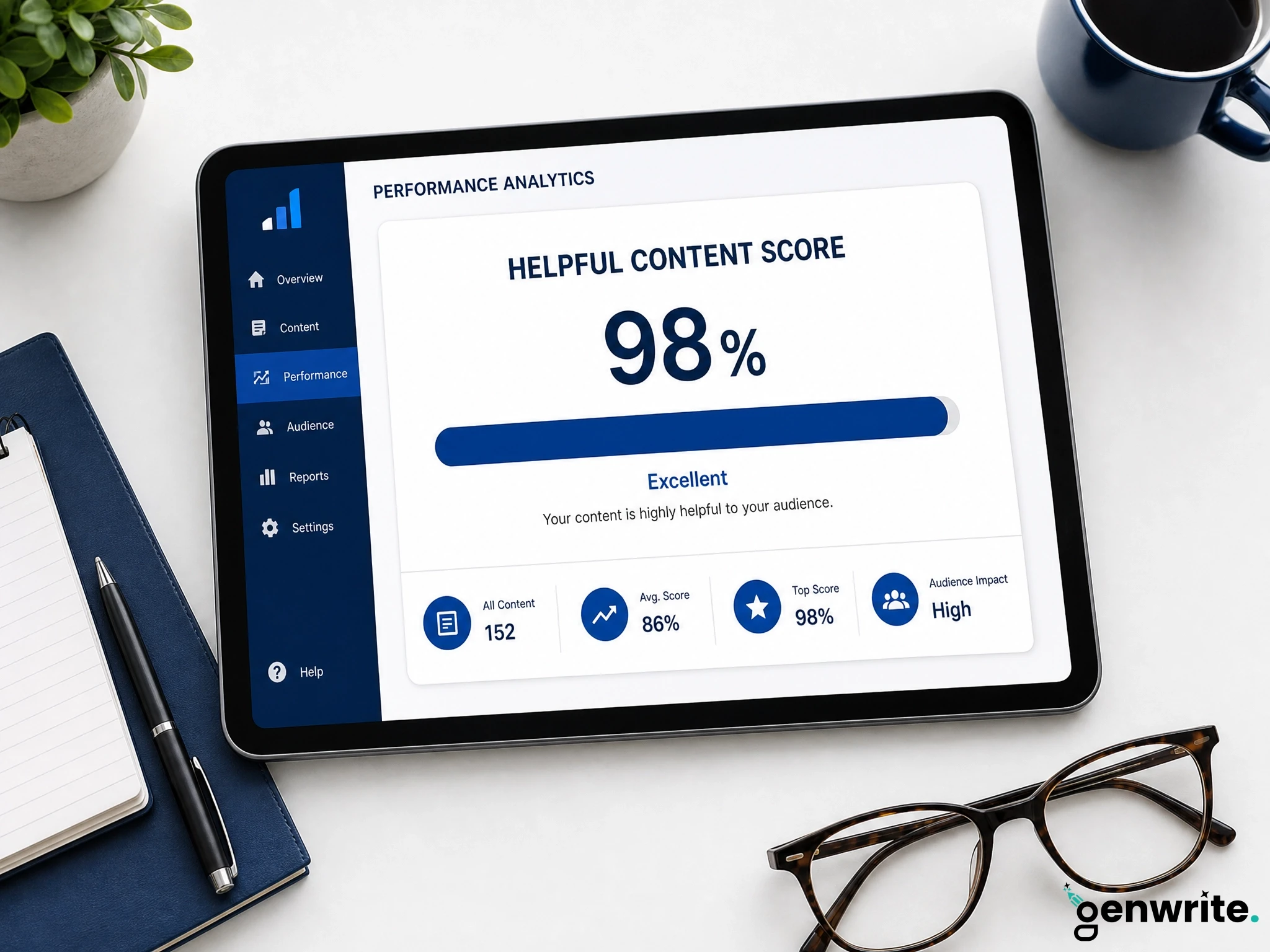
Google doesn’t actually care if a human or a machine wrote your article. They explicitly state that helpful, original content is what matters most. But they do penalize what they call “scaled content abuse.” This happens when people use cheap tools to pump out hundreds of thin, unverified pages. To stand out, you need to show real experience, expertise, authoritativeness, and trustworthiness. If your draft reads like a dry Wikipedia summary, Google’s automated systems will likely ignore it.
One technical metric Google looks at is “information gain score.” This measures whether your page actually adds new facts or unique perspective to the web, or if it just repeats what’s already out there. Most basic seo content writing tools fail here because they only scrape and rephrase the top search results. If ten sites say the exact same thing, Google has no reason to rank an eleventh. To fix this, you must inject fresh data, specific brand case studies, or unique expert quotes into your automated drafts.
Factual validation is another major piece of the puzzle. AI models sometimes make up facts, which programmers call “hallucinations.” If your article states false information, search engines will quickly flag your site as untrustworthy. That’s why choosing a specialized ai seo content generator like GenWrite is so helpful. It builds factual checks and real-time search data directly into the creation process. Yet, even with great tech, automated tools don’t always get every tiny industry nuance right on the first try, so human review remains necessary.
How does Google detect this? Their algorithms analyze user behavior signals, like how quickly readers bounce back to the search results page. If a reader clicks your link and immediately leaves because the text feels generic, Google assumes the content isn’t high-quality. So, you must treat your AI drafts as raw materials rather than finished products. We use tools to do the heavy lifting of keyword research and structural drafting. But a human editor must verify the data points, format the tables, and add real-world examples. This hybrid approach satisfies search engines, avoids penalties, and keeps your organic traffic growing.
How to transform your workflow from writing to editing
The biggest mistake you can make with modern seo writing tools is hitting publish without looking. But it’s a tool, not a replacement for your brain. Instead of staring at a blank screen for hours, your new job is to become an expert editor. You start with a structured draft, then you inject the human soul. This shift is exactly why top US agencies are shifting client content to automated blogging to protect their margins while scaling up.
You don’t need to rewrite the whole piece. That defeats the purpose of automation. But you do need a quick, systematic review.
Here’s how you build a reliable three-step editing loop:
1. Verify and inject real proof
An AI writer is great at structuring information, but it doesn’t know your specific client’s success stories. Go through the draft and replace generic examples with real data. If the text says “many businesses face this,” change it to “our client, Acme Corp, faced this exact issue last Tuesday.” This turns a generic guide into an authoritative case study.
2. Cut the fluff and robotic transitions
Machines love transition words like “moreover” or “in addition to.” Kill them immediately. They make your writing feel like a high school essay. But you can keep the flow natural by starting sentences with simple words like “And,” “But,” or “So.” Keep your paragraphs short,two to four sentences max. This formatting keeps readers sliding down the page.
3. Polish the hook
The first paragraph determines if a reader stays or leaves. Make it punchy. If the AI started with a slow, academic definition, delete it. Start with a bold claim or a direct question instead. Sometimes the draft’s third sentence is actually the best place to start.
By treating the first draft as raw material rather than a finished product, you save 80% of your writing time while keeping 100% of your human authority.
The verdict on keeping your human audience

At the end of the day, readers don’t hate AI. They hate bad writing. Recent studies show that 82% of consumers don’t mind brands using artificial intelligence behind the scenes, provided the final piece feels authentically human. The winning formula is simple. You use a specialized seo writer ai to handle the heavy lifting,like mapping out keywords and structuring the draft,but you let human editorial standards shape the final voice.
Think of it as hiring an incredibly fast research assistant. A high-quality ai seo content generator can pull real-time search data, find relevant competitor links, and draft a thousand words in seconds. But it still needs your unique perspective, your real-world stories, and your brand’s specific tone to truly connect with readers.
I’ve seen many teams try to publish raw machine drafts directly to their sites. It rarely ends well. The content often feels flat, missing the tiny nuances that build real trust with an audience. Sometimes, the facts might even be slightly off if the model guesses a statistic. But when you treat the AI draft as a strong starting point rather than a finished product, everything changes. You’ll save hours of staring at a blank screen while keeping your quality incredibly high.
So, can readers trust these drafts? Yes, but only if you do the work to make them human. By blending automated speed with human editing, you get the best of both worlds. You get rapid organic growth and deep reader loyalty without sacrificing your brand’s integrity.
Tired of editing robotic machine drafts? GenWrite handles research and optimization so you can focus on building actual reader trust.
FAQ
Why do readers distrust AI-generated SEO content?
Readers usually spot generic phrasing, repetitive structures, and a lack of original insights. When text feels robotic, they disengage because it lacks genuine human experience.
Can search engines penalize raw AI writing?
Google doesn’t penalize automation itself, but it strictly targets low-quality pages that lack helpful information and real human perspective.
How do you make an AI draft sound more human?
You’ll need to inject personal anecdotes, adjust the pacing, and strip out common LLM buzzwords. Honestly, most people skip this step, which is why their content falls flat.
Is it worth using an ai seo writer for scaling content?
It’s completely worth it as long as you use it for drafting rather than final publishing. Let the tool handle the heavy lifting while you add the editorial polish.