
How to test an AI SEO tool before trusting it with your main site
The high risk of trust-by-default in SEO automation

Putting an unvetted algorithm straight onto your main domain is like handing your car keys to a self-driving prototype that has only run in a simulator. It is risky. Right now, the market is packed with platforms promising to automate everything from keyword research to live publishing. But if you trust these systems blindly, you might wake up to a manual action or a sudden, devastating drop in organic traffic.
When people search for the best AI for SEO, they usually focus on speed. Sure, platforms can spin up hundreds of pages in minutes. However, search engines are getting much better at spotting and burying low-effort, synthetic content. If your automated setup publishes thin, repetitive, or flat-out wrong articles, your whole domain takes the hit. You are not just losing a few rankings here. You are actively damaging your credibility with search algorithms and your actual human readers.
A real pre-deployment check is not just about generating one test draft, reading it over, and calling it a day because the writing looks fine. It takes a systematic, multi-tiered audit. You have to see how the software handles data, structures internal links, and manages technical execution under pressure. Think of it as a stress test. You need to know exactly how the SEO AI software behaves with complex topics, how it affects your crawl budget, and whether the automated output actually fits your brand voice.
Before you let any tool touch your site, you need a clear, objective framework. Set hard benchmarks for content quality, technical accuracy, and factual reliability. The goal here is not to avoid automation entirely. It is about setting up enough oversight to protect your most valuable digital assets. Let’s look at how to build a safe sandbox environment to run these tests without risking your business.
Setting up a sandbox: why you need a subdomain or staging test
Building your technical firewall
Deploying automated content directly to your primary domain is the fastest way to ruin years of search authority. If an algorithm update shifts or the generator spits out malformed code, your entire organic footprint pays the price. You need a dedicated 14-day technical sandbox. This isolated environment lets you observe how the software interacts with search engines without risking your core traffic.
Start by setting up a staging subdomain, like sandbox.yourdomain.com, or buy a cheap, separate test domain. It depends on your risk tolerance. A separate domain offers complete isolation. A subdomain, however, lets you test how search engines handle directory-level crawling on your brand’s actual infrastructure.
Configuring the sandbox parameters
Your primary goal here is to verify how the platform handles critical technical directives. Before you generate a single word, configure your test environment to prevent indexation leaks.
First, set up your robots.txt rules to explicitly disallow crawling on your staging folder or subdomain until you are ready for a controlled indexation test. Next, apply a meta noindex, nofollow tag to your template headers. This ensures test content does not accidentally pollute search results. Finally, check your canonical alignments. The tool must automatically generate self-referential canonical tags rather than pointing back to your main site’s existing assets.
Once these guardrails are active, initiate your trial with a micro-batch of 10 to 30 pages. This small footprint is large enough to reveal template errors, formatting issues, or broken link structures, yet small enough to manage manually if things go wrong.
Moving to live indexation testing
After verifying the technical foundation, lift the noindex tags on your test domain. Now you can observe how search engines crawl and render the pages. This is where you evaluate the actual performance of best seo ai tools under real-world conditions.
Watch your log files closely. Are search crawlers getting stuck in infinite redirect loops? Are mobile-friendliness scores dropping due to poorly formatted tables or heavy scripts? Sometimes, automated platforms inject heavy, unoptimized code blocks that slow page load speeds to a crawl.
Learning how to use ai for seo safely requires this phase of quiet observation. Keep your test window restricted to 14 days and your page count low. This gives you clean performance data. If the pages index quickly and show stable technical health, you can confidently plan your migration to the main site.
Exposing hallucinated keyword metrics before they burn your budget

Blindly relying on automated systems to choose your search queries is a fast track to wasted spend. Many marketers assume that because an ai keyword research tool outputs a clean spreadsheet with search volumes and difficulty scores, the underlying data is accurate. The reality is far less comforting. Many platforms pull from outdated cached databases or, worse, use predictive LLM logic to hallucinate search volumes for highly specific niche terms. If you build your entire content strategy on these hallucinated figures, you will end up ranking for terms that literally nobody is searching for.
To protect your budget, you must run a manual sanity check on any keyword portfolio generated by your software. Take a random sample of 15% of the recommended terms and cross-reference them directly with primary search data sources like Google Keyword Planner or established databases like Ahrefs. Are the volume trends consistent? If your AI tool claims a long-tail phrase has 1,200 monthly searches, but Google’s own planner shows zero to ten, you have identified a data integrity issue. This discrepancy often happens because the tool is guessing demand based on semantic patterns rather than real-world query logs.
Auditing search intent alignment
Volume is only half the battle. The more insidious issue is intent misalignment. An algorithm might flag a high-volume keyword as a perfect target, ignoring that the search results are dominated by purely informational queries or free tools. If your goal is conversion, targeting these terms yields empty traffic that bounces instantly.
To audit intent, search for the target keywords yourself. Look at what is currently ranking on page one. If the top three results are interactive calculators and your tool suggests writing a 2,000-word blog post, the tool’s competitor analysis has failed. It does not understand what the user actually wants.
Isolating high-converting buyer intent
When evaluating the best ai seo software, look closely at how it categorizes transactional versus informational queries. You can test this by feeding the tool a list of mixed-intent terms. A reliable system should easily distinguish between informational research (“how do API integrations work”) and high-intent commercial queries (“best headless CMS API pricing”).
If the software lumps these together under a generic “high priority” tag, it lacks the semantic precision needed to drive actual revenue. Do not let vanity metrics fool you. A single keyword that drives ten highly targeted visitors who are ready to purchase is infinitely more valuable than a broad term that brings in thousands of readers who immediately leave. Always force your AI tools to prove their commercial relevance before you commit your production budget to their recommendations.
The factual sanity check: why your AI writer needs a source vault
I remember watching an experienced SEO specialist launch a massive content campaign using a generic AI writer, only to watch their organic traffic drop off a cliff three months later. The culprit wasn’t just poor formatting or repetitive phrasing. It was the fact that the engine was hallucinating statistics about a highly regulated industry, pulling outdated forum posts from 2018 as if they were current truths. When you trust an ungrounded tool with your brand, you aren’t just risking a bad draft. You are actively feeding search engines the exact kind of flat, regurgitated copy they are trained to ignore.
Modern search engines have grown incredibly sophisticated at detecting empty, synthesised text that lacks real-world backing. If your tool relies solely on its pre-trained weights, it’s just guessing what comes next based on probability. This is why grounding your seo writer ai in verified, high-quality source material is no longer optional. Without a dedicated knowledge vault,a centralized repository of your brand’s unique data, whitepapers, case studies, and verified industry insights,your automated drafts will inevitably feel hollow and generic.
Building and auditing your private knowledge vault
To prevent these costly hallucinations, you must establish a system that feeds the AI verified facts before it writes a single word. This process transforms your tool from a guessing machine into a precise execution engine. Here is how you can set up and audit this setup:
- Gather proprietary assets: Collect internal case studies, original customer interviews, and proprietary data sheets. This is the unique intelligence that competitors cannot scrape.
- Run a hallucination stress-test: Feed the tool a prompt containing a highly specific, niche technical question. If it invents a statistic or cites an anonymous blog post rather than pulling from your uploaded documentation, the tool’s grounding mechanism is failing.
- Enforce strict citation rules: Ensure the system is configured to cite its sources directly from your provided materials. If a claim cannot be mapped back to your vault, the draft should flag it for human review.
Honestly, most teams spend weeks tweaking their prompts when they should be auditing their source material instead. The reality is that even the most advanced seo writing ai cannot spin gold out of thin air. By establishing a rigorous verification process and feeding your system a solid foundation of real data, you protect your site from the silent traffic killers of misinformation and generic content.
Rewriting the drafts: turning mechanical outlines into humanized copy

Most AI drafts read like a textbook written by a very polite committee. They’re grammatically flawless but completely flat. If your test run of an ai seo content generator yields articles that read like a product manual, don’t panic. That is the baseline. The real work begins when you apply a systematic editing framework to turn those sterile blocks of text into engaging, authoritative copy.
Breaking the predictable rhythm of AI text
AI tools love a uniform sentence length. They cycle through medium-length sentences with a rhythmic, almost hypnotic monotony. To fix this, you must deliberately disrupt the pattern.
Write a punchy three-word sentence. Then follow it with a longer, winding sentence that gives your ideas room to breathe. This contrast keeps readers awake. And it mimics how humans actually talk. When you edit, read your draft aloud. If you find yourself running out of breath, or if your voice hits the exact same cadence in every paragraph, start chopping sentences in half.
Injecting real-world friction and opinion
An automated writer can aggregate facts, but it cannot share a hard-earned lesson from your career. That’s where you come in. If your draft lists generic advice, swap those bullet points for specific anecdotes. Mention the exact tool you used, the mistake that cost you money, or the exception to the rule.
This doesn’t always work for every single informational query, but for high-intent pages, it is non-negotiable. If you want to keep visitors on your page, you need to learn how to humanize AI content by injecting structural variety and personality.
Stripping out the linguistic glue
Watch out for transition words. Standard seo writing ai tools rely heavily on words like “consequently,” “moreover,” and “therefore” to link paragraphs. Real writers rarely use them.
But you can easily fix this. Delete those transition words entirely. Let your paragraphs connect through the logical flow of your argument rather than artificial signposts. Often, the first sentence of an AI-generated paragraph is just filler that restates the heading. Cut it. Jump straight into the meat of your point. By tightening the prose and removing the fluff, you’ll transform a robotic outline into a highly readable, high-converting article.
Can the tool actually write clean code, or is it just ‘automation theater’?
Most SEO software doesn’t actually do anything. It points at a problem, generates a generic report, and leaves the actual work to your engineering queue. When you evaluate the best seo ai tools, you must draw a hard line between passive reporting and active execution. If a tool merely flags that your schema is missing without writing the exact JSON-LD markup to fix it, you are paying for automation theater.
Real engineering layers write clean, production-ready code. A competent platform doesn’t just tell you that your structured data is broken; it generates the precise nested schema for your specific article, validates it against schema.org guidelines, and prepares it for deployment. You should be able to copy this code directly into your head tags or use native integrations, like WordPress auto posting, to push the updates instantly.
To test this, run a pilot page through your candidate tool and examine the technical output. Inspect the generated code for common AI errors: unclosed brackets, missing commas in JSON arrays, or hallucinated schema properties that Google doesn’t actually support. If the output is clean, paste it into Google’s Rich Results Test. If it passes without warnings, the tool’s engineering layer is legitimate.
But code generation is only half the battle. You also need to verify how these changes register in the real world. After deploying the tool’s recommended title tags, meta descriptions, and schema to your test environment, request indexing in Google Search Console. Monitor the enhancements tab over the next 48 hours. If Google successfully parses the new structured data without throwing parsing errors, you have found a tool that actually works. If you find yourself manually fixing broken syntax, walk away. You cannot scale a workflow that requires a human developer to clean up after the machine.
Will this content survive Google’s AI overviews and conversational search?
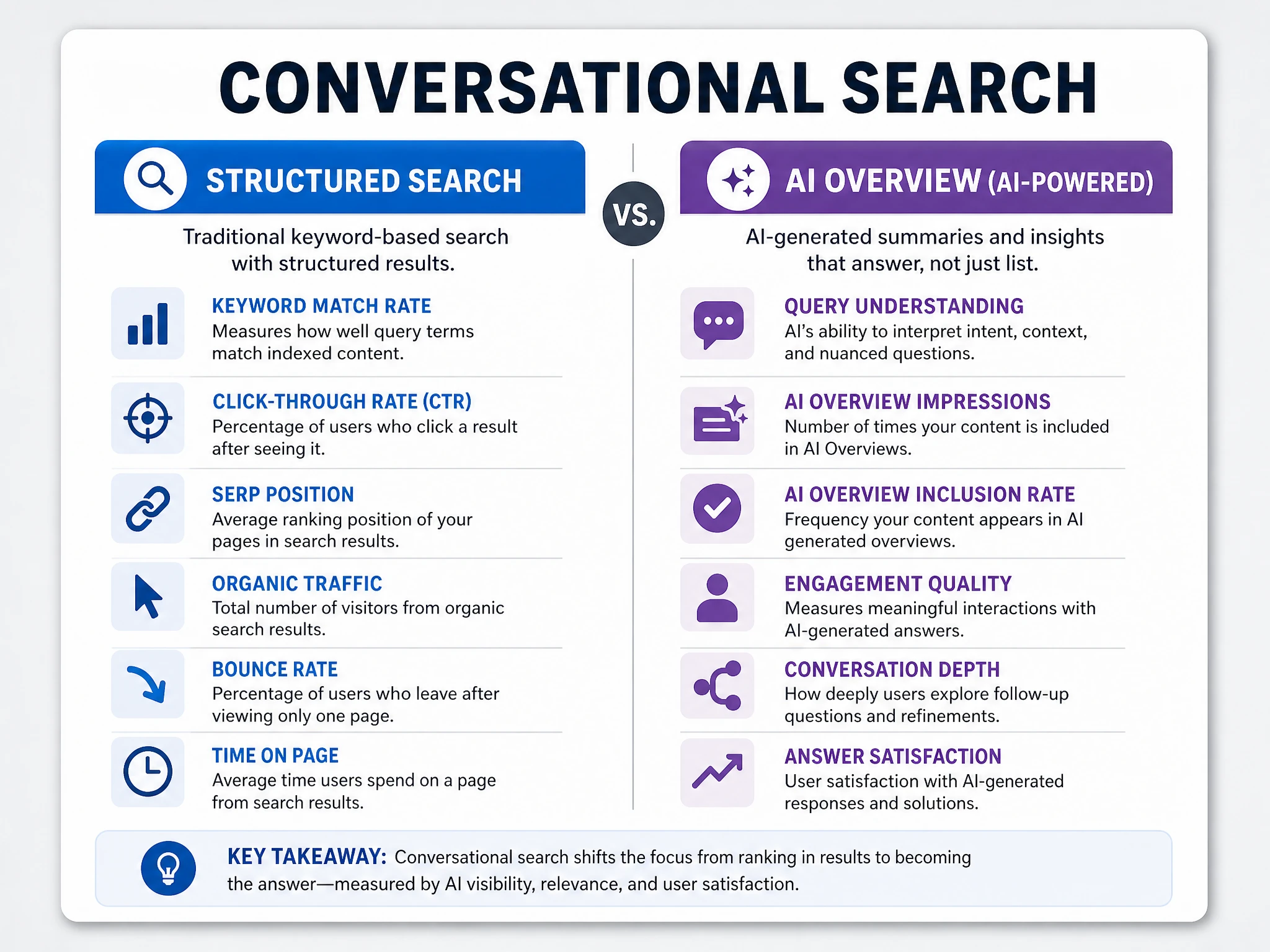
Traditional search engine optimization focused heavily on keyword density and backlink profiles. But the rapid rise of conversational engines demands a fundamental shift in how we evaluate how to use ai for seo. If your automated system merely spins up generic overviews, it will fail to gain traction in Google’s AI Overviews, Perplexity, or ChatGPT. Modern search engines no longer index keywords in isolation. Instead, they extract structured facts to answer user queries directly.
To determine if your tool is the best ai for seo, you must audit its output for information gain and answer engine optimization (AEO) readiness. Run a sample of five generated articles through a manual extraction test. Can you pull out at least three unique, verifiable data points, original statistics, or contrarian industry insights that do not exist on the first page of Google? If the content simply rehashes existing top-10 results, conversational agents will ignore it. They prefer highly structured, authoritative sources that offer clear, direct answers to complex prompts.
We tracked how different content structures performed when crawled by LLM-based search agents. The results show a clear divide between legacy SEO writing and AEO-optimized architectures:
| Content Attribute | Legacy SEO Output | Conversational/AEO Output |
|---|---|---|
| Sentence Structure | Long, winding, keyword-stuffed | Direct, active voice, assertion-first |
| Data Density | Low (mostly fluff and filler) | High (frequent use of stats and names) |
| Formatting | Generic paragraphs | Q&A schemas, tables, bulleted definitions |
| Information Gain | Zero (repackaged search results) | High (unique angles or synthesis) |
This structural difference goes beyond simple readability. Conversational search engines rely heavily on semantic parsing. If your AI tool writes in a circular, academic style, the parser struggles to map the relationship between entities. But when the tool uses clear noun-verb-object structures and explicit schema markup, LLM crawlers can easily extract the facts.
Before deploying any automated system, test its ability to answer highly specific “how-to” and “why” queries. If the generated draft buries the actual answer under 400 words of introductory throat-clearing, it is built on an outdated playbook. Conversational search requires immediate value delivery. If your tool cannot produce content that gets straight to the point, your organic visibility will likely shrink as AI overviews continue to dominate search results.
Why you must verify the tool’s strategy for LLM crawlers and GEO
Traditional search engine optimization focused almost entirely on securing a spot within the classic ten blue links. Today, that focus is too narrow. As conversational search agents increasingly synthesize web pages directly into their answers, your visibility depends on whether these LLMs can find, parse, and cite your content. If you are using ai generated content seo strategies, you must verify how your automation tool handles this secondary, critical layer of indexing.
The architecture of modern crawler accessibility
Before worrying about how your content reads, you must ensure LLM crawlers can actually access it. Many legacy robots.txt configurations inadvertently block user-agents like GPTBot or ClaudeBot. A sophisticated AI tool should automatically help you configure your site’s access rules to invite these crawlers while protecting sensitive directories.
One of the most effective ways to do this is by implementing an llms.txt file. This is a simple markdown file placed at the root of your domain that provides a clean, structured, and context-rich summary of your website specifically designed for LLMs to ingest quickly. If your current SEO tool does not help you generate or maintain this file, you are likely missing out on direct conversational traffic.
Formatting for generative engine optimization (GEO)
Once crawlers have access, your content must be structured to maximize the likelihood of being cited. Conversational models do not rank content the same way traditional algorithms do. They look for clear, authoritative answers that directly resolve complex, multi-part user queries.
To test if your tool understands how to use AI for SEO in this new environment, check if its generated drafts include:
- Direct, declarative answers placed at the very beginning of key sections to satisfy quick-extract algorithms.
- Structured data tables and bulleted lists that simplify dense technical concepts, making them easy for LLMs to scrape and quote.
- Explicit source citations and external links that establish a clear information pedigree.
For a deeper dive into these tactics, read our guide on what it actually takes to show up inside ChatGPT and AI search answers. The reality is that simply churning out generic blog posts is no longer enough. If your AI SEO tool does not actively optimize for both human readers and generative engines, it is already obsolete.
What should you do when pilot results fall flat?

What happens when your sandbox experiment yields nothing but flatlining traffic and a spike in crawl errors? It is a frustrating reality for many marketers testing seo ai software. Instead of panic-deleting the tool, you need a systematic diagnostic approach to figure out exactly where the automation broke down.
Did the tool block its own success?
Before blaming the content quality, check your technical foundations. Many automated platforms accidentally misconfigure your robots.txt or inject rogue noindex tags during setup. Look at your Google Search Console coverage reports. Are your test pages actually indexed, or are they sitting in the “Excluded” bucket? If search engines cannot crawl the pages, even the best ai seo software will look like a failure.
Is it generating generic checklists instead of real value?
Take a hard look at the optimization recommendations. If the tool merely outputs generic checklists,like “add keyword to H2” or “increase word count by 500”,without analyzing search intent, it is wasting your time. True optimization requires semantic depth. When the output feels shallow, the underlying prompt engineering or competitor analysis engine is likely failing. You need to adjust the tool’s parameters to prioritize depth over raw volume.
Did you trigger a crawl budget crisis?
Bulk generation features can sometimes backfire by flooding your server with low-value, duplicate URLs. This causes a massive spike in your crawl budget, leaving search bots too exhausted to index your high-value pages. Check your server logs. If you see thousands of rapid-fire requests from Googlebot on useless parameter pages, you must throttle the tool’s generation speed and implement strict canonical tag rules.
To triage these issues, run this quick check:
- Verify indexation status in Google Search Console.
- Audit internal links to ensure the new pages are connected to your main architecture.
- Compare content depth against the top three ranking competitors manually.
Sometimes, the software just needs tighter guardrails to perform.
A measured blueprint for moving from trial to full site deployment
Scaling up an automated system without a safety net is the fastest way to tank your hard-earned domain authority. The allure of publishing hundreds of pages with a single click is strong, but real sustainable organic growth requires a disciplined, phased approach. Before you let any software touch your production domain, you must prove its value in a controlled environment.
Your path to secure deployment follows a strict sequence. First, run your sandbox tests on a separate subdomain to isolate risk. Next, audit every single keyword metric against trusted third-party databases to ensure you are not targeting imaginary search volume. You then need to establish a strict source vault to ground the generator in factual, original data. Once the draft is generated, human editors must refine the copy to inject genuine expertise. Finally, you must verify that the technical output,from Schema markup to internal links,is clean and functional.
If you want to know how to use ai for seo without risking manual penalties, you have to treat the technology as an assistant, not an autonomous pilot. The transition to your main site should happen in small, measurable cohorts. Start by publishing five highly polished, human-reviewed articles per week. Monitor how search engines crawl, index, and rank these initial pages over a thirty-day window.
Only when these initial cohorts demonstrate positive signals should you gradually increase your publishing volume. The goal is never mindless mass production; it is structured, high-quality content acceleration. By maintaining a human-in-the-loop workflow, you ensure every piece of content meets search engine guidelines and serves real human readers. Treat automation as an engineering pipeline that requires constant calibration, and your organic traffic will reflect that care.
Tired of wasting time auditing unreliable software? GenWrite handles the heavy lifting with built-in factual accuracy and automated SEO optimization.
FAQ
Why shouldn’t I test a new AI SEO tool on my main domain?
It’s risky because bad AI content or hallucinated links can tank your rankings overnight. Honestly, most people skip sandbox testing and regret it when Google penalizes their site.
How can I spot hallucinated keyword data from an AI tool?
You’ll want to cross-reference search volumes and difficulty scores with established tools like Ahrefs or Semrush. If the AI’s numbers look wildly different, don’t trust them.
What is a sandbox test in the context of SEO automation?
A sandbox test means running the AI software on a staging site or a subfolder where mistakes won’t hurt your primary brand authority.
Does AI-generated content actually rank well in Google’s AI Overviews?
Yes, but only if it’s heavily fact-checked and structured for conversational search. Generic automated drafts usually get filtered out fast.