
Ease Into AI Blogging: Craft Your First Posts Smartly in 2026
Are You Ready to Master AI Blogging in 2026?

Are you ready to transform your content strategy and embrace the future of writing? As we step into 2026, the landscape of content creation has been dramatically reshaped by artificial intelligence, making AI blogging an essential skill for anyone looking to make an impact online. The AI content marketing market is projected to reach an astounding $5.01 billion this year, reflecting a massive shift in how we approach content.
Today, roughly 80% of bloggers are already integrating AI into their workflows, a significant leap from just a few years ago. This isn’t about replacing human creativity; it’s about augmenting it to achieve unprecedented efficiency and reach. Whether you’re a budding entrepreneur, a seasoned marketer, or simply keen to start blogging with AI, this guide is crafted specifically for you.
We know that navigating this new terrain can feel overwhelming, but it doesn’t have to be. This comprehensive guide will walk you through the essentials of beginner AI blogging, from ideation and outlining to drafting and optimization. You’ll discover how tools like GenWrite can automate the end-to-end blog creation process, focusing on crucial aspects like SEO optimization and increasing website traffic.
What You’ll Achieve with This Guide
By the end of this journey, you’ll be equipped to:
- Understand the core principles of effective AI content creation in a Google E-E-A-T world.
- Leverage AI tools for everything from keyword research to crafting compelling drafts.
- Humanize AI-generated content to ensure authenticity and audience engagement. You can learn more about this crucial skill in our guide on humanize content.
- Implement strategies for AI content marketing that align with 2026 search engine guidelines and LLMs, ensuring your posts truly stand out. Our article on AI content creation offers further insights into crafting website content with AI.
The goal is not just to create content, but to create high-quality, high-ranking content that drives real results. Get ready to ease into AI blogging and craft your first posts smartly in 2026!
What Exactly is AI Blogging and How Does it Work?
Ever wondered how some blogs churn out so much high-quality content these days? The secret often lies in AI blogging, a revolutionary approach transforming how we create online content. Simply put, AI blogging uses artificial intelligence to assist with, or even automate, various stages of blog creation, from initial ideation to final drafting.
It’s not about AI replacing human writers, but rather smart tools acting as powerful co-pilots. At its core, content generation with AI leverages sophisticated algorithms and large language models (LLMs) to produce human-like text based on your prompts. This powerful automated blog writing is already common, with 80% of bloggers integrating AI, primarily for ideation (74%) and drafting (44%).
The AI content creation market is set to hit $5.01 billion by 2026. Tools like GenWrite offer end-to-end solutions for artificial intelligence for blogs, automating keyword research, competitor analysis, and adding relevant links and images. This ensures content is optimized for search engines.
AI blogging offers an incredibly fast research assistant, freeing you to focus on unique insights. This blend of AI efficiency and human creativity is key for engaging readers and achieving strong Starting SEO: A Beginner’s Guide to Boosting Your Website in 2026 rankings, especially when you learn to Mastering AI-Written Content: A Beginner’s Guide to Humanizing Text in 2026.
Why Does AI Blogging Matter for Your Content Strategy in 2026?
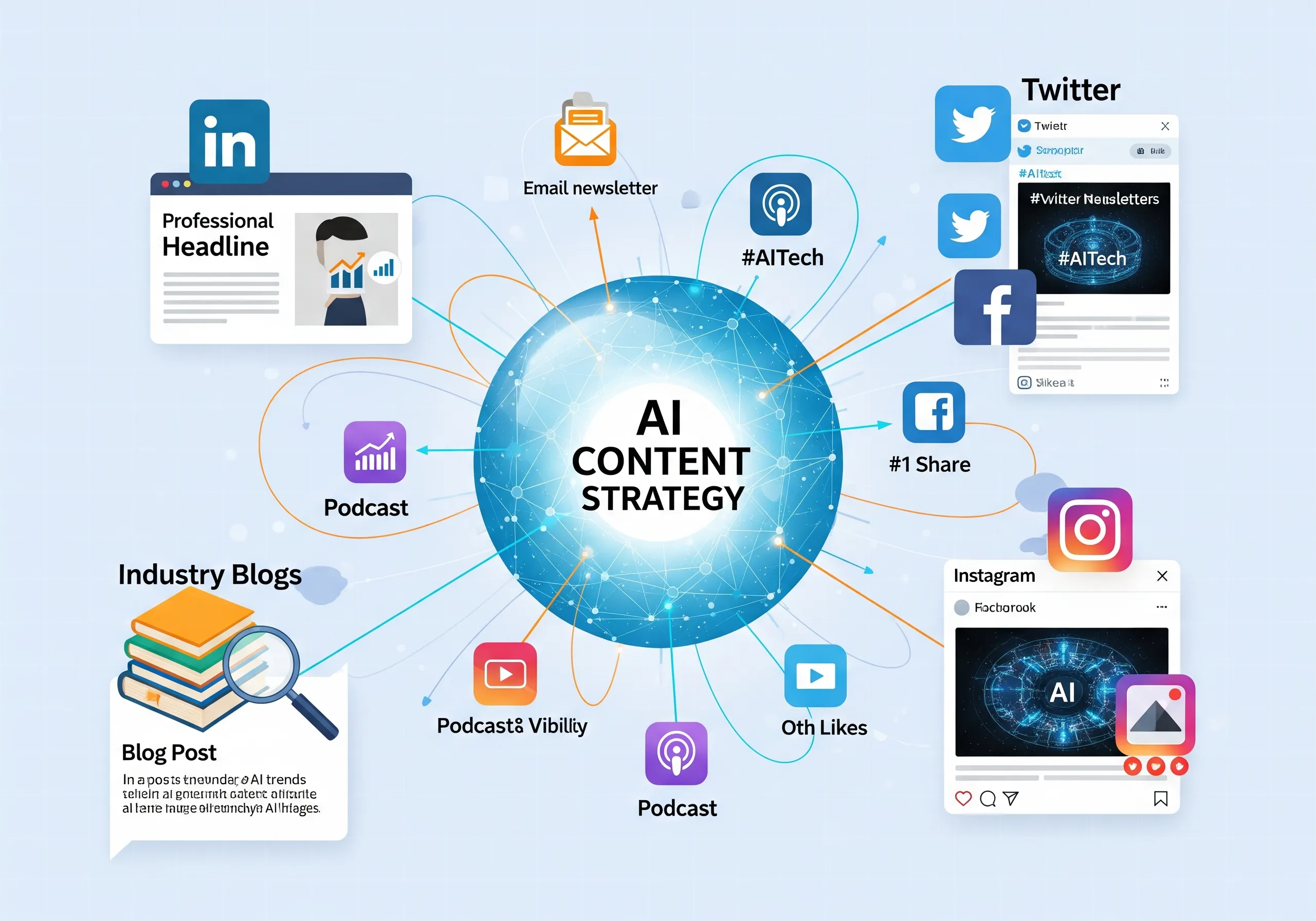
In the rapidly evolving digital landscape of 2026, embracing AI in your content strategy isn’t just an option,it’s a necessity for staying relevant and competitive. The AI content marketing market is projected to skyrocket to $5.01 billion, demonstrating a clear shift in how we approach content creation. This growth signals a future where AI isn’t just a tool, but a core component of successful content initiatives.
What does this mean for you? Simply put, AI empowers you to generate blog posts and write blog posts fast with unprecedented efficiency. Consider that approximately 80% of bloggers are already integrating AI into their workflows, primarily for ideation (74%), outlining (61%), and drafting (44%). This isn’t about replacing human creativity; it’s about amplifying it.
Websites with active blogs enjoy a remarkable 434% more indexed pages and 55% more traffic than those without. AI allows you to scale this impact, ensuring your content reaches wider audiences. Leveraging an SEO AI writer becomes crucial for optimizing content to meet Google’s E-E-A-T guidelines, which prioritize experience, expertise, authoritativeness, and trustworthiness. This means even with AI, human oversight for quality and unique insights remains paramount.
This is where a tool like GenWrite truly shines. As an AI blog generator, it automates the end-to-end blog creation process, from keyword research and competitor analysis to adding relevant links and images, helping you achieve robust SEO optimization for your blogs. It ensures your content is not only generated quickly but also strategically aligned to boost your website traffic and organic reach, making sure your site stands out in the competitive digital era. If you’re looking to dive deeper into boosting your online presence, a starter’s guide to SEO in 2026 can provide invaluable insights.
How Can Beginners Start Crafting AI-Powered Blog Posts Smartly?
Ready to dive into the exciting world of AI-powered blogging? It might seem complex at first, but with a structured approach, beginners can absolutely start blogging with AI effectively. The key is to see AI as your co-pilot, not a replacement, ensuring your content remains authentic and valuable.
Embrace the Human-AI-Human Workflow
The most effective way to start blogging with AI is by adopting the “Human-AI-Human” sandwich approach. This means you, the human, define the initial strategy and provide creative prompts. The AI then generates the structure and a first draft, acting on your instructions. Finally, you step back in to fact-check, refine, and humanize the content, adding your unique voice and insights. This iterative process ensures your content meets Google’s E-E-A-T guidelines, which are crucial for ranking in 2026.
Select Your AI Co-Pilot for Content Creation
Choosing the right AI blog writing tools is critical for beginner AI blogging. While general models like ChatGPT (GPT-5+) are excellent for initial drafting and Claude excels at natural-sounding long-form content, specialized platforms offer distinct advantages. For example, tools like Jasper and Copy.ai provide marketing-specific templates, but if you’re looking for an end-to-end solution focused on SEO and automation, consider platforms like GenWrite. It’s designed to automate keyword research, add relevant links and images, analyze competitors, and even handle WordPress auto-posting to drive traffic generation.
Master the Art of Prompting and Iterative Editing
Once you have your tool, the next step is learning how to craft effective prompts to generate blog posts. Be specific with your instructions regarding tone, target audience, and key points to cover. Remember, AI provides a powerful foundation, but it’s not the final product. A staggering 93% of bloggers manually edit AI-generated drafts before publishing to ensure quality, brand voice, and to infuse that essential human touch.
Always review and refine AI-generated content to add unique insights and ensure accuracy.
This final human editing phase is where you introduce the unique value that differentiates your content from purely automated output, enhancing engagement and trust with your readers. For those looking to ensure their content also performs well in search engines, understanding foundational principles is essential. You can learn more about website SEO optimization in a comprehensive guide like Starting SEO: A Beginner’s Guide to Boosting Your Website in 2026.
What Common Mistakes Should New AI Bloggers Avoid?

Jumping into AI content creation can feel like unlocking a superpower, but even superheroes have their kryptonite. New AI bloggers often stumble into common pitfalls that can undermine their efforts and keep their content from truly shining. Understanding these mistakes early on can significantly streamline your journey.
Over-relying on Unedited AI Drafts
One of the biggest blunders I see is treating automated blog writing as a ‘set it and forget it’ solution. While AI tools are incredibly efficient, nearly 93% of bloggers manually edit AI-generated drafts before publishing. Google’s Search Quality Rater Guidelines explicitly penalize purely automated scaled content that lacks unique value, emphasizing E-E-A-T (Experience, Expertise, Authoritativeness, Trustworthiness).
Always remember: AI is a co-pilot, not an autopilot.
Your human touch is irreplaceable for adding nuance, fact-checking, and infusing your unique perspective. Without careful editing, your content risks feeling generic, failing to build reader trust.
Neglecting SEO Fundamentals and Keyword Strategy
Another common misstep is allowing the ease of content generation with AI to overshadow foundational SEO principles. AI can draft content, but it’s your strategy that guides it to success. Simply generating text isn’t enough; you need to target relevant keywords and align with search intent.
This is where tools like GenWrite become invaluable. They don’t just write; they automate the end-to-end process, focusing on SEO optimization by researching keywords, analyzing competitor content, and adding relevant links, ensuring your posts are built to rank from the ground up. Overlooking this strategic layer means your AI-generated content might never reach its intended audience.
Forgetting Your Unique Voice and Information Gain
Finally, new AI bloggers sometimes forget to inject their authentic brand voice and provide genuine information gain. Readers are savvy; 52% report lower engagement if they suspect a post is entirely bot-written. Your audience craves authenticity and new insights not readily available in the AI’s training data.
Infuse personal anecdotes, share proprietary data, or offer unique interpretations that only you can provide. This human layer is what transforms AI content into truly engaging, high-value material that resonates deeply. For more on structuring content for optimal engagement, check out GenWrite’s guide on content structure and internal linking.
Which AI Blogging Tools are Best for Beginners in 2026?
Navigating the landscape of AI blog writing tools can feel daunting for beginners, especially with so many options emerging in 2026. The key isn’t just finding a tool, but finding one that streamlines your workflow and helps you create high-quality, SEO-friendly content from the start. For those just dipping their toes into AI content marketing, a blend of general-purpose and specialized platforms often yields the best results.
Foundational AI Writing Tools for Beginners
Many beginners start with widely accessible large language models (LLMs) that provide a solid foundation for drafting and ideation. Tools like ChatGPT (especially with GPT-5+ in 2026) are excellent for brainstorming topics, generating outlines, and even drafting initial paragraphs. Claude excels at producing more natural-sounding, longer-form content, making it a favorite for those who want a less ‘robotic’ feel right out of the gate. For research-heavy blog posts, Gemini, with its deep integration into Google’s ecosystem, proves invaluable for quickly pulling and synthesizing information.
The right AI tool acts as your intelligent co-pilot, not a replacement.
These general-purpose AI blog writing tools help you overcome writer’s block and accelerate the initial content creation phase. However, to truly write blog posts fast and effectively, especially with an eye on search engine rankings, you need more specialized capabilities.
Elevating Your Content with Specialized AI
While tools like Jasper and Copy.ai offer robust marketing-specific templates, the real game-changer for beginners looking for an SEO AI writer is an end-to-end platform. This is where a tool like GenWrite shines. It moves beyond just drafting, automating keyword research, analyzing competitor content, adding relevant links and images, and even publishing directly to WordPress. This comprehensive approach means beginners can focus on refining their unique insights rather than getting bogged down in manual SEO tasks.
For example, instead of manually searching for keyword research tools or SEO content optimization tool options, GenWrite integrates these functions, allowing you to generate content that aligns with Google’s E-E-A-T guidelines by providing information gain and structuring posts for both human readers and LLM crawlers. This integrated approach is essential for beginners aiming to drive traffic and organic reach efficiently with their AI content.
By leveraging a platform that combines drafting with advanced SEO features, beginners can rapidly produce high-quality, high-ranking content, ensuring their AI content marketing efforts yield tangible results. You can explore how such integrated solutions work for automated on-page SEO writing on the GenWrite platform directly. (https://genwrite.co/automated-on-page-seo-writing)
Ready to Start? Your Next Steps into AI Blogging Await!

You’ve journeyed through the essentials of AI blogging in 2026, understanding its power as a co-pilot, the critical Human-AI-Human workflow, and how to sidestep common pitfalls. We’ve explored the leading tools and strategies that make artificial intelligence for blogs not just a trend, but a foundational element of effective content creation.
It’s clear that the path to mastering AI blogging is less about immediate perfection and more about consistent, informed iteration. Every expert started as a beginner, and the landscape of beginner AI blogging is more supportive than ever. The market for AI content marketing is booming, projected to reach $5.01 billion by 2026, signaling immense opportunity for those ready to dive in.
If you’re ready to start blogging with AI and transform your content strategy, remember that the goal is not to replace your unique voice, but to amplify it. Tools like GenWrite are specifically designed to streamline the entire process, from keyword research to publishing, ensuring your efforts are always aligned with SEO best practices and Google’s E-E-A-T guidelines. Ready to generate high-quality, SEO-friendly content that truly drives traffic? Explore how an AI blog generator can automate your content workflow and help you achieve your blogging goals.
Ready to streamline your AI content creation and boost your website traffic? Discover how GenWrite automates SEO optimization and blog publishing to help you scale your content strategy efficiently.
People Also Ask About AI Blogging
What is AI blogging and how does it differ from traditional blogging?
AI blogging involves using artificial intelligence tools to assist in the content creation process, acting as a co-pilot. Unlike traditional blogging, AI can help with tasks like keyword research, outlining, drafting, and even suggesting optimizations. The goal is to enhance human creativity and efficiency, not replace it entirely.
Is AI-generated content good enough for SEO in 2026?
Yes, AI-generated content can be excellent for SEO in 2026, provided it’s human-edited and optimized. Google values helpful, reliable, people-first content that demonstrates E-E-A-T. AI can help produce this content faster, but human oversight is crucial for accuracy, unique insights, and maintaining brand voice.
What’s the best way for beginners to start using AI for blog posts?
Beginners should start with the ‘Human-AI-Human’ workflow. Begin with a clear human prompt and strategy, let AI generate a draft, and then critically edit and humanize the content. Focus on using AI for ideation, outlining, and initial drafting, then refine it with your unique perspective and expertise.
Which AI writing tools are recommended for beginners in 2026?
For beginners, foundational LLMs like ChatGPT, Claude, and Gemini are great starting points for general drafting and research. Specialized tools like Jasper, Copy.ai, and comprehensive platforms like GenWrite can further streamline SEO tasks, bulk content generation, and automated publishing for faster results.
How can I ensure my AI-assisted blog posts sound authentic and not robotic?
To ensure authenticity, always perform a thorough human edit. Inject personal anecdotes, unique insights, and your specific brand voice. Fact-check all AI-generated information and rephrase sentences to sound more natural. The key is to use AI as a tool to augment your writing, not to fully automate it.
What are the risks of relying too heavily on AI for blog content?
Over-reliance on AI can lead to generic, unoriginal content that lacks a unique voice and may not meet Google’s E-E-A-T standards. It can also result in factual inaccuracies or repetitive phrasing if not properly edited. Readers may also disengage if they perceive content as entirely bot-written, impacting trust and engagement.