
Starting SEO: A Beginner’s Guide to Boosting Your Website in 2026
Why Should You Care About SEO in 2026?

The digital landscape of 2026 isn’t just evolving; it’s undergone a seismic shift, making robust search engine optimization more critical than ever. With AI Overviews (formerly SGE) now appearing in over 80% of informational queries, many businesses are seeing a reported 61% drop in organic click-through rates for top-of-funnel content. This fundamental change means that relying on outdated SEO tactics is a direct path to invisibility.
Your online presence in 2026 depends on adapting to AI-first search.
Success hinges on understanding ‘Generative Engine Optimization’ (GEO), where Google prioritizes Experience, Expertise, Authoritativeness, and Trustworthiness (E-E-A-T) over traditional metrics. For beginners navigating this complex terrain, ignoring these new ranking factors 2026 isn’t an option. The average monthly SEO retainer in 2026 can range from $1,000 to $2,500 for small businesses, highlighting the value of getting it right from the start.
Mastering SEO in 2026 is no longer about simple keyword stuffing; it’s about strategic content creation that resonates with both human users and advanced AI algorithms, providing genuine value. This is precisely where AI-powered tools become indispensable. For those looking to streamline their efforts and ensure high-quality, SEO-friendly content, an AI blog generator like GenWrite can automate the end-to-end blog creation process, aligning with new search engine guidelines and LLMs.
This comprehensive guide serves as your roadmap, offering practical online visibility tips and strategies to adapt your website for AI-driven search. You’ll discover how to effectively leverage E-E-A-T, Schema markup, and Google Business Profile optimization to Boost Your Website’s Rank: A Starter’s SEO Guide for 2026. By the end, you’ll be equipped to increase your organic reach and drive website traffic, setting a strong foundation for digital success.
What Exactly is SEO, and How Has it Changed for 2026?
At its core, Search Engine Optimization (SEO) is the practice of enhancing your website’s visibility when people search for products, services, or information related to your business on search engines like Google. Think of it as making sure your shop is not just open, but strategically placed on the busiest street, with a clear sign that stands out. The goal is to attract more organic (unpaid) traffic, leading to increased brand awareness and potential customers.
However, the landscape of website seo optimization has dramatically transformed for 2026. The days of simply stuffing keywords are long gone. The focus has shifted from traditional keyword matching to a sophisticated understanding of user intent and content quality, driven heavily by artificial intelligence.
The AI-First Evolution of SEO
Today, success is defined by what we call ‘Generative Engine Optimization’ (GEO). Google’s AI Overviews now dominate informational queries, changing how users consume content and how websites need to present it. This means your content must be structured into ‘Answer Blocks’,like bullet points and FAQs,that AI models can easily cite. Tools designed for AI blog generation are becoming essential to meet these demands.
SEO in 2026 prioritizes user experience and authoritative content above all else.
Google has moved to an entity-based search model, meaning it no longer just matches keywords but understands ‘Entities’,brands, people, and places. This emphasizes the importance of demonstrating comprehensive topical authority across multiple platforms. Moreover, the rise of multimodal search, through features like ‘Circle to Search,’ demands that images and videos are also optimized with descriptive schema and metadata, ensuring they appear in AI-generated summaries.
E-E-A-T: The Core Ranking Factor for 2026
The most critical of the ranking factors 2026 is E-E-A-T: Experience, Expertise, Authoritativeness, and Trustworthiness. Google’s December 2025 Core Update solidified the Helpful Content System into its core algorithm, making real-time quality assessment the standard. This means your content must genuinely demonstrate a deep understanding of the topic, backed by real-world experience, to rank effectively. For those just starting their journey in AI content creation for blogs, prioritizing E-E-A-T is non-negotiable.
Automated SEO tools, like the AI blog generator from GenWrite, are becoming indispensable for businesses aiming for effective website seo optimization. They help research keywords, analyze competitors, and structure content to align with these new, rigorous search engine guidelines and Large Language Models (LLMs).
How Can AI Overviews and Generative SEO Impact Your Website?
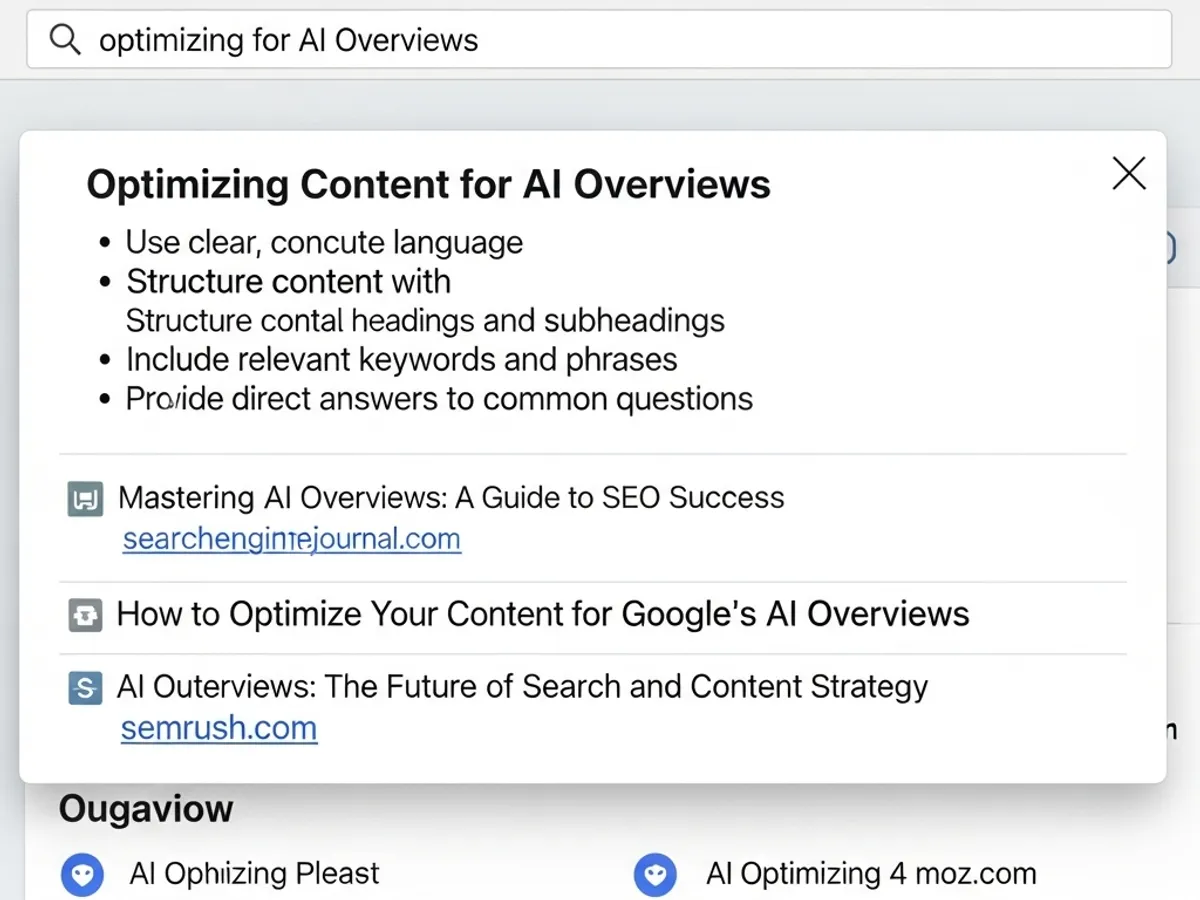
The search landscape has fundamentally shifted, with AI Overviews (formerly SGE) now dominating informational queries. This isn’t merely a minor update; it’s a seismic shift demanding a proactive approach to your “website seo optimization”.
Data reveals that AI Overviews now appear in over 80% of informational queries, leading to a reported 61% drop in organic click-through rates (CTR) for top-of-funnel content. This stark reality means traditional visibility alone is no longer sufficient; your content must be designed for direct answers and AI citation.
Embracing Generative Engine Optimization (GEO)
Success in this new environment hinges on what we term Generative Engine Optimization (GEO). The critical “ranking factors 2026” prioritize E-E-A-T (Experience, Expertise, Authoritativeness, Trustworthiness) and crucial user engagement signals like dwell time and scroll depth, moving significantly beyond simple keyword density. Google’s March 2024 Core Update, which successfully removed 40% of low-quality content, underscores this stringent quality standard.
Content must be structured for AI models to easily extract and cite.
To secure your “online visibility tips” in an AI-first world, content strategy must evolve. We’re seeing a critical need to structure information into ‘Answer Blocks’,think bullet points, FAQs, and concise TL;DR sections,making it effortless for AI models to extract and cite your site as a source.
Navigating these complex changes manually can be daunting, but AI-powered tools like GenWrite are designed to streamline this adaptation. Our SEO content optimization tool helps automate the process, ensuring your content meets the rigorous demands of current search algorithms.
As content creation becomes more automated, the challenge shifts to maintaining authenticity. It’s vital to craft truly human-sounding AI content that resonates with readers and avoids detection by sophisticated scanners. An AI SEO content generator can assist, but the human touch remains paramount to make AI writing undetectable and ensure genuine value. The imperative is clear: embrace GEO and strategically adapt content to thrive within AI Overviews, ensuring sustained “online visibility tips” and long-term organic growth.
What Are the Essential Steps to Start Your SEO Journey in 2026?
Embarking on your Search Engine Optimization (SEO) journey in 2026 requires a strategic, AI-informed approach that fundamentally differs from past methodologies. The landscape has shifted dramatically, with Generative Engine Optimization (GEO) and AI Overviews reshaping how content is discovered and consumed. Success now hinges on understanding these new dynamics and implementing a robust plan from the outset.
1. Foundational Keyword and Entity Research
The first essential step is to move beyond mere keyword density and delve into entity-based search. Google now prioritizes understanding the core ‘entities’ (people, places, things, concepts) your content relates to, rather than just matching isolated keywords. This means your research must uncover not only what users are searching for but why they are searching and what underlying entities are most relevant.
Focus on identifying long-tail keywords that indicate specific user intent, as these are less likely to be fully answered by AI Overviews and often lead to higher conversion rates. For businesses with a physical presence, local SEO is paramount, given that 93% of local searches lead to clicks on the Google 3-Pack. Optimizing your Google Business Profile (GBP) with geotagged photos and keyword-rich review responses is no longer optional.
AI tools dramatically streamline the discovery of emerging entities and user intent. Leveraging an AI keyword research tool can help you analyze competitor content, identify semantic clusters, and uncover lucrative long-tail opportunities that align with 2026 ranking factors. This data-driven start ensures your content directly addresses current search demands.
2. Crafting High-Authority, AI-Optimized Content
Content is still king, but its crown is now forged from Experience, Expertise, Authoritativeness, and Trustworthiness (E-E-A-T). Google’s March 2024 Core Update removed 40% of low-quality content, setting a clear precedent: only truly helpful, high-quality content will rank.
To thrive in a world dominated by AI Overviews, your content must be structured for machine readability. This means breaking down information into easily digestible Answer Blocks such as bullet points, FAQs, and concise TL;DR sections. These formats make it simple for AI models to extract and cite your content as a source, even in zero-click scenarios.
GenWrite excels in SEO optimization for blogs, automating the creation of high-quality, E-E-A-T-aligned content that is structured for both human readers and AI models. It’s about creating content that clearly demonstrates your unique perspective and deep understanding, signaling authority to both algorithms and audiences.
3. Mastering Technical SEO Essentials
Technical SEO forms the backbone of any successful website SEO optimization strategy. Without a technically sound site, even the most brilliant content can struggle to rank. Core Web Vitals,metrics like Largest Contentful Paint (LCP), Interaction to Next Paint (INP), and Cumulative Layout Shift (CLS),are critical ranking factors 2026.
Your website’s LCP, for instance, should ideally be under 2.5 seconds to provide a seamless user experience. Implement structured data using Schema Markup to help search engines understand the context of your content, which is vital for multimodal search and AI-generated summaries. This also improves the chances of your content appearing in rich snippets and other enhanced search results.
4. Building Quality Backlinks and Entity Signals
While the concept of backlinks remains, the emphasis has shifted dramatically from sheer quantity to quality, relevance, and most importantly, entity-based signals. Google’s shift to entity-based search means establishing topical authority across multiple platforms is now a primary ranking signal. It’s no longer just about who links to you, but who mentions you and how your brand is perceived across the web.
Focus on acquiring backlinks from authoritative, relevant sites within your niche. Simultaneously, cultivate positive brand mentions and ensure consistent entity representation across directories, social media, and industry publications. This holistic approach builds genuine authority, reinforcing your search engine optimization efforts.
Starting your SEO journey in 2026 means embracing an iterative, data-driven strategy. By focusing on deep keyword understanding, E-E-A-T content, technical excellence, and robust entity building, you lay the groundwork for sustainable growth. Tools like GenWrite can significantly streamline these complex processes, allowing you to focus on strategic oversight while ensuring your content remains competitive.
Can Local SEO Still Boost Your Business in an AI-Driven World?
Even as AI Overviews dominate informational queries, the landscape of local search remains a powerful, high-conversion frontier for businesses in 2026. While many worry about declining organic click-through rates, local intent searches are fundamentally different; they signal immediate need and a strong likelihood of conversion. This makes local SEO a critical differentiator in an AI-first world.
Why Local SEO Thrives in an AI-First World
Traditional search engine optimization often targets broad audiences, but local business SEO zeros in on customers ready to make a purchase or visit a physical location. This precise targeting is why local search continues to deliver exceptional return on investment. The data speaks for itself: 93% of all clicks in local searches still go directly to the ‘Google 3-Pack,’ the top three map results, demonstrating an unparalleled level of user engagement and trust.
Local SEO converts because it meets immediate, localized intent.
This makes local business SEO indispensable, even as AI models summarize general information. Your goal is to ensure your business appears prominently when users search for services or products near them.
Mastering Google Business Profile for Enhanced Visibility
The cornerstone of your local business SEO strategy is an optimized Google Business Profile (GBP). In 2026, optimization has evolved beyond basic information; it’s now about ‘Engagement Depth.’ This means:
- Comprehensive Information: Ensure all fields are meticulously filled out, including business hours, services, and accurate contact details. Incomplete profiles signal a lack of authority.
- Visual Richness: Upload high-resolution, geotagged photos and, if possible, 3D tours of your premises. These visuals enhance trust and provide vital context for multimodal search queries, crucial for modern search experiences.
- Active Review Management: Proactively collect customer reviews and, critically, respond to them with keyword-rich, thoughtful replies. This not only builds E-E-A-T (Experience, Expertise, Authoritativeness, Trustworthiness) but also signals to Google that your business is engaged and reliable. This isn’t just about rankings; it’s about building genuine trust with both potential customers and Google’s sophisticated algorithms, signaling your business as a definitive local authority. Leveraging tools like GenWrite can empower you to identify optimal keywords for these responses, significantly boosting your
google my business optimizationefforts.
For a deeper dive into optimizing your presence, explore comprehensive google my business optimization guides.
Hyperlocal Relevance and Multimodal Search
Beyond GBP, focus on creating content that resonates with your local community. This involves targeting hyperlocal keywords and developing content that answers specific local questions. For instance, if you’re a local bakery, blog about “the best sourdough in [Your City Neighborhood],” “local coffee shop collaborations,” or “seasonal treats for [Local Event].” This hyper-focused content strategy drives highly qualified local traffic.
What Common SEO Mistakes Should Beginners Absolutely Avoid?
Navigating the rapidly evolving landscape of 2026 search engine optimization (SEO) can feel like a minefield, especially for beginners. The shift towards AI-first indexing and generative experiences means old tactics are not just ineffective, but potentially detrimental. Avoiding common pitfalls is crucial for successful website seo optimization.
Neglecting User Experience and E-E-A-T
One of the most significant mistakes is failing to prioritize the user. Google’s ranking factors 2026 are heavily weighted towards user engagement signals, coupled with robust E-E-A-T (Experience, Expertise, Authoritativeness, Trustworthiness). Content that doesn’t genuinely help, inform, or engage its audience will struggle. Remember, AI Overviews now dominate over 80% of informational queries, and if your content isn’t seen as authoritative or helpful, it won’t be cited.
Quality content that truly serves user intent is non-negotiable for visibility.
Ignoring AI Overviews and Generative SEO
Many beginners still optimize solely for traditional blue-link results, overlooking the seismic shift brought by AI Overviews. These summaries have led to a reported 61% drop in organic click-through rates for top-of-funnel content. The mistake here is not structuring your content into ‘Answer Blocks’ (bullet points, FAQs) that AI models can easily extract and cite. This means embracing Generative Engine Optimization (GEO) rather than resisting it.
Prioritizing Quantity Over Quality
Churning out numerous low-quality articles is a surefire way to harm your search engine optimization efforts. Google’s March 2024 Core Update successfully removed 40% of unhelpful content, setting a strict precedent. It’s not about how much you publish, but how valuable each piece is. Focus on creating deeply researched, unique, and truly helpful content.
This is where an AI blog generator like GenWrite can be invaluable, automating the research and structuring to ensure high-quality, SEO-friendly output, rather than just volume. By focusing on user experience, adapting to AI, and prioritizing quality, beginners can lay a strong foundation for their SEO journey.
Where Can You Find More Resources to Master SEO Beyond This Guide?

Your journey to mastering search engine optimization (SEO) is less about reaching a finish line and more about continuous evolution. This guide has equipped you with critical starting points , from understanding E-E-A-T to embracing AI-first content strategies , all vital for achieving robust online visibility in 2026. To truly thrive and maintain sustained success in this dynamic landscape, continuous learning and adaptation are not just recommended, they are non-negotiable. Your proactive commitment to evolving your knowledge will ultimately define your success in boosting organic reach.
To develop and maintain your expertise, actively engage with leading industry blogs and vibrant communities, staying ahead of constant algorithm updates. For truly efficient content creation and enhanced search engine optimization, leverage AI-powered tools like search engine optimization. These platforms automate crucial tasks such as keyword research and blog generation, ensuring your content is optimized for today’s landscape.
Consider our dedicated seo optimization service to refine your approach with expert guidance, ensuring your strategies are always cutting-edge.
Deepen Your SEO Mastery
To reinforce your learning and ensure ongoing growth, explore these essential resources:
- Courses & Books: Invest in authoritative guides on technical SEO and strategic content planning to build a solid foundation.
- Industry Insights: Follow thought leaders and actively participate in SEO forums for real-time updates and community knowledge.
- AI Tools: Integrate advanced platforms like search engine optimization to streamline workflows, automate optimization, and remain highly competitive in the AI-driven search environment.
The path to SEO mastery is ongoing, but with these resources and a proactive mindset, you are exceptionally well-prepared to flourish digitally. Take the next step to secure your website’s future and dominate the search landscape.
Ready to conquer the AI-driven search landscape? Discover how GenWrite can automate your SEO content creation and boost your website’s authority today!
People Also Ask
What is Generative Engine Optimization (GEO) and why is it important for SEO in 2026?
Generative Engine Optimization (GEO) is the evolution of SEO for AI-driven search. It focuses on creating content that AI models can easily understand and cite, often through structured formats like ‘Answer Blocks.’ Prioritizing E-E-A-T and user engagement signals is crucial for ranking in 2026’s AI-first search environment.
How do Google’s AI Overviews affect website click-through rates (CTR)?
AI Overviews can significantly impact CTR, with reports showing a substantial drop in organic clicks for top-of-funnel content. To combat this, content needs to be highly authoritative and structured to be featured or cited by AI, ensuring your website still gains visibility.
Is local SEO still relevant with the rise of AI search?
Absolutely. Local SEO remains critical, as a vast majority of local searches result in clicks on the ‘Google 3-Pack.’ Optimizing your Google Business Profile with rich media, detailed responses, and hyperlocal relevance is essential for attracting local customers in 2026.
What does E-E-A-T mean in the context of SEO in 2026?
E-E-A-T stands for Experience, Expertise, Authoritativeness, and Trustworthiness. Google heavily prioritizes these signals to ensure users receive reliable and high-quality information. Demonstrating these qualities through your content and online presence is vital for SEO success in 2026.
How can I optimize my content for ‘zero-click’ searches?
To succeed in zero-click searches, structure your content into easily digestible ‘Answer Blocks.’ This includes using bullet points, FAQs, and concise TL;DR summaries that AI models can directly pull information from to answer user queries without them needing to click through to your site.
What are the typical costs associated with SEO services in 2026?
SEO service costs in 2026 vary widely. Small businesses might expect retainers between $1,000 to $2,500 per month, while larger campaigns can range from $2,500 to over $10,000+. Businesses are increasingly seeking custom, data-driven strategies rather than fixed packages.