
Why your first AI SEO software might confuse you (and how to start the right way)
The messy reality of your first week with AI SEO tools

You open your brand-new dashboard, expecting a clean list of high-volume keywords and an easy path to page one. Instead, you get a wall of unfamiliar data, automated content scores, and suggestions that seem to contradict everything you know about search. It’s a common story. The first week with ai seo software usually feels less like a breakthrough and more like a headache.
This friction happens because search is changing fast. For years, SEO was a predictable game of matching exact phrases and building backlink volume. But today, search engines are evolving into generative engines. With Google’s AI Overviews, Gemini, and ChatGPT changing how users find information, the old playbook is cracking. When you plug your site into modern ai tools for seo, they aren’t just looking for keyword density. They’re trying to predict how semantic systems will interpret your brand’s authority.
That shift is incredibly disorienting.
You might notice your organic click data doesn’t match the optimistic projections in your new software. Or perhaps the tool suggests targeting a search term that traditional databases claim has zero search volume. Naturally, you start to wonder if the software is broken, or if you’re simply doing it wrong.
The reality is more nuanced. The tools are trying to optimize for intent rather than raw volume, but they can’t do it without your guidance. If you expect an algorithm to completely run your strategy without human oversight, you’ll likely end up with sterile, robotic pages that please neither search engines nor actual human readers.
We need to adjust our expectations. Success with these platforms isn’t about hitting a perfect 100/100 optimization score on your first draft. It’s about learning how to use machine speed to handle the heavy lifting, like mapping semantic clusters or analyzing competitor structures, while you keep your hand on the steering wheel. Once you accept that these systems are analytical partners rather than autonomous pilots, the initial confusion starts to clear.
What we actually mean when we talk about ai seo software
To understand modern AI SEO software, we must first dissect how search engines have evolved. Traditional search operates on a retrieval-based model. When a user types a query, the engine crawls an index of static pages, matches keywords, and presents a list of links. Generative search engines, however, rely on synthesis. They do not just point to a source; they read, compress, and reconstruct information into direct answers. This shift changes how we must optimize content.
Beginners often treat all SEO writing tools as a single, monolithic solution. This is a mistake. A specialized SEO writer AI is designed for language generation, not data validation. If you ask a content generator to perform a technical site audit, it will likely hallucinate metrics or misinterpret server logs.
To avoid confusion, we must categorize these tools by their actual technical functions:
- On-page optimization engines: These systems scrape top-ranking competitor pages, analyze semantic keyword density, and calculate TF-IDF (term frequency-inverse document frequency) scores. They tell you what topics you missed, but they do not write the copy.
- Generative writing agents: Built on large language models (LLMs), these tools synthesize new text based on prompts and structured briefs. They excel at drafting but require verified source material to remain accurate.
- Search intent analyzers: These platforms cluster keywords based on user behavior patterns, helping you identify whether a searcher wants to buy, learn, or compare.
And here is the hard truth: machines do not actually understand your business. They calculate mathematical probabilities of word associations based on historical training data. If your software scrapes outdated competitor content, it will simply reproduce those same errors with perfect grammar.
So, before you run your first optimization campaign, map your tools to their specific strengths. Use database-driven scraping tools for your keyword research, and reserve your generative writing systems strictly for structuring and drafting. Mixing these roles up only leads to broken strategies and flat, unoriginal content that search engines will eventually ignore.
Why getting a grip on search engine optimization ai matters right now
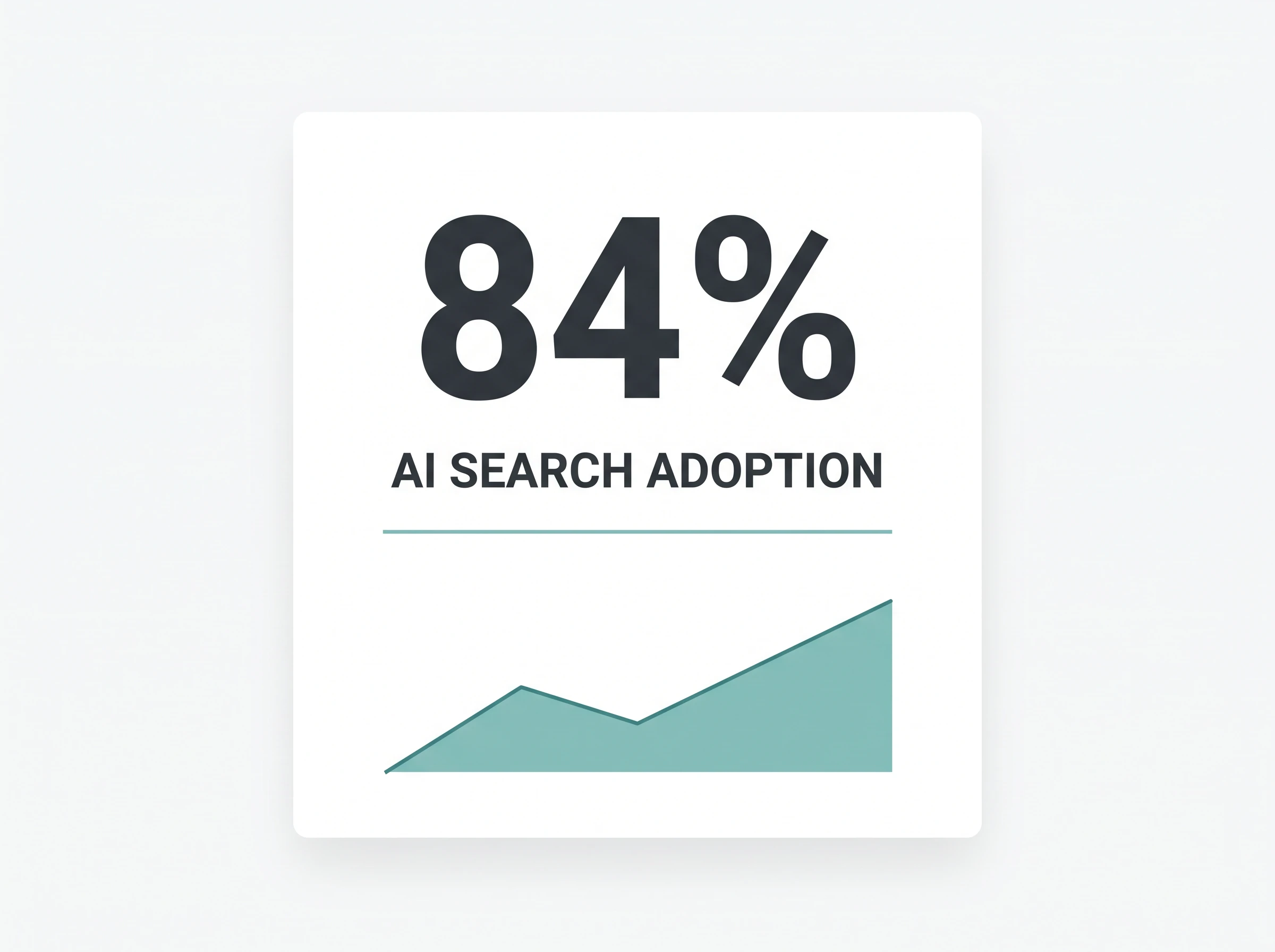
The landscape of search is undergoing its most radical transformation since the introduction of mobile indexing. If you are still optimizing content by manually counting keyword density and hoping for a blue link click, you are operating on an outdated playbook. Modern search engines no longer just index documents; they synthesize answers. To remain visible, mastering search engine optimization ai is no longer an optional skill set,it is the baseline for survival.
This shift is driven by how search engines now process and display information. Users increasingly rely on direct, AI-generated summaries at the top of their search results rather than scrolling through pages of blue links. The implications for traditional publishers are stark. For instance, data from Moz reveals that 88% of the sources cited in Google’s AI-driven search results do not actually rank in the top 10 standard organic positions for those queries. This means the old rules of ranking no longer guarantee visibility in the answers that users actually read.
| Traditional SEO Focus | AI-Driven SEO Focus |
|---|---|
| Keyword frequency & density | Entity clarity & semantic relationships |
| Backlink quantity | Authoritative citations & structured data |
| Broad page-level targeting | Direct, conversational answer matching |
To capture traffic in this new paradigm, your content must be structured so that machine learning models can easily parse, verify, and cite it. This requires a transition from keyword stuffing to establishing clear entity relationships and utilizing structured schema markup. Search engines look for authoritative consensus; they need to trust that your data is accurate before they present it as a definitive answer.
But relying on legacy tools to build these modern semantic structures is incredibly inefficient. The best ai for seo tools help bridge this gap by analyzing competitor entities and semantic gaps in seconds rather than hours. The reality is that search engines are using machine learning to understand user intent, and you must use similar technology to match it. Failing to adapt to this shift means your content risk becoming invisible to the very systems designed to synthesize the web’s knowledge.
A simple framework for your first real-world optimization experiment
You don’t have to risk your primary domain’s hard-earned authority just to figure out how these systems work. In fact, you shouldn’t. The smartest way to master seo ai tools is to build a low-risk sandbox,a simple subdomain or a secondary test site where a sudden drop in search traffic won’t break your business.
Step 1: Establish your staging environment
Set up a separate staging environment. This is your training ground. By isolating your experiments, you can test how search engines crawl, index, and rank your automated content without affecting your main site’s reputation. It gives you the freedom to fail, tweak, and learn the software’s quirks in a safe, controlled space.
Step 2: Seed the engine with unique human insights
Most search teams make the mistake of feeding their software the exact same generic keywords. This results in copycat content that search engines easily ignore. Instead, start your ai keyword research by gathering raw, real-world human conversations.
Look through customer support tickets, Reddit threads, or sales call transcripts. Find the specific phrasing your customers actually use when they are frustrated. When you input these unique, competitor-free queries into your generator, you bypass generic search databases and force the machine to produce highly targeted, valuable solutions.
Step 3: Run a limited, manual-first campaign
Choose five of your custom, conversation-derived queries and generate five draft articles. Do not publish them immediately. Treat the machine’s output as a rough first draft.
Review each piece for accuracy and tone. Ensure the software didn’t hallucinate facts or create repetitive sentences. Once you’ve polished the drafts to meet your quality standards, publish them to your sandbox site and monitor how they perform over the next few weeks.
Step 4: Audit the results and scale up
Analyze the data. Are your sandbox pages getting indexed? Are they ranking for the intended queries? This step-by-step approach lets you master how to use ai for seo safely, giving you the confidence to scale up your content automation only after you’ve proven it works.
Where beginners get tripped up by automated metrics and raw drafts

Most marketers fail with AI SEO because they treat the software like an oracle instead of an assistant. They copy, paste, and publish without verifying a single metric. If you want to avoid burning your site’s reputation, you have to watch out for the major traps that catch beginners.
The hallucinated search volume trap
Many teams assume that every ai keyword research tool pulls live, flawless search data directly from Google’s database. It doesn’t. Unless your software is actively connected to a live search API, it’s making educated guesses based on historical training data.
This leads to targeting phrases with zero actual search volume, or worse, completely missing shifts in consumer behavior. You’ll end up ranking for terms nobody actually searches for, watching your analytics dashboard stay flat despite your high rankings.
The one-click publishing illusion
Generating a 2,000-word blog post with a single click feels like magic. But publishing that raw, unedited draft is the fastest way to trigger search engine spam filters.
AI models excel at structured layouts, but they struggle with original insights, unique case studies, and brand voice. A raw draft lacks the human perspective that search engines reward. If your content looks exactly like every other AI-generated article on the web, search engines have no reason to index it, let alone rank it on the first page.
Ignoring search intent for vanity metrics
It’s easy to get excited when your best ai seo software suggests a high-volume keyword that seems easy to rank for. But high volume doesn’t equal high revenue.
Beginners often target broad informational terms that bring in casual readers who have no intention of buying. You need to screen your keywords for commercial intent. A keyword with 100 monthly searches from active buyers is worth infinitely more than a keyword with 10,000 searches from students looking for a quick definition.
Treating SEO as a content-only problem
You can write the most optimized, beautifully structured article on the web, but it won’t rank if your site’s technical foundation is broken. AI content tools won’t fix your slow page load times, your messy URL structures, or your lack of authoritative backlinks.
Content is only one piece of the puzzle. If you ignore technical site health and basic off-page authority, your automated content strategy will fail to drive any real business results.
Real examples of how machines and editors work together successfully
A few months ago, I watched an enterprise marketing team try to scale their organic reach using pure automation. They generated a 2,000-word draft on “how to manage distributed engineering teams” using a basic prompt. The output was grammatically flawless, but it was entirely hollow. It offered generic advice like “communication is key” and “use project management tools” without naming a single real-world headache. The bounce rate on that published draft hovered around 88%. Readers saw right through the lack of genuine experience.
So, how did we fix it? We took that same flat draft and applied a collaborative editing framework. First, we interviewed an actual engineering manager to extract real-world facts and specific friction points. We replaced abstract advice with a concrete story about resolving a time-zone conflict between developers in San Francisco and Warsaw using Slack integration hacks. We then restructured the dry, repetitive paragraphs into a punchy, problem-first narrative. By learning how to rewrite flat AI drafts, the team transformed a generic wall of text into a high-performing organic asset. The bounce rate plummeted to 42%, and sign-ups for their software increased by 14%.
This is where effective ai seo content writing succeeds. The machine is great at building the structural skeleton, researching competitor headings, mapping out semantic entities, and drafting the initial layout. But the human editor has to inject the soul.
Consider this side-by-side comparison of a raw draft versus an edited, humanized version:
| Raw Machine Output | Human-Edited Revision |
|---|---|
| “It is critical to utilize robust software tools to facilitate seamless communication among your remote team members.” | “We tried three different chat tools in six months, but our remote team kept missing critical updates until we locked down our Slack channel rules.” |
| “Additionally, setting clear expectations will foster synergy and enhance overall project outcomes over time.” | “We started writing down exact deliverables every Monday at 9 AM. If it wasn’t in the shared document, it didn’t exist.” |
The raw draft relies heavily on abstract verbs and corporate fluff. The edited version, however, uses precise, lived-in details that build immediate trust. When you approach seo copywriting ai as a collaborative partnership rather than a hands-off replacement, you stop publishing noise. You start publishing resources that actually deserve to rank.
Curated resources to keep your training on track

building your verification toolkit
Mastering AI-driven optimization requires moving away from guesswork. You need to build a reliable environment where you can test prompts, track performance, and verify how search engine crawlers interact with your pages.
Below is a comparative breakdown of the three primary testing and validation methods you should run weekly to ensure your technical environment remains healthy.
| Verification Method | Primary Focus | Best Tooling | Main Trade-off |
|---|---|---|---|
| Direct Prompt Testing | Verifying semantic variation and search intent alignment. | ChatGPT, Perplexity, Gemini | Time-intensive; requires constant manual iteration. |
| Traffic Segmentation | Isolating organic search from AI engine referral traffic. | Google Analytics 4 (GA4) | Attribution models are still evolving and imperfect. |
| Crawler Verification | Ensuring search bots can render and index your automated pages. | Google Search Console, Screaming Frog | Only identifies issues after rendering attempts occur. |
comparing direct engine behaviors
When testing how engines interpret your content, don’t rely on a single LLM. Run your drafts through different models to see how they summarize your ideas.
- ChatGPT (OpenAI): Excellent for structuring complex, multi-layered arguments. However, it occasionally defaults to predictable phrasing patterns if not heavily constrained.
- Perplexity: Great for verifying whether your content contains the necessary factual citations to surface in conversational search results.
- Gemini (Google): Highly useful for understanding how Google’s own search systems might categorize your topical authority.
If managing these individual testing loops feels too fragmented, integrated platforms can simplify the process. For instance, using an all-in-one seo ai generator allows you to bypass manual prompt building by automating competitor analysis and semantic optimization in a single workflow.
setting up your analytical environment
Once your content is live, you must track how search engines and users interact with it. The most common mistake is looking at overall traffic instead of isolating your variables.
In GA4, set up a custom traffic referral segment specifically for AI search engines (like perplexity.ai or claudebot). This helps you see if your content is being sourced as a citation.
At the same time, monitor Google Search Console’s “Crawl Stats” report. If you use automated seo content writing tools to scale your publishing, keep an eye on your host load. Too many rapid updates can cause crawl budget issues, meaning Google might delay indexing your newest pieces. It’s a delicate balance, but setting up these tracking guardrails early protects your site’s reputation while you scale.
Moving past the learning curve and taking your first step
The promise of push-button search dominance is a myth, but that doesn’t mean the tools aren’t transformative. When you first log into any modern platform, the sheer volume of metrics, content scores, and automated suggestions can feel like sensory overload. But once you strip away the marketing noise, you realize the fundamental mission of search engine optimization has not changed at all. It is still, and has always been, about providing clear, accurate answers to human questions.
The trick is resisting the temptation of total automation. Relying on software to do 100% of the thinking is how sites end up with sterile, repetitive content that search engines eventually ignore. Instead, the most successful publishers treat ai seo software as an incredibly fast, highly capable assistant. You direct the strategy, define the unique perspective, and inject the real-world experience, while the machine handles the heavy lifting of scale, structure, and initial drafts.
This hybrid workflow is where the real value lies. By using a platform like GenWrite to manage your content automation and initial drafts, you free up your mental bandwidth to focus on editorial polish and actual strategy. You aren’t replacing your voice; you’re amplifying it. And because you are still steering the ship, you can ensure that every published piece contains original research, genuine insights, and the kind of depth that generic AI generation simply cannot replicate.
Yes, the initial learning curve is steep. You will probably over-optimize your first few articles, or feel frustrated when a generated outline misses a subtle nuance of your niche. That’s a normal part of the process. The key is to start small. Run a single experiment, edit the output with a critical eye, and learn how the system responds to your inputs.
Over time, you’ll stop viewing these tools as mysterious black boxes and start seeing them as an essential advantage. Finding the best ai for seo isn’t about finding a tool that replaces your brain. It’s about finding a system that respects your expertise while accelerating your execution. Step away from the promise of effortless magic, embrace the role of the editor-in-chief, and take that first practical step today.
Tired of spending hours editing robotic AI drafts? GenWrite handles automated keyword research and SEO optimization so you can publish human-ready content faster.
FAQ
Why does my AI SEO content rank poorly?
It’s usually because raw AI drafts lack unique perspective and rely on recycled competitor fluff. Search engines prefer original insights, so you’ll need to inject personal experience and edit heavily before hitting publish.
How do I know if an AI keyword research tool is lying to me?
Honestly, most automated volume estimates are inflated guesswork. Always cross-reference AI suggestions with real search console data and actual user queries rather than trusting the tool blindly.
Can search engines detect content written by AI SEO software?
They don’t penalize text simply for being AI-generated, but they hate low-quality, repetitive spam. If your automated drafts provide genuine value to readers, you’ll be fine.
What should I automate first when starting with SEO AI?
Start with structuring outlines and drafting meta descriptions rather than full-length articles. That way, you keep creative control while letting the software handle the tedious heavy lifting.