
How to rescue a US SaaS brand from absolute zero search visibility
The quiet crisis of zero SaaS visibility
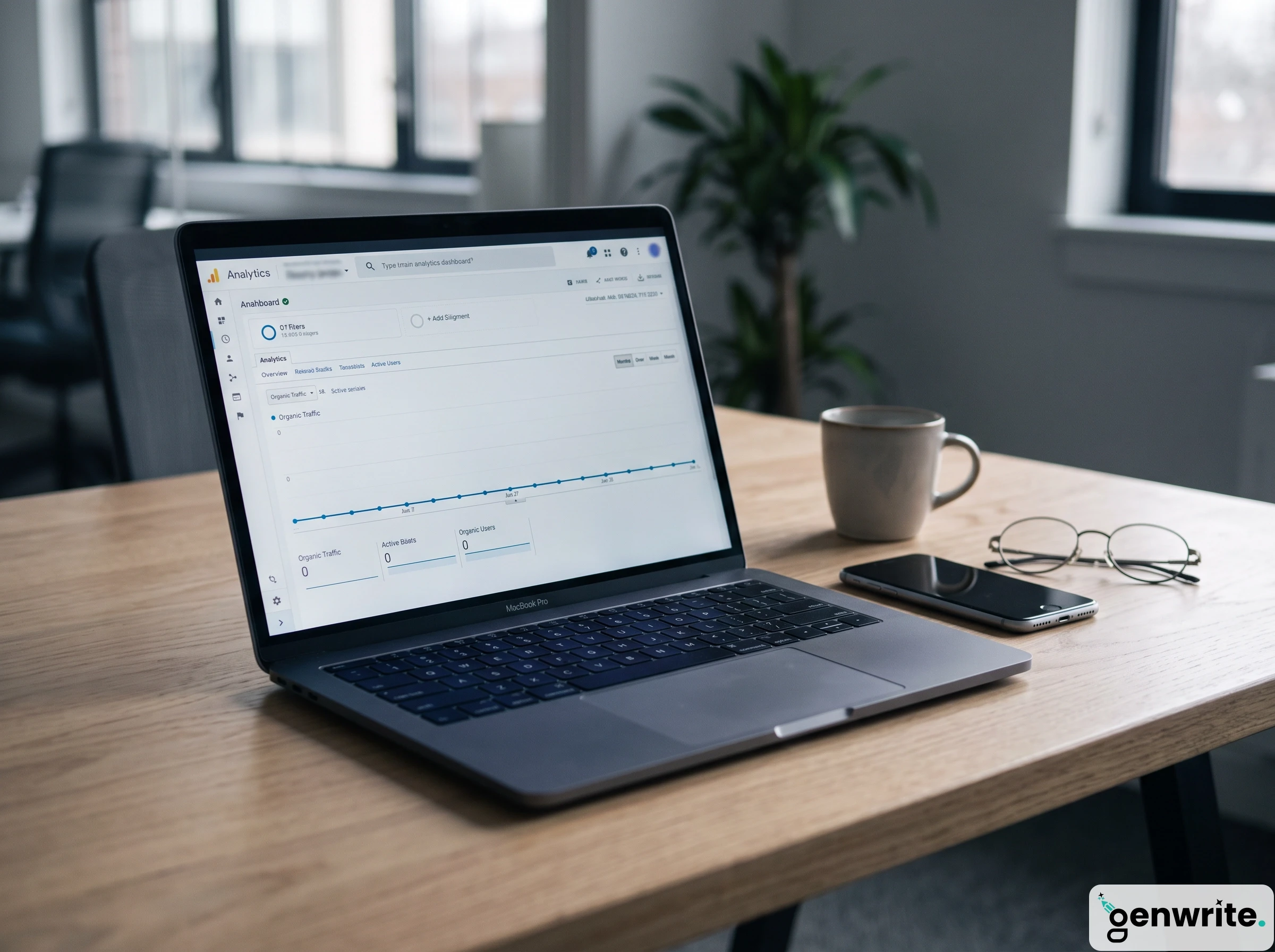
You launch your SaaS, set up your tracking, and wait. Nothing happens. The organic traffic line in your dashboard stays completely flat.
To compensate, you start pumping money into paid ads. It works for a few weeks, sure, but your customer acquisition costs quickly spiral out of control. That’s the trap. Renting your distribution through paid channels is a temporary band-aid, not a sustainable business model. The moment you turn off the budget, your pipeline dries up.
Building saas organic visibility from absolute zero is brutal. When your domain has zero authority, search engines simply ignore you.
To fix this, you need a structured recovery plan. Don’t expect instant miracles here. Reclaiming your saas search visibility takes about 90 days of consistent, targeted effort just to see the needle twitch. Compounding returns won’t really show up until around the six-month mark. It’s a slow, sometimes painful burn, but it’s the only way to build an asset you actually own.
A 90-day recovery plan to jumpstart search traffic
The 90-day execution framework
Staring at a flatline in Google Analytics is bruising. When your product is ready but organic traffic is dead, you need a systematic seo recovery plan. Don’t chase high-volume informational terms. Focus on the small pocket of users who are ready to buy right now.
Days 1 to 14: the technical triage
Your first fortnight is about diagnosing why Google is ignoring you. Open Google Search Console. Go straight to the indexing report and look for “discovered – currently not indexed” and “crawled – currently not indexed” statuses. These usually point to rendering issues or messy internal linking. If you are executing SEO for a SaaS with no traffic, you have to fix these crawl budget leaks before writing anything new.
Days 15 to 30: high-intent keyword mapping
Stop targeting broad industry terms. Focus instead on commercial queries where searchers actually want to buy. Search engines understand intent now, so group your keywords by what the user wants to achieve, not just raw search volume. Using ai search intent analysis to categorize transactional queries helps map out these high-converting clusters. It stops your pages from competing with each other and ensures you actually match buyer intent.
Days 31 to 60: building transactional assets
Now, build the pages that turn searchers into signups.
Create comparison pages (like “Your Brand vs. Competitor”) and alternative pages (“Best Competitor Alternatives”). These terms have low volume. But the conversion rates are incredibly high. You can also build simple free tools or calculators that solve a specific, immediate problem for your target user.
Days 61 to 90: scaling and automation
A manual saas zero traffic fix takes too long if you write every piece of content from scratch. To build topical authority, you have to scale your publishing schedule. Using an AI platform like GenWrite lets you automate competitor analysis and bulk content production without losing control of your quality. This is how your saas seo recovery efforts actually start to show results.
Why traditional keyword stuffing breaks in the AI era
Surviving the shift from keywords to entities
Repeating exact-match keywords across a 3,000-word blog post is dead. Modern search engines are no longer simple string-matching indexes. They operate as semantic entity graphs. To improve saas rankings now, you have to pivot from legacy tactics to answer engine optimization (AEO).
LLMs and search bots don’t care about string frequency. They don’t just scan for terms like “SaaS accounting software” anymore. Instead, they map out entity relationships, structured definitions, and explicit data formats. It is about nodes and edges. When search engines resolve a user’s query directly on the SERP, they pull from highly structured assets. If your pages lack these semantic connections, generative engines simply won’t see them. Surviving this zero-click search environment requires two things: machine-readable content blocks and precise JSON-LD schema.
For sustainable saas growth seo, you must structure pages with clear, bulleted comparisons and definition blocks. Code your pricing, features, and integrations directly into your schema markup. This makes your content instantly parseable for crawlers that synthesize answers.
Yes, you might lose some immediate clicks. But you will secure the brand citations that actually drive pipeline.
What to do when your indexation flatlines
Diagnosing the indexation flatline
If your search console indexation chart looks like a flat ECG, stop writing new content immediately. More drafts won’t fix a leaking bucket. When faced with sudden organic traffic drops, the issue is almost always technical, not creative.
First, rule out self-inflicted wounds. Check your robots.txt and inspect your page templates for accidental noindex tags left over from your last staging deployment. It happens more often than engineering teams admit. If Google isn’t crawling your XML sitemap, force-submit your high-priority transactional pages directly through Google Search Console to trigger a manual recrawl.
But what if your pages are fully indexed and still getting zero traction? This is where fixing bad seo saas strategies gets messy. Most marketing teams waste weeks manually rewriting every line of copy, chasing a subjective editorial standard while ignoring actual search intent. We ran into this exact wall and discovered that heavy manual quality assurance bottlenecks actually hide structural problems like keyword cannibalization.
Finally, audit your tracking scripts. Sometimes, a flatline isn’t an indexation issue; it’s a broken Google Tag Manager container or a duplicate analytics tag skewing your session data. Trust the raw log files, not just dashboard visualisations.
Turning search into a compounding asset
Building the compounding engine
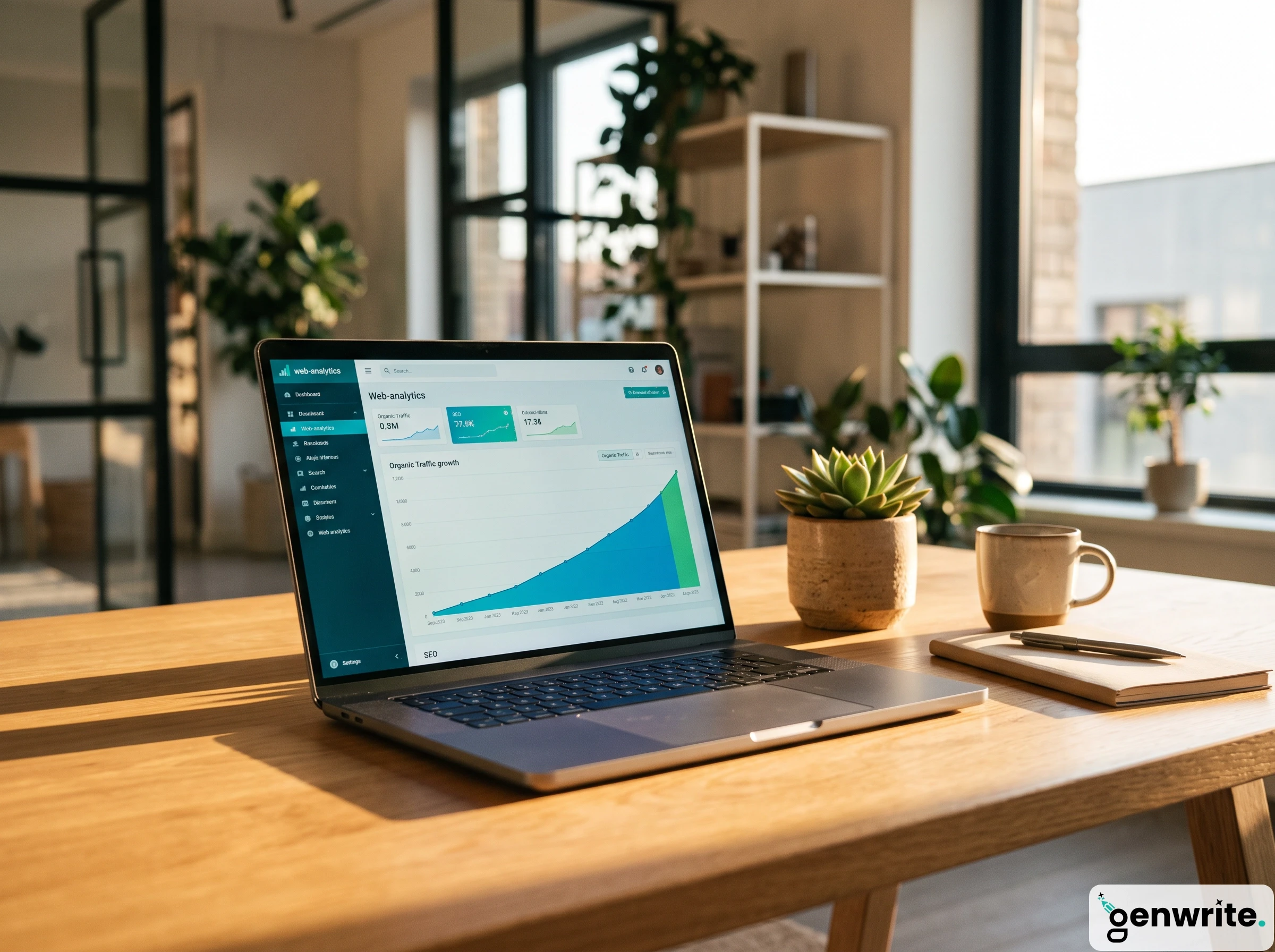
Rescuing a dead domain isn’t an overnight fix. You won’t wake up tomorrow with thousands of organic signups, and honestly, some niche terms might take even longer than you expect to move. But if you systematically audit your technical setup, target high-intent transactional terms, and execute a proven saas growth seo strategy, the math starts to work in your favor.
Most US SaaS brands see early signs of long-tail movement around months four to six. By month 12, those high-value transactional terms should start ranking, turning your site into a compounding pipeline.
You don’t have to write every single diagnostic piece manually to get there. Using a modern AI blog generator allows you to execute competitor analysis and scale your publishing cadence without burning out your team. Audit your search footprint today, find where the pipeline is leaking, and start building.
Tired of manual keyword research and slow SEO results? GenWrite automates competitor analysis and content creation so you can scale organic traffic without the headache.
FAQ
How long does it actually take to recover zero search visibility for a SaaS brand?
Most brands start seeing steady movement in 90 days once indexation blocks and technical errors are cleared. That’s usually when Google starts trusting your site again after a dry spell.
Why did my SaaS organic traffic suddenly flatline overnight?
It’s usually caused by accidental noindex tags pushed during a deployment, a core algorithm update, or a complete lack of fresh entity signals. Honestly, check your robots.txt and Search Console first before panicking about content.
Should I focus on high-volume keywords or niche comparison terms when starting over?
Skip the broad head terms because you won’t rank for them yet. Target high-intent comparison and feature terms where buyers are already making purchase decisions.
Does AI search change how I should fix my SaaS blog?
It really does, since AI engines care about entity relationships and clear answers rather than just keyword density. You’ll want to structure your pages so machines can easily cite your product features.