
Crafting Content to Dominate Google’s AI Overviews in 2026
What are Google’s AI Overviews and Why Do They Matter Now?
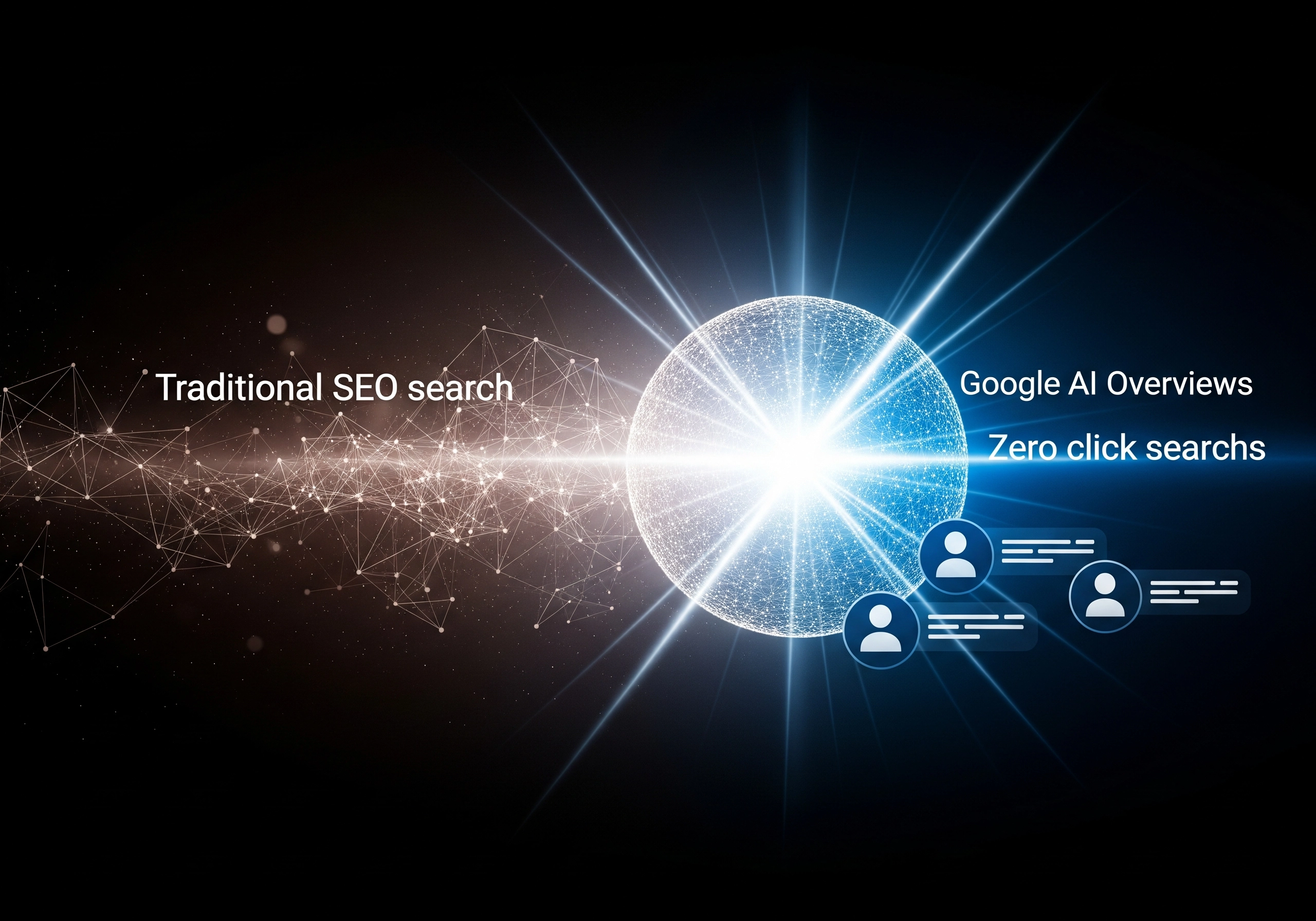
For over two decades, the primary goal of Search Engine Optimization (SEO) was to secure the number one organic ranking. In 2026, that coveted top spot is rapidly becoming irrelevant for clicks. The entire search landscape has been fundamentally reshaped by a single, powerful force.
Enter Google’s AI Overviews. These are not simply enhanced snippets; they are comprehensive, AI-generated summaries that sit at the very top of the search engine results page (SERP). Powered by advanced models like Gemini 3, they synthesize information from multiple sources to provide a direct answer, often negating the user’s need to scroll down or click on any traditional blue links.
The New Reality of Search Visibility
The impact of this shift is staggering. By early 2026, AI Overviews appear in approximately 60% of all search queries, rising to nearly 99% for informational searches. This has created a crisis for traditional SEO metrics. The average click-through rate (CTR) for the top organic result has plummeted from 7.3% to just 2.6%,a decline of over 60%. For many queries, zero-click searches are now the default outcome, fundamentally altering the future of search marketing.
However, this disruption isn’t just a threat; it’s a powerful opportunity. While uncited content fades into obscurity, websites referenced within an AI Overview experience a CTR boost of 35-80%.
The goal is no longer just to rank; it is to be cited.
This makes mastering Google AI Overviews SEO the most critical task for any brand seeking AI-driven SERP visibility. The old playbook is obsolete. To succeed, you must learn how to optimize content for Google’s AI summaries and win 2026 search rankings by creating content specifically engineered to be the definitive source for Google’s AI.
How Can You Structure Content for Atomic Answers and AI Extraction?
The Atomic Answer Framework: Your Blueprint for AI Visibility
Traditional content strategy taught us to build suspense and save the core answer for later. In the age of AI Overviews, that model is obsolete. To secure a citation, you must deliver the answer immediately. This is the core principle behind the Atomic Answer Framework, a structure designed for machine readability and direct information extraction.
The framework is simple yet powerful: every major section of your content should begin with a question-based header (typically an H2 or H3), followed immediately by a concise, self-contained paragraph of 50-70 words that directly answers that question. This “atomic answer” provides the AI with a perfect, pre-packaged summary to pull for its overview.
This structure flips the conventional writing process; you provide the conclusion first, then the context.
Designing for Extraction: Lists, Bullets, and Clarity
Once you’ve provided the atomic answer, the rest of the section can elaborate with details, data, and examples. This is where structuring for AI extraction becomes critical. Since 40-61% of AI Overviews utilize lists, incorporating them is no longer optional,it’s essential for effective AI summary optimization.
Follow these steps to structure your content:
- Lead with the Answer: Place your 50-70 word summary directly under the question-based heading.
- Use Bullet Points: Break down complex processes, benefits, or features into scannable bullet points.
- Leverage Numbered Lists: Use numbered lists for sequential steps or ranked items.
- Keep Sentences Short: Write with clarity and precision, avoiding jargon that could confuse an AI parser.
This methodical approach to Content Optimization SGE ensures your content is not just readable for humans but is also perfectly formatted for AI consumption. Advanced ai seo writing tools like GenWrite are built to automate this process, ensuring every article adheres to the structural demands for achieving high AI search visibility.
By structuring content this way, you make it incredibly easy for Google’s AI to parse, understand, and cite your key points, dramatically increasing your chances of being featured.
What Role Do Entity-Based Content and Information Gain Play in AI Citations?

Traditional SEO often focused on keyword density, but AI Overviews have rendered that approach obsolete. Google’s Gemini 3 model doesn’t just read text; it understands concepts and the semantic relationships between them. This is the core of Entity-Based Content, where the goal is to build a comprehensive topical map, not just a keyword-rich page.
An entity is a distinct concept,a person, place, organization, or idea. To secure a citation, your content must demonstrate a deep understanding of its subject’s entire topical neighborhood. This means covering not just the primary topic but all interconnected entities that define it. For example, a definitive article on “renewable energy” must also discuss related entities like “photovoltaic cells,” “grid parity,” and “carbon sequestration” to signal comprehensive knowledge.
However, simply listing entities is not enough. The key to earning a citation is information gain. This principle dictates that your content must add new, unique value to the existing body of knowledge online. AI prioritizes sources that fill information gaps, rather than those that simply rephrase what’s already known.
To achieve this, you must focus on:
- Proprietary Data: Include original research, survey results, or internal statistics that cannot be found elsewhere.
- Unique Experience: Share first-hand case studies, personal anecdotes, or expert insights that provide a novel perspective.
- Deeper Analysis: Synthesize existing information in a new way or provide a level of analytical depth that is absent in competitor content.
Ultimately, AI Overviews reward content that acts as a definitive source. By mapping out a complete topical neighborhood and enriching it with unique information gain, you signal to Google that your content is not just relevant, but an essential resource worthy of citation.
How Do Technical SEO Signals Enhance AI Understanding and Trust?
Building a Foundation of Trust for AI
While superior content is the price of entry, it remains invisible to AI if your technical foundation is unstable. In the past, technical SEO was about satisfying crawlers. Today, it’s about communicating clarity and trustworthiness to sophisticated language models. A technically sound website is a prerequisite for getting your content considered for AI Overviews.
Fundamental signals like page speed, mobile-first indexing, and HTTPS are no longer just best practices; they are trust indicators. AI systems prioritize efficiency and security. A slow-loading or non-secure page introduces friction and risk, making it an unreliable source for citation. Optimizing for Crawl Budget Efficiency is critical because it ensures AI can access and process your most valuable content without wasting computational resources, directly impacting your AI content performance.
Translating Content for Machines with Schema Markup
The most powerful tool in your technical arsenal is structured data, specifically Schema markup. Think of it as a universal translator that converts your unstructured text into a language machines can instantly comprehend. It’s the difference between an AI reading a block of text about an event and understanding its date, location, and performers.
Implementing specific schemas like FAQPage, HowTo, and Article markup removes ambiguity. You are essentially handing the AI a neatly labeled dataset, which is why structured content is 60% more likely to be featured in AI results. This explicit labeling allows Gemini 3 to parse information with confidence, making your site a preferred source for building its summaries.
Ultimately, Technical SEO creates an environment where your high-value content can be discovered and trusted. By ensuring your site is fast, secure, and semantically structured, you make it easy for AI to choose your content. Tools that focus on AI SEO content generator capabilities can build these structural elements in from the start, giving you a competitive edge in earning that coveted Google AI summary spotlight.
Can Strategic E-E-A-T and Multimodal Content Boost Your AI Visibility?

While technical SEO creates a solid foundation, it’s the layers of trust and media richness that truly differentiate your content for AI selection. If atomic answers get you into the consideration set, strategic E-E-A-T and multimodal content are what get you cited. It’s the shift from being technically correct to being authoritatively preferred.
Building Algorithmic Trust with E-E-A-T
Google’s E-E-A-T framework,Experience, Expertise, Authoritativeness, and Trustworthiness,is no longer a guideline just for human raters. It’s now a core input for AI models to validate the credibility of a source before referencing it. To optimize for E-E-A-T for AI, you must make these signals machine-readable.
- Experience: Go beyond generic advice. Include proprietary data, first-hand case studies, and unique examples that AI cannot find elsewhere.
- Expertise: Implement detailed author bios that list credentials, publications, and links to professional profiles.
- Authoritativeness: Build your Citation Velocity by getting your brand, authors, and data mentioned on high-authority industry platforms, forums, and news sites.
- Trustworthiness: This is reinforced by a secure website (HTTPS), clear contact information, and factual accuracy.
AI doesn’t just read your content; it investigates your credibility across the entire web.
The Power of Multimodal Content
In an ecosystem powered by Gemini 3, text-only pages are at a significant disadvantage. Data shows that pages integrating multimodal content,a mix of text, custom visuals, and video,achieve 317% higher selection rates in AI Overviews. This is because each media type provides a distinct data signal that reinforces your authority and offers unique information.
- Custom Visuals: Infographics, charts, and annotated screenshots provide structured data that AI can parse and feature as unique insights.
- Video: Embedded videos with optimized titles, descriptions, and transcripts offer a rich, alternative format for AI to extract information from.
- Optimized Images: Descriptive alt text and file names act as entity signals, helping AI contextualize your content more deeply.
This integrated approach is central to Brand Visibility SEO, a strategy where becoming a citable authority is more valuable than just ranking for a keyword. By using an AI SEO content generator like GenWrite, teams can efficiently structure articles to include these crucial E-E-A-T and media elements from the start.
Ultimately, you must strengthen E-E-A-T signals and enrich your content with diverse media to prove to AI that your insights are not just accurate, but indispensable.
What Are the Best Practices for AI-Optimized Content Creation and Updates?
The old model of “set it and forget it” content is a liability in the age of AI. To earn a citation, your content must be a living asset,semantically rich, structurally sound, and consistently relevant. Effective AI content optimization is not a one-time task but an ongoing discipline of refinement.
Use AI Tools for Semantic Richness
Moving past simple keyword stuffing is non-negotiable. Modern AI search optimization tools are designed to build topical authority by identifying and weaving in related entities and concepts. For instance, an article about “electric vehicles” must also discuss “lithium-ion batteries,” “charging infrastructure,” and “range anxiety” to demonstrate comprehensive knowledge. Platforms like GenWrite leverage this principle, using an ai seo content generator to create content that speaks the language of Google’s knowledge graph from the start.
This approach ensures your content covers a topic’s full semantic neighborhood, signaling to AI that you are an authoritative source.
Adopt a Unified Structure and Conversational Tone
AI agents prefer to find a complete answer in one place rather than piecing it together from multiple pages. Avoid fragmenting information across several thin articles. Instead, create a single, comprehensive resource that serves as the definitive source for a topic. This strategy makes your content more crawlable and satisfying for AI.
Fragmented content is a dead end for AI crawlers.
Simultaneously, using conversational language in your headings and body copy aligns directly with how users pose queries to AI. Frame your subheadings as direct questions to make your content easily extractable for summaries.
Prioritize Content Freshness with Regular Updates
Stale content signals declining relevance. Regularly updating your content is a powerful trust signal for AI systems, which often favor recent information in their summaries. Establish a simple cadence for content updates for AI, such as a quarterly review of your most important pages. Update statistics, replace outdated examples, and add new insights to keep the content fresh and accurate. This simple act of maintenance can significantly impact your visibility in AI Overviews.
How Can You Troubleshoot Common AI Overview Challenges and Optimize Performance?

Even perfectly crafted content can fail to secure a citation in AI Overviews, a frustrating reality for many creators. This isn’t a sign of failure, but rather an indication that a specific alignment is missing. Successfully troubleshooting AI Overviews requires moving beyond traditional SEO diagnostics and adopting a model-centric view of your content’s performance.
Diagnosing Common AI Content Challenges
If your citation rate is low, the issue typically falls into one of three categories. The first and most common problem is a structural mismatch. Your content may be comprehensive but lacks the concise, extractable “atomic answers” that models like Gemini 3 are engineered to find. The answer is there, but it’s buried in narrative prose.
Another frequent challenge is a lack of unique information gain. With AI synthesizing data from countless sources, content that merely repeats existing consensus offers no new value. If your article is one of ten sources saying the same thing, the AI has little incentive to prioritize your specific page. This is a primary cause of inconsistent or fleeting citations.
Finally, a semantic mismatch can prevent your content from being surfaced for relevant queries. Your page might rank well for a keyword, but if its underlying entity relationships and topical depth don’t precisely match the user’s intent as interpreted by the AI, it will be overlooked. This is where advanced AI content optimization tools become critical for identifying and filling those subtle gaps.
A Framework for Tracking and Optimization
The old metrics of keyword rankings and raw traffic are insufficient for measuring AIO success. The new key performance indicator is “Share of AI Voice”,how often your brand is the cited authority for your core topics. Tracking AI visibility requires a shift in both mindset and toolset.
- Conduct Regular Citation Audits: Use SEO platforms that specifically track AIO appearances to monitor which queries you are being cited for and which competitors are winning citations you should own.
- Analyze Citation Quality: Are you being cited for high-intent, bottom-of-funnel queries or just broad, top-of-funnel questions? The quality of the citation matters more than the quantity.
- Iterate Based on AI Model Updates: When Google updates its models, as it did with Gemini 3, review your top-performing content. Does the structure and depth still align with the AI’s enhanced capabilities for multimodal and multi-vector retrieval?
True optimization for 2026 SEO for AI is a continuous feedback loop.
By systematically diagnosing shortfalls in structure, value, and semantics, you can refine your content to meet the precise needs of generative AI. This iterative process transforms troubleshooting from a guessing game into a strategic advantage, ensuring your content not only gets seen but becomes a trusted source for AI-driven answers.
What Does the Future Hold for Ranking in AI Overviews Beyond 2026?
Looking beyond 2026, the evolution of AI-driven search is set to accelerate, making today’s strategies the foundation for a much more dynamic future. The concept of ranking is transforming from a static position on a page to a fluid appearance in a personalized, generated answer. The core of this shift lies in moving beyond reactive SEO to a proactive model built on anticipation.
From Keywords to Contextual Ecosystems
The future of AI SEO is not about keywords; it’s about context. The practice is evolving into what experts call Generative Engine Optimization (GEO), where the goal is to become an indispensable node in the AI’s knowledge graph. Instead of optimizing a single page for a single term, you must build an entire ecosystem of content that comprehensively covers a topic from every angle. This approach ensures your domain is seen as the definitive authority, making it a primary source for AI-generated summaries.
The Rise of Predictive Search SEO
As AI models become more sophisticated, we will see the emergence of predictive search SEO. This means creating content that answers the user’s next question before they even ask it. AI will analyze user journeys and anticipate subsequent needs, pulling information from sources that demonstrate deep, interconnected knowledge. Your content structure must mirror this journey, guiding users (and the AI) seamlessly from one logical point to the next.
Adaptability is no longer a soft skill; it is the core competency for digital survival.
To keep pace, creators must leverage advanced platforms that can analyze semantic gaps and build these complex content structures efficiently. Utilizing powerful AI SEO tools becomes essential for automating the research and creation needed to compete for ranking AI search 2026 and beyond. The future demands not just great content, but an intelligent, adaptable content strategy that evolves alongside the AI itself.
Ultimately, thriving in the next era of search will require a fundamental shift from chasing algorithmic updates to building a resilient, authoritative, and contextually rich digital presence.
Ready to conquer the AI-driven SERP? Discover how GenWrite automates end-to-end blog creation, ensuring your content is optimized for AI Overviews and maximizes your organic reach.
People Also Ask About Google AI Overviews
What are Google AI Overviews and how do they impact CTR?
Google AI Overviews (AIOs) are AI-generated summaries that appear at the top of search results for many queries. Early 2026 data shows they appear in 55-60% of searches, significantly reducing the click-through rate (CTR) of the top organic result by over 60%.
How can I get my website cited in Google’s AI Overviews?
To get cited, your content needs to provide concise, 50-70 word answers directly beneath question-based H2 headers, following the Atomic Answer Framework. Google prioritizes unique data, proprietary insights, and highly structured, skimmable content like lists and bullet points.
Does traditional SEO still matter for AI Overviews?
Traditional top-10 rankings are less critical; content relevance and citation are paramount. Approximately 48% of AIO citations come from websites ranking in positions 11-20. Focusing on semantic SEO, information gain, and structured data is key.
What is ‘Information Gain’ in the context of AI Overviews?
Information Gain refers to the unique value your content provides that AI cannot easily paraphrase from other sources. This includes proprietary data, personal experience, in-depth analysis, and original research, making your content more valuable for AI summaries.
How does multimodal content affect AI Overview selection?
Pages featuring a mix of text, custom visuals, and video achieve significantly higher selection rates in AI results compared to text-only pages. Integrating diverse media formats makes your content more engaging and comprehensive for AI processing.
What is Citation Velocity and why is it important for AI SEO?
Citation Velocity is a new 2026 ranking signal tracking how frequently your brand is mentioned on high-authority platforms like Reddit and Quora. Consistent mentions across reputable sites build authority and increase the likelihood of being cited in AI Overviews.