
How to Earn Google’s AI Summary Spotlight: Essential 2026 Tactics
What is Google’s AI Summary Spotlight and Why Does It Matter Now?
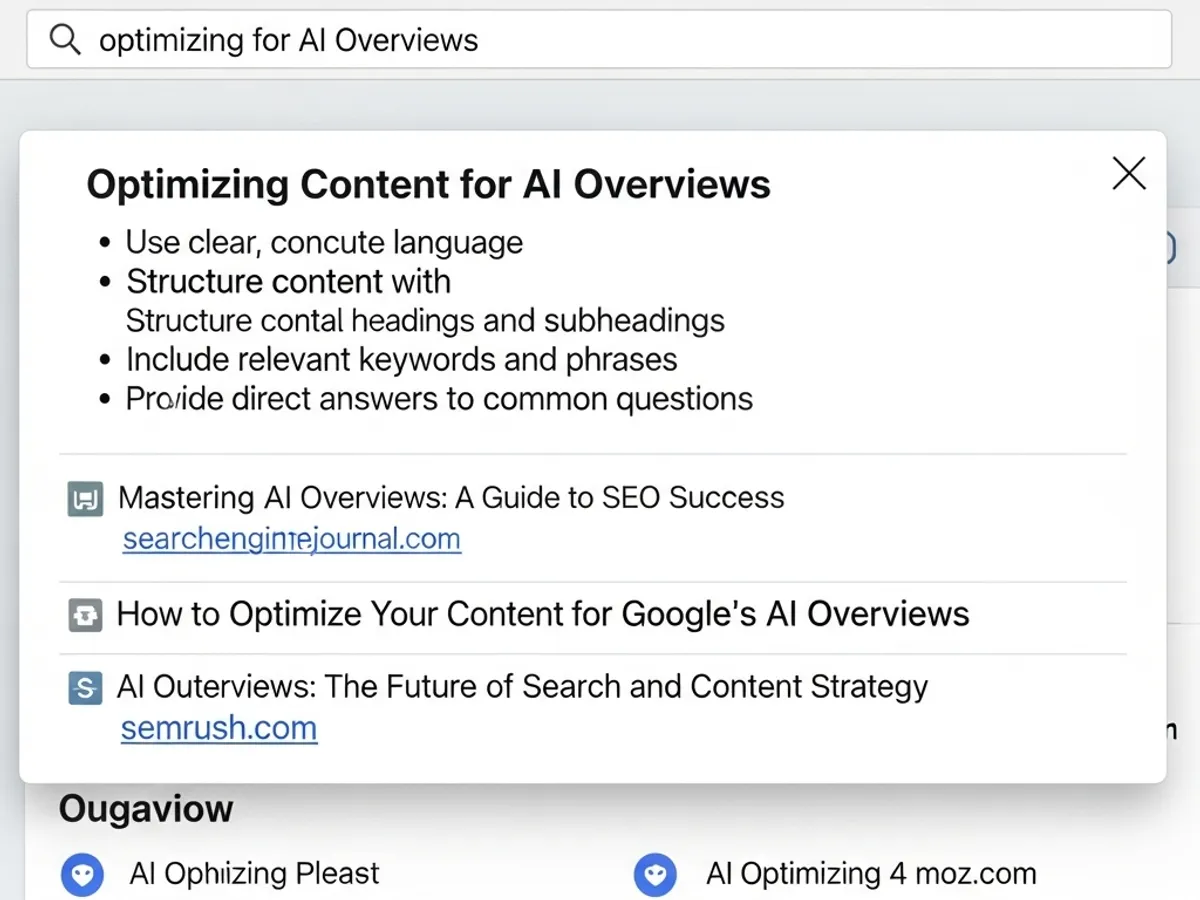
The familiar landscape of search engine results is undergoing its most significant transformation in a decade. For years, the primary goal was a top-10 spot among the traditional “blue links.” Today, that’s only half the battle. The new prime real estate is the Google AI Overview, the AI-generated summary that appears at the very top of the page to answer user queries directly and conversationally.
This isn’t a niche feature. These AI summaries already appear for approximately 15-20% of US search queries, with projections suggesting a 50% penetration by 2026. This rapid adoption signals a definitive shift in the future of SEO AI, moving the goalposts from simple ranking to becoming a cited authority.
Here’s why this matters now more than ever: recent data shows that a staggering 70% of links cited within AI Overviews come from domains that do not rank in the top 10 organic results. This is a disruptive game-changer. It means the battle for AI search visibility isn’t just for the established players. It creates a new pathway for brands to earn a top spot by providing clear, authoritative, and well-structured answers that AI models can trust.
Simply put, your content no longer needs to outrank every competitor in the traditional sense to be featured prominently. Instead, it must be optimized for direct citation. This guide will provide the specific, actionable tactics you need to optimize content for Google’s AI summaries and secure your position by 2026.
This is the new standard for SEO, and it’s where content automation platforms like GenWrite provide a critical advantage by structuring content for maximum AI readability and impact.
How Have AI Overviews Fundamentally Changed SEO Dynamics for 2026?
From Rankings to Citations: The New Definition of SEO Success
The era of equating SEO success solely with a top-ten organic ranking is rapidly closing. By 2026, the primary goal shifts from climbing a list to becoming a cited, authoritative source within Google’s AI-generated summaries. This isn’t a minor update; it’s a paradigm shift. While traditional rankings still matter, your content’s “source-worthiness” now determines true visibility for a growing number of queries.
This change forces a fundamental re-evaluation of our approach to generative AI SEO. The new battlefield is for inclusion and attribution inside the AI Overview itself.
AI Overviews vs. Featured Snippets: A Critical Distinction
It’s easy to mistake AI Overviews for an evolution of Featured Snippets, but they operate on a completely different principle. Featured Snippets extract a direct answer from a single, well-structured source. In contrast, AI Overviews synthesize information from multiple sources to generate a new, composite answer.
| Feature | Traditional Featured Snippet | 2026 AI Overview |
|---|---|---|
| Source Model | Single-source extraction | Multi-source synthesis |
| Content | Verbatim text from one page | Newly generated summary |
| SEO Goal | Win the #0 position | Become a cited source |
This distinction is vital. You are no longer competing to be the single best answer; you’re competing to be one of the most credible inputs for Google’s AI.
How Google’s Core Principles Drive AI Selections
To understand how to rank on AI search, we must look at the signals Gemini-powered systems prioritize. Google’s core algorithms are magnified, with a focus on:
- Helpful Content & E-E-A-T: The system actively seeks content demonstrating first-hand experience, original research, and proprietary data. AI can’t fake lived experience, making genuine expertise a powerful ranking factor.
- Information Gain: Google measures whether your content provides unique value not found in other top sources. A page with a novel statistic or a fresh perspective is far more likely to be cited than one that regurgitates existing information.
The most effective SEO best practices for AI involve creating deeply valuable, unique assets.
This new landscape requires a sophisticated approach, where a powerful seo ai content generator can help structure content to meet these stringent criteria. The evolving SERP features 2026 demand a move from traffic-focused to visibility-focused strategies, emphasizing brand authority across multiple search touch-points.
What Strategic Content Optimizations Will Win the AI Spotlight?
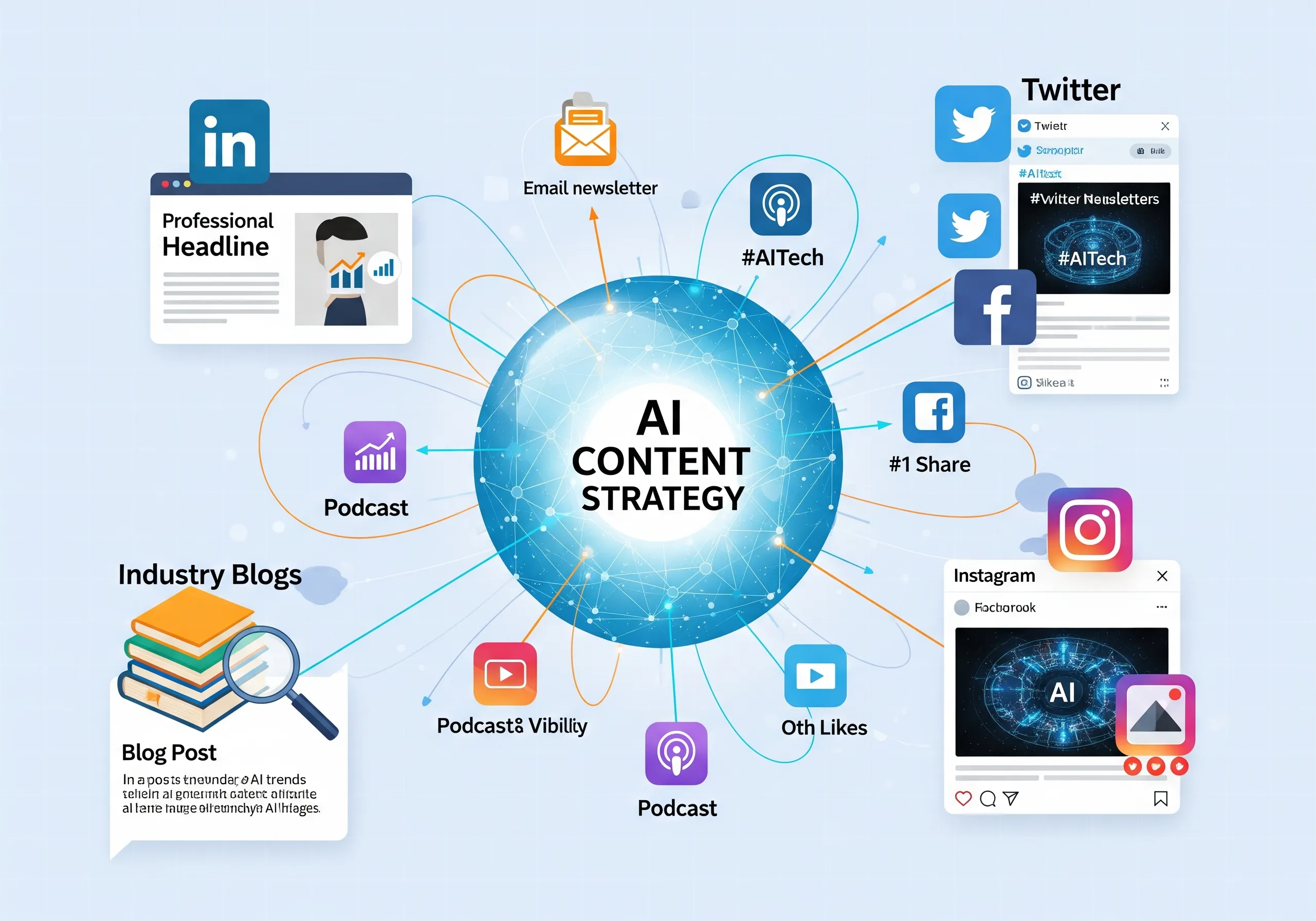
Adopt the Definition-Detail-Data Flow
To win in 2026, your content strategy for AI must shift from keyword density to answer clarity. The old model of burying the lead to keep users on the page is now a liability. AI models prioritize content that provides immediate, direct answers. We’ve found the most effective structure is the “Definition-Detail-Data” (3-D) flow.
Start by placing a concise, declarative answer to the primary user query within the first 150 words. This is your Definition. Next, expand on this with the Detail—context, examples, and the ‘how’ or ‘why’ behind the answer. Finally, support your claims with Data, such as statistics, original research, or case studies, to establish authority.
This front-loaded approach directly satisfies the AI’s need for quick information retrieval and aligns perfectly with Google’s helpful content system.
Engineer Content for Modularity and Snippets
AI Overviews don’t consume entire articles; they parse and reassemble them into new summaries. Your content must be built like a set of Lego blocks—easy to pull apart and use. This means abandoning long, dense paragraphs in favor of a more modular and snippet-friendly design.
Use the following formatting to increase your chances of being sourced:
- Short Paragraphs: Limit paragraphs to 2-4 sentences to improve scannability for both humans and machines.
- Bulleted and Numbered Lists: Break down processes or key points into lists that AI can easily extract.
- Clear Headings (H3s, H4s): Use descriptive subheadings to signal the content of each section.
- Data Tables: Organize comparative data into tables for direct, structured answers.
Modern content optimization 2026 is less about writing an article and more about architecting an answer.
This structured approach makes your content highly “sourceable,” a key factor as AI systems prioritize well-structured, trustworthy content.
Focus on Long-Tail, Conversational Queries
Short, high-volume keywords are becoming less effective for triggering AI Overviews. Instead, focus on long-tail queries that mimic natural human language and conversation. Research shows these complex, multi-part questions trigger AI Overviews up to 80% more frequently because they require synthesized answers that go beyond a simple web link.
Answering questions like “what is the best content structure for AI overviews and why does it work?” is more likely to earn a citation than targeting “AI SEO.” This is where using powerful ai seo writing tools becomes a competitive advantage, as they can identify and build content around these nuanced queries at scale. Platforms like our own GenWrite SEO content optimization tool are designed to automate this process, ensuring your content is structured for modern search from the start.
How Can Technical SEO Pave Your Way to AI Overview Inclusion?
From Crawlability to Comprehensibility: The New Technical SEO Mandate
For years, technical SEO was about making your site easy for search engine crawlers to find and index. Today, that’s just the baseline. For AI Overviews, the goal has shifted from simple crawlability to complete machine comprehensibility. If Google’s AI can’t definitively understand the context and purpose of your content, it won’t be trusted as a source.
This is where structured data becomes your most powerful asset. By implementing Schema.org markup, you’re not just organizing content for display; you’re providing an explicit, machine-readable layer of meaning. Research confirms that pages using Schema markup are 2.5 times more likely to be featured in AI summaries, making it a non-negotiable part of modern Google SGE optimization.
Essential Schema Types for AI Visibility
While hundreds of Schema types exist, a few are particularly potent for earning a spot in AI Overviews. These directly address the informational and instructional queries that frequently trigger AI-generated responses.
- FAQPage Schema: Perfect for pages that answer multiple related questions. This markup explicitly tells Google, “This content block is a direct answer to a specific user question,” making it prime material for AI synthesis.
- HowTo Schema: Use this for step-by-step instructional content. It breaks down a process into a clear sequence that AI models can easily parse and present to users seeking guidance.
- Speakable Schema: Initially designed for voice assistants, this schema identifies sections of content particularly well-suited for being read aloud. As AI Overviews become more conversational,
Speakablehelps flag concise, clear answers for inclusion.
Implementing structured data is now a foundational element of any effective SEO strategy, helping search engines understand your content’s context and making it crucial for rich results and SERP feature eligibility.
Beyond Schema: Core Performance as a Trust Signal
While Schema is critical, don’t neglect foundational technical SEO AI principles. Site speed, mobile-friendliness, and core web vitals remain vital. A slow or clunky user experience sends negative signals that can undermine even the most perfectly structured content. AI systems are designed to recommend sources that provide a high-quality experience from click to consumption.
Ultimately, excelling at technical SEO for AI means making your expertise unambiguously clear to machines. Platforms focused on content automation, such as GenWrite, can help by building content with the clean, logical structure that AI models require, simplifying the entire optimization process.
Do Authority and E-E-A-T Really Influence AI Citation More Than Ever?
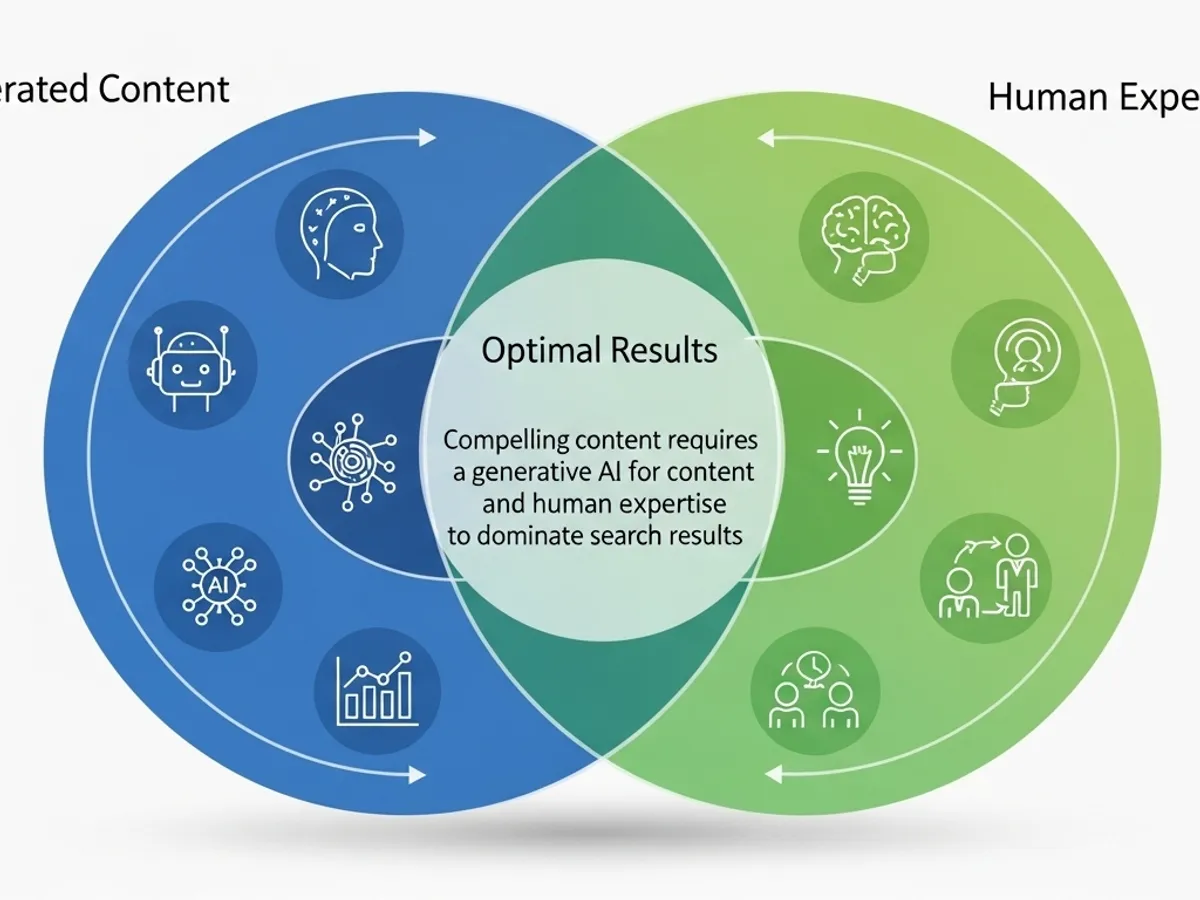
The Authenticity Filter: Why E-E-A-T Is Non-Negotiable for AI
For years, authority was a game of volume—more backlinks, more mentions. But AI Overviews have fundamentally changed the rules. Google’s Gemini-powered systems are not just indexing content; they are evaluating its credibility. Experience, Expertise, Authoritativeness, and Trust (E-E-A-T) are no longer just quality guidelines; they are the primary filter AI uses to identify reliable information.
Why the shift? Because content demonstrating genuine experience is much harder for AI to replicate or hallucinate. It serves as a powerful defense against the wave of low-effort, AI-generated content that lacks human oversight. For AI to cite you, it must first trust you, and that trust is built on verifiable proof of your expertise.
In the AI era, your unique human perspective is your most valuable SEO asset.
Cultivating AI-Ready Authority Signals
Building E-E-A-T for an AI audience requires a deliberate strategy focused on creating signals of authenticity that machine learning models can easily parse. This moves beyond simple on-page optimization and into demonstrating real-world credibility.
Showcase First-Hand Experience
Your personal case studies, project post-mortems, and first-person narratives are now top-tier SEO assets. Where traditional content might state a fact, E-E-A-T-driven content explains the how and why behind it, grounded in a real experience. This creates a high Information Gain score, making your content a prime candidate for citation.
Publish Original Insights and Data
Proprietary data, unique survey results, or a novel analysis of industry trends create an undeniable source of authority. When you are the sole source of a specific data point, AI models are more likely to reference you directly. This is a core component of building topical authority that endures algorithm updates. Utilizing ai seo content generator tools can help structure this data effectively, making it easier for both users and AI to digest.
Amplify Authoritativeness with Mentions and Sourcing
Your authority is validated by what others say about you. Consistent brand mentions on reputable sites act as powerful, third-party endorsements. Internally, transparently citing your sources and linking to other authoritative guides reinforces your position within a trusted information ecosystem, which is a key signal for AI Overview selection.
Ultimately, building E-E-A-T for AI Overviews means proving your value through unique, experience-driven content that cannot be easily automated or replicated.
Can Semantic Density & Entity Optimization Boost Your AI Search Visibility?
From Keyword Density to Semantic Richness
The old SEO playbook taught us to fixate on keyword density. That model is officially broken. In an AI-first world, success is no longer about how many times you mention a term, but how deeply you connect related concepts. This shift from keyword frequency to conceptual relationships is the core of modern semantic SEO.
AI Overviews don’t just look for keywords; they seek to understand context. They achieve this through entity optimization. An entity is any distinct concept, person, place, or thing. Google’s AI builds a knowledge graph by identifying these entities and mapping the relationships between them. Your content must provide the blueprint for this map.
A page with high semantic density is a goldmine for an AI model.
When your content explicitly links “cloud computing” to “SaaS,” “data storage,” and “virtualization,” you are no longer just a document about a topic. You become a structured source of knowledge that an AI can use for multi-step reasoning. This is how you move from being a potential result to a cited authority within an AI Overview.
Building Your On-Page Knowledge Graph
To boost your AI search visibility, you must intentionally weave a web of related ideas. This involves:
- Defining Entities: Clearly explain what key terms mean in the context of your article.
- Mapping Relationships: Explicitly state how one concept influences or connects to another.
- Structuring with Topic Clusters: Organize content logically, with a central pillar page and supporting articles that explore sub-topics in detail.
Manually creating this interconnected content can be a significant drain on resources. An ai seo content generator like GenWrite is designed to build this semantic richness automatically, ensuring your articles demonstrate the topical authority required for AI citation. By focusing on creating a comprehensive resource, you are directly optimizing for AI Overviews and establishing your content as a reliable source for complex queries.
By treating your content as a mini-knowledge base, you provide the clear, interconnected signals that AI models need to understand, trust, and feature your insights.
What Are the Common Pitfalls to Avoid When Optimizing for AI Overviews?
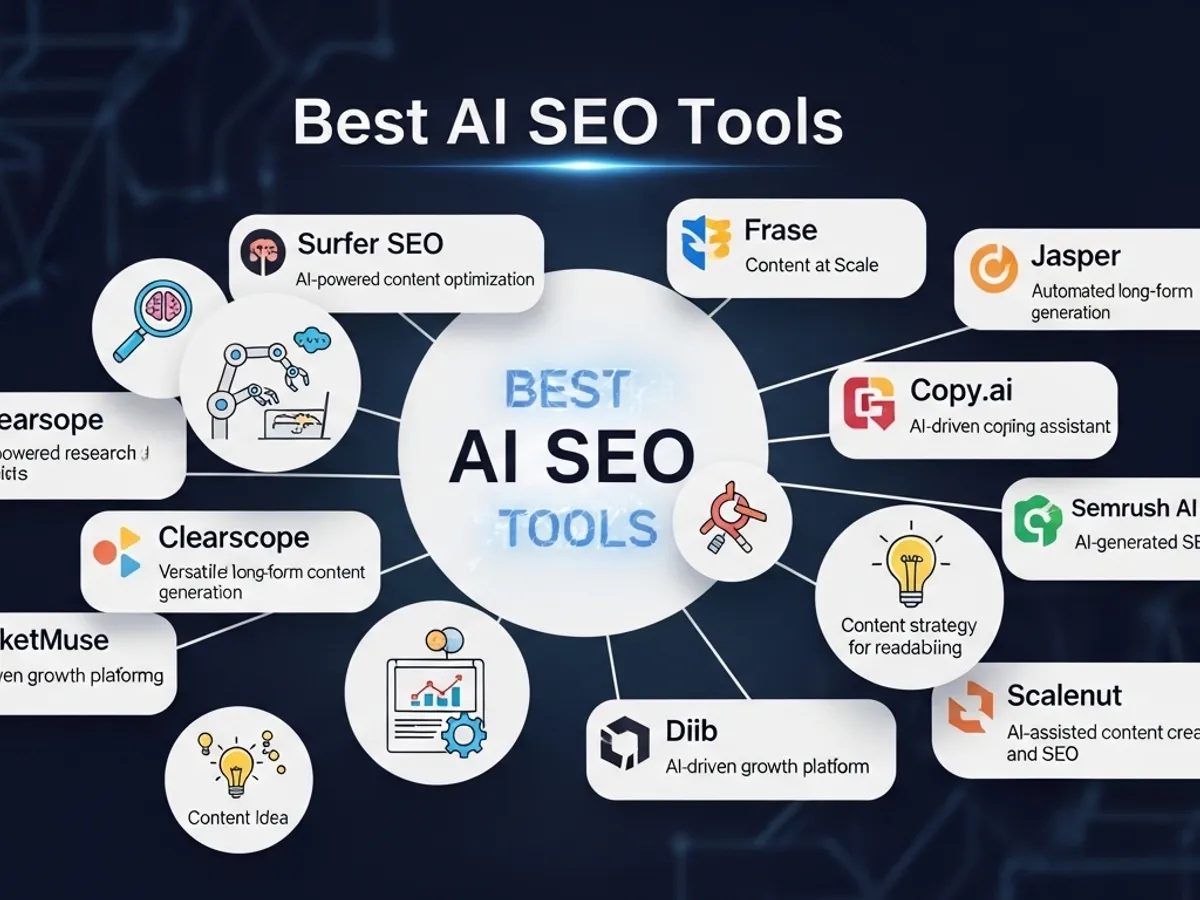
Navigating the shift to an AI-first search landscape can feel like sailing in new waters—the opportunities are immense, but so are the hidden reefs. Many well-intentioned SEO strategies that worked for years now lead directly to invisibility. Understanding these new pitfalls is the first step toward securing your spot in the AI Spotlight instead of being filtered out by recent algorithm changes.
Mistaking Automation for Abdication
One of the most prevalent and common SEO mistakes is publishing raw, unedited AI-generated content. Following Google’s helpful content update, the core algorithm now actively penalizes content that lacks demonstrable human experience and oversight. While AI excels at synthesis, it cannot replicate your unique perspective or original data, which are key differentiators.
The solution isn’t to abandon automation but to use it as a powerful co-pilot. An advanced AI blog generator like GenWrite can produce a high-quality, structured first draft that aligns with SEO best practices. Your role is to then infuse it with firsthand expertise, case studies, and a distinct brand voice.
Human oversight is the non-negotiable final step in modern content creation.
Focusing on Keywords, Not Concepts
Another common trap is optimizing for keywords instead of entities and concepts. AI Overviews don’t just scan for a keyword match; they seek to understand the relationships between ideas to provide a comprehensive answer. Stuffing a page with conversational queries without building contextual depth is a failing strategy.
Instead, focus on creating a rich semantic web within your content. The goal is to provide the clearest, most extractable source, a key factor in effective AI Overviews optimization. This means explicitly defining terms, explaining how different concepts relate to one another, and answering follow-up questions proactively.
Neglecting Technical and Structural Integrity
Finally, many teams overlook the critical role of technical SEO. You can have the best content in the world, but if Google’s crawlers can’t parse it efficiently, it won’t be considered. Missing Schema markup, slow page speeds, and a confusing site structure are all red flags.
Ensure your content is wrapped in relevant structured data (like FAQPage and HowTo), is mobile-first, and loads quickly. These technical signals act as a foundation of trust, demonstrating that your content is both valuable and reliable. Understanding the full spectrum of Winning SERP Features in 2026 requires this solid technical base.
How Do You Measure Success and Maintain Your AI Overview Presence?
Measuring Success Beyond the Top 10
The old SEO playbook is officially closed. If your SEO reporting still revolves solely around a number-one ranking, you’re measuring a battle that’s already over. In the era of AI Overviews, success has a new definition: influence. The goal is no longer just to rank, but to be the definitive source the AI trusts and cites.
This requires a fundamental shift in AI search analytics. Instead of obsessively tracking keyword positions, the most critical visibility metrics now focus on your content’s role in the AI-generated answer. This new measurement framework prioritizes influence over simple placement.
The New KPIs for AI-First SEO
To effectively gauge your performance, your reporting must evolve. Focus on these core indicators for tracking AI performance:
- AI Overview Citation Rate: How frequently is your domain cited as a source within AI-generated summaries for your target queries? This is the new click-through rate.
- Brand Mention Velocity: Monitor how often your brand is named within an AI answer, even without a direct link. This is a powerful signal of authority.
- Query-to-Source Alignment: Identify which specific long-tail, conversational queries feature your content as a primary source. This reveals the topics where Google’s AI considers you an expert.
True visibility in 2026 is about becoming a trusted node in the AI’s knowledge graph.
Maintaining Your Presence: The Continuous Feedback Loop
Securing a spot in an AI Overview isn’t a one-time achievement; it’s a continuous process of adaptation. The underlying models are constantly learning and evolving. Consistently analyzing which content formats, data points, and sentence structures get cited provides a direct feedback loop to refine your strategy. As you analyze performance, you’ll need the right AI SEO tools to keep pace.
Manually tracking these new signals across thousands of potential queries is impractical. Platforms like GenWrite automate this analysis, helping you understand not just if you’re cited, but why. This allows you to double down on what works and efficiently scale your content strategy to maintain your authority.
By shifting your focus from pure rankings to these deeper influence metrics, you align your strategy with the undeniable future of search.
Ready to dominate AI search? Discover how GenWrite automates end-to-end blog creation, ensuring your content is optimized for Google’s AI Overviews and drives significant traffic.
People Also Ask About Google AI Overviews
What are Google AI Overviews and how do they differ from Featured Snippets?
Google AI Overviews are AI-generated summaries that appear at the top of search results, synthesizing information from multiple sources. Unlike Featured Snippets, which typically pull a single answer from one source, AI Overviews provide a more comprehensive, conversational response crafted by AI.
Why is it important to get cited in Google AI Overviews by 2026?
By 2026, Google AI Overviews are projected to appear for 50% of search queries, significantly impacting visibility. Being cited in these summaries means your content is recognized as authoritative and valuable by Google’s AI, driving traffic and establishing your brand as a go-to source.
What kind of content is favored by Google’s AI for summaries?
Google’s AI favors content that offers unique perspectives, original data, and first-hand experience. A clear ‘Definition-Detail-Data’ flow, especially in the first 150 words, helps AI models understand and present your information effectively. Content with a high Information Gain score is particularly valuable.
How does technical SEO impact AI Overview inclusion?
Technical SEO is crucial for AI Overviews. Implementing Schema.org structured data, such as FAQPage, HowTo, and Speakable Schema, helps AI easily parse and understand your content. Foundational site performance and mobile-friendliness also contribute to building trust signals for AI selection.
What is the role of E-E-A-T in AI search visibility?
E-E-A-T (Experience, Expertise, Authoritativeness, Trustworthiness) is more critical than ever for AI Overviews. Google prioritizes content demonstrating real-world experience, original research, and proprietary data, as these are harder for AI to replicate and indicate genuine authority.
How should I adapt my content strategy for AI-driven search?
Shift from keyword frequency to semantic density and entity relationship mapping. Focus on creating modular content that explicitly links related concepts. Use long-tail, conversational queries in your content, as these trigger AI Overviews more frequently. AI tools can assist in automating this complex mapping.