
How to Produce High-Quality Blog Posts Faster Using an AI Writer in 2026
What’s the Secret to Unleashing Faster, Smarter Blog Writing with AI in 2026?
The landscape of content creation has been utterly transformed. By 2026, the question isn’t whether to use AI in your blog writing, but how to harness its full power for unparalleled speed and intelligence. We’ve moved beyond simple text generation; today’s AI blog writer offers real-time content optimization, predictive SEO analysis, and even personalized content recommendations. This evolution helps you to know how to Create SEO-Optimized Content Rapidly with an AI Writer in 2025.
Indeed, a late 2025 survey revealed that a staggering 85% of content marketers are already integrating these advanced AI tools for content writing into their workflows. The secret to unleashing faster, smarter blog writing isn’t about replacing human creativity, but profoundly augmenting it. It’s about AI handling the heavy lifting—automating exhaustive research, generating intricate outlines, and drafting initial content with remarkable efficiency. This shift frees up human writers to zero in on strategic thinking, nuanced editing, and injecting that unique, irreplaceable human insight.
AI-driven content creation is projected to increase production speed by up to 70% while maintaining or improving quality.
Imagine an ai writer that can analyze vast datasets to pinpoint trending topics and critical keywords, adapting its output to your specific brand voice and writing style. This level of sophistication ensures more consistent, on-brand content that truly resonates. As an advocate for efficient content creation through AI, I see tools like GenWrite as the embodiment of this evolution. They don’t just write; they automate the entire end-to-end process, from keyword research and competitor analysis to adding relevant links and images, all while focusing on SEO optimization. If you’re wondering Why you should try an AI blog writer for your content in 2025, exploring platforms like ours can provide a clear answer. By mastering these sophisticated platforms, you’re not just writing faster; you’re building a smarter, more effective content strategy designed for today’s dynamic digital landscape. This guide will show you precisely how to achieve this, helping you Discover how this AI blog writer can transform your content in 2025.
Why is AI Becoming Your Indispensable Co-Pilot for Blog Content Creation?
In 2026, the question isn’t whether to use AI in content creation, but how deeply it integrates into your workflow. Modern ai writer tools have transcended the simplistic content spinner of yesteryear, evolving into sophisticated co-pilots that fundamentally transform how we approach blog content. No longer just a generator of text, today’s AI is an indispensable strategic partner.
The Evolution of the AI Co-Pilot
The perception of AI tools for writing has undergone a radical shift. Early iterations were often criticized for producing generic or robotic content. However, the ai for blog writing landscape in 2026 is vastly different. These advanced systems now leverage deep learning to understand context, tone, and audience intent, moving far beyond mere keyword stuffing to deliver truly valuable content.
The best AI writer doesn’t replace human creativity; it amplifies it.
What makes these advanced content writing ai platforms, like GenWrite, so crucial? They are designed to automate the most time-consuming aspects of content production, allowing human strategists to focus on refinement and unique insights. This synergy is why 85% of content marketers now utilize AI to some extent, recognizing its power to streamline operations.
Unlocking Unprecedented Efficiency and Quality
The core benefits of adopting an AI co-pilot for blog content creation are profound. Firstly, these tools offer real-time content optimization, ensuring your posts are always aligned with current SEO best practices. They also provide predictive SEO analysis, identifying high-ranking topics and keyword opportunities before they saturate the market. This proactive approach gives you a significant competitive edge.
For instance, an AI platform can analyze vast datasets to pinpoint trending topics and keywords, providing data-driven insights for content planning that would take human researchers days to compile. This capability is pivotal for increasing content production speed by up to 70% while maintaining or improving quality. To explore more about leveraging these tools, consider how an AI blog writer can transform your output.
Modern AI writers also offer personalized content recommendations, tailoring suggestions based on your brand’s specific style, audience engagement, and performance metrics. This level of customization ensures that every piece of content you produce is not only optimized for search engines but also deeply resonates with your target readers. They empower creators to produce high-quality, SEO-friendly content that aligns with search engine guidelines and LLMs, ultimately driving traffic and organic reach.
How Can Strategic Planning Maximize Your AI Writer’s Output?

Maximizing your AI writer’s output isn’t about simply hitting “generate”; it’s about the meticulous preparation that precedes it. Think of your AI as a highly capable, yet direction-dependent, co-pilot. Without a clear flight plan, even the most advanced AI can veer off course, producing content that misses the mark.
Defining Your Content North Star
Before any AI-powered blog post generation begins, a foundational understanding of your objectives is critical. This starts with deeply understanding your target audience: their pain points, their questions, and the language they use. When you feed your AI writer this context, it can tailor its output to resonate directly with those who matter most.
Simultaneously, effective topic research becomes paramount. While AI tools in 2026 can offer predictive SEO analysis and identify trending topics, the strategic human touch ensures those topics align with your brand’s authority and goals. A well-researched topic is an AI’s best starting point. This upfront investment in understanding what your audience wants to read dramatically improves the relevance and engagement of the final content.
The Power of Precise Directives
Once you have your topic and audience defined, the next crucial step involves precise directives for the AI. This means meticulously integrating keywords and creating a detailed outline. For effective content optimization with ai, you must provide the AI with the primary and secondary keywords it needs to weave into the narrative naturally, ensuring the content is primed for search engines and LLMs.
An outline acts as the structural blueprint for your ai content creation. It dictates the flow, sections, and key points to cover, preventing the AI from producing disjointed or unfocused content. A robust outline guides the AI to generate well-structured, authoritative pieces that truly answer user queries. For more on this, consider how to rapidly create SEO-optimized content rapidly with an AI writer.
By providing your AI with clear audience insights, well-researched topics, targeted keywords, and a solid outline, you transform generic drafts into strategic, high-performing content. This strategic groundwork ensures that when you write blog posts with ai, the output is not just fast, but also highly effective and aligned with your content marketing goals. Tools like GenWrite excel when given this level of strategic input, automating the end-to-end blog creation process with precision.
What Are the Key Steps to Drafting Compelling Content with Your AI Assistant?
Transitioning from strategic planning to actual content creation requires a systematic approach, even with the most advanced AI assistant. The goal isn’t just to generate text, but to draft compelling, high-quality content that resonates with your audience and ranks well. Here’s a breakdown of the key steps to effectively leverage your AI assistant for impactful blog post generation.
1. Master the Art of Prompt Engineering
The foundation of any great AI-generated draft lies in the initial prompt. Think of it as the detailed brief you’d give a human writer, but even more precise. You must clearly define the topic, target audience, primary keywords, desired tone, and the specific angle you want to take. Including a rough outline or key points you wish to cover will guide the AI significantly.
A precise prompt is the blueprint for quality AI output.
This crucial first step allows the ai article writer to understand your intent and generate content that aligns with your strategic goals, rather than generic text. The more context and instruction you provide, the better the AI can perform.
2. Generate Content Section-by-Section
Instead of asking the AI to produce an entire blog post in one go, break it down into manageable sections. Start with the introduction, then move to individual body paragraphs or subheadings, and finally the conclusion. This method provides greater control over the narrative flow and allows for real-time adjustments.
For example, after generating the introduction, you can review it, provide feedback, and then prompt the AI for the next section based on the approved intro. This iterative approach is key to effective ai seo content creation, ensuring each part of your blog post aligns perfectly with your goals. Breaking down the task ensures focused, high-quality content blocks.
3. Review, Refine, and Guide for Optimal Output
Your AI assistant is a powerful co-pilot, not an autonomous agent. After each section is generated, meticulously review it for accuracy, coherence, tone, and the natural integration of your target keywords. Provide specific, constructive feedback to the AI to refine subsequent drafts or regenerate parts that don’t quite hit the mark.
This continuous feedback loop is where your expertise truly shines, transforming raw AI output into authoritative, compelling content. Tools like GenWrite’s AI blog generator are designed to streamline this feedback process, helping you to write blog posts with ai more efficiently and elevate the overall quality of your ai content creation efforts. Human oversight transforms raw AI output into authoritative content.
How Do You Transform AI-Generated Drafts into Polished, High-Quality Blog Posts?
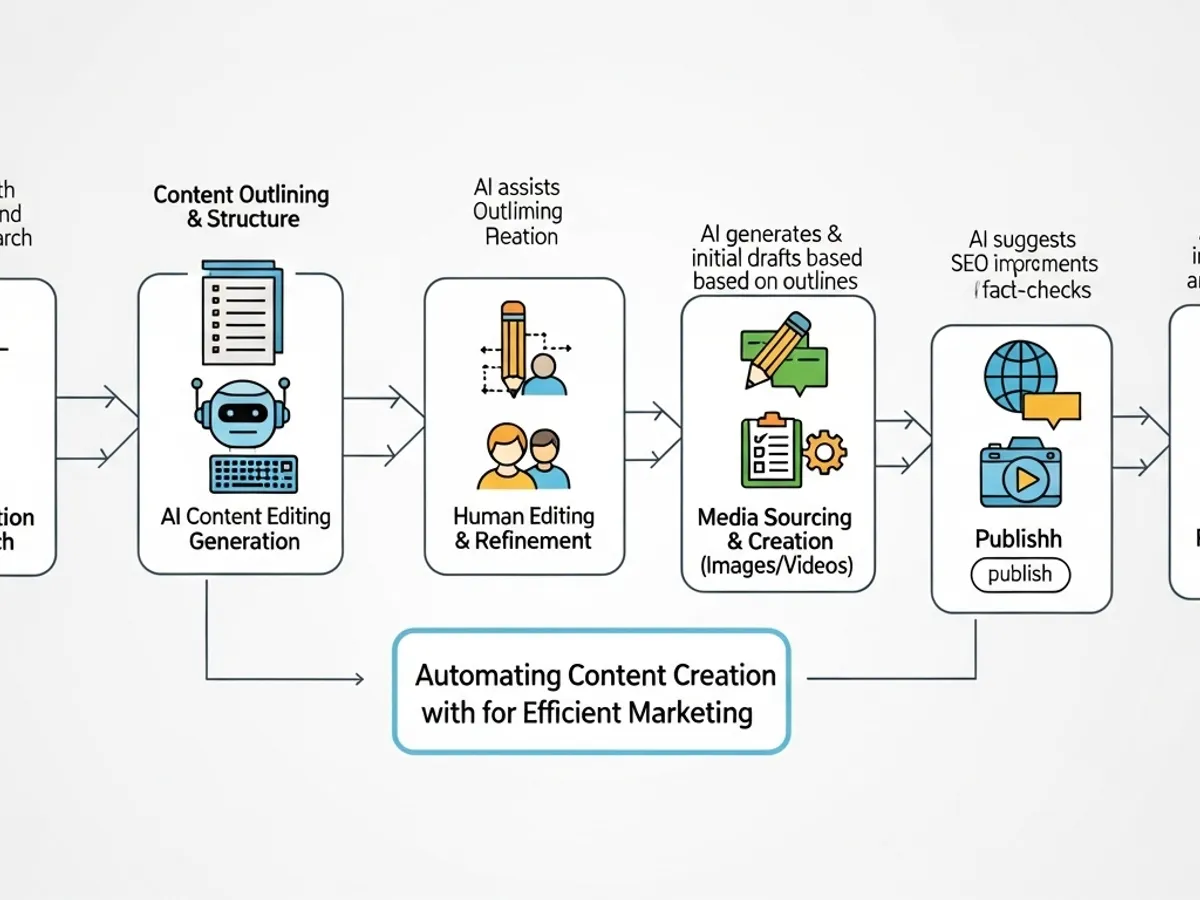
Even with advanced AI tools acting as a crucial co-pilot, the journey from an AI-generated draft to a truly polished, high-quality blog post always demands a discerning human touch. While AI, like GenWrite, excels at automating research, structuring content, and handling initial tasks in content writing ai, the critical final layer of refinement is where your expertise truly shines. This human intervention transforms good AI output into exceptional content that resonates deeply with your audience. Think of it as the difference between a blueprint and a masterpiece; the AI provides the robust structure, but you infuse the artistry and precision.
Validating Accuracy and Depth: The Foundation of Trust
The first, and arguably most critical, step involves rigorous fact-checking. AI models, despite their vast knowledge bases, can sometimes generate plausible-sounding but inaccurate information—a phenomenon often termed “hallucinations.” As the content strategist, you must meticulously verify all statistics, claims, and data points. This isn’t just about avoiding errors; it’s about safeguarding your brand’s integrity and building unwavering trust with your audience. Remember, an AI writer provides a strong foundation, but you are the architect of credibility. Leveraging a GenAI SEO tool can assist in identifying reputable sources, but the ultimate validation rests with human judgment.
Infusing Brand Voice and Unique Insights: The Human Signature
Next, focus on brand alignment. Does the draft genuinely resonate with your unique brand voice, tone, and specific messaging? While AI can mimic styles, it often lacks the nuanced understanding of your brand’s personality, the subtle humor, or the specific insights only you possess from direct experience. This is your prime opportunity to inject personal anecdotes, expert opinions, and real-world examples that make the content authentically yours. This irreplaceable human element is what transforms generic text into engaging, memorable narratives that forge a deeper connection with your readers. It’s about moving beyond information delivery to true storytelling.
Enhancing Readability and SEO Quality: Optimizing for Impact
Finally, refine for ultimate readability and search engine performance. While AI assists with initial content optimization with AI, human editors excel at ensuring a natural flow, varying sentence structures, and breaking down complex ideas into easily digestible segments. Review for clarity, conciseness, and engagement, ensuring every sentence serves a purpose. Beyond basic keyword inclusion, leverage deeper semantic understanding to ensure your content truly answers user intent and is structured for optimal SEO. Tools like GenWrite can provide predictive SEO analysis and help you write better blog posts by suggesting relevant links and images, but your strategic overview ensures the entire piece aligns with your broader content goals. This iterative process is key to leveraging AI for blog writing to its fullest potential, ensuring every post is not just good, but exceptional—driving both engagement and search visibility.
Can You Avoid Common Pitfalls and Optimize Your Workflow with AI Writing Tools?
Even with advanced AI tools for content writing available in 2026, it’s easy to fall into traps that undermine quality and authenticity. The goal isn’t just to produce more content, but to produce better content, faster. This requires a strategic approach, blending AI’s efficiency with human discernment.
The Pitfall of Over-Reliance and Generic Output
One of the most common mistakes is treating an AI blog writer as a set-it-and-forget-it solution. While AI can generate impressive drafts, simply publishing them without review often leads to generic, uninspired content. This content lacks the unique voice, nuanced insights, and personal touch that truly engages readers and builds authority. AI excels at execution; humans excel at strategy and empathy.
Another trap is neglecting prompt engineering. If you feed an AI article writer vague instructions, you’ll get vague results. Without detailed briefs, target audience specifics, and desired tone, even the best ai writer will struggle to deliver high-quality, on-brand material.
Neglecting Critical Fact-Checking and Personalization
AI, for all its sophistication, can sometimes “hallucinate” or present outdated information as fact. Publishing unchecked AI-generated content can severely damage your credibility. The human element of fact-checking and verification remains non-negotiable, especially for technical or sensitive topics.
Furthermore, failing to infuse your content with unique perspectives, anecdotes, or expert opinions makes it indistinguishable from competitors. In a content-saturated world, personalization is key to standing out. Your brand’s distinct voice and values must shine through, transcending the AI’s initial output.
Optimizing Your Workflow with Strategic AI Integration
To truly optimize your workflow, view AI as a powerful co-pilot rather than a substitute. Leverage AI for its strengths: automating research, generating outlines, drafting initial sections, and performing real-time SEO optimization. Tools like GenWrite are designed to handle the heavy lifting of keyword research, competitor analysis, and even publishing, freeing you to focus on the strategic and creative aspects.
Here’s how to avoid pitfalls and optimize:
- Detailed Briefing: Always provide your AI blog writer with comprehensive instructions, including target keywords, audience, desired tone, and key messages. Think of it as guiding an expert assistant.
- Human Review & Refinement: Treat AI-generated content as a robust first draft. Fact-check rigorously, refine the language, and inject your unique brand voice and insights. This is where your expertise transforms good content into great content.
- Iterative Process: Don’t stop at one draft. Use the AI to generate variations, then combine the best elements. Tools like GenWrite can help you continuously optimize content for search engines and reader engagement. An AI blog generator can help you write better blog posts by streamlining these iterative steps.
- Strategic Task Delegation: Use AI for specific, repetitive tasks. For instance, GenWrite excels at automating on-page SEO, link building, and image integration, allowing your team to focus on high-value strategy and creative input.
By embracing an informed, iterative approach, you can harness the full power of AI tools for content writing, ensuring your output is not only efficient but also authentic, accurate, and truly compelling.
Are There Quick Fixes for Common AI Writing Challenges?

Even with advanced ai writer tools, users inevitably encounter hurdles like generic outputs or factual inconsistencies. The good news is that most common content writing ai challenges have straightforward, actionable fixes that enhance your workflow and content quality.
Overcoming Generic Content and Repetition
One of the most frequent frustrations with ai for blog writing is receiving content that feels bland or repetitive. This often stems from insufficient input.
- Refine Your Prompts: Instead of simple topic requests, provide specific angles, desired tone, target audience, and even examples of content you admire. Think of it as guiding a highly intelligent, but initially uninitiated, junior writer.
- Inject Specificity: After the initial
blog post generation, review and add unique data points, case studies, or anecdotes that only you (or your research) can provide. This human layer transforms generic drafts into authoritative pieces. - Leverage AI for Variety: If the wording feels stale, instruct the AI to rephrase sentences, offer alternative vocabulary, or explore different narrative structures. Modern AI tools are excellent at providing stylistic variations when prompted correctly.
Specificity in your prompts is the ultimate antidote to generic AI outputs.
Addressing Factual Inaccuracies and Hallucinations
While content writing ai has become incredibly sophisticated, it’s not infallible. AI models can sometimes “hallucinate” facts or present outdated information, especially if not explicitly trained on the most current data.
- Prioritize Human Fact-Checking: Always cross-reference any critical data, statistics, or claims with reliable, authoritative sources. This step is non-negotiable for maintaining credibility.
- Provide Verified Data: For sensitive or crucial information, feed the AI the exact data points you want it to use. This eliminates ambiguity and ensures accuracy.
- Cite Sources: Encourage your AI, or manually add, citations to bolster the trustworthiness of your content. This practice is crucial for both readers and search engines.
Enhancing Tone and Brand Voice Consistency
Maintaining a consistent brand voice across all blog post generation can be tricky, particularly when collaborating with an AI.
- Train with Examples: Provide your
ai writerwith examples of your brand’s existing content to help it learn your unique style, tone, and preferred terminology. Tools like GenWrite are designed to adapt and align with specific brand guidelines. - Iterate and Refine: Don’t accept the first draft as final. Offer specific feedback on tone – e.g., “make this section more empathetic” or “use more active voice here.” The AI learns from these interactions.
By strategically guiding your AI and retaining human oversight, you can quickly mitigate common writing challenges, turning potential roadblocks into opportunities for refinement. For deeper insights into leveraging AI for consistent, high-quality content, explore how an AI SEO automation software can streamline your entire content workflow.
Ready to Revolutionize Your Content Strategy with AI?
The journey through leveraging AI for blog writing in 2026 has revealed a powerful truth: AI isn’t just a tool; it’s a strategic partner. We’ve explored how a sophisticated ai blog writer can transform your content creation process, moving beyond simple text generation to real-time optimization, predictive SEO analysis, and personalized content recommendations. This evolution allows you to produce high-quality blog posts faster than ever before.
Throughout this guide, we’ve emphasized that the secret to unleashing faster, smarter content lies in a human-guided approach. Strategic planning, detailed briefs, and meticulous human oversight are crucial to shaping AI’s output into compelling, on-brand narratives. This synergy ensures your ai content creation efforts yield content that resonates, ranks, and converts.
Imagine increasing your content production speed by up to 70% while maintaining or even improving quality—a reality for many marketers today. By embracing tools like GenWrite, you gain an indispensable co-pilot that automates research, drafts initial content, and optimizes for search engines, freeing you to focus on strategy and creative refinement. This isn’t about replacing human creativity, but amplifying it.
It’s time to confidently integrate these advanced capabilities into your workflow. Leverage an ai blog writer to streamline your processes, enhance your SEO, and keep your content fresh and relevant. The skills you’ve developed, from prompt engineering to expert editing, are your competitive edge in this new landscape. Ready to write blog posts with ai and revolutionize your content strategy? Explore how GenWrite can automate your blog creation and drive organic reach at GenWrite.
Ready to revolutionize your content strategy? Discover how GenWrite can help you create exceptional, SEO-optimized AI content at scale.
Quick Summary
In 2026, AI writers are transforming blog content creation by offering unprecedented speed and efficiency, with capabilities extending to real-time optimization and predictive SEO analysis. AI tools are projected to increase content production speed by up to 70% while maintaining quality, with 85% of content marketers already utilizing them.
Leveraging AI involves using its ability to automate research, generate outlines, and draft initial content, freeing human writers for strategy and refinement. AI acts as an indispensable co-pilot, enhancing productivity and providing data-driven insights.
Strategic planning is crucial for maximizing AI output, requiring clear goals, audience understanding, and detailed briefs. The drafting process involves prompt engineering and iterative refinement, transforming AI output into high-quality content.
Transforming AI drafts into polished posts requires human oversight for fact-checking, infusing brand voice, and SEO optimization. Avoiding pitfalls like over-reliance and neglecting personalization is key, optimizing workflows by retaining human control.
Quick fixes for AI challenges include prompt refinement and human fact-checking, ensuring authenticity and accuracy. Ultimately, integrating AI revolutionizes content strategy, amplifying creativity and SEO performance for a competitive edge.
Frequently Asked Questions About AI Writers for Blog Content
How have AI writers evolved for blog content creation in 2026?
In 2026, AI writers have evolved beyond simple text generation. They now offer features like real-time content optimization, predictive SEO analysis, and personalized content recommendations, acting as sophisticated co-pilots for content creators.
What is the primary benefit of using AI writers for blog posts?
The primary benefit is a significant increase in content production speed, projected up to 70%, while maintaining or even improving content quality. AI handles research, outlining, and initial drafting, freeing up human writers for strategic tasks.
How can I ensure AI-generated content is high-quality and on-brand?
Strategic planning is key. Provide AI with detailed briefs, target audience information, and specific keywords. Human oversight is crucial for editing, fact-checking, adding unique insights, and ensuring the content aligns with your brand voice.
What are common pitfalls to avoid when using AI writing tools?
Common pitfalls include over-reliance on AI, neglecting fact-checking, and failing to personalize content. It’s essential to use AI as a co-pilot, retaining human control for quality, accuracy, and authenticity.
Can AI writers help with SEO optimization for blog posts?
Yes, advanced AI writers can analyze trending topics and keywords, suggest optimizations, and even provide real-time feedback on readability and engagement, giving you a significant advantage in search engine rankings.
How do I integrate AI writing tools into my existing workflow?
Integrate AI by using it for specific tasks like initial research, outline generation, and drafting. Combine this with your strategic planning, editing, and final polishing to create a seamless and efficient workflow that maximizes AI’s capabilities.