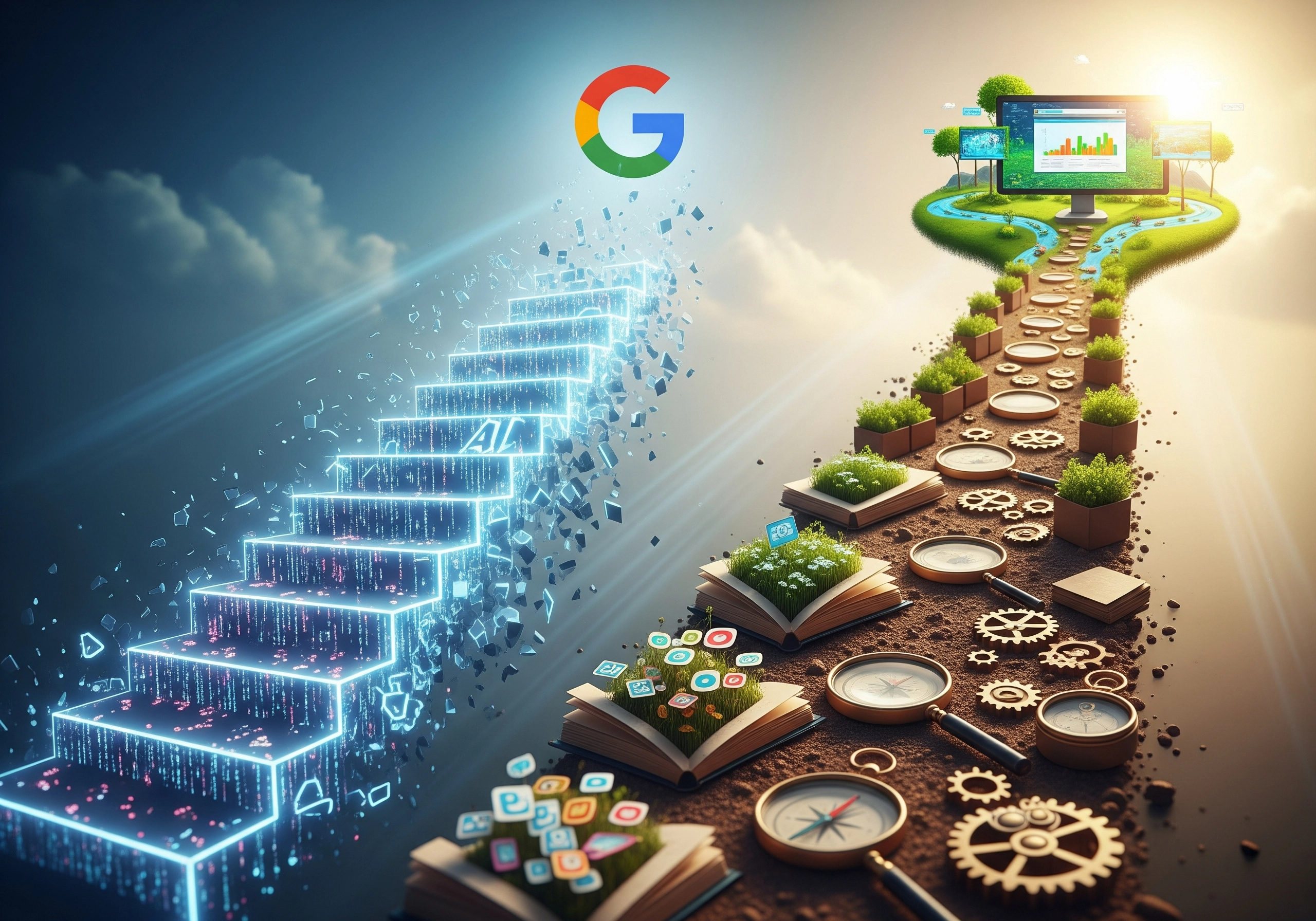
Why AI is Not a Cheat Code for Ranking Higher on Google
Setting the record straight on AI and Google rankings

Forget the fantasy: AI isn’t the SEO cheat code you’ve been told it is. While the allure of instant content and effortless Google rankings is strong, anyone serious about search knows it’s far from simple. That widespread belief is a major misconception.
Google itself debunked this idea in early 2024, cracking down on “scaled content abuse” and sites churning out low-quality pages. They don’t care if a human or a machine wrote it; their focus is on helpfulness. This policy shift means simply generating tons of AI content doesn’t work; many sites actually saw significant traffic drops. It’s not just about quantity; it’s about quality and originality. If you’re struggling to make your AI-generated articles resonate, you might want to explore why AI text often sounds robotic and how to fix it.
The reality is, AI is an incredibly powerful tool, but it’s a bicycle for the mind, not a self-driving car. It demands a skilled rider. We need to set the record straight on AI’s true utility and limitations in search today, especially with Google’s emphasis on information gain and experience (E-E-A-T). Tools like GenWrite are designed to assist you with keyword research and optimization, not just spitting out raw text. If you’re wondering why most AI SEO content fails to rank, it often comes down to this fundamental misunderstanding. This guide will clarify how to truly begin optimizing search with AI in a way that actually works,leveraging these powerful tools to create content that connects with your audience and satisfies search engine guidelines.
The ‘information gain’ Google actually cares about
Google isn’t just looking for more content; it’s looking for better content. This is where the idea of information gain comes in. Simply put, it’s about how much new, valuable insight your content adds to the existing web, rather than just rephrasing what’s already out there. If your article provides a unique perspective, original data, or a fresh solution to a problem, that’s information gain.
Think about it: Google’s job is to give searchers the most helpful answer. If ten articles say the exact same thing about “best coffee makers,” none of them offer real information gain. They’re just a “sea of sameness.” Google’s algorithms are designed to spot and prioritize the content that actually moves the needle, like the one review that includes original photos, a long-term durability test, or a specific user hack no one else mentions. During the early 2024 Core Update, Google explicitly targeted “scaled content abuse,” de-indexing sites that churned out thousands of derivative pages.
This is where AI hits a fundamental wall in terms of raw, unedited output. Large Language Models (LLMs) are predictive text engines; they learn from existing data to generate new text. So, by their very nature, they’re designed to be derivative. They can summarize, synthesize, and rephrase incredibly well, but they aren’t equipped to perform the original research, conduct the unique experiments, or gather the firsthand experience that produces true information gain. You’ll find that top-ranking pages often include 45% more “unique entities” than second-page results, details AI frequently misses.
So, while an AI blog generator like GenWrite can automate the process of structuring content, researching keywords, and even drafting sections, the critical ingredient for information gain still comes from human input. We provide the unique insights, the specific examples, and the ‘experience’ Google now explicitly values in its E-E-A-T guidelines. You’ve got to infuse that human touch to ensure your content stands out, and that’s why learning to humanize AI writing matters so much. It’s about combining AI’s efficiency with your unique expertise to create content that Google truly wants to rank higher.
E-E-A-T and the experience gap AI can’t bridge

Imagine you’re trying to find the perfect pair of hiking boots. An AI can pull up specs, compare materials, and even list user reviews it’s found online. But it can’t tell you how those boots felt after ten grueling miles on a rocky trail, or if they truly kept your feet dry during an unexpected downpour. That deeply personal, subjective insight? That’s the ‘Experience’ Google’s E-E-A-T guidelines now explicitly look for, and it’s a gap AI, on its own, simply can’t bridge.
Why experience matters more than ever
Google’s shift to E-E-A-T (Experience, Expertise, Authoritativeness, and Trustworthiness) isn’t just a tweak; it’s a fundamental recognition that content needs a human touch. While AI excels at summarizing existing information and even generating new text, it fundamentally lacks lived experience. An AI can’t test a product, visit a travel destination, or troubleshoot a complex software bug in real-time.
This is why unedited AI content often falls short in competitive niches. If ten different AI tools write about the same topic, say, “best coffee makers,” they’ll produce strikingly similar lists of features and common pros/cons. They won’t include that unique anecdote about the one time the filter basket overflowed, or the subtle hum that makes one model particularly annoying in a quiet kitchen. Google’s algorithms are designed to spot this ‘sea of sameness’ and prioritize content that offers genuine, first-hand accounts.
The human advantage in website visibility
For your content to truly stand out and achieve strong website visibility through SEO, you need to inject that unique human experience. This is where AI becomes a powerful assistant, not a replacement. Tools like GenWrite can handle the heavy lifting of keyword research, content structuring, and even drafting initial sections, freeing you up to add the important experiential details.
But the core insight, the specific observations, the ‘I tried this and here’s what happened’ moments, those still come from you. The reality is, Google wants to reward content that feels like it was written by someone who has actually done the thing they’re writing about. And honestly, that’s a pretty good filter for helpfulness.
When scaled content abuse met Google’s core updates
In early 2024, Google rolled out a significant Core Update that explicitly targeted what it called “scaled content abuse.” We saw sites relying on pumping out thousands of low-quality pages daily, often with unedited AI output, experience massive ranking volatility. Some even lost over 60% of their organic traffic during this period.
This wasn’t just about AI content; it was about the quality of the content, regardless of its origin. Google’s spam policies now clearly state that using automation to manipulate search rankings is a violation. The focus isn’t on the tool, but on the content’s “helpfulness” to users.
Think about it: if ten blogs use the exact same prompt to write about “Best things to do in Rome,” they’ll produce nearly identical lists. Google’s algorithms are designed to filter out this “Sea of Sameness” to find the one article offering genuine, unique insights. Data shows that the top three search results often have 45% more “unique entities”,specific facts or data points,than those on the second page. That’s a huge difference AI often misses on its own.
So, while AI can certainly increase content volume by 10x, simple automation isn’t a viable long-term strategy for organic traffic. You need an approach that blends AI’s speed with human oversight and expertise. That’s why tools like GenWrite focus on SEO content optimization, helping you create high-quality, relevant content that actually provides information gain and aligns with Google’s helpfulness guidelines, rather than just generating bulk.
The sea of sameness: why generic AI content gets ignored

After those massive core updates from Google, many content creators found their sites sinking, and I’ve seen a clear pattern emerge: the “sea of sameness.” Think about it, if you give ten different AI models the same prompt for, say, “Best things to do in Rome,” what do you get? Pretty much the same list, every single time. It’s like everyone’s singing the same song, but no one’s adding a new verse.
Google’s algorithms are pretty good at spotting this duplication. They aren’t looking for the 50th rephrasing of information that’s already out there. Instead, they actively seek out unique entities and fresh insights. The data really backs this up; the top three search results often have about 45% more specific, rare facts or data points than content on the second page.
AI, by its very nature as a predictive engine trained on existing data, struggles to create truly original content. It’s built to summarize and re-present, not to invent a hidden alleyway in Rome that only a local would know. This means unedited AI content often just adds to the noise, getting ignored in the search engine results.
But that doesn’t mean AI is useless for content originality. We use tools like GenWrite to avoid this by focusing AI on the heavy lifting of research and structuring. This frees you up to inject those unique observations and experiences. You can use its features for things like AI keyword research, which helps you find the specific angles and questions people are asking that haven’t been exhaustively covered yet.
AI as a powerful assistant, not a ghostwriter
It’s easy to fall into the trap of seeing AI as a magic button for SEO, a ghostwriter ready to churn out content that instantly ranks. But that perspective misses the point entirely. When we talk about ai tools for seo, we’re not talking about replacing human creativity or expertise. Instead, think of AI as a powerful assistant, a bicycle for the mind that can supercharge your seo strategy when combined with careful human oversight.
So, how does this work? AI excels at handling the more laborious, data-intensive tasks. For instance, it can rapidly conduct keyword research, analyzing trends and identifying long-tail opportunities that might take a human hours. It’s also brilliant for competitor analysis, quickly sifting through top-ranking articles to identify common themes and content gaps. Tools like GenWrite can automate much of this initial legwork, giving you a robust foundation.
Beyond research, AI can be an incredible aid in outlining. It can help structure your content, suggesting logical flows and subheadings based on extensive data. This means you spend less time on the basic architecture and more time on adding unique insights and value. And when it comes to optimization, AI can suggest improvements for on-page SEO, identify internal linking opportunities, and even help refine your existing text for clarity and impact, truly enhancing your overall seo strategy. GenWrite’s SEO optimization features can be particularly helpful here.
But here’s the kicker: none of this works without you. AI is like a calculator; it can solve equations incredibly fast, but it doesn’t know which equations to solve or why the answer truly matters. That’s where human oversight comes in. You’re the mathematician, the one who brings the experience, the unique perspective, the brand voice, and the critical eye to fact-check and ensure genuine information gain. It’s this human touch that transforms AI-assisted content from generic to truly exceptional, making it helpful and authoritative in Google’s eyes.
Beyond the shortcut: building a future-proof presence
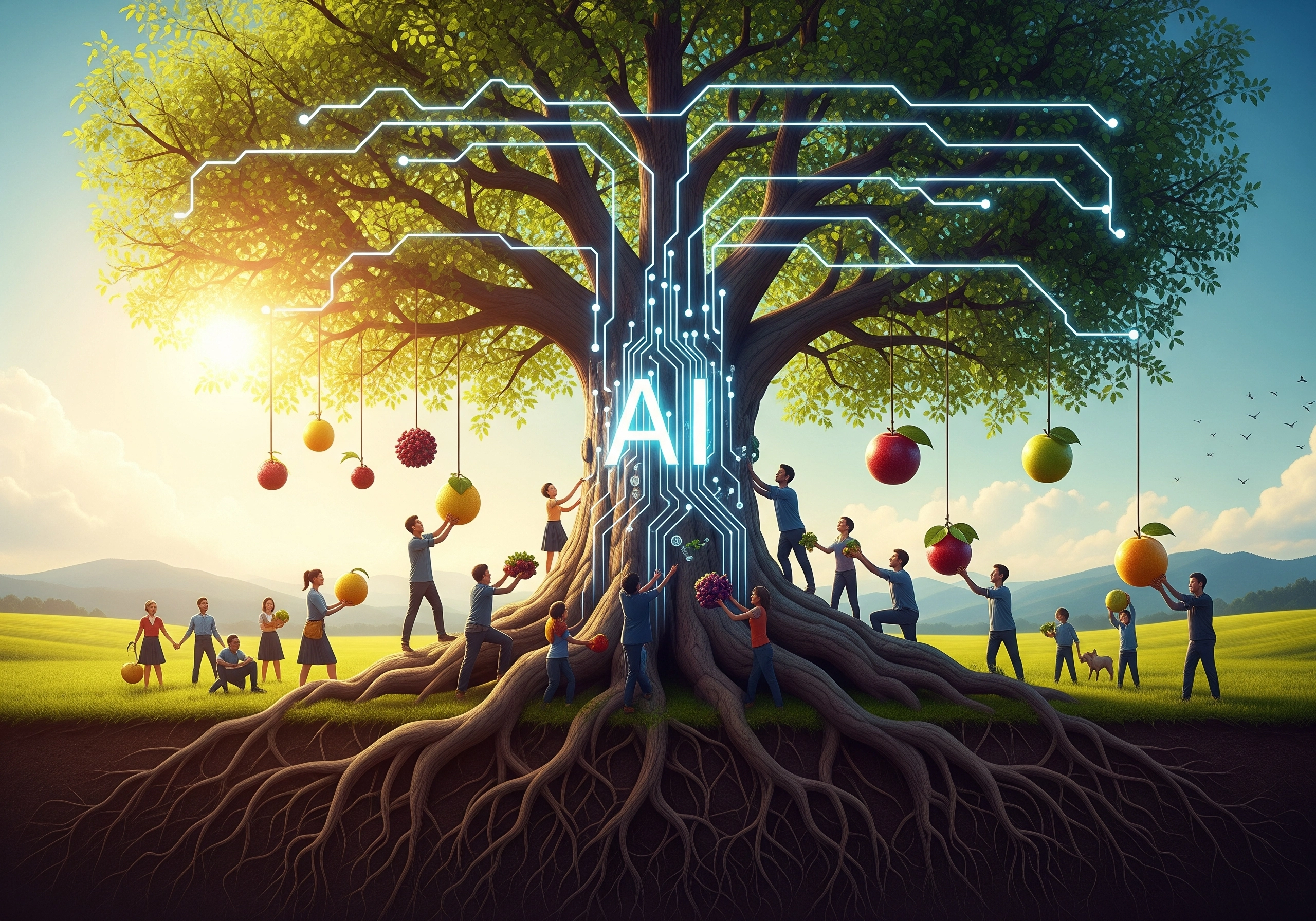
We’ve established that AI isn’t a magic button for Google rankings. It’s a powerful co-pilot. The real win comes from weaving AI’s efficiency with genuine human insight. This isn’t just about cranking out content; it’s about building a sustainable, future-proof presence Google wants to reward.
Tools like GenWrite automate tedious parts , keyword research, competitor analysis, initial outlines , freeing you to focus on unique angles AI can’t replicate. This aligns perfectly with modern SEO best practices that prioritize helpfulness and authority.
The goal isn’t just content volume. It’s about information gain and demonstrating E-E-A-T. Your unique perspective, real-world experience, and ability to address user intent differentiate your content. AI structures information, but core insights still come from you.
Chasing quick ranking “shortcuts” with purely AI text proves short-sighted; Google’s updates show us that. Instead, a hybrid model , where intelligent AI SEO services support human creativity , builds a robust foundation for long-term SEO success. It means consistently delivering value, not just words. What kind of legacy do you want your content to leave?
Stop wasting time on generic AI content. See how GenWrite helps you create SEO-optimized, human-centric blogs that rank by automating the research and analysis, not the writing.
People Also Ask
Can AI content rank on Google?
Yes, AI-assisted content can rank, but raw, unedited AI output often struggles. Google prioritizes helpfulness, expertise, and genuine experience (E-E-A-T). If AI content simply rehashes existing information without adding unique insights or personal experience, it’s unlikely to perform well, especially after recent core updates targeting scaled content abuse.
What is ‘information gain’ in SEO?
Information gain refers to content that introduces new, specific facts or unique perspectives to the search index. Search engines like Google favor content that genuinely adds to the existing knowledge base rather than just rephrasing what’s already out there. Since AI models are trained on existing data, they often struggle to produce truly original insights.
How does E-E-A-T affect AI content?
E-E-A-T (Experience, Expertise, Authoritativeness, Trustworthiness) is crucial for Google rankings. AI can simulate expertise and trustworthiness, but it can’t replicate genuine ‘Experience.’ For instance, an AI can’t truly review a product it’s never used or describe the feeling of visiting a place. This experiential gap limits how high raw AI content can rank in competitive niches.
What was Google’s ‘scaled content abuse’ update?
In early 2024, Google rolled out a major update targeting sites that mass-produce low-quality content, whether human or AI-generated, primarily to manipulate search rankings. The focus is on the helpfulness and quality of the content itself, not just the volume produced. Sites relying solely on unedited AI output saw significant ranking drops.
Is it better to use AI for content creation or as an assistant?
It’s definitely better to use AI as a powerful assistant. Think of it like a calculator for a mathematician; it speeds up tasks like research, outlining, and initial drafting. However, human oversight is essential for adding unique insights, personal experience, strategic linking, and ensuring the content is truly helpful and original, which is what Google rewards.
What happens if I rely too much on AI prompts?
Over-reliance on AI prompts without subject matter expertise can lead to ‘fluff’—content that sounds authoritative but lacks substance or unique information. It can also result in an ‘optimization loop’ where content becomes unreadable or triggers spam filters. Fact-checking AI-generated citations is also vital, as fake references can severely damage your site’s trustworthiness.