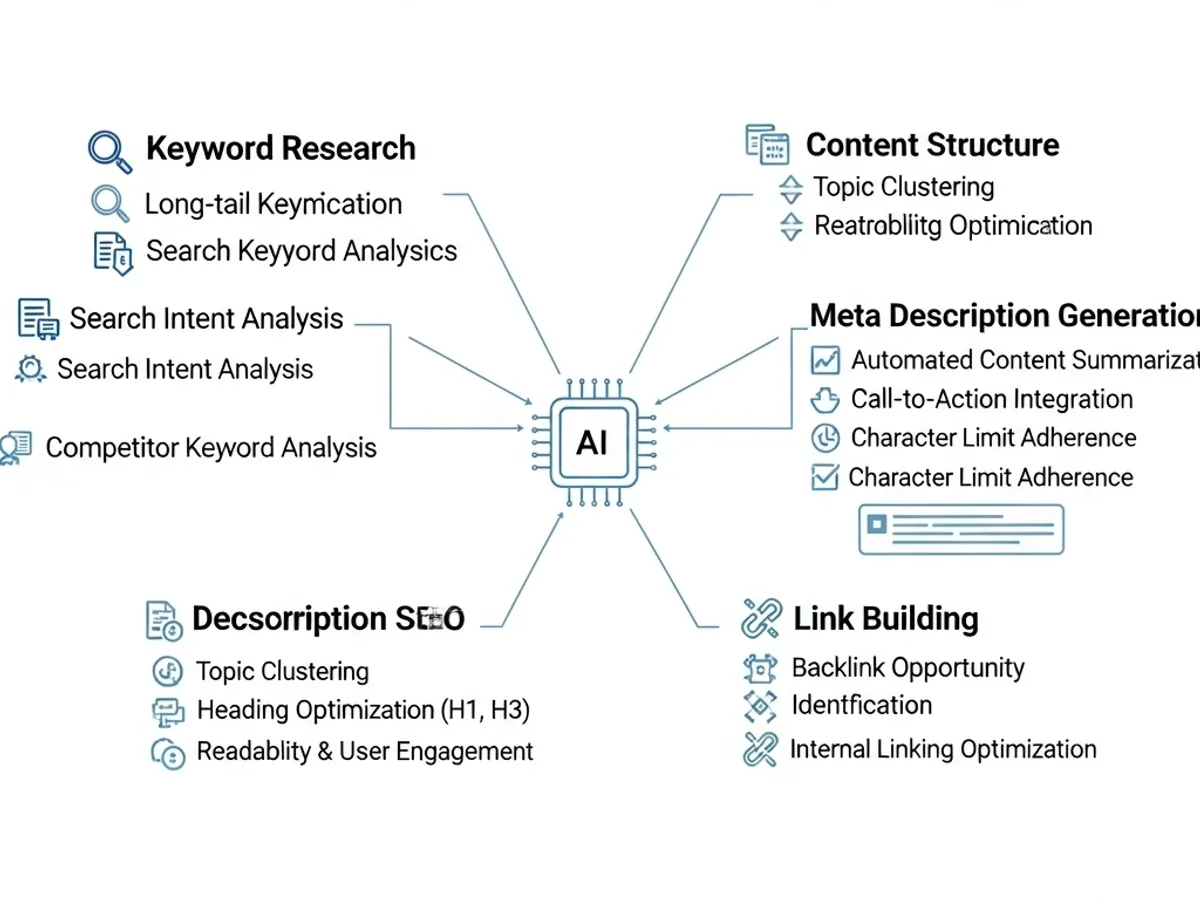
Which AI SEO Tools Outperform Competitors for 2026 Rankings?
Why is AI Transforming the SEO Landscape for 2026?

The SEO landscape isn’t just evolving; it’s undergoing a seismic shift, particularly as we look toward 2026. What was once a meticulous, manual process is now being redefined by artificial intelligence. This isn’t about minor tweaks; AI is fundamentally changing how we approach search engine optimization. It’s automating tasks that once consumed countless hours, dramatically improving content quality, and unearthing insights into user behavior that were previously impossible to detect manually.
What Defines AI SEO Tools?
So, what exactly are these game-changing AI seo tools? Simply put, they are sophisticated software solutions designed to leverage artificial intelligence—including natural language processing (NLP), machine learning (ML), and predictive analytics—to enhance every facet of your SEO strategy. They move beyond simple data aggregation to provide actionable intelligence, helping you not just see data, but understand its implications.
This technology can analyze vast amounts of data to identify patterns and trends that would be impossible for humans to detect manually. Accurate data analysis becomes the bedrock of effective strategy.
The Overarching Benefits of AI in SEO
The overarching benefits are clear: unparalleled efficiency and effectiveness. Imagine automating your keyword research, streamlining topic generation, and even optimizing existing content with precise, AI-driven suggestions. Tools like GenWrite exemplify this, providing an AI blog generator that automates the entire content creation workflow, from research to publication.
This integration of features into comprehensive platforms is what makes a top-tier AI seo tool 2026 stand out. They empower us to build authority and improve rankings at a scale previously unimaginable. Mastering these capabilities is key to Mastering Blog Post SEO: A Guide to Using AI Tools for Faster Google Rankings. This fundamental shift means that understanding and effectively utilizing these advanced seo ai tools isn’t just an advantage—it’s a prerequisite for staying competitive and achieving superior rankings in the years to come.
What Defines a Top-Tier AI SEO Tool for Success in 2026?
The landscape of digital marketing is constantly shifting, making the selection of truly effective 2026 ai seo tools paramount for sustained success. It’s no longer enough for an AI solution to simply generate text; we must look deeper into its capabilities and strategic impact.
Proprietary Data and Demonstrable ROI
What truly sets a top-tier AI SEO tool apart is its reliance on proprietary data. While many ai online tools pull from publicly available data sets, the best solutions leverage unique, often real-time, information to deliver unparalleled insights into market trends, search intent, and competitor strategies. This advanced data analysis allows them to identify patterns and opportunities that are otherwise invisible.
A tool’s true value is measured by its measurable return on investment.
We’re looking for platforms that can clearly demonstrate improved organic traffic, higher conversion rates, and a tangible boost to your overall digital presence. This goes beyond vanity metrics, focusing on bottom-line impact. Such tools empower you to make data-driven decisions that directly affect your growth.
Beyond Basic Content Generation
The Best AI SEO Tool in 2026 offers much more than just content creation. While automation is crucial, a superior tool focuses on comprehensive content optimization. This includes identifying critical content gaps, refining existing articles for semantic relevance, and ensuring every piece aligns perfectly with search engine guidelines and LLM expectations.
It’s about sophisticated optimization, not merely filling a page.
Seamless Integration and Advanced AI Functionalities
An essential criterion for any leading AI SEO tool is its ability to integrate seamlessly into your existing marketing stack. SEO doesn’t operate in isolation; therefore, the ideal tool should connect effortlessly with CRM systems, analytics platforms, and content management systems, creating a holistic and efficient workflow.
Core AI Capabilities
- Natural Language Processing (NLP): For nuanced content analysis and understanding complex queries.
- Machine Learning (ML): To adapt strategies and learn from performance data over time.
- Predictive Analytics: To forecast trends and pinpoint future opportunities, keeping you ahead of the curve.
Consider a platform like GenWrite, which exemplifies these advanced capabilities. It acts as an AI blog generator and a comprehensive SEO optimization solution. GenWrite automates keyword research, analyzes competitor content, and ensures your blogs are not only high-quality but also strategically positioned for top search engine rankings. Its focus on practical, actionable strategies empowers users to increase website traffic and organic reach, making it a strong contender for the Best AI SEO Tool in 2026.
Which All-in-One AI SEO Platforms Offer the Most Comprehensive Solutions?
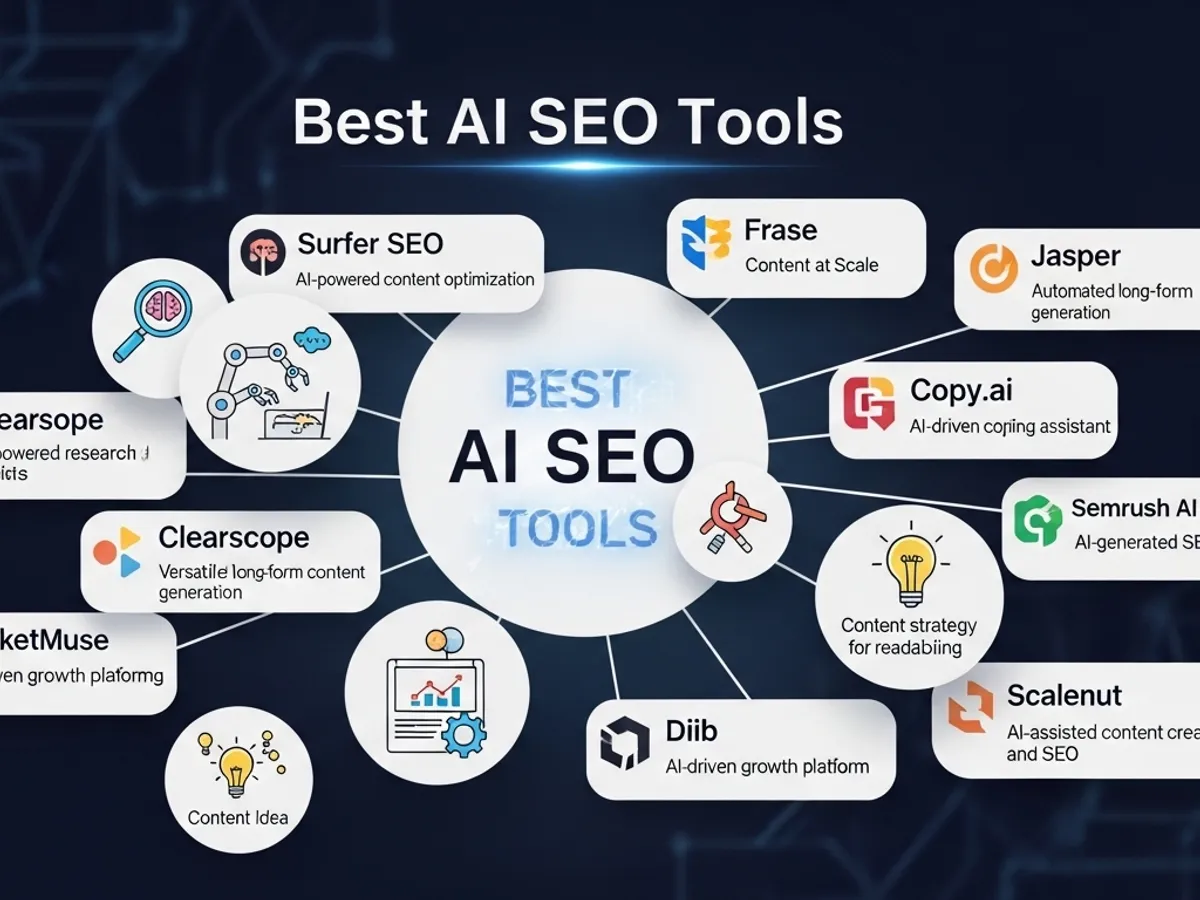
Choosing the right all-in-one AI SEO platform is paramount for navigating the complexities of the 2026 digital landscape. While many tools promise comprehensive solutions, discerning which ones truly deliver advanced, AI-driven capabilities across the entire SEO spectrum—from keyword research to technical audits—requires a closer look.
The Need for Comprehensive AI in SEO
The era of relying on disparate, siloed tools is rapidly fading. Today’s search environment demands integrated platforms that leverage AI to automate tasks, provide deeper insights, and streamline workflows. These platforms synthesize vast datasets, identifying patterns and trends that human analysis alone would miss, thereby equipping marketers with a significant competitive edge.
An all-in-one platform is your central nervous system for SEO, driven by intelligent automation.
Leading the Pack: Semrush and Ahrefs
When we talk about comprehensive solutions, two names consistently emerge: Semrush and Ahrefs. Both have evolved significantly, embedding AI into their core functionalities to meet the demands of modern SEO.
Semrush: A Content & Competitive Powerhouse
Semrush has long been a go-to for competitive analysis and content marketing, and its integration of AI has only strengthened this position. The Semrush AI Co-Pilot, for instance, assists with everything from content ideation to optimization, ensuring that your content not only targets the right keywords but also resonates with user intent. Its AI helps identify content gaps, analyze competitor strategies, and even refine your on-page elements for maximum impact.
- AI-driven Keyword Research: Uncovers long-tail opportunities and semantic clusters.
- Content Optimization: Provides real-time suggestions for readability, tone, and SEO elements.
- Competitor Insights: AI-powered analysis of rival content and backlink profiles.
- Technical SEO Audits: Identifies critical site health issues with actionable recommendations.
Semrush excels for those who prioritize robust content creation and deep competitive insights, often serving larger teams and agencies.
Ahrefs: The Backlink and Keyword Authority
Ahrefs has historically been celebrated for its unparalleled backlink data and intricate keyword research capabilities. Its Ahrefs AI capabilities enhance these strengths, offering more sophisticated analysis of link profiles and deeper dives into SERP dynamics. While perhaps not as overtly branded with an “AI Co-Pilot” as Semrush, Ahrefs utilizes machine learning to refine its data accuracy and provide more nuanced insights into link quality and keyword difficulty.
- Advanced Backlink Analysis: AI identifies toxic links and high-value opportunities.
- Keyword Clustering: Groups related keywords for comprehensive content strategies.
- Content Gap Analysis: Uncovers topics your competitors rank for but you don’t.
- Rank Tracking: Predictive analytics for keyword performance.
Ahrefs is often the preferred choice for SEOs focused on technical SEO, link building, and in-depth keyword analysis, especially those seeking the most comprehensive backlink index.
Finding the Best AI SEO Tool for Your Needs
Determining the best AI SEO tool ultimately depends on your primary focus and budget. While Semrush and Ahrefs offer broad coverage, specialized tools can complement these platforms or serve as potent standalone solutions for specific needs. For instance, platforms like GenWrite excel in automating the entire content creation workflow, from keyword research to publishing, using AI to generate high-quality, SEO-optimized blogs that adhere to search engine guidelines and LLMs.
The ideal AI SEO platform integrates seamlessly, automates intelligently, and provides actionable data.
When evaluating these tools, consider how effectively they automate repetitive tasks versus human effort. For a deeper look into this efficiency, explore the debate on whether an ai seo writing tool truly outperforms human efforts in driving traffic and sales. The best tools leverage AI to augment, not just replace, human expertise, providing a clear return on investment through improved rankings and traffic. Ultimately, the most comprehensive solution is one that fits your specific workflow, budget, and strategic objectives, allowing you to scale your SEO efforts efficiently.
How Can AI Tools Revolutionize Your Content Optimization and Creation Process?
The landscape of content creation and optimization has undergone a profound transformation, moving from manual guesswork to a highly strategic, data-driven process. This shift is largely powered by AI Content Optimization tools, which are revolutionizing how we plan, write, and refine our content for maximum search engine visibility and user engagement.
AI-Powered Content Optimization for Higher Rankings
At the core of this revolution are specialized platforms designed to analyze search engine results pages (SERPs) and provide actionable insights. Tools like Surfer SEO, Clearscope, and Frase empower content creators to move beyond basic keyword stuffing, focusing instead on semantic relevance and comprehensive topic coverage. They dissect top-ranking content, identifying key terms, questions, and structures that resonate with both search algorithms and human readers.
Surfer SEO for Data-Driven Content Briefs
Surfer SEO stands out by offering granular, data-backed recommendations for content length, keyword density, and NLP (Natural Language Processing) terms. It helps you craft highly optimized content briefs, ensuring every piece you create is primed for Google’s algorithms from the outset. This precision minimizes the guesswork often associated with achieving high rankings.
Clearscope for Semantic Relevance and Clarity
Clearscope specializes in content grading, providing real-time feedback on how well your content covers a given topic. It emphasizes semantic relevance, helping you write authoritative content that fully addresses user intent. Achieving a high content grade means your piece is comprehensive and relevant.
Frase for Research and Outline Generation
Frase accelerates the research phase by automatically pulling key insights from top-ranking articles and generating detailed content outlines. This capability significantly reduces the time spent on initial research, allowing teams to focus more on crafting compelling narratives. It’s a powerful ally in structuring high-ranking, AI-optimized content.
These platforms provide the strategic backbone, ensuring your content is built on a solid, data-informed foundation. They are indispensable for any serious content marketer aiming for top SERP positions.
Leveraging AI Writing Tools for Content Creation
Beyond optimization, AI Writing Tools like ChatGPT and Claude are changing the very act of content creation. These large language models (LLMs) excel at generating initial drafts, brainstorming ideas, and expanding on specific topics. They can quickly produce outlines, generate introductions, and even craft entire sections of content, significantly speeding up the writing process.
While these generative AI tools are incredibly powerful for initial content generation and overcoming writer’s block, human oversight remains crucial. The best results come from using AI to create a strong foundation, which is then refined, fact-checked, and imbued with a unique brand voice by a human editor. This hybrid approach ensures both efficiency and quality.
Ultimately, the synergy between advanced AI Content Optimization tools and sophisticated AI Writing Tools like ChatGPT and Claude revolutionizes the entire content pipeline. They enable marketers to produce high-ranking content at scale, ensuring every piece is both technically optimized and semantically rich. For those looking to fully automate and optimize their blog creation process, a solution like GenWrite integrates many of these capabilities, streamlining everything from keyword research and competitor analysis to automatic publishing, ensuring your content is always geared for maximum traffic and organic reach.
Uncovering Opportunities: What are the Best AI Tools for Keyword Research and SERP Analysis?
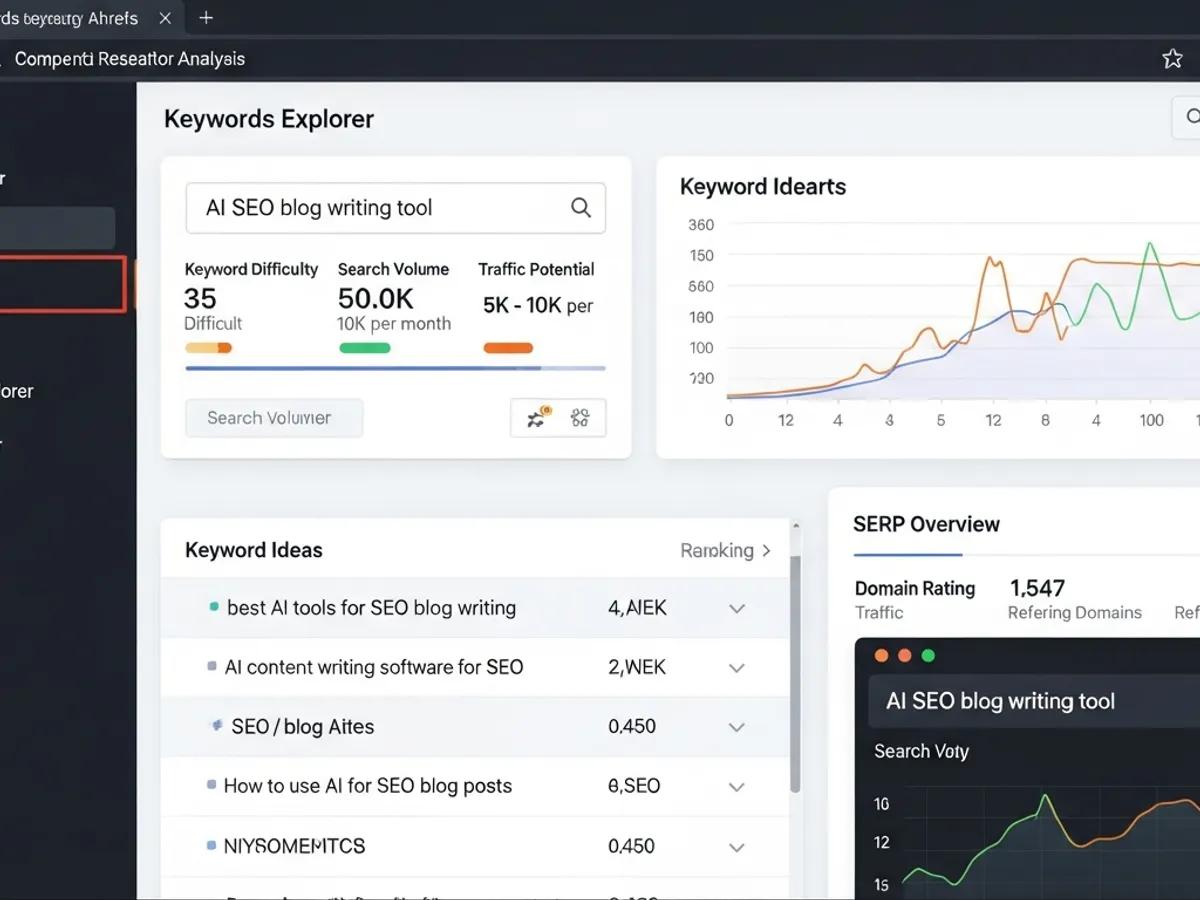
The landscape of SEO is continually reshaped by artificial intelligence, transforming how we approach foundational tasks like keyword research and SERP analysis. Gone are the days when these processes were purely manual, relying on intuition or basic data sorting. Today, AI empowers us to uncover opportunities with unprecedented precision. We’re seeing a shift from simply finding keywords to understanding the intricate intent behind them and the competitive dynamics of the search results.
The Evolution of AI Keyword Research
Traditional keyword research often provided a list of terms and their search volumes, leaving much of the strategic interpretation to the marketer. With AI Keyword Research, this process becomes far more sophisticated. AI algorithms can analyze vast datasets, identifying semantic relationships, user intent clusters, and even predicting future trends that a human might miss. This allows us to move beyond high-volume, generic terms to discover long-tail, high-intent keywords that align perfectly with user needs.
Tools like Semrush and Ahrefs have integrated powerful AI capabilities into their platforms. For instance, Ahrefs Keyword Research tools now leverage machine learning to group related keywords by intent, helping content creators understand the true query behind a search term. This means instead of just seeing a keyword, you get a contextual understanding of why people are searching for it, which is critical for creating truly relevant content. The ability to group these intents ensures that our content addresses a comprehensive range of user questions and needs, leading to higher engagement and better rankings.
Advanced SERP Analysis with AI
Understanding the Search Engine Results Page (SERP) is no longer about just glancing at the top 10 results. SERP Analysis AI delves deep into the structure, content, and features of these pages, providing actionable insights into what Google truly values for a given query. AI can process and categorize elements like featured snippets, People Also Ask boxes, video carousels, and even the sentiment of competing content.
Tools like Surfer SEO, for example, analyze hundreds of on-page factors from top-ranking pages to provide data-driven content guidelines. This isn’t just about keyword density anymore; it’s about understanding content structure, word count, topic coverage, and the overall semantic richness required to compete. AI translates raw SERP data into a clear roadmap for optimization. This deeper analysis helps us identify gaps in our own content and refine our strategies to outperform competitors.
These AI-powered insights are invaluable for any content automation tool aiming to deliver high-quality, SEO-friendly content. For instance, at GenWrite, we leverage such advanced analysis to inform our automated blog creation process, ensuring that the generated content is not only relevant but also optimized to align with search engine guidelines and LLMs from the outset. This integration of AI for both keyword discovery and competitive SERP understanding provides a holistic approach to securing higher rankings.
Are You Tracking AI Visibility? New Tools for Generative Engine Optimization (GEO)
The landscape of search is rapidly shifting, driven by the increasing sophistication of AI models like ChatGPT, Gemini, and Perplexity. While traditional Search Engine Optimization (SEO) remains vital, a new frontier demands our attention: Generative Engine Optimization (GEO). This isn’t just about ranking on Google anymore; it’s about ensuring your brand and content are visible and accurately represented within these powerful AI-driven answers.
The Rise of Generative Engine Optimization
For years, our focus as content creators has been on optimizing for search engine algorithms. We meticulously crafted content, built backlinks, and refined technical elements to secure top spots on SERPs. But what happens when users bypass traditional search results entirely, opting instead for a direct answer generated by an AI chatbot? This is the core challenge and opportunity that Generative Engine Optimization addresses. It’s about understanding how AI models synthesize information, attribute sources, and present data, then optimizing your digital footprint accordingly.
AI Search Visibility is the new battleground for brand presence.
Traditional SEO helped us understand how users find information through keywords; GEO helps us understand how AI processes and presents that information. This shift requires a proactive approach to content creation and distribution, ensuring your authoritative content is readily discoverable and trustworthy for AI systems.
New Tools for Tracking AI Visibility
As this new domain emerges, so do specialized tools designed to measure and improve your performance within generative AI environments. These platforms offer novel insights into how your brand appears in AI-generated summaries and responses, a critical aspect of your overall digital strategy:
- SE Visible: This tool focuses specifically on monitoring your brand’s presence and perception within AI chatbot responses. It helps you understand if your content is being cited and how your brand’s narrative is being shaped by these generative models.
- Rankscale.ai: Moving beyond traditional rank tracking, Rankscale.ai provides analytics on how your content performs in AI-driven search environments. It offers metrics to gauge your AI Search Visibility and identify optimization opportunities.
- Mangools AI: While traditionally known for its SEO suite, Mangools is also developing capabilities to help track and analyze content performance in the context of AI-generated answers, helping bridge the gap between classic SEO and GEO.
These platforms are invaluable because they provide actionable data that traditional analytics simply can’t. They reveal whether your content is being correctly interpreted and attributed by AI, which is paramount for maintaining brand authority and driving traffic from these new channels. Just as we use tools for keyword research and content optimization for Google, we now need specific solutions to navigate the complexities of AI-driven search.
Optimizing for GEO means not just creating great content, but creating content that AI models understand, trust, and leverage. This is where tools like GenWrite play a crucial role. By automating the creation of high-quality, SEO-optimized content, GenWrite ensures your foundational material is robust and semantically rich, making it more digestible and authoritative for both traditional search engines and advanced AI models. It’s about building a digital presence that thrives across all evolving search paradigms.
Mastering Technical SEO: How Do AI Solutions Diagnose and Resolve Website Issues?

The labyrinthine world of technical SEO, once a manual slog through server logs and countless lines of code, is now being systematically unraveled by AI. For us, the goal has always been about efficiency and impact, and nowhere is this more evident than in how AI solutions diagnose and resolve website issues, ensuring our expertly crafted content finds its audience.
Traditional technical audits were painstaking, often leading to missed opportunities or delayed fixes. Today, AI Technical SEO tools automate the identification of critical problems, from broken internal links and redirect chains to slow page load times and mobile usability issues. This shift means we spend less time hunting for problems and more time implementing solutions.
How AI Transforms the Technical Audit Process
AI-powered solutions aren’t just scanning for errors; they’re interpreting vast datasets to provide actionable insights. A comprehensive Site Audit AI can crawl millions of pages, identifying patterns indicative of deeper architectural flaws that might escape a human reviewer. These tools prioritize issues based on their potential impact on search performance, allowing us to focus on what truly matters for Google rankings and user experience.
Consider established tools like Screaming Frog. While primarily a powerful crawler, its increasing integration with AI capabilities allows it to offer more than just raw data. When we talk about Screaming Frog AI, we’re referring to its evolving ability to provide richer contextual analysis, flag complex indexing issues, and even suggest optimal schema markup based on content analysis. Similarly, Sitebulb leverages advanced algorithms to visualize site structure and highlight critical technical debt, making complex problems intuitively understandable.
These platforms do more than just report; they offer prescriptive guidance. They can simulate how search engine bots view a site, predict the impact of proposed changes, and even generate code snippets for common fixes, accelerating the resolution process. This proactive approach ensures that the content created with tools like GenWrite has the most robust technical foundation possible, allowing it to rank effectively and drive organic traffic.
Building Authority: Which AI Tools Lead in Backlink Analysis and Outreach?
The landscape of link building has evolved dramatically, moving beyond manual sifting through endless reports to embrace the analytical power of artificial intelligence. Today, AI Backlink Analysis isn’t just a buzzword; it’s a critical component for identifying high-quality link opportunities and crafting effective outreach strategies that truly move the needle for organic rankings.
AI-driven tools now process vast datasets, uncovering patterns and predictive insights that human analysis simply cannot match. They help us understand not only who is linking, but why and how those links impact authority and search visibility. This transformation means less guesswork and more data-backed decisions in a highly competitive digital space.
Ahrefs and Semrush: Leaders in AI-Enhanced Link Building
When we look at platforms leading the charge in Link Building AI, Ahrefs and Semrush consistently rise to the top. Both offer robust backlink analysis suites, but their AI capabilities provide a distinct advantage in pinpointing strategic opportunities.
Ahrefs Backlinks: Ahrefs leverages its massive backlink index and proprietary algorithms to identify potential link partners with high domain authority and relevance. Its AI-driven insights help filter out spammy links, prioritize targets based on their linking patterns, and even suggest content gaps that could attract natural backlinks. This precision ensures that every outreach effort is directed towards maximum impact. The tool’s ability to analyze competitor backlink profiles rapidly, flagging common link sources and successful strategies, is significantly enhanced by AI.
Semrush’s Link Building AI: Semrush, similarly, employs AI to streamline the entire link building workflow. Its Link Building Tool uses machine learning to score prospects based on relevance, authority, and estimated traffic, then provides contact information for outreach. This proactive identification of high-value prospects, coupled with automated email templates and tracking, makes the outreach process incredibly efficient. Semrush’s AI helps prioritize opportunities that offer the highest return on investment, saving valuable time and resources.
Both platforms move beyond simple metric reporting, utilizing AI to offer actionable intelligence. They predict the likelihood of successful link acquisition, analyze the contextual relevance of potential links, and help refine your target list to focus on those that will genuinely boost your website traffic with AI SEO.
Ultimately, the integration of AI into backlink analysis and outreach isn’t about replacing human strategists, but empowering them. These tools provide the data, insights, and automation necessary to build authority at scale. For instance, creating high-quality, link-worthy content that these tools can then help promote is where solutions like GenWrite shine, automating the content creation process to ensure you always have valuable assets ready for your outreach efforts.
Beyond the Hype: Which AI SEO Tools Offer the Best Value for Budget-Conscious Users?
The perception often exists that cutting-edge AI SEO tools come with a prohibitive price tag. While some enterprise solutions can indeed be significant investments, the landscape of affordable AI SEO tools is rich with options that deliver exceptional value for budget-conscious users. My experience tells me that smart investment isn’t about spending the most, but about maximizing return on every dollar.
Maximizing Value with Budget AI SEO Solutions
For businesses and individuals looking to leverage AI without breaking the bank, a strategic approach is essential. It’s about identifying tools that offer robust features in key areas like content optimization, keyword research, and competitive analysis, often at a fraction of the cost of their all-in-one counterparts.
Effective AI SEO doesn’t require an unlimited budget.
One excellent example of an accessible yet powerful platform is NeuronWriter. This tool specializes in content optimization, guiding users to create articles that rank well by analyzing top-performing content and providing actionable recommendations. Its affordability makes it a strong contender for those prioritizing on-page SEO excellence without a hefty subscription.
SE Ranking also stands out as a comprehensive platform that provides a wide array of SEO features—from keyword tracking and competitor analysis to technical audits—at a more accessible price point than many of its competitors. It offers a fantastic balance of functionality and cost-effectiveness, making it a viable option for those needing a broader suite of tools for their Budget AI SEO strategy.
Leveraging Free AI SEO Tools and LLMs
Beyond dedicated platforms, the capabilities of large language models (LLMs) like ChatGPT offer incredible opportunities for free AI SEO tools. While not a direct replacement for specialized SEO software, these models can be invaluable for:
- Content Ideation: Generating topic ideas, headlines, and outlines.
- Initial Drafts: Creating preliminary content sections to build upon.
- Keyword Expansion: Brainstorming long-tail keyword variations.
- Rephrasing & Summarization: Improving readability and conciseness.
However, it’s crucial to remember that raw output from LLMs still requires significant human oversight and dedicated SEO optimization to ensure accuracy, factual correctness, and alignment with search engine guidelines. This is where tools designed for robust SEO come into play, even when working with initial LLM drafts.
We’ve found that integrating solutions like NeuronWriter for deep content insights and then using platforms like GenWrite to automate the end-to-end blog creation and SEO optimization process provides a powerful, cost-effective workflow. GenWrite handles the keyword research, competitor analysis, and content generation, ensuring high-quality, SEO-friendly content even from a lean budget. It’s about smart integration to create high-ranking content efficiently.
By carefully selecting affordable AI SEO tools and effectively utilizing free AI SEO tools like advanced LLMs, businesses can achieve significant SEO gains without overspending. The key is to understand your specific needs and build a tech stack that delivers maximum impact for your investment.
Crafting Your Perfect AI SEO Stack: How to Choose the Right Tools for Your Needs?
Building an effective AI SEO Strategy in 2026 isn’t about collecting every shiny new tool; it’s about curating a powerful, cohesive stack that aligns perfectly with your specific objectives. Just as a craftsman selects their tools for a particular project, you need to be intentional when choosing AI SEO Tools to ensure they serve your unique needs and drive tangible results. The wrong tools can complicate your workflow and drain resources without delivering value.
Define Your Core Objectives First
Before you even consider individual tools, clarify your primary SEO goals. Are you focused on rapid content scaling, deep technical audits, or hyper-targeted keyword research? Your answer dictates the foundational elements of your stack. For instance, a small business aiming for local visibility will have different requirements than an enterprise striving for global organic reach. Understand your ‘why’ before you pick your ‘how.’
Aligning Tools with Business Size and Budget
Your budget and team size are critical factors. Startups or solo marketers might opt for more integrated, cost-effective solutions or freemium tools, prioritizing versatility. Larger enterprises, with dedicated SEO teams, can invest in specialized, high-powered platforms for granular analysis and automation. The key is to avoid overspending on features you won’t use or underinvesting in critical areas. Remember, value often trumps raw cost.
The Art of SEO Tool Integration
The real power of your AI SEO stack emerges from seamless SEO Tool Integration. A collection of disparate tools, no matter how powerful individually, creates data silos and workflow friction. Modern AI SEO platforms are designed with interoperability in mind, allowing data to flow between keyword research, content optimization, and performance tracking tools.
Integration transforms a patchwork of tools into a unified system.
Consider how information from your keyword research tool will inform your content creation platform, or how your technical SEO auditing tool will communicate with your site’s CMS. This interconnectedness allows for a more holistic view of your SEO performance and faster, more informed decision-making.
GenWrite: Simplifying Your AI SEO Stack
For many, especially those focused on content at scale, an all-in-one solution like GenWrite can significantly streamline the process. As an AI-powered tool, GenWrite automates end-to-end blog creation, from researching keywords and analyzing competitor content to generating high-quality, SEO-optimized articles and publishing them directly. This approach drastically reduces the need for multiple, disconnected tools for content, making it easier to manage your AI SEO Strategy.
By leveraging an integrated platform, you can achieve comprehensive SEO optimization without the complexity of managing countless individual subscriptions. Whether you’re looking for how to pick the best SEO writing tools or build a comprehensive content strategy, the goal remains the same: select tools that empower your team, simplify your workflow, and ultimately drive your organic growth.
Ready to dominate the 2026 search rankings? Streamline your AI SEO strategy and achieve end-to-end content automation with GenWrite.
Frequently Asked Questions about AI SEO Tools for 2026
How are AI tools changing SEO for 2026?
AI tools are revolutionizing SEO by automating complex tasks like keyword research, content optimization, and technical audits. They leverage machine learning and NLP to provide deeper insights, predict trends, and generate high-quality content, significantly improving efficiency and effectiveness.
What makes an AI SEO tool ‘top-tier’ for 2026?
A top-tier AI SEO tool in 2026 offers proprietary data, proven ROI, and advanced AI functionalities beyond basic content generation. Key features include sophisticated NLP, ML, predictive analytics, and seamless integration with other marketing platforms.
Can AI tools help with content creation and optimization?
Absolutely. AI tools can revolutionize content by automating keyword research, topic generation, and even drafting content. They also help optimize existing content by identifying areas for improvement and suggesting data-driven changes, though human oversight remains crucial for brand voice and quality.
What is Generative Engine Optimization (GEO)?
Generative Engine Optimization (GEO) is a new frontier focused on optimizing content for AI models and search engines that prioritize AI-generated content. It involves tracking AI visibility and adapting strategies to ensure your content performs well in these evolving AI-driven search environments.
Are there AI SEO tools suitable for budget-conscious users?
Yes, several AI SEO tools offer value for budget-conscious users, including options like NeuronWriter and SE Ranking. Many also integrate well with free LLMs for ideation, and platforms like GenWrite offer comprehensive automation to maximize ROI.
How can AI tools assist with technical SEO issues?
AI solutions excel at diagnosing and resolving technical SEO problems. They can automatically identify issues like broken links, slow loading speeds, and mobile usability problems, and even automate tasks like schema markup generation, significantly speeding up technical audits.