
Which AI SEO Tools Will Dominate Search Rankings in 2026?
Why is the SEO Landscape Shifting So Rapidly Towards AI?

The Pivot from Search Engines to Answer Engines
The era of manually tweaking meta tags to chase “ten blue links” is effectively over. Search behavior has mutated; users no longer want a list of URLs to sift through—they demand immediate, synthesized answers. This fundamental transition is the primary catalyst driving the industry toward ai seo.
The urgency stems from data velocity. The modern search landscape changes faster than any human team can analyze. To remain visible in environments like Google’s AI Overviews or ChatGPT, we must move beyond traditional tactics and embrace Generative Engine Optimization (GEO). This new discipline focuses on structuring content so it is easily ingested, understood, and cited by Large Language Models (LLMs).
The fundamental shift in optimization priorities:
| Traditional SEO | AI-First SEO |
|---|---|
| Keyword frequency & exact matches | Contextual depth & semantic relevance |
| Optimizing for clicks | Answer Engine Optimization (AEO) |
| Manual competitor analysis | Automated, real-time data synthesis |
Efficiency is no longer a luxury—it is survival.
Tools that automate research and content structuring, like GenWrite, are becoming essential infrastructure rather than optional add-ons. They allow marketers to focus on high-level strategy while AI handles the heavy lifting of aligning content with E-E-A-T guidelines at scale.
In short: The landscape is shifting because manual workflows cannot compete with the speed, precision, and data volume required to rank in a generative search environment.
What Core AI Features Will Define the Best SEO Tools of 2026?
The era of reactive optimization is ending. By 2026, the best AI SEO tool will not merely report on past performance; it will predict future opportunities with terrifying accuracy. We are shifting from tools that simply assist to platforms that autonomously execute complex strategies, fundamentally changing how we approach organic growth.
Predictive Analytics and Trend Forecasting
The gold standard for 2026 is predictive intelligence. Advanced algorithms will analyze vast datasets to forecast search trends weeks before they peak. Instead of chasing keywords after they become competitive, you will deploy content to meet demand exactly as it surges. This capability allows marketers to dominate emerging niches before competitors even notice the shift.
Insight: The winner of 2026 isn’t the one with the most data, but the one with the best foresight.
Autonomous “Agentic” SEO
We are witnessing the evolution of automated SEO from simple suggestions to full execution. Future tools will act as autonomous agents—fixing broken links, adjusting meta tags, and re-indexing pages without human intervention. This shifts the user’s role from “operator” to “strategist,” allowing software to handle the technical heavy lifting.
For example, platforms like GenWrite are already pioneering this shift by automating end-to-end blog creation, ensuring technical and semantic alignment without the manual drudgery typically required to scale.
Semantic Content Intelligence
A standard AI writing seo tool creates text; a 2026-ready tool engineers relevance. These platforms will utilize advanced Natural Language Processing (NLP) to analyze the “semantic distance” between your content and top-ranking results in generative engines. They will ensure your content answers the unasked questions, satisfying user intent deeply enough to rank in AI overviews and traditional SERPs alike.
The defining features of 2026 tools are predictive foresight, autonomous execution, and deep semantic understanding, moving SEO from a maintenance task to a strategic advantage.
How Are All-in-One SEO Platforms Integrating Advanced AI Capabilities?

The era of disjointed SEO workflows—where you research in one tab, write in another, and audit in a third—is rapidly collapsing. The industry’s heavyweights are no longer just data repositories; they are evolving into proactive intelligence engines. For 2026, the goal for platforms like Semrush and Ahrefs is to embed artificial intelligence directly into the user journey, transforming static data into actionable execution.
From Data Reporting to Predictive Strategy
Historically, all-in-one platforms told you what happened. Today, they are telling you what to do next. This shift is driven by the need to rank blog posts faster and adapt to algorithmic volatility without manual analysis paralysis.
Semrush AI has aggressively integrated content generation into its ecosystem. Tools like ContentShake AI bridge the gap between keyword discovery and drafting, allowing users to move from a keyword metric directly to an optimized article draft. This eliminates the friction of exporting data to external writers, creating a unified feedback loop between research and creation.
Conversely, Ahrefs AI capabilities are pivoting toward deep competitive intelligence and Answer Engine Optimization (AEO). rather than just generating text, Ahrefs is utilizing AI to analyze why certain pages rank, identifying semantic gaps and internal linking opportunities that human audits often miss. Their focus remains on data integrity, using AI to clean and categorize the massive influx of web data.
The Unified Workflow Advantage
| Feature | Traditional SEO Platform | AI-Integrated Platform (2026) |
|---|---|---|
| Research | Lists of keywords & volume | Intent clustering & topic modeling |
| Execution | Export data to writers | Integrated AI drafting & optimization |
| Analysis | Historical performance charts | Predictive traffic & ranking forecasting |
Closing the Gap Between Insight and Action
This integration signals a mature market where an ai seo tool is judged not by its novelty, but by its ability to streamline complex processes. Whether you are using specialized automation or a massive suite, the future belongs to tools that reduce the time between identifying an opportunity and publishing the solution.
Micro-Summary: Major platforms are moving beyond data reporting by integrating AI that handles execution and prediction. This shift creates a unified workflow where research, writing, and optimization happen in a single environment.
Which AI Tools Will Master Content Generation and Optimization for Search Engines?
The Architects of Semantic Relevance
In 2026, the distinction between simple text generation and high-performance SEO is data. The tools mastering this space do not rely on creative guesswork; they rely on reverse-engineering the algorithmic patterns of top-ranking pages. We are seeing a move away from generic drafting toward what I call “Content Intelligence.”
Surfer SEO and Clearscope remain the heavyweights in this category. They act as the architects of your content strategy, analyzing hundreds of on-page signals—from keyword density to header structure—to provide a precise blueprint. Their dominance lies in their ability to score content against live SERP data, ensuring that every paragraph serves a ranking purpose. However, while these tools are excellent at telling you what to write, they often leave the actual execution to you.
Automating the End-to-End Workflow
This is where the next generation of automation steps in. To truly scale, you need an ai seo content generator that doesn’t just draft text but builds the entire asset based on those SEO blueprints. At GenWrite, we designed our platform to bridge this gap. Rather than treating research and writing as separate silos, GenWrite integrates keyword analysis, competitor benchmarking, and drafting into a single automated workflow.
While a standard ai content generator might produce fluent text, it often lacks the structural nuance required for competitive verticals. By automating the inclusion of relevant images, internal links, and semantic clusters, we enable teams to publish high-fidelity content without the manual friction of traditional editors.
The Semantic Specialists
For those focused strictly on semantic gaps, NeuronWriter has emerged as a powerful contender. It specializes in NLP-driven optimization, helping writers cover topics with the depth Google’s algorithms demand. By identifying missing semantic terms, it ensures your content achieves the topical authority necessary to rank blog posts faster in crowded niches.
Comparison of Top Content Optimization Tools
| Tool | Primary Focus | Best Use Case | Key Strength |
|---|---|---|---|
| GenWrite | End-to-End Automation | Bulk Blog Generation & Publishing | Automates research, writing, and posting. |
| Surfer SEO | On-Page Optimization | Content Scoring & Audits | Data-driven content blueprints. |
| Clearscope | Semantic Relevance | High-End Content Briefs | Enterprise-grade NLP analysis. |
| NeuronWriter | Semantic SEO | Budget-Friendly Optimization | NLP recommendations and competitor gaps. |
Micro-Summary: The future belongs to tools that combine deep semantic analysis with automated execution. While Surfer and Clearscope provide the map, platforms like GenWrite provide the engine to drive traffic efficiently.
Can AI Tools Accurately Track Visibility in Generative AI Search Environments?

The concept of “ranking” is fundamentally changing. In a conversational search environment, there is no “Page 2″—there is only the direct answer provided by the AI. If a user asks ChatGPT for a solution, being visible in the training data or live retrieval results is more critical than a traditional SERP position. This shift demands a sophisticated new class of analytics capable of measuring “Share of Model.”
The Rise of Generative Engine Optimization (GEO) Tracking
Standard rank trackers are insufficient for this new reality. Innovative platforms like LLMrefs have emerged to solve this visibility crisis. LLMrefs is not just a standard online ai seo tool; it is an analytics engine purpose-built for Generative Engine Optimization (GEO). It allows marketers to quantify their brand’s presence across major answer engines like Perplexity, ChatGPT, and Gemini. Instead of tracking keyword positions, it tracks citation frequency and recommendation probability.
Key metrics for the generative era include:
- Citation Share: The percentage of times your brand is cited as a source for relevant queries.
- Entity Association: How strongly the AI links your brand to specific industry terms and concepts.
- Competitive Displacement: Identifying prompts where competitors are recommended over your solution.
Turning Visibility Data into Content Authority
Diagnosing a visibility problem is only the first step; fixing it requires rapid, authoritative content production. Once tracking data reveals a gap, you must provide high-quality information that LLMs can ingest. This is where GenWrite bridges the gap. We designed our AI SEO blog writer to automate the creation of depth-rich content that signals authority to both Google and Large Language Models.
By using GenWrite to build semantic topic clusters, brands can influence the data that generative engines rely on. Effective AI SEO now requires a dual approach: precise tracking of your “Share of Model” and the automated production of content that secures it.
What Niche AI SEO Solutions Are Emerging for Specific Marketing Needs?
While massive all-in-one platforms provide a broad overview, they often lack the granular depth required for specific marketing verticals. In 2026, we are seeing a divergence where generalist software is being supplemented by highly specialized ai seo tool stacks designed to master a single function. The “Jack of all trades” approach is giving way to a “Master of One” philosophy, particularly for complex technical tasks like local optimization and internal architecture.
The Rise of Specialized Agents
For agencies balancing multiple client portfolios, SE Ranking AI has emerged as a standout for agency-focused workflows. It excels at translating raw ranking data into automated seo reporting, bridging the gap between technical metrics and client-ready strategy—a specific friction point that broader tools often complicate. Furthermore, local commerce has seen a dedicated surge in AI capability. Niche platforms are now offering features specifically for optimizing Google Business Profiles and hyper-local voice search queries, ensuring physical businesses aren’t drowned out by global competitors in generative results.
Speed and Execution Niches
On the content intelligence side, GrowthBar addresses the need for speed. It bypasses complex analytics to provide rapid content scoring and keyword difficulty assessments, making it ideal for agile teams that need to make decisions in minutes, not hours. However, the most resource-intensive bottleneck remains actual content execution. This is where GenWrite fits into the specialized stack. While tools like GrowthBar analyze what should be written, GenWrite automates the end-to-end drafting and publishing process. By handling keyword research, competitor analysis, and formatting autonomously, it allows lean teams to rank blog posts faster and scale organic traffic without expanding their headcount.
Key Insight: The most effective SEO strategy in 2026 isn’t about finding one tool that does everything moderately well, but assembling a stack of specialists that execute perfectly.
| Niche Need | Emerging AI Solution | Core Value |
|---|---|---|
| Agency Reporting | SE Ranking AI | Automates client data visualization and tracking. |
| Agile Content Scoring | GrowthBar | Provides rapid keyword difficulty and optimization scores. |
| Internal Linking | Link Whisper | Automates site architecture and link distribution. |
| End-to-End Production | GenWrite | Automates research, writing, and publishing workflows. |
How Do You Choose the Right AI SEO Tool for Your Strategy in 2026?
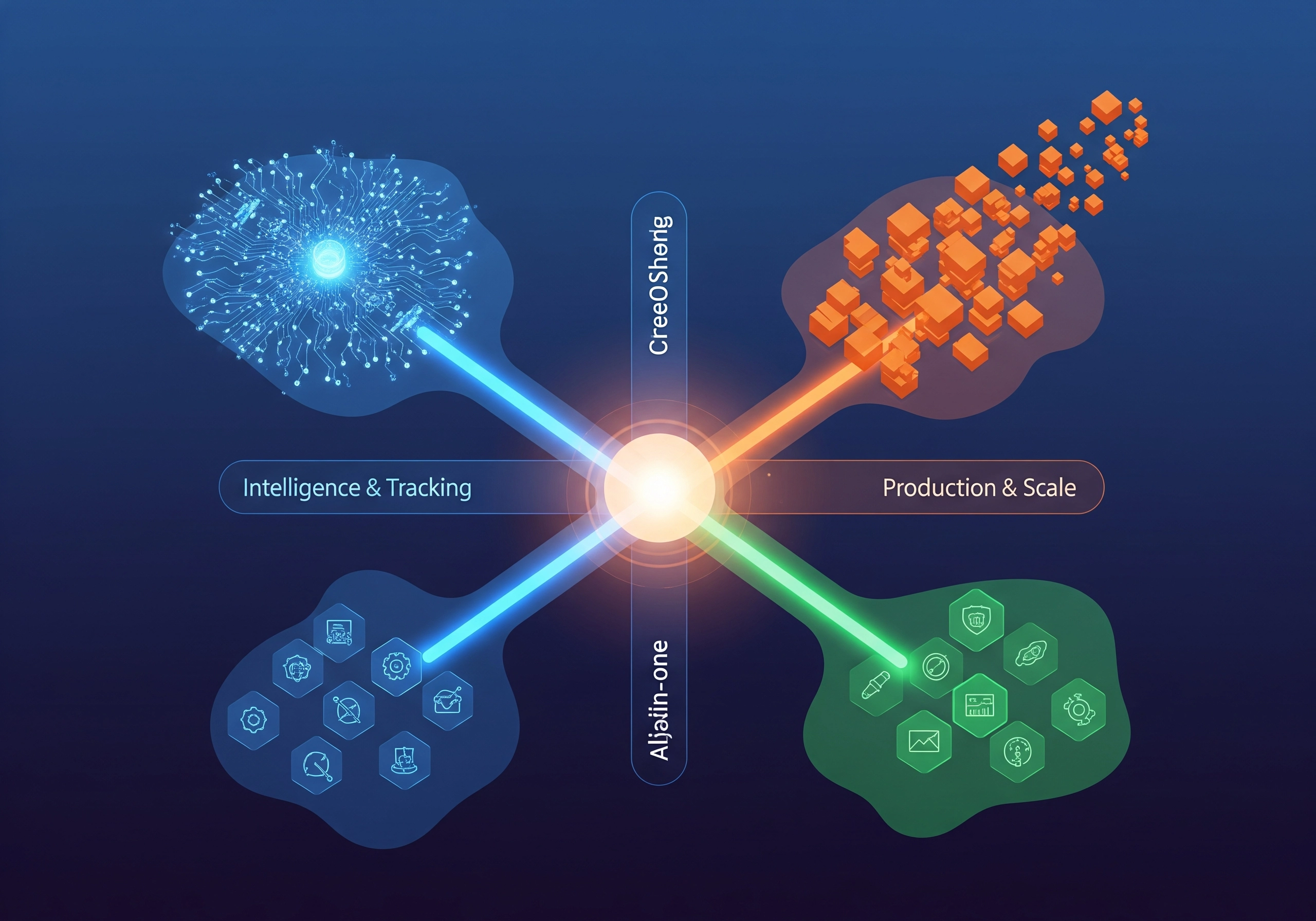
Selecting the right software in a market projected to surge toward $98 billion isn’t about comparing feature sets—it’s about pinpointing your operational bottlenecks. Marketers today face a paralysis of choice. To navigate this, you must distinguish between tools that offer insight and those that deliver execution.
Categorize by Function, Not Hype
Your strategy requires a stack, not a silver bullet. When evaluating the best AI SEO tools, categorize them by the specific problem they solve:
- Intelligence & Tracking: If you need to monitor visibility in Generative Engine Optimization (GEO), you need specialized analytics that track answer engine responses rather than just static rankings.
- Production & Scale: If your bottleneck is writing capacity, prioritize content automation. Tools like GenWrite don’t just assist; they manage the end-to-end lifecycle—from keyword research to publishing—allowing you to scale organic reach without scaling headcount.
The Hybrid Workflow Test
The most effective tools in 2026 facilitate a seamless blend of speed and quality. There is often a debate regarding the AI content generator versus the human SEO writer, but the data suggests that a distinct hybrid approach yields the highest ROI. The right tool should handle the heavy lifting—data analysis, drafting, and optimization—leaving the strategic nuance to you.
Selection Criteria Matrix
To choose a tool that truly fits your workflow, evaluate it against these core operational needs:
| Criteria | Question to Ask | Why It Matters |
|---|---|---|
| Integration | Does it connect directly to WordPress/CMS? | Seamless publishing reduces manual upload time. |
| Autonomy | Can it execute tasks (research, link building) autonomously? | True automation frees up strategic bandwidth. |
| Data Source | Does it rely on real-time SERP data or outdated training sets? | Accuracy depends on live data access. |
Strategic Insight: Avoid “all-in-one” bloat. Build a lean stack where an online AI SEO tool handles execution (like GenWrite) and another handles high-level analytics. This division of labor ensures you aren’t paying for overlapping features that dilute your budget.
By adhering to a strict selection framework, you ensure that every tool in your arsenal serves a distinct purpose. This disciplined approach prevents subscription fatigue and guarantees that your AI investment directly correlates with improved search rankings and operational efficiency.
What Does the Future Hold for AI in SEO Beyond 2026?
From Reactive Analysis to Autonomous Execution
By the time we look beyond 2026, the future of SEO will no longer be defined by how well you react to algorithm updates, but by how effectively you anticipate them. We are transitioning from the “Assistant Era”—where AI suggests changes—to the “Agentic Era,” where ai seo systems autonomously execute complex strategies. The novelty of generation will fade, replaced by a ruthless demand for precision, accuracy, and autonomous lifecycle management.
The winners of the next decade won’t just use AI to write; they will use AI to think, predict, and publish.
The Shift to Predictive Intelligence
AI search trends indicate a permanent move away from the traditional “ten blue links” toward direct answer delivery. As search engines evolve into answer engines, optimization strategies must pivot from capturing clicks to capturing mindshare within Large Language Models (LLMs). This requires a content infrastructure that is both vast and meticulously verified.
Key pillars for the post-2026 landscape include:
- Agentic Workflows: Tools that handle end-to-end tasks—from keyword discovery to publishing—without human hand-holding.
- Predictive Analytics: Forecasting traffic shifts before they happen rather than reporting on them after the fact.
- Hyper-Personalization: Content dynamically tailored to user intent signals in real-time.
To survive this shift, marketers need smart, adaptive AI-powered SEO tools that automate the heavy lifting of technical audits and content production. Platforms like GenWrite are already paving this path by automating the entire blog creation lifecycle, ensuring that businesses can maintain high-frequency, high-quality output without burning out their human teams.
Ultimately, the top AI SEO tools reshaping rankings will be those that bridge the gap between data insight and autonomous action, allowing human strategists to focus on creativity while machines handle the scale.
Conclusion: Will Your AI SEO Strategy Be Ready for Tomorrow’s Search?

Will Your AI SEO Strategy Be Ready for Tomorrow’s Search?
Generative search is no longer a forecast; it is the operational reality of 2026. As the industry accelerates toward a projected $98 billion valuation, clinging to manual workflows isn’t just inefficient—it is a competitive liability. The sheer speed and data volume of modern search demand that your ai seo strategy pivots immediately from reactive analysis to autonomous execution.
The era of static reporting is over. Future SEO tools now function as strategic partners, capable of predicting trends before they emerge. Whether you are integrating predictive analytics for traffic forecasting or deploying specialized AI SEO tools to dominate search, the objective remains identical: scaling relevance without compromising quality.
The gap between insight and action is where rankings are won or lost.
This is where GenWrite distinguishes itself. While traditional platforms merely map the terrain, execution engines like GenWrite build the roads. By automating the entire lifecycle—from deep research to auto-publishing—we ensure your brand actively shapes trends rather than chasing them. The infrastructure you build today determines if you dominate search rankings tomorrow.
Ready to future-proof your SEO strategy? Explore how GenWrite can automate your blog creation and drive organic traffic in the AI era.
Frequently Asked Questions about AI SEO Tools
How is the SEO landscape changing with the rise of AI?
The SEO landscape is shifting from traditional search engine result pages (SERPs) to AI-driven answer engines. This necessitates a move towards Generative Engine Optimization (GEO) and Answer Engine Optimization (AEO) to ensure visibility in AI-powered search environments.
What are the key features to look for in AI SEO tools for 2026?
The best AI SEO tools for 2026 will likely feature advanced natural language processing (NLP) for content generation and optimization, machine learning for predictive analytics, and automated technical SEO audits. These capabilities will enable proactive rather than reactive SEO strategies.
How can AI tools help with content generation and optimization?
AI tools can master content generation by creating SEO-optimized blog posts, website copy, and other content formats tailored to specific keywords and target audiences. They also assist in analyzing content performance and suggesting improvements for better search engine rankings.
Are AI SEO tools capable of tracking visibility in generative AI search?
Yes, AI tools are being developed to track visibility in generative AI search environments. They focus on analyzing how content ranks within AI-generated answers and understanding user engagement to adapt strategies for this new paradigm.
How do I choose the right AI SEO tool for my business?
Selecting the right AI SEO tool involves assessing your specific needs, budget, and technical expertise. Consider the tool’s features, accuracy, integration capabilities, and whether it focuses on intelligence and tracking or production and scale to fit your workflow.
What is the future of AI in SEO beyond 2026?
Beyond 2026, AI in SEO is expected to move towards autonomous execution and an ‘Agentic Era.’ AI systems will independently manage complex strategies, leveraging advanced predictive analytics and hyper-personalization to create highly effective and adaptive SEO campaigns.