
Which AI Blog Post Generator Delivers More Than Just Words?
The rising tide of ‘AI slop’ and why choosing wisely matters

Let’s be honest. The internet’s drowning in bland, robotic mush. You’ve seen them: those blog posts that say absolutely nothing, all written in that overly polite, slightly-off AI voice. This ‘AI slop’ makes it tough for good content to get noticed. With so many tools promising one-click blog posts, the market’s a confusing mess. Picking an AI writer that actually helps? That’s a real challenge.
Sure, the temptation’s clear. Articles cost next to nothing compared to human writers, and the speed? It’s alluring. But just pumping out generic content isn’t a strategy; it’s a risk. Search engines, and more importantly, real people, are getting pretty good at spotting low-effort articles. The real problem isn’t just that your content won’t rank; it’s that it can actually trash your brand’s credibility. That’s exactly why a free AI content generator can hurt your rankings over time.
So, how do you pick a tool that’s actually an asset, not just another content mill? It’s not just about finding an AI that writes pretty sentences. Honestly, that’s the bare minimum now. A truly effective AI blog post generator works on a whole different plane, handling your entire content workflow, not just spitting out text.
This tool comparison cuts through the marketing fluff. We’ll evaluate these options based on what truly matters for boosting organic traffic and establishing authority. We’ll dive into questions that really get at whether AI SEO content generation actually improves rankings and what features make it happen.
What to look for beyond word count
Forget just judging the prose. We need to ask tougher questions:
- Does the tool offer SEO intelligence? Can it perform real-time SERP analysis, pinpoint keyword gaps, and suggest content structures based on what’s already ranking?
- What about brand voice consistency? Can you actually train the AI on your existing content to match your unique tone and style, or are you just stuck with its default generic voice?
- Does it offer end-to-end automation? Does it just give you a wall of text, or does it manage the whole shebang—research, internal linking, finding images, even auto-posting to your CMS? A truly helpful AI blog writing platform should take care of these time-consuming jobs.
Getting answers to these questions is what really separates basic text spinners from robust content automation platforms like GenWrite. You want a partner that saves you time, not just on the first draft, but throughout the entire content lifecycle.
Understanding the core contenders: what each AI writer brings to the table
Avoiding AI slop isn’t about finding a better sentence generator. It’s about picking a completely different kind of tool. The AI blogging tool market has split into distinct categories, each with a unique idea about what content creation should be. Grasping this split is the first step to getting real results, not just words.
The generalist writers
First up, you’ve got the generalists. Think Jasper or the basic ChatGPT interface. These tools give you a blank canvas and a powerful paintbrush. They’re incredibly flexible. Ask for a sonnet, a marketing email, or a blog post outline—you’ll get a decent first draft. But that’s it.
Here’s their big problem for serious blogging. These platforms don’t know your audience, your competitors, or anything about search engine optimization. They’re just text engines. Using them for SEO content is like trying to build a house with only a hammer. It’s a useful tool, sure, but it can’t tell you where to build, what materials to use, or how to draw a blueprint. They dump the entire strategy burden on you. That makes them a bad choice if your main goal is organic traffic.
The SEO-focused optimizers
Next, there are SEO co-pilots. SurferSEO and MarketMuse fit this mold. They aren’t just writers; they’re data platforms. They analyze top-ranking pages for a keyword, then hand you a data-backed blueprint. They’ll tell you which terms to include, how long your article should run, and how to structure your headings.
This is a huge step up from the generalists. These platforms turn writing from a guessing game into a systematic process. They give you the map the generalists lack. Still, the work’s on you or your team. You’ve got to do the research, write the copy, find the right internal links, and format the final piece. They’re excellent SEO content writing software, but they’re assistants, not standalone systems.
End-to-end content automation
The last category is the full-stack system. GenWrite operates here. The idea is different. Instead of just helping with writing or optimization, these platforms aim to own the whole workflow, start to finish. You give it a keyword or topic, and the system handles everything else: competitive analysis, outline creation, drafting, internal linking, image sourcing, even publishing directly to your CMS.
The thinking behind automated content creation is that content production steps are all linked. Optimizing one part in isolation just doesn’t work. This is for teams focused on traffic and leads, not just pretty words. Sure, you might lose some hands-on creative control. But you gain a scalable, SEO-driven content machine. These aren’t just article generators; they’re full content platforms built to execute a marketing strategy with minimal human help. They’re some of the best AI content writing tools for blogs when performance is the goal.
Beyond basic text: how features stack up for ranking and relevance

Beyond basic text: how features stack up for ranking and relevance
Tools integrating with real-time Search Engine Results Page (SERP) data have a 25% better chance of ranking on the first page. That’s not a small point; it’s the core distinction between writing blindly and writing for a clear, measurable audience need. An AI writer relying on a static, pre-2023 dataset just guesses. One that analyzes the current top 10 results, however, strategizes.
This difference highlights the main philosophical split in the market. You’ll notice it when comparing various AI writer review options. Surfer AI, for instance, is almost mathematical, breaking down top-ranking content into clear directives for keyword density and NLP terms. It’s a pure SEO move. Jasper, on the other hand, focuses on consistent brand voice across channels. That’s useful, but it considers SERP alignment a secondary objective. Neither method is incorrect, yet only one is built specifically for organic search dominance.
From SERP data to content structure
Getting SERP data is only the beginning. Next, you translate that data into a logical structure. A good AI blog generator doesn’t just list H2s. It pinpoints the user’s journey, outlining questions, objections, and related queries already covered by top articles. The goal is to build an information hierarchy that fully meets search intent.
Many tools fall short here. They might find keywords but can’t construct a logical narrative. Real content structure and internal linking means creating a flow that guides readers, not just ticking off terms. A strong outline predicts the reader’s next question and answers it before they even think to Google it. This approach is central to how we built the GenWrite engine.
Content scoring and optimization loops
After generating a draft, the feedback mechanism turns into the most crucial feature. Basic tools give you a word count and perhaps a keyword density score. Advanced platforms, though, offer a dynamic content score that updates live as you edit. This feedback loop is vital for polishing a draft.
A good SEO content optimization tool examines more than just keywords. It checks readability, sentence structure, paragraph length, and how well semantic terms related to the topic are included. It’s an interactive process. Even with the smartest AI, top articles still need 30-45 minutes of human editing to inject unique insights. The tool’s job is to make that editing time as productive as possible by managing the structural and keyword heavy lifting.
The challenge of factual accuracy
Factual accuracy often proves the weak point for many AI content tools. Models lacking live web access tend to hallucinate or pull outdated information. This is where a major difference in AI software benefits shows up. KoalaWriter, for instance, gets around this by integrating with live Amazon APIs and web search data, which makes it much more dependable for product reviews and current topics.
Real-time data access is a must-have for anyone covering fast-moving industries or products. A typical LLM could confidently list incorrect specs or pricing, immediately ruining reader trust. The top AI blog post generator tools include built-in fact-checking or live data retrieval. This is a key element of a thorough approach to SEO optimization for blogs, making sure content isn’t just optimized but also credible. Results, naturally, aren’t always perfect, and no system is flawless. That’s why a final human review is still essential for any serious content writing workflow using an AI SEO content generator. This represents a collection of modern AI SEO tools that go beyond simple text generation, even assisting with metadata through a meta tag generator. Such functionality distinguishes a basic AI writing tool from a complete competitor analysis tool and content strategist. Check the pricing to understand feature bundles.
The human element: assessing brand voice, customization, and ‘information gain’
Imagine feeding your last three successful articles into an AI and asking it to write a new one. What you get back is a perfect test of its limits.
The tool might nail your sentence length and preferred vocabulary, but does it capture your perspective? Does it understand the arguments you didn’t make? This is the gap between simple mimicry and true brand voice consistency, and it’s where most platforms fall short.
Most brand voice features are, frankly, stylistic skins. They learn your writing tics but not your thinking process. They can replicate a casual tone or a preference for short paragraphs, but they can’t replicate the unique connections you make between ideas. This is why so much AI-generated content feels hollow, even when grammatically perfect. The output often still needs a final pass through a tool that can humanize AI text to restore the subtle cadence and conviction that marks a human author.
The myth of ‘one-click’ perfection
This leads directly to the need for meaningful AI content customization. The most effective AI workflow isn’t hands-off; it’s a focused collaboration. High-performing content still requires a human to spend 30-45 minutes injecting unique data, refining the narrative, and ensuring the core argument is sharp.
This isn’t a failure of the technology. It’s the defining feature of a successful partnership where the writer guides the tool, rather than just accepting its first draft.
Your ability to upload a research document, specify counterarguments, or force the inclusion of proprietary data is what separates a generic content spinner from a genuine writing assistant. Without these controls, you’re just contributing to the noise.
Escaping the echo chamber with ‘information gain’
The real goal is to achieve information gain,to publish something that adds a new fact, perspective, or insight to the existing conversation. An AI that only analyzes the top ten search results is designed to create an echo. While some of the best AI blog post generators are powerful, their value is limited if they only summarize what’s already been said. Real authority comes from contributing, not just rehashing.
This is where a strategic approach makes all the difference. By using an AI for the heavy lifting of structural optimization and SERP analysis, you free up your own expertise for the one thing the machine can’t do: provide the novel insight. A smart strategy for keyword-driven blog writing uses the AI to build the scaffolding, allowing the human expert to construct the truly valuable parts of the argument. It’s a workflow that inherently produces more original content, making it far less likely to trigger an AI content detector while delivering real value to the reader. You can see this principle in action across our own GenWrite blog posts.
The good, the bad, and the unexpected: a hard look at pros and cons

Customizing AI output is one thing. Facing the machine’s raw capabilities and inherent flaws is another. Let’s be direct about what you actually get when you hit ‘generate’.
The good: Speed and data at scale
Speed is the most obvious advantage. AI slashes drafting time by 60-80%. A task that once took a full day now takes an hour. This isn’t just an efficiency boost; it lets you scale content differently. You can target more keywords, run more experiments, and dominate niches faster than any human writing team could.
The second, bigger advantage is data-driven structure. Tools integrating real-time SERP analysis build content based on what actually ranks. They don’t guess at keyword density or how relevant terms are. They calculate it. This gives them a real edge over static models, which have no idea what your competitors published five minutes ago. The best tools don’t guess. They pull data directly from top performers, sometimes with built-in utilities like a keyword scraper from a URL.
The bad: Sameness and outright lies
Most AI content is painfully generic. Basic generators churn out a ‘Sea of Sameness,’ interchangeable, polite, and utterly forgettable prose that reads like a corporate apology. It lacks a point of view. This happens because models are trained to find the statistical average. And the average is boring. This is the fast track to being ignored by both humans and search algorithms.
Worse than boring is being wrong. ‘Hallucination Loops’ are the biggest threat to your brand’s authority. This is when AI confidently invents statistics, cites non-existent sources, or describes software features that don’t exist. It’s not a bug; it’s core behavior. If you publish a single AI-generated ‘fact’ without triple-checking it, you risk destroying your credibility. The damage is immediate. And it’s hard to repair.
The unexpected: Hidden costs and catastrophic risks
An AI tool’s sticker price is misleading. The real cost comes from human oversight. Every high-ranking AI-assisted article needs at least 30-45 minutes of what I call ‘de-robotizing’. You’ll correct hallucinations, inject a real voice, and fix awkward, repetitive sentences. That’s the hidden labor cost.
But the real risk is existential. Relying on cheap, unedited AI content is like building your house on a sinkhole. It might stand for a while. But when the next Google core update hits, the floor will collapse. We’ve seen entire sites built on low-effort AI get completely wiped from search results overnight. Those $5 article cost savings mean nothing when your organic traffic drops to zero. This is why a tool’s philosophy matters. Our approach at GenWrite builds content that follows search engine guidelines from the start, not just churns out volume.
So while there are dozens of different AI writing tools to choose from, their main weaknesses are often the same. The difference isn’t the AI model; it’s the process and guardrails built around it.
When to lean on Surfer AI versus embracing Jasper’s brand voice wizard
So after weighing the pros and cons, you’re left with the real question: which one do you actually use? The answer isn’t about which tool has more features. It’s about correctly diagnosing your primary bottleneck. Are you losing the mathematical game of search engine optimization (SEO), or are you failing to build a memorable brand voice?
Your answer points you directly to the right tool for the job.
Choose AI writer for the SEO blueprint: Surfer AI
Think of Surfer AI as a tool for reverse-engineering a blueprint. You should lean on it when you’re entering a competitive SERP where the rules of the game are already well-defined. Is the top page dominated by 2,000-word listicles with specific subheadings and a high density of certain keywords? That’s not a creative writing problem; it’s a structural engineering challenge.
Surfer excels here because it treats content as a data problem. It analyzes what’s already winning and gives you a strict, data-backed outline to follow. This is your go-to when the primary goal is technical compliance and hitting the benchmarks needed to even be considered by Google. If your team struggles with keyword integration, content structure, and understanding competitor patterns, Surfer’s rigid guidance is a strength, not a limitation. It’s the choice when ‘how to rank’ is a much bigger question than ‘what to say’.
Embrace the ghostwriter: Jasper’s brand voice AI
What if ranking isn’t the issue? What if your problem is that your content sounds generic, failing to connect with your audience or differentiate you from the five other companies saying the same thing? This is Jasper’s territory.
You choose Jasper when your brand’s personality is your primary competitive advantage. It’s for the teams that need to produce content at scale without sounding like a dozen different people wrote it. By ingesting your existing content, style guides, and company documents, Jasper learns to mimic your specific tone. It’s less about reverse-engineering the SERP and more about cloning your best writer.
This is the right move for thought leadership, opinion pieces, and any content where trust and authority are built through a consistent, recognizable personality. If your biggest hurdle is the ‘sea of sameness’ and your content lacks a distinct point of view, a powerful brand voice AI is the better investment.
Navigating the messy middle
Of course, most of us face both problems. We need to satisfy the SEO algorithm and sound like a human with a unique perspective. This is where workflows become critical. You don’t have to pick one tool forever. Many teams use an SEO content AI like Surfer to build the initial, data-driven skeleton of an article. Then, they bring that draft into a tool like Jasper to rewrite paragraphs and inject the brand’s voice.
This hybrid approach acknowledges that one tool rarely solves everything. It’s also the philosophy behind platforms like GenWrite, which aim to automate the entire SEO-first draft process so your human editors can focus exclusively on adding that final layer of brand identity and information gain. You’re still the one responsible for unique insights, whether that comes from your own experience or from using a tool to quickly summarize dense research PDFs to find an original angle. The reality is, the AI handles the science of SEO, freeing you up for the art of communication.
Real-world wins: how marketers and teams are actually using these tools

Picking a tool is one thing; watching it deliver is quite another. Picture a small affiliate marketing team, desperate to rank a review for something super specific—say, a new ergonomic keyboard model. They’re battling tech giants, companies with huge online sway. Instead of just hoping for the best, they feed their challenge into Surfer AI. It dissects the top 10 search results, laying out the precise heading structures, keyword densities, and even internal link strategies of their rivals. The AI then spits out a draft that’s not only well-written, but also engineered to compete. This isn’t about creative genius; it’s pure, calculated SERP reverse-engineering.
Or consider a B2B SaaS company, one that sells incredibly complex compliance software. Their content must echo their head of product’s voice: sharp, credible, and truly informed. The catch? She’s swamped. This is where AI really shines for brand consistency. The marketing team uploads her old whitepapers, webinar transcripts, and internal docs into Jasper’s Brand Voice feature. What they get is an AI model that lets even a junior marketer craft a technical post sounding exactly like the company’s top expert. Suddenly, review times for the expert shrink from hours to mere minutes.
Scaling with hybrid workflows
These individual AI content success stories point to a bigger picture. Agencies handling tons of clients don’t just hit ‘generate’ and call it a day. They build smart hybrid systems. The AI handles the first 80% of an article—the research, the structure, the basic text—often in less than an hour. This lets human writers focus their energy on the crucial last 20%, where the true magic happens.
That final stretch is all about injecting what AI simply can’t: fresh insights, exclusive data, or a genuinely compelling personal story. It’s those 30-45 minutes of sharp editing that make sure an article actually adds something new, something more than what’s already out there. This often means digging up new angles from recent expert chats or industry events. Some teams even speed up this research by using an AI-powered YouTube video summarizer to quickly pull out key points from a bunch of videos.
From single tasks to full automation
For smaller, leaner teams, the aim isn’t just help with drafting; it’s about achieving total, end-to-end efficiency. Here, the tool stops being just for writers and becomes a full-blown content engine. They need a system that manages the whole shebang: finding a low-competition keyword, dissecting the SERP, drafting the post, sourcing and adding images and links, and even pushing it live to their CMS. Workflows built with a tool like GenWrite are made for exactly this, transforming a multi-day slog into something much quicker and easier. The real victory isn’t just a new blog post; it’s getting your time back.
The economic reality: cost-per-article and ROI considerations
An AI-generated article might cost just $0.50. A human freelancer, for the same piece, charges $50 to $500. The economic choice looks simple, right? But raw cost per article is a deceptive metric, often hiding the true price of content production.
The cheapest output often carries the highest risk. A low-cost, unedited article from a generic tool might save $495 upfront, but it could cost thousands in lost rankings and authority if search engines flag it as low-value. In fact, a supposedly free AI content generator can actually cost you rankings by producing content that needs a complete rewrite or, worse, gets your site penalized.
Pricing models and their strategic fit
AI writing pricing usually fits into two main categories. Credit-based models suit teams needing high-precision articles where every output counts, especially data-heavy SEO pieces. Unlimited monthly subscriptions, however, are for high-velocity strategies, like covering topical news or quickly building large content clusters.
Consider another distinction: integrated platforms versus standalone wrappers. A simple LLM wrapper is cheap, but it leaves all the work of keyword-driven blog writing and competitor analysis on your plate. An integrated AI SEO content generator like GenWrite might cost more upfront, but it automates the entire workflow, from research to optimizing the final draft.
Calculating the real AI content ROI
The most effective teams don’t fully automate; they augment. A hybrid workflow can cut first-draft time by 60-80%, but high-performing content still needs a human editor. That 30-45 minute pass checks facts and injects brand voice. This approach to automated content creation lets a single editor manage 10-15 articles weekly, a huge jump from the typical 2-3.
This changes the whole ROI calculation. The goal isn’t the lowest cost-per-word; it’s the lowest cost-per-ranking-signal. A $5 article that never hits Google’s first page offers zero return. But a $20 article, crafted with a sophisticated AI blog writer that understands content structure and internal linking and ranks for target keywords, delivers real business value. Your ultimate decision on SEO content writing software boils down to optimizing for budget spreadsheets or for actual search performance.
Integration and workflow: fitting AI into your content pipeline
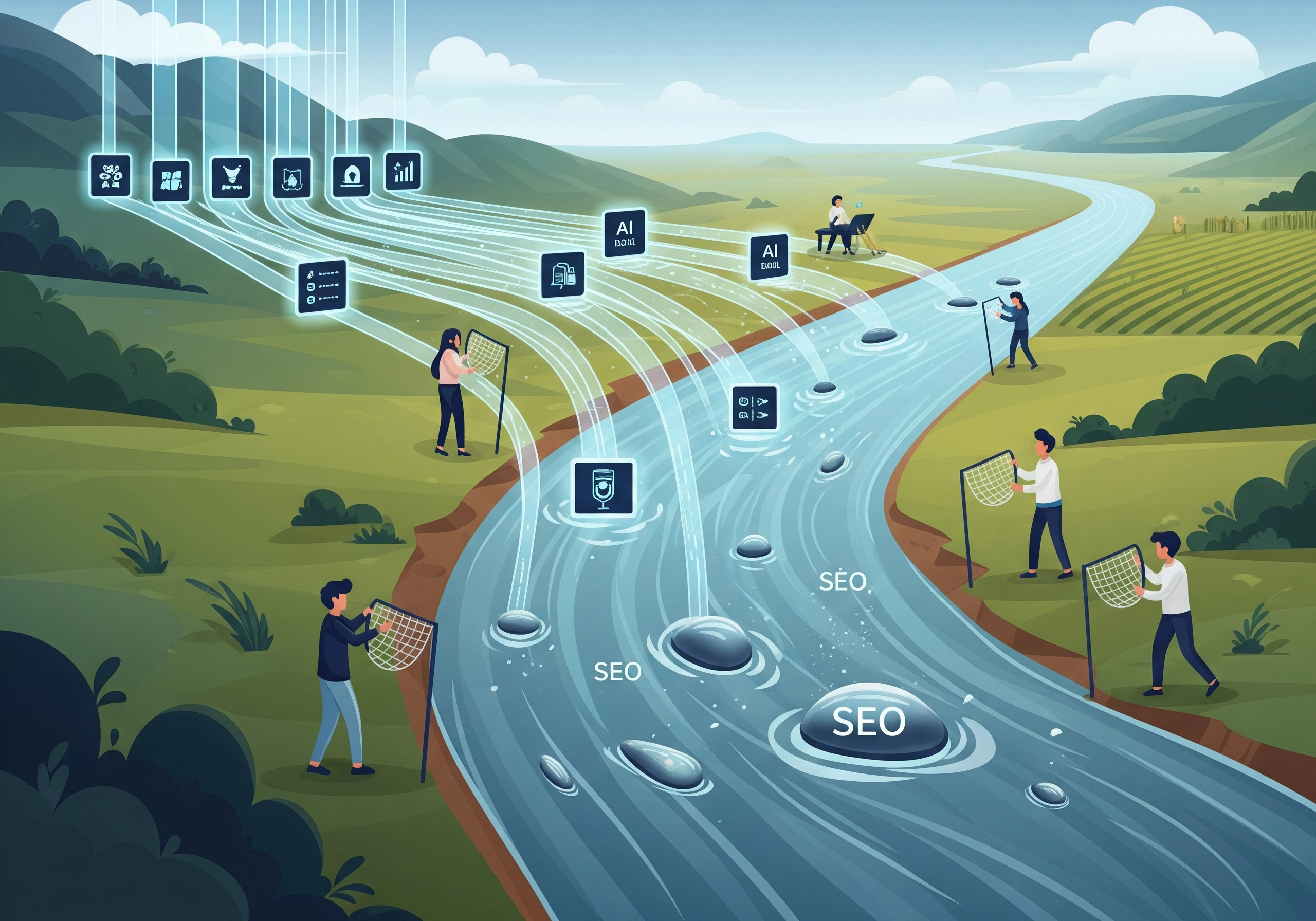
A tool’s price tag rarely reflects its full cost. The true expense often comes from the friction it adds to your content pipeline. An AI writer might save you two hours drafting, but if it then costs three hours in formatting, SEO checks, and manual uploads, that’s no win. It’s a workflow bottleneck, plain and simple, dressed up as a bargain.
Consider the immediate friction point: the copy-paste chasm between an AI platform and your Content Management System (CMS). With many top AI content writing tools, you’ll generate text in one tab, copy it, paste it into WordPress or another CMS, then spend considerable time reformatting headings, lists, and blockquotes. This manual transfer often makes productivity gains from AI generation evaporate. It’s a tedious, error-prone step, one more sophisticated tools are designed to eliminate.
Workflow specialists like Jasper and Copy.ai, frequently cited as best AI writers, aim to bridge this gap by acting as central hubs. They provide team collaboration features, letting multiple users work from a shared brand voice library and access common templates. This marks a clear step up from basic text generators; it positions them as platforms for standalone AI writing, not just simple tools. For content teams, this shared context is essential.
True workflow automation, however, pushes beyond mere writing. A truly integrated system treats content generation as just one component of a much larger process. The objective isn’t simply writing an article; it’s getting a fully optimized, ready-to-publish post live with minimal human intervention. This means automating the entire lifecycle, a task a complete AI blog writing platform manages from start to finish. It’s the difference between a tool that helps you write and an agent that helps you publish.
Such platforms handle tedious pre-writing and post-writing tasks. Instead of you using a separate tool to scrape keywords from a URL or manually crafting metadata with a meta tag generator, the system does this work for you. It finds and inserts relevant images, adds internal and external links, and pushes the final post directly to your blog, often including scheduling options.
This integration level directly impacts search performance. Effective AI SEO content generation needs more than just keyword-rich text; it demands proper structure, metadata, internal linking, and adherence to technical best practices. When your AI writing tool disconnects from your CMS, you bear the full burden of perfecting all these elements. Fully integrated SEO AI tools from a provider like GenWrite build these components into the generation process, significantly cutting down potential human error during final SEO optimization for blogs. The focus moves beyond mere AI-powered content writing to comprehensive content performance.
The future is hybrid: why ‘helpful content’ demands a human touch
So, you’ve plugged an AI writer into your content workflow, and drafts are churning out like crazy. It’s tempting to just hit publish and move on. But that last step—the human review—that’s where the magic happens. Honestly, it’s what makes content actually rank instead of just disappearing into the void.
Let’s be real about Google’s Helpful Content updates. They aren’t just after spam; they’re hunting for genuine experience and expertise. What does ‘helpful’ truly mean to Google? It means you’re bringing something fresh to the conversation, not just regurgitating the top three search results. This is exactly where raw, unedited AI content falls short. It can’t share a personal story about a marketing campaign gone wrong or a unique insight from a customer chat.
The 80/20 rule of human-AI collaboration
Think of AI as your super-efficient research assistant. It can whip up a solid, SEO-friendly first draft in minutes, easily saving you 60-80% of the initial writing time. It’ll nail the structure, drop in keywords, and handle the basic explanations. But that final 20%? That’s all you. That’s where you infuse your brand’s unique voice, weave in a story only you can tell, or even challenge some common assumptions.
This hybrid approach isn’t just a good idea; it’s the only way forward that actually lasts. You’re leveraging a tool for its strengths—speed and data synthesis—while saving human creativity for what it does best: connecting with other people. The best-performing articles always get this manual polish. It’s a crucial step, and it’s why we built our whole philosophy at GenWrite around this partnership. You can learn more about us and how we approach this collaboration.
Why your edits are your competitive advantage
Every time you fix an AI’s clunky phrasing, add a personal example, or link to your own proprietary data, you’re boosting your content’s ‘Information Gain.’ You’re giving readers (and search engines) a solid reason to pick your article over the ten other AI-generated pieces on the same topic. The aim isn’t just grammatical correctness; even the best AI blog post generator tools still need a human touch to create truly original work.
Ultimately, AI content quality isn’t set when the text is generated, but when it actually gets published. Running your draft through an SEO content optimization tool and then layering on your own expertise? That’s the smart workflow for any modern content team. Sure, you can even use a tool to humanize AI text, but nothing beats your authentic input. Skipping this step is a big gamble, especially since you can easily use a simple AI content detector to check how robotic your draft looks before it ever goes live.
Making your move: a final recommendation for your content needs

The right tool depends on the job. You can’t skip human oversight, so your final AI writer decision comes down to what you’re trying to do and how much of the process you want to handle yourself. There’s no single best AI blog generator. Just the one that works for you.
For the SEO agency
If your team lives and breathes SERP analysis and keyword density, Surfer AI’s probably for you. It tears apart competitor content to build an optimized brief. That’s its strength. The downside? It’s only one piece of the pipeline. You’re still on the hook for research, editing, internal linking, and publishing. Don’t forget that. It’s powerful, but you’ll need to run it yourself.
For the enterprise team
Got ten writers who all need to sound like one founder? Brand voice is everything. Tools like Jasper work well here. Their strength isn’t top-tier SEO. It’s maintaining a consistent tone across a big organization. It solves a coordination problem, not a traffic one. A necessary function for big companies.
For the small business or solopreneur
No time for deep SEO analysis? No budget for a big content team? You need efficiency that gets results. You need an engine. We built GenWrite for that. It isn’t just a writer. It’s a full blogging agent. It handles keyword research, competitor analysis, writing, and even auto-posting to your site. All of it. You can see examples of the final output on our AI-generated blogs page. This approach is for users who want to set a strategy and let the machine drive traffic.
Plenty of AI writing tools exist for content creators. Your choice simplifies once you nail down your main goal. Granular control? Brand consistency? Automated growth? Your answer tells you which tool to pick. The real goal isn’t just publishing. It’s building a system that consistently pulls in the right audience.
Tired of generic AI content that tanks your rankings? See how GenWrite automates SEO research and content creation, so you can publish helpful, high-ranking articles faster.
People Also Ask
What is ‘Information Gain’ in AI content generation?
Information Gain refers to content that provides unique insights, data, or perspectives not readily found elsewhere, especially not in the top search results. The best AI tools are moving beyond just summarizing existing info to actually contributing something new, making your articles stand out.
How can AI tools help maintain a consistent brand voice?
Many advanced AI writers, like Jasper, offer ‘Brand Voice’ features. You can train them on your existing content, allowing the AI to learn and mimic your specific tone, style, and terminology. It’s a huge step up from generic AI output.
What are the risks of ‘Sea of Sameness’ and ‘Hallucination Loops’?
The ‘Sea of Sameness’ is when AI generates repetitive sentence structures and generic phrasing, making content bland. ‘Hallucination Loops’ occur when the AI confidently states false information or makes up facts and figures. Both can seriously hurt your content’s credibility and SEO.
Can AI truly replace human editors for blog posts?
Honestly, no. While AI can drastically speed up the first draft, human editors are crucial for ensuring factual accuracy, adding unique insights, refining the narrative flow, and injecting genuine personality. It’s about a hybrid approach, not full automation.
Which AI blog post generator is best for SEO?
Tools like Surfer AI and Frase are built with SEO at their core. They analyze competitor content, suggest keywords, and optimize output based on real-time SERP data, giving you a significant edge in rankings. They’re great if technical optimization is your top priority.
How much does an AI-generated blog post typically cost?
The cost can vary widely, but AI-generated content often ranges from $0.50 to $5.00 per article, depending on the tool and features used. This is significantly cheaper than hiring human freelancers, making it an attractive option for scaling content production.