
Does AI SEO Content Generation Actually Improve Your Rankings?
The big question: does AI content actually land on page one?

Alright, let’s cut to the chase. Can you just hit a button on an AI tool, publish what it spits out, and magically land on Google’s page one? Not long ago, everyone worried about penalties. But Google’s changed its tune on AI content. They’ve made it pretty clear: helpful content gets rewarded, no matter how you make it. So, that old fear of getting penalized? Mostly a ghost story these days.
The real problem with AI content ranking isn’t about getting punished. It’s pure competition. Your article doesn’t exist in a bubble; it’s fighting for space against dozens of other pages. Guess what? A lot of those were probably cranked out by an AI SEO content generator too. The real question isn’t ‘Is this AI?’ but ‘Does this offer anything new?’ If your piece just rehashes what the top ten results already cover, why on earth would Google bother ranking it?
That’s the trap, isn’t it? Just relying on automation without a solid strategy. When everyone’s got the same tools, that competitive edge vanishes. Pumping out text that just copies the SERPs? That’s a race to the bottom, creating a vast ocean of generic content that gives readers absolutely nothing fresh. This whole approach completely misses what search engines are actually trying to do: link users with truly useful, smart, and unique information.
So, how do you get out of this mess? The trick is shifting your perspective. Don’t see an ai seo content generator as some magic one-click fix. Instead, think of it as a seriously powerful assistant. The real aim isn’t just to churn out content, but to create better content, and do it faster. This means letting AI handle the grunt work: research, outlining, and those initial drafts. Meanwhile, a human expert steps in to add the unique insights, personal stories, and critical thought that AI simply can’t fake. Whether an ai seo article writer actually helps rank content hinges entirely on this human-AI collaboration. Raw AI output will struggle to be seen, but AI-assisted human content? That’s what can truly dominate.
Unpacking the two main approaches: ‘pure AI’ versus ‘cyborg’
The debate over AI’s ranking potential splits into two distinct operational models. The first is the ‘pure AI’ approach: set a topic, push a button, and publish whatever the machine generates. It’s a strategy built entirely on speed and volume, aiming to flood the SERPs with content faster than any human team ever could. The allure is obvious, but it carries a significant, often overlooked, risk.
The trap of ‘AI sameness’
This risk is AI sameness. Because most content tools pull from the same foundational Large Language Models (LLMs), they often produce articles with identical structures, predictable insights, and a generic tone. They echo the most common information already available online, creating a sea of derivative content that offers no new value. Search engines are designed to filter out this kind of low-effort material, and there are many common misunderstandings about SEO content writing software that lead teams down this path.
This is where the second, more sustainable model emerges: the ‘cyborg’ approach. It’s not about replacing the writer but augmenting them. The AI becomes a powerful assistant, not the final author.
Adopting the cyborg approach
In this human-in-the-loop workflow, the AI handles the heavy lifting. It performs the initial research, outlines a structure based on top-ranking competitors, and generates a first draft. This process transforms the writer’s role from raw creation to strategic refinement. Instead of staring at a blank page, the human expert injects unique experience, adds proprietary data, and refines the tone,the very elements that satisfy Google’s E-E-A-T (Experience, Expertise, Authoritativeness, and Trustworthiness) criteria. This is how AI blog post generators really change your workflow, shifting focus to high-value editorial tasks.
Platforms like GenWrite are built for this methodology. By automating the foundational steps of keyword-driven blog writing and competitor analysis, the system frees up human experts to do what they do best: provide the unique perspective that an algorithm simply cannot replicate. The choice isn’t just about efficiency; it’s about creating content that is defensible and genuinely valuable.
Key tools under the microscope: Writesonic, Rytr, and Frase compared

Some AI writing tools can generate a draft up to 10 times faster than a human can. This raw speed, epitomized by platforms like Writesonic, defines one major camp in the AI SEO world: content at scale. It connects to Google’s search data in real-time to produce articles that mirror what’s already ranking, making it a powerful engine for agencies that need to produce dozens of landing pages or product descriptions quickly.
But speed isn’t the only metric that matters. Frase represents the opposite philosophy. Instead of prioritizing generation speed, its core function is SERP analysis. It dissects the top 20 search results to identify semantic gaps and questions competitors haven’t answered. This ‘Information Gain’ approach is built for SEO specialists who see content not as a commodity to be produced, but as a strategic asset to be engineered. Frase is fundamentally a research-first tool for building data-backed briefs, while Writesonic is a generation-first platform.
Then you have tools like Rytr, which operate in a different category altogether. With over 40 specific use cases, Rytr’s low-latency model is optimized for short-form copy,think ad headlines, social media updates, and meta descriptions. While you can technically write a blog post with it, its strength isn’t in deep structural SEO. It’s a versatile tool for solo creators on a budget, but it won’t give you the SERP-driven insights of Frase or the rapid long-form output of Writesonic.
Choosing your workflow
The decision between these tools reflects a fundamental choice in content strategy. There is no single best ai for seo content; there is only the best tool for a specific job. If you’re just getting started, understanding how to approach an ai content generator is the first critical step.
| Tool | Primary Focus | Ideal User | Key SEO Strength |
|---|---|---|---|
| Writesonic | High-volume generation | Agencies, content marketers | Speed, topical relevance |
| Frase | Deep SERP analysis | SEO specialists, strategists | Information gain, competitor gaps |
| Rytr | Short-form versatility | Solo creators, social media managers | Metadata, ad copy |
Ultimately, the goal is to find a platform that aligns with your process. Advanced systems like GenWrite are working to merge these functions, pairing high-speed generation with the kind of deep competitor analysis that was once the domain of specialized research tools. This creates a more integrated workflow where you don’t have to sacrifice analytical depth for production speed.
When to reach for a research partner versus a drafting assistant
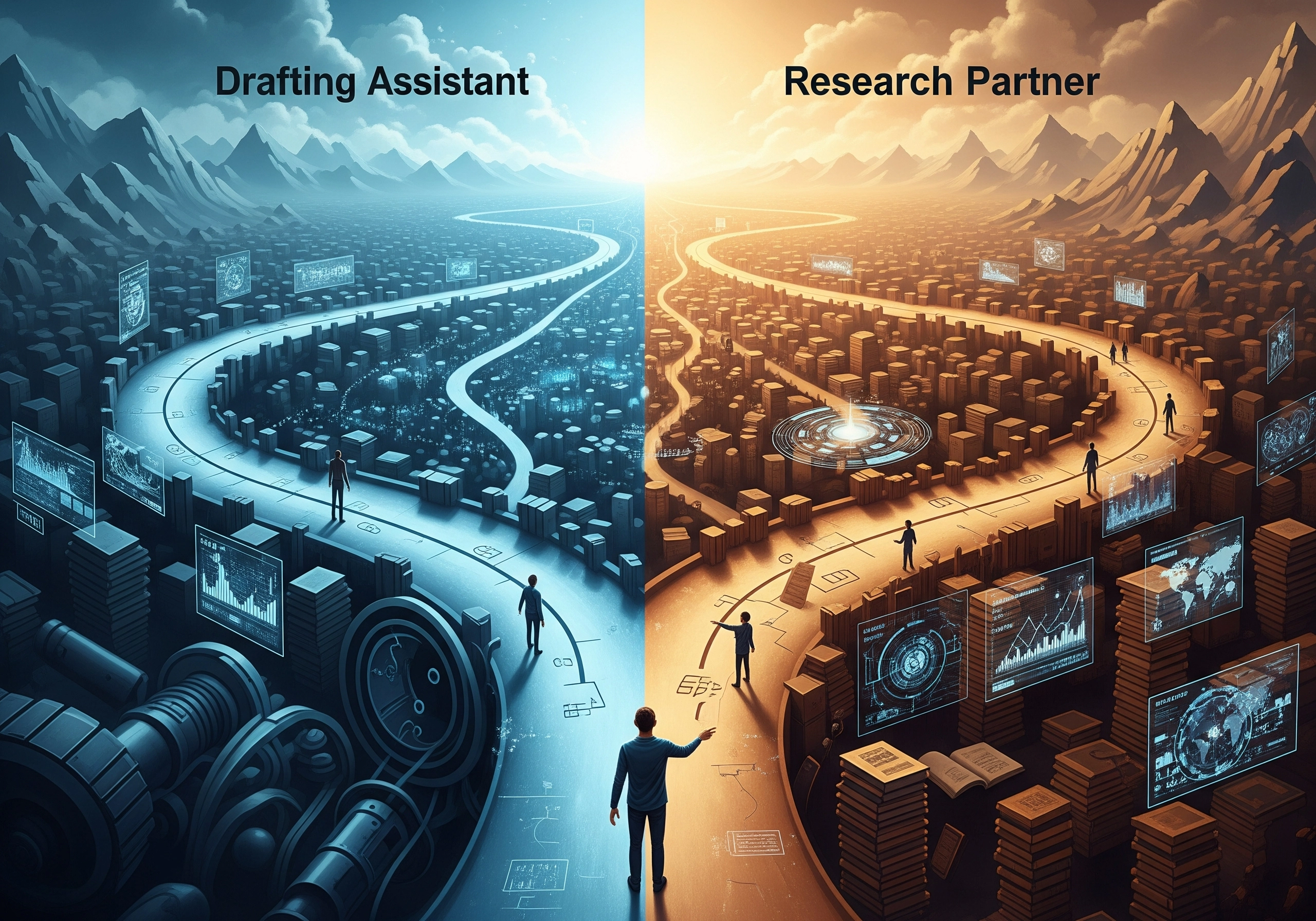
Imagine you’re a content lead, tasked with scaling output. You need 15 blog posts targeting competitive keywords and another 50 social media posts to promote them. The budget’s tight, too. The real question isn’t just whether to use AI, but which kind of AI you should deploy for each task.
Your first instinct might be to grab a writing-first AI. Think of it as a drafting assistant on steroids. Tools like Jasper or Rytr are great at this; they’re fantastic for whipping up social media copy, ad variations, or even a quick email draft. They’ve got tone and style down. But they largely operate in a vacuum, completely unaware of the competitive SERP landscape. They’re ideal for quick, standalone tasks, like using a meta tag generator to churn out catchy descriptions.
Now, for those 15 strategic blog posts, your goal isn’t just creation; it’s winning organic traffic. That’s where you need a research partner. An SEO-first AI tool isn’t just about writing; it dives deep into the search landscape. It pulls apart top-ranking content, pinpoints semantic keywords, and builds an article structure that search engines will love. That’s what modern SEO optimization for blogs is all about. The focus shifts from simply getting words on a page to getting the right words in the right order to satisfy user intent.
So, what you pick really comes down to the job’s goal. For high-volume, low-stakes content where creativity is the main driver, a simple writing assistant is fine. But for any content central to your SEO strategy, you’ll need a tool specifically designed to rank. When every position counts, a platform handling automated on-page SEO writing becomes non-negotiable. The smartest AI content strategy often blends both approaches. That’s why a good AI writing tool combining solid research with quick drafting can be incredibly effective. When you’re looking at options, sure, check the pricing. But more importantly, ask yourself if the tool’s main strength truly matches what your content needs to achieve. You can read more about us and our approach to solving this exact problem.
Real-world impact: successes and struggles from the front lines
Imagine your organic traffic shooting up 300% in just a few months. That’s exactly what SEOwind’s team saw. But their success wasn’t about simply turning on an AI and walking away. It was a clear win for the “cyborg” approach. They let AI handle the grunt work of first drafts and SERP analysis. Then, their human experts spent hours on each piece, adding proprietary data, personal stories, and a truly unique perspective.
Their ai content ranking success happened because they treated AI like a super-fast junior writer, never the boss. This method directly creates the ‘Information Gain’ Google’s algorithms love. It’s the difference between just repeating what’s already on page one and actually building something that deserves to be there.
The painful but necessary cleanup
Then there are the sites that got absolutely crushed by the March 2024 Core Update. I’ve talked to founders who saw traffic briefly explode for 60-90 days with pure AI content, only for it to vanish almost overnight. This isn’t a bug; it’s the system doing what it’s supposed to. Bad user engagement signals eventually catch up, telling the algorithm the content isn’t actually helpful.
This forced many teams, like the content marketers at O’Callaghan, into the tough job of pruning low value content. They had to find and delete hundreds of thin, AI-generated articles that were dragging down their site’s overall standing. Sure, their total indexed pages dipped at first. But what followed was a solid recovery and stable rankings for their most important stuff. Sometimes, you just have to chop off the dead branches to help the tree grow stronger.
Finding a sustainable workflow
The best ai content case studies show one thing: winning isn’t about finding the perfect prompt. It’s about building a smarter production line. Teams like Userpilot have fine-tuned their process to use AI for very specific tasks. Think using a keyword scraper from a URL to figure out competitor angles or quickly summarizing research documents. This frees up their strategists to focus on crafting compelling stories and finding fresh insights.
The takeaway from the trenches is pretty simple. AI can get you started way faster than before, but it won’t win the whole thing for you. Building a toolkit of essential AI SEO writing tools like those in the GenWrite suite means boosting your team’s smarts, not replacing them entirely.
What Google’s updates actually mean for your AI content

The mixed results from the front lines aren’t random; they stem from a basic misunderstanding of Google’s priorities. The real debate isn’t human versus machine; it’s always been about value versus spam. Google’s official stance is straightforward: they don’t penalize content just for being AI-generated. Instead, the google ai content policy zeroes in on the intent. If the main goal is to manipulate search rankings by churning out low-quality material at scale, the creation method doesn’t matter. That’s spam.
The March 2024 core update’s impact
The march 2024 core update sharpened this distinction, fully integrating the helpful content system into its main ranking algorithm. This wasn’t a minor adjustment; it was a structural shift meant to demote unoriginal content. Google reported this led to a 45% reduction in low-quality results.
The update also refined the policy on “scaled content abuse.” This targets generating many pages with little to no value, regardless of whether automation, humans, or a combination produces them. The system now identifies patterns of low-value, mass-produced content, moving beyond just the digital fingerprints of an AI writer.
E-E-A-T: your best defense
Here’s where the eeat guidelines (Experience, Expertise, Authoritativeness, Trustworthiness) really matter. They act as a practical filter for what Google terms “Information Gain”—essentially, does your content offer new insight or value not already in the top search results?
Simply rehashing what others have said fails this test. Content showing firsthand experience or unique analysis, however, passes. This means you’re adding original data, a novel perspective, or synthesizing information in a new way. For instance, using a tool like a YouTube video summarizer to distill key points from an expert interview, then layering on your own analysis, offers far more value than a generic article.
The aim for any AI-assisted workflow, including those using GenWrite, is to create content an expert would trust and a reader would find truly valuable.
Making your move: integrating AI for lasting ranking power
After all those Google updates, what’s the real play? It’s easy to see this as humans against machines, but that’s a losing battle. The only way to truly boost rankings with AI is to work with it, not replace people. Imagine your AI as an incredibly sharp junior strategist. It tackles the heavy lifting, leaving you to bring the essential, human touch.
A smart ai content generation strategy has layers. You’ll use AI to whip up outlines from SERP analysis, draft meta descriptions, or group keywords. This frees up your human experts. They can then do what they’re best at: adding unique data, sharing personal stories, and injecting a brand voice that truly resonates. Skip that human layer, and you’ll land right in the ‘AI sameness’ trap. Your content might be optimized, sure, but it’ll feel hollow.
This is where picking the right tools really matters. Some are great for simple, repetitive stuff. Others, like GenWrite’s engine, handle the grunt work of research and first drafts, prepping things for your expert polish. You could use an AI ChatPDF feature to grab key stats from a big industry report in seconds. But remember, it’s your take on those numbers that makes them valuable. The best seo writing ai isn’t some ‘fire-and-forget’ weapon; it’s a smart co-pilot for your brain.
Look, the point isn’t just pumping out more content. It’s about building valuable assets that truly belong in search results and actually help people. AI gets you to the starting line way faster than before. But your insights, your edits, and your dedication to being genuinely helpful? That’s what wins the whole thing.
Struggling to create SEO content that actually ranks? See how GenWrite automates research and drafting, letting you focus on adding that essential human expertise.
People Also Ask
Can AI content get penalized by Google?
Yes, Google’s recent updates have significantly reduced unhelpful, unoriginal content, much of which was unedited AI bulk generation. If your AI content lacks unique value or expertise, it’s at risk of being penalized.
What is the ‘cyborg approach’ to AI content?
The ‘cyborg approach’ means using AI for the heavy lifting like research and drafting, but then having a human inject crucial expertise, experience, and unique insights. It’s about blending AI efficiency with human judgment for superior content.
How do tools like Writesonic and Rytr differ for SEO?
Writesonic often focuses on SEO-first features like SERP analysis and competitor gap identification, making it great for data-driven strategies. Rytr tends to be more writing-first, excelling at speed and creative output for shorter content types.
What is the ‘AI sameness’ trap?
The ‘AI sameness’ trap happens because many AI tools use similar LLMs, often producing identical content structures and insights. This generic output struggles to provide the unique value needed to stand out and rank high.
Is it better to use an AI research partner or a drafting assistant?
It depends on your needs. If you need deep data analysis and SERP insights to guide your content, a research partner tool is better. If you’re mainly looking to overcome writer’s block and speed up drafting, a writing assistant might be more suitable.
How important is E-E-A-T for AI-assisted content?
E-E-A-T (Experience, Expertise, Authoritativeness, Trustworthiness) is more vital than ever. Google prioritizes content demonstrating these qualities. AI can help draft content, but humans must add the genuine experience and expertise to satisfy E-E-A-T signals.