
What happens when your AI content saas generates factual errors?
Introduction
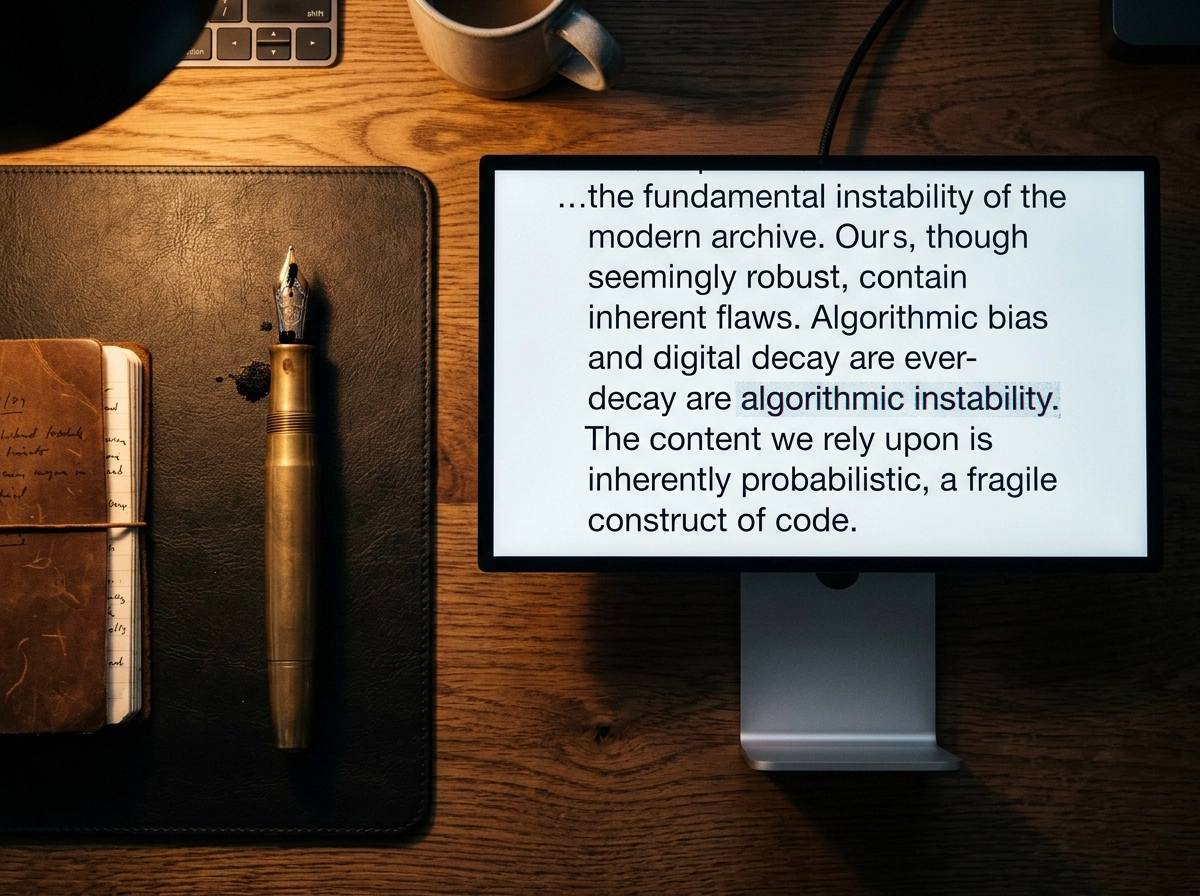
Imagine publishing a technical breakdown for your latest software update, only to realize forty-eight hours later that the AI hallucinated a non-existent integration. This isn’t a minor typo; it’s a structural failure in trust.
While we’ve moved past treating an ai content saas as an experimental toy to seeing it as a baseline necessity, the risks have scaled alongside the adoption. These probabilistic engines don’t ‘know’ facts; they predict the next likely token based on statistical patterns. Results aren’t always predictable when you’re dealing with LLMs that prioritize fluency over factuality.
But in the B2B world, where your authority is your primary currency, an invisible error in a compliance report or a technical blog post can be devastating. Unlike a broken line of code that crashes a page, a hallucination stays silent. And it sits there, looking perfectly plausible, until a customer or regulator spots the discrepancy. This is why we focus so heavily on saas content writing that isn’t just fast, but anchored in reality.
Using an AI blog generator effectively requires more than just hitting ‘publish’ and hoping for the best. It’s the ability to bridge the gap between AI speed and human-led accuracy. If you aren’t actively managing the truth gap in your automated blog content workflows, you’re not just saving time,you’re accruing technical and reputational debt.
Q: Why does my AI driven content platform confidently invent fake statistics?
The problem starts when users treat an AI driven content platform like a glorified search engine. It isn’t. LLMs are probabilistic engines. They don’t “know” facts; they predict the next token based on statistical weights and high-dimensional vector proximity. It’s math, not memory.
prediction versus retrieval
When you prompt an ai writing tool for a specific stat, the model identifies a structural need for a numerical value. If that data point isn’t explicitly clear in its training weights, it generates a figure that fits the semantic context of the latent space. This is why keyword-driven blog writing often leads to hallucinations. The model prioritizes linguistic coherence over empirical truth. Even a sophisticated ai blog writer will guess if the prompt is too vague.
managing the verification gap
Fake stats are dangerous because they look so plausible. Using an automated content creation tool effectively requires a serious fact checking AI writing layer. At GenWrite, we view the AI as a high-speed engine, but the human is always the one steering. You can’t outsource the truth.
So, how do you fix this? You can link automated-on-page-seo-writing to verified datasets, but the safest bet is using the AI for the skeleton. Let it manage content-structure-internal-linking and your seo-content-optimization-tool strategy. Then, manually drop in your own verified data. Don’t let an ai text generator for blogs burn your brand’s authority just to save five minutes.

Q: Who is legally responsible when the software for blog writing gets the facts wrong?
The hard truth is that you own the errors your AI produces. SaaS providers aren’t legal shields. If your blog publishes a libelous claim or a dangerous medical tip, the liability doesn’t magically transfer to the software developer. It stays with the publisher.
Most software for blog writing includes standard terms of service that explicitly state the user is responsible for the final output. This isn’t just fine print; it’s the foundation of the industry. You’re the one hitting the “publish” button. That action constitutes a legal endorsement of the facts within the text.
The industry standard is a human-in-the-loop requirement. Platforms like GenWrite are built to handle the heavy lifting, but they don’t replace the need for an editor. Relying on an AI writing platform without a verification step is a recipe for disaster.
Think about editorial workflow automation as a way to scale, not as a way to abdicate duty. If the AI hallucinates a fake statistic, you’re the one who looks incompetent to your clients. And you’re the one who pays the legal fees if things go south.
Legal departments don’t care about probabilistic prediction engines. They care about who signed off on the copy. So, use these tools to boost your SEO, but never let them fly solo.
Why RAG is the architecture you should actually care about

The legal burden of accuracy sits on your desk. You can’t gamble on an LLM’s internal memory. Most AI content saas tools are just high-end predictive text engines. RAG changes the math. It’s a hard pivot from guessing to checking.
Instead of pulling a “fact” from a black box of training data, RAG forces the model to read a verified source before it types. Think of it as an open-book exam. This is exactly why automated news publishing relies on it—when you’re public-facing, a hallucination is a PR disaster you can’t walk back.
Grounding output in reality
RAG locks the model into a closed information loop. When GenWrite tackles a technical topic, it isn’t just hallucinating prose. It’s synthesizing data from a specific context you provide. This structure is the only way to moving away from generic prompts that usually trigger the hallucinations we’ve seen before.
But don’t treat RAG like a magic wand. It’s still subject to the “garbage in, garbage out” rule. If your source material is trash, the AI will just parrot that trash with unearned confidence. The retrieval phase is where the real work happens.
Why content accuracy needs RAG
In B2B, “plausible” is a failure. You need the model to cite its work. By separating the reasoning engine from the knowledge base, RAG lets you swap out data without the massive cost of retraining the whole model. It’s faster. It’s cheaper. Most importantly, it makes your content verifiable. It keeps your brand from becoming just another source of noise.
Q: How do we build a workflow that catches errors before they go live?
Imagine a content lead at a cybersecurity firm. They’ve just used GenWrite to draft a piece on data breaches. The flow is perfect, but the machine cites a “2024 Global Security Report” that doesn’t actually exist. It sounds real and fits the context, but it’s a ghost. This is where a rigid verification loop becomes your only safety net when managing automated blog content.
creating the sparring partner loop
Instead of reading for flow first, read for friction. I suggest a “Claims Audit” where you strip every statistic, name, and date into a separate list. If the AI can’t point to a specific source for that data, it’s discarded. This isn’t just about catching lies; it’s about protecting your authority and improving your fact checking AI writing habits. While this technique works for most factual claims, it can struggle with highly subjective industry opinions where the “truth” is a moving target.
We’ve seen this work effectively in editorial workflow automation where the human acts as the final gatekeeper. The goal is to spend 80% of your time on verification and only 20% on the actual generation. It’s a complete reversal of the traditional writing process, but it’s the only way to scale without sacrificing trust.
focus on aeo and source grounding
But accuracy isn’t just about avoiding embarrassment. When you’re optimizing for answer engine optimization, the stakes are even higher. Modern search engines reward precision over volume. So, use the AI to generate counter-arguments to its own draft. Ask it: “Which claim in this article is most likely to be factually disputed?” It’s surprisingly good at spotting its own weak points when prompted as a critic rather than a creator.
Conclusion & Key Takeaways

So, where does this leave your content calendar? If you’ve been treating AI like a magic wand, it’s time to swap that for a magnifying glass. The real winners in this era of SaaS content strategy won’t be the ones who hit ‘publish’ the fastest, but the ones who blend speed with a relentless commitment to human-verified facts.
You’ve seen how easy it is for a model to hallucinate a statistic that sounds perfectly reasonable but is entirely fabricated. That’s a risk your reputation can’t afford. Platforms like GenWrite are built to handle the heavy lifting of ai blog creation, taking care of the SEO optimization and keyword research that usually eats up your afternoon. But the actual value you provide is still the layer of expertise you add on top.
Think of it this way: AI builds the engine, but you’re the driver who knows when the road is getting slippery. It’s about shifting your mindset from being a writer to being an editor-in-chief. You’re verifying the logic, checking the tone, and ensuring that every claim stands up to scrutiny.
Will AI eventually get better at self-policing? Maybe. But right now, your ability to verify and refine is what keeps your readers coming back. If you aren’t putting in that final 10% of effort, you’re just contributing to the noise. What’s the one fact in your latest draft that you haven’t double-checked yet? Go find it.
If you’re tired of manually fact-checking every paragraph, GenWrite handles the heavy lifting by grounding content in real data so you can focus on strategy.
People also ask
Why does my AI driven content platform confidently invent fake statistics?
AI models are just fancy prediction engines, not databases. They don’t ‘know’ facts; they’re just guessing the next most likely word in a sentence based on patterns. That’s why they can sound incredibly confident even when they’re totally wrong.
Who is legally responsible when the software for blog writing gets the facts wrong?
Almost every SaaS provider puts the burden on you in their terms of service. They expect a human to review everything before it goes live. If you publish a hallucination, it’s usually your brand’s reputation on the line, not theirs.
How do we build a workflow that catches errors before they go live?
Treat the AI like a junior researcher rather than an expert. You’ll need to cross-reference every statistic against primary sources and verify all citations manually. Honestly, most teams find that keeping a human in the loop is the only way to stay safe.
Does RAG actually solve the problem of AI hallucinations?
It helps a lot because it forces the AI to look at your specific, verified data before it answers. It’s not a magic bullet, but it’s way better than letting the model guess from its general training data.