Navigating the SEO Landscape: Essential Fundamentals for Website Owners
What Exactly is SEO and Why Does it Matter for Your Website?

In the vast digital landscape, simply having a website isn’t enough to connect with your audience. How do you ensure potential customers or readers find your offerings amidst the overwhelming digital noise? This is precisely where Search Engine Optimization (SEO) becomes indispensable.
At its core, SEO is the strategic and continuous process of enhancing your website’s visibility within search engine results pages (SERPs). It’s about optimizing your digital presence so that when someone searches for products, services, or information relevant to your business, your site appears prominently.
For beginners, understanding SEO for beginners means grasping that it’s not a quick fix but a long-term investment in your online success. It involves meticulously improving various aspects of your site to make it more appealing and comprehensible to search engine algorithms. This strategic approach defines what is SEO and how it works in practice, aiming to secure those coveted top rankings.
SEO transforms your website from a hidden gem into a highly visible storefront.
The profound importance of SEO stems from its power to drive organic traffic—visitors who discover your site naturally through search, rather than paid advertisements. This organic visibility is not only cost-effective in the long run but also builds immense credibility and trust with your audience. Users inherently place greater faith in search results that appear organically, viewing them as more authoritative and relevant.
Beyond just traffic, a robust SEO strategy offers critical insights into your target audience’s search behaviors and intent. This knowledge allows you to refine your content, products, and services to meet their needs more precisely, creating a virtuous cycle of relevance and engagement. Embracing SEO isn’t just about rankings; it’s about building a sustainable, authoritative online presence that continuously attracts and serves your ideal audience. For a more comprehensive look at the fundamentals, consult this Beginner’s Guide to SEO.
How Do Search Engines Find and Rank Your Content?
Ever typed a question into a search engine and been amazed by the instant, relevant results? This digital magic is powered by a three-step process: crawling, indexing, and ranking. Understanding these fundamental stages is key to unlocking the secrets of search engine operations and mastering how SEO works.
Discovering the Web: The Crawl
Imagine tiny digital explorers, known as spiders or crawlers, constantly navigating the internet. These automated bots follow links from one webpage to another, uncovering new content and revisiting existing pages to check for updates. They meticulously read the code and text of each page, gathering raw data to send back to the search engine’s vast servers.
This relentless exploration ensures the search engine maintains a dynamic, comprehensive map of the ever-expanding digital universe.
Organizing Information: The Index
Once a page is crawled, its content is analyzed and processed. The search engine extracts crucial details like keywords, topics, media types, and the overall context of the page. This information is then meticulously organized and stored in an immense database called the search index.
Think of this index as the world’s largest library, with every piece of web content cataloged and ready for retrieval. A well-indexed website means the search engine has successfully understood and stored its content, making it discoverable.
Determining Relevance: The Ranking
When you perform a search, the engine doesn’t just present every page from its index. Instead, sophisticated algorithms spring into action to identify the most relevant and authoritative results. These algorithms evaluate hundreds of ranking factors – from content quality and freshness to website speed, mobile-friendliness, and the strength of incoming backlinks.
The ultimate goal? To provide the most accurate and trustworthy answer to your query. This intricate evaluation is precisely how search engine optimization works to boost your site’s visibility. By optimizing your website for these factors, you significantly increase your chances of ranking higher. For beginners, understanding website optimization is crucial. For a more technical overview, consider this basic search engine optimization tutorial.
Ranking is the final, critical stage where search engines align user intent with the best content available, prioritizing relevance and authority above all else.
Where Should a Beginner Start Their SEO Journey?
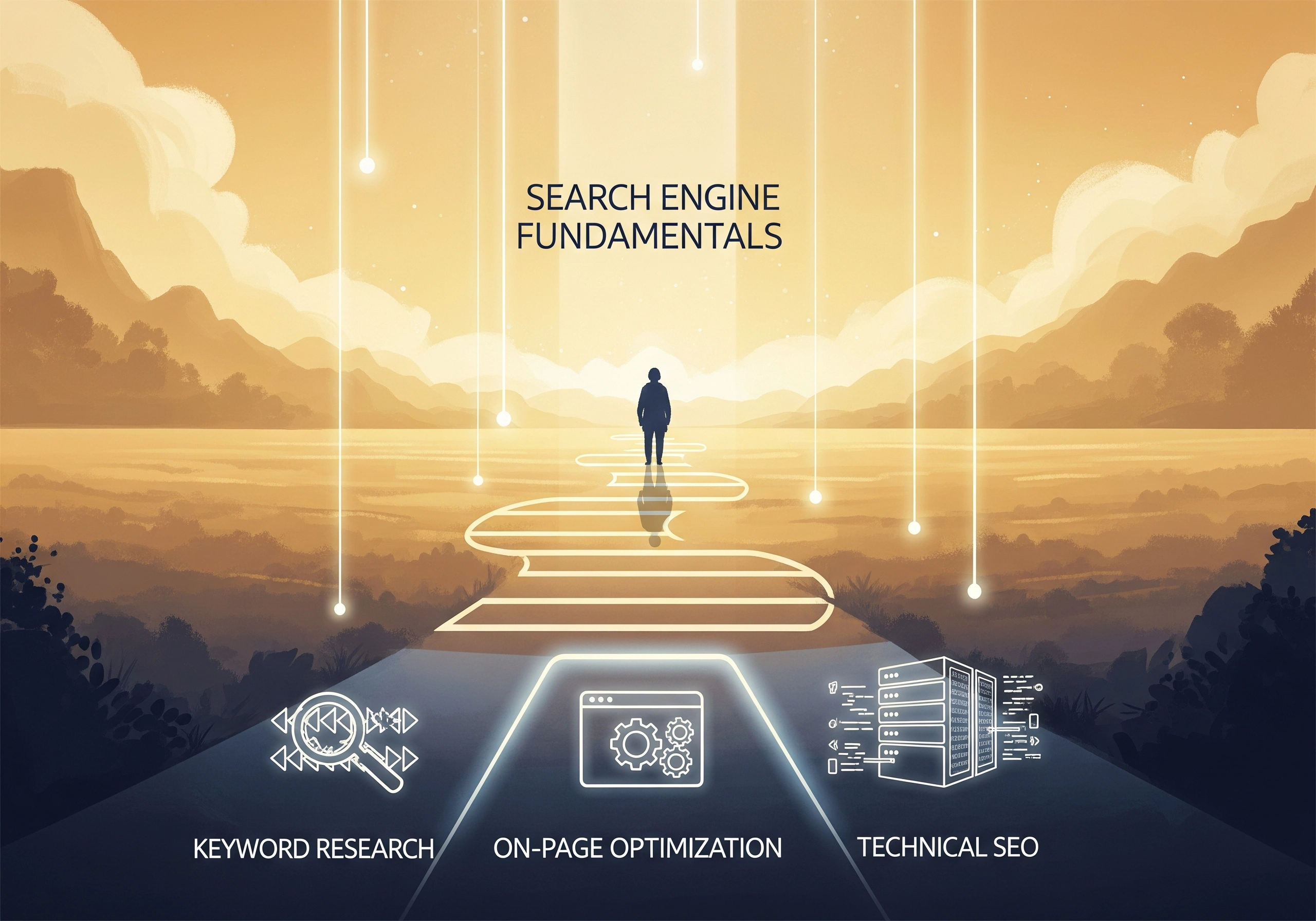
Embarking on the path to Search Engine Optimization (SEO) can feel like navigating a dense fog, filled with complex algorithms, elusive keywords, and technical jargon. Many new website owners find themselves adrift, unsure of where to begin. The most effective strategy isn’t to conquer every SEO element simultaneously, but to build a strong, foundational understanding of its core principles.
Decoding the Search Engine Compass: Understanding the Fundamentals
Before diving headfirst into tactics, invest time in grasping how search engines operate. This doesn’t mean memorizing Google’s hundreds of ranking factors. Instead, focus on the fundamental concepts: crawling, indexing, and ranking. Recognizing that search engines prioritize user experience, content relevance, and authoritative signals will serve as your guiding compass for all future SEO decisions.
A firm grasp of search engine mechanics is your indispensable first step.
Step 1: The Cornerstone of Keyword Research
Your initial practical endeavor should be comprehensive keyword research. This vital process involves identifying the precise terms and phrases your target audience uses when seeking information, products, or services. Without this insight, your content creation efforts are akin to shooting in the dark. Tools like Google Keyword Planner are invaluable for uncovering search volume and competition levels, directly informing your content strategy.
By deeply understanding search intent, you can craft content that truly resonates with your potential visitors, forming the bedrock of any successful “beginner’s guide to SEO.”
Step 2: Mastering On-Page Optimization
Once you’ve identified your target keywords, the next logical phase is on-page optimization. This entails refining elements directly on your website’s pages to enhance their visibility and relevance for those specific keywords. Concentrate on optimizing title tags, meta descriptions, headings (H1, H3), and the body content itself. Ensure your content is not only rich with your chosen keywords but also delivers exceptional value, is highly readable, and genuinely helpful to your audience.
Correctly optimizing your pages clearly signals their relevance to both search engines and users.
For anyone looking to “learn SEO from scratch,” mastering these on-page techniques is absolutely essential. It transforms a generic web page into a precisely targeted resource. As you advance, leveraging tools like an AI content writer can significantly streamline this process, aiding you in crafting more impactful content.
Step 3: Technical Health and User Experience Synergy
While often perceived as intimidating, basic technical SEO is quite accessible. Ensure your website is mobile-friendly, loads with impressive speed, and possesses a clear, logical structure. Submitting an XML sitemap to search engines facilitates their discovery of all your important pages. These technical aspects directly influence user experience, a factor Google increasingly emphasizes. For a thorough understanding, consult a comprehensive resource like a Beginners’ Guide to SEO: How to Boost Search Visibility.
By focusing on these foundational elements, you establish a clear, actionable path forward, effectively preventing the overwhelm that frequently hinders new SEO practitioners.
Why is Keyword Research the Cornerstone of Effective SEO?
Imagine building a house without a blueprint; you might erect walls, but they won’t stand for long, nor will they serve a clear purpose. This analogy perfectly encapsulates why keyword research is not just important, but the absolute cornerstone of effective SEO.
Without understanding the precise terms your audience uses to find solutions, your content exists in a vacuum, unseen and unheard. It’s the critical first step for any website SEO for beginners, revealing the language of demand.
Unveiling Searcher Intent
The true power of comprehensive keyword research lies in its ability to unveil searcher intent. Are users looking for information, a specific product, a local service, or a comparison? Each query type represents a distinct need, and knowing this allows you to create content that directly addresses those needs.
Keywords are more than just words; they are direct signals from your target audience.
This insight transforms your content strategy from guesswork into a data-driven process. Instead of simply writing about what you think people want, you craft content around what they are actively searching for. This precision is what drives relevant organic traffic to your site.
Guiding Content Creation and Optimization
Once you’ve identified high-value keywords, they become the compass for your entire SEO strategy. These keywords inform every aspect of your content creation, from blog posts and product descriptions to landing pages and FAQs. This ensures every piece of content serves a strategic purpose, aiming to rank for specific, user-driven queries.
For instance, if your research reveals a strong demand for “eco-friendly garden tools,” you don’t just write a general article about gardening. You create detailed guides, product reviews, or comparison articles specifically targeting that phrase and its semantic variations.
The Role of AI in Modern Keyword Strategy
While manual keyword analysis is fundamental, modern seo writing tools and platforms like GenWrite can significantly streamline this process. AI-powered tools can analyze vast datasets, identify emerging trends, and uncover long-tail opportunities that might otherwise be missed. This augmentation allows you to focus on strategic implementation rather than tedious data collection.
Leveraging an AI SEO writer can help you not only discover these crucial terms but also integrate them naturally into high-quality, engaging content. This dual approach ensures your content is both discoverable by search engines and valuable to your human readers.
Effective keyword research is the blueprint for discoverability, ensuring your website not only gets found but also resonates with the right audience.
Can You Really Optimize Your Website’s Pages for Higher Rankings?

This direct control is precisely why on-page SEO is often the ideal starting point for anyone looking to enhance their digital footprint.
The Anatomy of an Optimized Page
Optimizing a page involves refining its intrinsic elements to signal relevance and quality to search engine algorithms. Think of it as meticulously preparing your content for both human readers and search crawlers, ensuring clarity and purpose. Without this foundational work, even the most compelling content can struggle to find its audience.
Crafting Compelling Content
The core of any high-ranking page is its content. This isn’t just about word count; it’s about delivering exceptional value, answering user queries comprehensively, and demonstrating expertise. For SEO for beginners, focus on creating content that is insightful, well-researched, and naturally integrates your target keywords and their semantic variants. Google prioritizes content that genuinely serves the user’s intent.
High-quality, relevant content is the magnet that attracts both users and search engines.
Optimizing Title Tags and Meta Descriptions
Your page’s title tag (<title>) is perhaps the single most impactful on-page element. It’s what appears as the clickable headline in search results and directly influences both ranking and click-through rates (CTR). Craft it to be concise, compelling, and include your primary keyword near the beginning. Similarly, the meta description, while not a direct ranking factor, acts as your page’s mini-advertisement, enticing users to click. Make it a clear, benefit-driven summary of your page’s content.
Strategic Use of Heading Tags
Heading tags (H1, H3, H4) provide structure and hierarchy to your content, making it easier for both users and search engines to digest. Your H1 should typically be your page’s main title, containing your primary keyword. Subsequent H3 and H4 headings break down complex topics into digestible sections, often incorporating secondary keywords or related concepts. This structure significantly improves readability and signals topical relevance.
Image Optimization
Images enhance user experience, but they must be optimized for performance and accessibility. Ensure images are compressed to reduce load times, and always use descriptive alt text. This alt text provides context for search engines and visually impaired users, often serving as another opportunity to include relevant keywords. You can learn more about fundamental SEO practices in this The Beginner’s Guide to SEO.
Internal Linking for Authority and User Flow
Internal links connect different pages within your own website, forming a coherent network. They help spread link equity (or “PageRank”) across your site, boosting the authority of specific pages. More importantly, they guide users through your content, encouraging longer sessions and deeper engagement. When linking, use descriptive anchor text that clearly indicates what the destination page is about. For advanced content strategies, consider how tools can streamline this process; for example, an AI SEO writer can assist in identifying internal linking opportunities within new content.
By meticulously optimizing these on-page elements, you provide search engines with clear signals about your content’s value and relevance, directly influencing its potential to rank higher.
What Common Pitfalls Should SEO Beginners Avoid?
Embarking on an SEO journey is exciting, but many beginners stumble into common SEO mistakes that can derail their progress or even trigger penalties. Recognizing these traps early is paramount; it conserves precious time and resources, allowing you to concentrate on effective strategies from the outset. Ignoring these warnings can lead to stagnation or, worse, damage your online reputation, making early avoidance essential for sustained success.
The Peril of Over-Optimization and Keyword Stuffing
A classic misstep is the belief that cramming more keywords equates to higher rankings. While keyword research is fundamental, keyword stuffing—unnaturally forcing keywords into content, meta descriptions, or title tags—is a severe error. Search engines prioritize user experience and natural language above all else. Instead of forcing keywords, the focus should be on creating high-quality, comprehensive content that genuinely answers user queries and integrates keywords organically. This approach aligns with modern SEO best practices that champion relevance and user value.
Authenticity and value consistently outperform mere keyword density.
Overlooking User Experience (UX) is a Costly Mistake
Another frequent oversight is concentrating solely on search engines while neglecting the actual human users. A website that loads slowly, has a design that isn’t mobile-friendly, or features complex navigation will drive visitors away. This signals to search engines that your site offers a poor user experience. Google’s algorithms heavily consider factors like page speed and mobile-friendliness, making a seamless experience across all devices non-negotiable for achieving higher rankings.
The Danger of Building Low-Quality Backlinks
The temptation of quick ranking boosts can lead beginners to acquire backlinks from irrelevant or spammy websites. While backlinks remain a critical ranking factor, their quality significantly outweighs quantity. Low-quality or purchased links can result in manual penalties from Google, effectively nullifying all your hard work. The recommended approach is to focus on earning natural, authoritative backlinks by creating exceptional content and engaging in genuine outreach.
Prioritize earning high-quality links over simply acquiring them.
By skillfully sidestepping these prevalent common SEO mistakes, beginners can establish a robust foundation for their online presence. This proactive approach fosters sustainable growth and helps avoid detrimental setbacks on the path to achieving greater search engine visibility. For a deeper dive into foundational knowledge, exploring resources like The Beginner’s Guide to SEO can solidify your understanding of essential best practices.
How Can AI Tools Simplify Your SEO and Content Creation Process?

In today’s competitive digital landscape, mastering SEO and content creation requires a substantial investment of time for research, drafting, and optimization. This traditional, often burdensome, approach can lead to missed opportunities and slower growth. Fortunately, artificial intelligence (AI) is revolutionizing these labor-intensive processes, transforming them into streamlined, efficient workflows that empower creators.
AI SEO Tools: Redefining Content Strategy
AI SEO tools are fundamentally changing how content strategies are developed and executed. They automate a wide array of tasks, from initial topic ideation to the final stages of optimization. For instance, an AI blog generator like GenWrite.co can be instrumental in brainstorming relevant topics, drafting initial article outlines, and even generating full pieces of content that are inherently search-engine-optimized. This capability dramatically reduces the time spent on initial drafting, freeing up valuable time for human creators to inject unique insights, expert opinions, and brand-specific nuances.
- Benefit: Significantly cuts down initial content production time.
- Focus Shift: Allows creators to concentrate on adding unique value and strategic depth.
For those looking to harness advanced capabilities, exploring how to strategically use an AI SEO writer for better Google rankings can provide deeper insights into maximizing these tools.
Automating Crucial SEO Tasks with AI
Beyond content generation, AI’s prowess extends to automating many critical SEO tasks that are vital for visibility and ranking. These tools can perform sophisticated keyword research, uncovering opportunities that might be missed through manual methods. They excel at identifying content gaps within your niche and suggesting real-time on-page optimizations to improve relevance and performance.
This predictive analytics capability empowers marketers and content creators to make swift, data-driven decisions. By acting on AI-driven insights, businesses can significantly improve their search engine visibility and boost their ranking potential in competitive SERPs.
- Key Functions: Advanced keyword research, content gap analysis, real-time on-page optimization suggestions.
- Outcome: Faster, more informed decision-making for improved SEO performance.
Augmenting Creativity, Not Replacing It
It’s crucial to understand that AI doesn’t replace human creativity; it powerfully augments it. By handling the more repetitive and data-intensive aspects of SEO and content creation, AI makes these processes more strategic and significantly less burdensome. Leveraging an AI SEO writer ensures that your content not only resonates with your target audience but also ranks effectively, demonstrating an ability to adapt to the ever-evolving landscape of search trends.
To grasp the future implications and strategic advantages, consider learning how to drive organic traffic using an AI SEO writer in 2025.
Achieving Efficiency and Superior Performance
Integrating these sophisticated AI tools into your workflow is a direct path to achieving higher operational efficiency and superior search engine performance. For a foundational understanding of SEO principles, especially in the context of AI’s growing influence, an essential SEO tutorial for thriving in the age of AI can provide valuable context and guidance.
Where Can You Find More Resources to Continue Your SEO Learning?
Mastering search engine optimization is less a destination and more a continuous journey of adaptation and discovery. The landscape evolves rapidly, making ongoing education not just beneficial, but essential for staying competitive. Fortunately, a wealth of high-quality SEO learning resources exists to help you deepen your understanding.
Expanding Your Knowledge Beyond the Basics
To truly excel, consider delving into dedicated online courses offered by reputable platforms. These often provide structured curricula covering everything from foundational principles to advanced SEO topics like technical SEO audits, international SEO, and sophisticated content strategies. Many courses also offer certifications that can validate your expertise.
Industry-leading blogs, whitepapers, and research reports are invaluable for keeping pace with algorithm updates and emerging trends. They provide real-time insights from practitioners at the forefront of the field. For instance, comprehensive guides like The Beginner’s Guide to SEO offer a robust starting point.
Continuous learning is the bedrock of sustained SEO success.
Engaging with professional communities, attending webinars, and participating in virtual or in-person conferences also offer unparalleled opportunities. These forums connect you with peers and experts, fostering an environment for collaborative learning and problem-solving. Embracing these diverse learning avenues ensures your SEO strategies remain effective and future-proof.
Ready to elevate your website’s search performance? Discover how AI-powered content creation can simplify your SEO journey with GenWrite.
People Also Ask
What is the primary goal of SEO?
The primary goal of SEO is to increase the quantity and quality of organic traffic to your website by improving its visibility in search engine results pages (SERPs). This involves making your site more appealing to both users and search engine algorithms.
How do search engines like Google determine rankings?
Search engines use complex algorithms that consider hundreds of factors to rank content. These factors generally fall into categories like relevance, authority, user experience, and technical soundness of the website. Understanding these elements is key to effective SEO.
Why is keyword research so important for beginners?
Keyword research is crucial because it helps you understand what your target audience is searching for. By identifying relevant keywords, you can create content that directly addresses user intent, ensuring your website appears in search results for the terms people are actually using.
What are the most important on-page SEO elements to focus on first?
For beginners, focus on optimizing title tags, meta descriptions, header tags (H1, H2, etc.), and ensuring your content is high-quality and relevant to your target keywords. Image alt text and internal linking are also important foundational elements.
What are common SEO mistakes beginners should avoid?
Beginners should avoid keyword stuffing, creating thin or duplicate content, ignoring user experience, and acquiring low-quality backlinks. Focusing on providing genuine value to users and building a technically sound website is a safer approach.
Can AI tools genuinely help with SEO for beginners?
Yes, AI tools can significantly simplify SEO for beginners by automating tasks like keyword research, content ideation, and optimization suggestions. Tools like GenWrite can help streamline the entire blog creation process, making SEO more accessible.