
How to Outrank Rivals by Optimizing Your AI SEO Writing Workflow in 2025
What Defines a Cutting-Edge AI SEO Writing Workflow in 2025?

The landscape of digital content creation has transformed dramatically, making what was considered advanced yesterday obsolete today. In 2025, a truly cutting-edge optimizing AI writing workflow isn’t merely about using AI tools; it’s about a sophisticated, integrated system where artificial intelligence augments human expertise at every stage, from conception to conversion.
This evolution marks a significant shift from traditional content strategies, which struggle to keep pace with the sheer volume and velocity required for competitive SEO. Businesses leveraging AI-driven SEO tools are already reporting a substantial 30-40% increase in organic traffic, underscoring the power of these advanced workflows.
The Integrated Ecosystem: Beyond Basic Automation
A modern AI content workflow is less about full automation and more about intelligent augmentation. It’s an iterative process designed for speed, scale, and uncompromising quality, ensuring content not only ranks but also resonates deeply with the target audience.
A truly advanced workflow integrates AI for tasks that demand precision and data processing, freeing human experts to focus on strategic oversight and creative refinement.
This seamless integration is what differentiates market leaders from those playing catch-up. It’s about orchestrating AI’s analytical power with human-driven insight.
Pillars of a 2025 AI SEO Writing Workflow
At its core, a cutting-edge workflow is built on several interconnected pillars, each enhanced by AI to deliver superior results.
-
Intelligent Ideation and Research: Gone are the days of manual keyword research alone. Today, AI tools analyze vast data sets to identify emerging trends, content gaps, semantic clusters, and audience intent with unprecedented accuracy. This means uncovering high-potential topics that resonate specifically with your market.
-
Precision Content Generation: While AI can generate initial drafts rapidly, the cutting edge lies in how these drafts are refined. Specialized seo ai writer tools focus on semantic richness, E-E-A-T compliance, and persuasive language. They go beyond surface-level keywords to build contextually relevant, authoritative narratives.
AI reduces content creation time by up to 50%, allowing for a higher volume of meticulously crafted pieces.
-
Dynamic Optimization and Personalization: A truly advanced workflow employs AI for real-time on-page seo optimization, ensuring headings, meta descriptions, and internal linking structures are optimized for both search engines and user experience. AI also enables personalization, tailoring content delivery based on user behavior and preferences, a critical factor given that 80% of consumers expect personalized experiences.
-
Robust Human Oversight and Refinement: Even with advanced AI, human expertise remains irreplaceable. This involves expert review for E-E-A-T, brand voice alignment, and ethical considerations. Human editors inject the nuance, empathy, and unique perspectives that AI cannot yet replicate, elevating good content to great.
This collaborative approach, where AI handles the heavy lifting and humans provide the strategic direction and final polish, defines the pinnacle of an optimizing AI writing workflow in 2025. It’s the blueprint for continuous improvement and sustained competitive advantage.
Why Are Traditional SEO Content Strategies Falling Behind in the AI Era?
The digital landscape has fundamentally shifted, rendering many once-effective SEO content strategies obsolete. What once worked — a focus on keyword stuffing and manual content creation — now struggles to keep pace with the sheer velocity and sophistication of today’s search engines and user expectations. The old playbook, built on slower cycles and less data, simply cannot compete in the AI era.
The Cracks in Traditional Approaches
Traditional SEO content generation, often reliant on individual writers or small teams, faces inherent limitations in scale and speed. Crafting high-quality, keyword-optimized articles takes significant time and resources. This bottleneck prevents businesses from capturing the breadth of long-tail search queries or rapidly responding to emerging trends.
Manual content creation simply can’t match AI’s speed and scale.
Moreover, the analytical capabilities of human teams, while invaluable for strategic direction, often fall short in processing the immense datasets now available. Identifying nuanced semantic relationships, predicting search intent shifts, or personalizing content at scale becomes a monumental, if not impossible, task without advanced tools.
Why AI Integration is No Longer Optional
The rise of AI has fundamentally redefined the competitive playing field. By 2025, AI is projected to automate up to 70% of content creation tasks, illustrating a clear shift in industry dynamics. Companies that have embraced AI-driven SEO tools are already reporting a significant 30-40% increase in organic traffic, a testament to the technology’s transformative power.
Without modern seo writing tools and seo content writing tools, businesses are disadvantaged in several key areas:
The Speed and Scale Deficit
Traditional methods cannot produce content at the volume and velocity required to dominate diverse search landscapes. AI-powered platforms can generate vast amounts of content, covering more topics and targeting a wider array of keywords, allowing for faster publishing cycles and quicker results. This agility is critical for maintaining relevance and capturing market share.
Lack of Data-Driven Personalization
In an age where 80% of consumers expect personalized experiences, generic content falls flat. Traditional strategies often struggle to tailor content effectively to individual user segments or intent signals. AI, however, can analyze user data to create highly personalized content experiences, significantly boosting engagement and conversion rates.
Inefficient Keyword and Topic Discovery
Reliance on basic keyword research tools and manual analysis misses the deeper semantic connections and emerging trends that AI can uncover. Advanced algorithms can identify content gaps, predict future search queries, and map out comprehensive topic clusters with a precision and speed that human-only efforts cannot replicate. To truly outrank rivals, leveraging these insights becomes paramount.
Embracing AI isn’t just about efficiency; it’s about unlocking strategic advantages that traditional methods simply cannot provide. For a deeper dive into integrating AI, explore How to Strategize with an AI Content Writer for Impressive Search Engine Placeme to understand how to leverage these powerful seo writing tools effectively.
How Can AI SEO Content Generators Transform Your Content Ideation and Research?
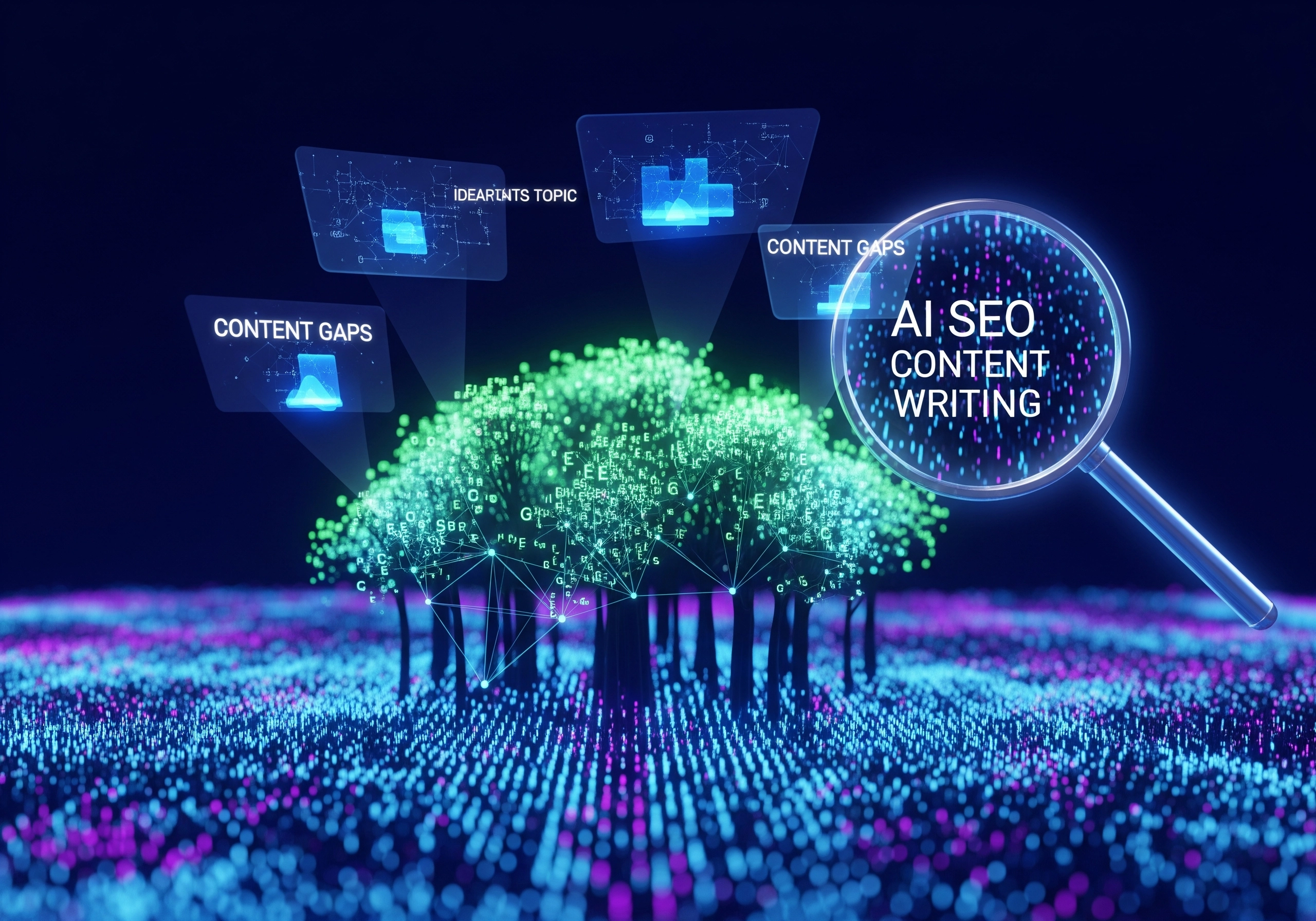
The initial blank page of content creation can be daunting, often leading to analysis paralysis rather than innovative ideas. Traditionally, content ideation and research were resource-intensive processes, demanding countless hours of manual sifting through search results, competitor sites, and keyword tools. This is precisely where an ai seo content generator shifts the paradigm, transforming a laborious chore into a strategic advantage.
Advanced Keyword Research: Beyond the Obvious
Gone are the days of simply targeting high-volume, generic keywords. In 2025, effective keyword research demands a deeper understanding of user intent, semantic relationships, and long-tail opportunities. AI tools excel here, moving beyond basic search volume metrics to uncover nuanced insights.
They analyze vast datasets, including SERP features, related questions, and competitive landscapes, to identify clusters of semantically related keywords. This approach allows you to capture a broader audience by addressing diverse search queries, not just head terms. An ai seo content generator can rapidly generate comprehensive keyword maps, highlighting profitable niches and underserved topics that manual efforts would likely miss.
AI elevates keyword research from guesswork to data-driven precision.
This precision ensures that every piece of content you plan is aligned with actual user needs and search intent. For those new to the field, understanding the fundamentals of SEO for beginners is crucial before diving into advanced AI applications.
Unearthing Topic Clusters and Content Gaps
Building authority in your niche requires more than standalone articles; it demands comprehensive topic clusters. These clusters demonstrate expertise and interconnectedness, signaling to search engines that your site is a definitive resource. However, manually identifying these complex relationships and potential content gaps is a monumental task.
AI SEO tools streamline this by analyzing your existing content, competitor content, and search trends to map out entire topic ecosystems. They can highlight missing sub-topics within a cluster, suggest new content ideas based on emerging trends, and even predict content performance. This capability ensures your content strategy is always proactive, filling gaps before rivals even spot them.
Revolutionizing Competitor Analysis
Understanding your competitors is vital for outranking them, but traditional competitor analysis is often a tedious, snapshot-in-time exercise. An ai seo content generator offers a dynamic, continuous competitive intelligence platform.
These tools can monitor competitor keyword rankings, content performance, backlink profiles, and even changes in their content strategy in real-time. By leveraging AI, you gain insights into what’s working for your rivals, what isn’t, and where opportunities lie for differentiation. This allows you to identify their top-performing content, analyze its structure and semantic depth, and then strategize how to create even better, more comprehensive resources.
AI transforms competitor analysis from a reactive chore into a strategic weapon.
This continuous feedback loop empowers you to adapt quickly, ensuring your content remains competitive and always a step ahead. By integrating AI into these foundational stages, businesses can reduce content creation time by up to 50%, allowing for faster publishing cycles and quicker results, as highlighted by industry trends.
Ultimately, AI doesn’t just assist; it fundamentally transforms content ideation and research. It empowers content strategists to make more informed, data-backed decisions at an unprecedented speed, laying a robust foundation for high-ranking, E-E-A-T compliant content.
Which AI SEO Writers Deliver the Best Quality for E-E-A-T Compliant Content?
The allure of AI-powered content creation is undeniable, promising efficiency and scale. However, the real challenge lies in ensuring this content doesn’t just occupy digital space but actively builds your online authority and trust. To achieve this, selecting an seo ai writer that genuinely aligns with Google’s E-E-A-T (Experience, Expertise, Authoritativeness, and Trustworthiness) guidelines is not just important—it’s essential. The landscape of AI tools is vast and varied, making the identification of the best seo ai writer a critical task that demands a thorough examination of their capabilities and underlying design principles.
The Non-Negotiable E-E-A-T Standard for AI Content
Google’s algorithms are increasingly sophisticated, prioritizing content that demonstrably embodies E-E-A-T. This means that even AI-generated text must strive to reflect these core qualities. The focus has shifted beyond simple keyword integration to a comprehensive assessment of content quality, factual precision, and the overall credibility of the information presented. Without diligent human oversight and a strategic approach to tool selection, AI risks generating superficial, unverified content that can actively undermine your search rankings instead of enhancing them.
Essential Criteria for Selecting an E-E-A-T Compliant AI SEO Writer
When evaluating an ai writer seo tool, it’s crucial to scrutinize its inherent ability to weave E-E-A-T signals directly into its output. This isn’t about relying on AI’s inherent magic, but rather on its intelligent design and the robustness of its data integration and fact-checking capabilities.
Prioritizing Factual Accuracy and Robust Validation
Early AI models often struggled with factual accuracy, sometimes fabricating information or presenting outdated data. A truly effective seo ai writer must incorporate mechanisms for factual validation. This could involve:
- Access to Verified Data Sources: Does the AI draw information from reputable, up-to-date sources?
- Citation Capabilities: Can the tool provide sources for the claims it makes, allowing for easy verification?
- Fact-Checking Prompts: Does the AI prompt users to verify specific claims or offer tools to cross-reference information?
- Contextual Understanding: Does the AI demonstrate an understanding of the nuances of the topic, avoiding oversimplification or misrepresentation?
Ensuring Authoritativeness and Expertise in AI Output
Beyond mere facts, E-E-A-T demands a demonstration of expertise. An ai writer seo should be capable of:
- Adopting Specific Tones and Styles: Can it mimic the voice of an expert in a given field?
- Incorporating Nuance and Insight: Does the output go beyond surface-level information to offer deeper analysis or unique perspectives?
- Structuring Content Logically: Does it present information in a way that reflects expert knowledge, with clear reasoning and supporting evidence?
Building Trustworthiness Through Transparency and Reliability
Trust is built on reliability and transparency. For an seo ai writer to contribute to trustworthiness, it should:
- Be Consistent: Does the AI consistently produce high-quality, accurate content?
- Facilitate Human Editing: Does the tool make it easy for human editors to review, refine, and add their unique experience?
- Avoid Sensationalism: Does it refrain from making unsubstantiated claims or using clickbait language?
The Indispensable Role of Human Oversight
Ultimately, no best seo ai writer can completely replace human judgment. E-E-A-T is deeply rooted in human experience and nuanced understanding. AI tools are powerful assistants, but their output must be guided, reviewed, and enhanced by human experts. This collaborative approach ensures that AI-generated content is not only factually sound and authoritative but also resonates authentically with readers, building the trust that is crucial for long-term SEO success.
How to Structure Your AI Content for Maximum On-Page SEO Impact?

While artificial intelligence (AI) excels at generating vast amounts of content, its true impact on search engine optimization (SEO) isn’t just about what it writes, but how that content is meticulously structured. Unstructured AI output, however brilliant, often falls short in the competitive digital landscape. Transforming raw AI text into a high-ranking asset requires a strategic approach to on-page elements, ensuring both search engine crawlability and exceptional user experience.
The Foundational Blueprint: Heading Hierarchies
Effective content structure begins with a logical heading hierarchy. Think of your H1, H3, and H4 tags as a roadmap for both readers and search engine crawlers, guiding them through the content’s core arguments and subtopics. Google’s algorithms increasingly reward content that is easy to digest and clearly organized.
AI tools can provide initial drafts, but human editors must refine these headings to create a clear flow.
A well-defined heading structure signals topical authority and enhances readability.
For optimal SEO optimization, ensure your H3s and H4s contain relevant keywords and semantic variations, acting as signposts that reinforce the main topic without feeling stuffed. This hierarchical organization directly contributes to improved dwell time and lower bounce rates, critical metrics for search engine ranking.
Semantic Optimization Beyond Keywords
Beyond just placing keywords, modern ai seo content writing demands deep semantic optimization. This involves understanding the relationships between concepts and entities, rather than just isolated terms. AI can analyze vast datasets to identify related topics, synonyms, and latent semantic indexing (LSI) keywords that enrich your content’s context.
Leverage AI to expand your content’s semantic breadth, ensuring it covers the topic comprehensively.
This approach helps search engines understand the full scope of your article, making it a more authoritative resource. Instead of merely repeating target phrases, AI helps you weave in a rich tapestry of related terms that demonstrate true expertise, aligning with E-E-A-T (Experience, Expertise, Authoritativeness, and Trustworthiness) principles.
Mastering Internal Linking for Authority Flow
Strategic internal linking is a powerful, yet often underutilized, SEO optimization tactic. It not only helps users navigate your site but also distributes authority (PageRank) across your pages and signals to search engines which content is most important. When structuring AI-generated content, consciously identify opportunities to link to other relevant pages on your domain.
Thoughtful internal links boost user engagement and strengthen your site’s overall SEO.
AI can assist in identifying these linking opportunities by scanning your existing content for semantic matches. Ensure the anchor text for these internal links is descriptive and keyword-rich, providing clear context. For instance, if you’re explaining foundational concepts, you might link to a guide on seo for beginners, directing users to more detailed information while reinforcing the value of your related content. This proactive link building strategy within your own site is crucial for establishing topical clusters and improving overall site architecture.
Enhancing Readability and User Experience
Even the most semantically rich content won’t perform if it’s difficult to read. AI-generated drafts often benefit from human editing to break down dense paragraphs, introduce bullet points, and use bolding for key takeaways. Short, punchy paragraphs (2-4 sentences) are paramount for online reading habits, especially on mobile devices.
Incorporate lists and tables when appropriate to present complex information clearly and concisely.
These friction breakers make the content scannable, improving engagement and reducing cognitive load for the reader. Prioritizing readability ensures that your AI-assisted content not only ranks well but also delivers genuine value and a positive experience, solidifying your brand’s authority and user trust.
Can AI Truly Automate Your Content Publishing and Distribution Efforts?
The promise of fully autonomous content operations—from creation to publication and beyond—is tantalizing. While AI significantly streamlines these processes, the true question isn’t whether it can automate, but how intelligently it augments human effort to achieve superior outcomes. By 2025, AI is projected to automate a substantial portion of content tasks, freeing up valuable human capital for strategic oversight and creative refinement.
Streamlining Publication with Intelligent Automation
Modern AI tools are transforming the publishing landscape, moving beyond simple scheduling to intelligent content deployment. This involves not just hitting ‘publish’ but optimizing the delivery mechanics itself. Think about how AI can dynamically adjust publishing times based on audience engagement data, ensuring your content lands when it has the highest chance of impact.
True content automation isn’t about replacing; it’s about elevating every stage of your workflow.
For platforms like WordPress, AI integration offers robust capabilities, including advanced WordPress auto posting features. These go beyond basic scheduling, encompassing automated SEO checks, image optimization, and even smart internal linking suggestions before an article goes live. This ensures that content is not just published, but published with an optimized foundation for discoverability. Such tools reduce content creation time by up to 50%, allowing for faster publishing cycles.
AI-powered publishing ensures content is consistently high-quality and strategically deployed, saving considerable manual effort.
Expanding Reach Through AI-Driven Distribution
Once content is live, the next critical step is ensuring it reaches the right audience. This is where AI truly excels in driving traffic generation. Instead of manually sharing across disparate platforms, AI algorithms can analyze audience demographics, platform-specific engagement patterns, and trending topics to distribute content precisely where it will resonate most.
Precision Targeting for Maximum Impact
AI facilitates hyper-personalized distribution strategies. It can identify key influencers, optimal social media channels, email segmentation opportunities, and even detect nascent communities discussing your topic. This intelligent dissemination maximizes visibility and engagement, transforming a broad broadcast into a series of targeted conversations.
Platforms powered by advanced content automation solutions, like GenWrite, leverage these insights to automate social media scheduling, email newsletter compilation, and content syndication. They monitor performance in real-time, providing actionable insights to continually refine distribution tactics and boost organic traffic by 30-40%.
Effective AI distribution ensures your content doesn’t just exist, but actively finds and engages its ideal audience.
The Indispensable Human Element in AI Publishing
While AI handles the heavy lifting of scheduling, formatting, and initial distribution, human oversight remains paramount. This ensures that the content maintains E-E-A-T (Experience, Expertise, Authoritativeness, and Trustworthiness) standards and aligns perfectly with brand voice. A human editor reviews AI-suggested distribution channels, fine-tunes messaging for specific platforms, and ensures that the overall strategy contributes to meaningful traffic generation and audience connection.
The synergy between AI’s efficiency and human strategic insight creates a powerful, high-impact content ecosystem.
What Are the Essential Human-in-the-Loop Processes for Flawless AI SEO Content?

While AI can generate content at an unprecedented scale, achieving truly flawless, high-ranking output demands more than mere automation. The critical distinction lies in robust human-in-the-loop processes that infuse expertise, brand authenticity, and ethical scrutiny into every piece of AI content. These essential human touchpoints elevate raw AI output into authoritative, E-E-A-T compliant material.
Strategic Oversight and Prompt Engineering
Before any generation even begins, human intelligence is paramount in defining the strategic direction. This involves crafting meticulous prompts that guide the AI in understanding search intent, target audience nuances, and desired content structure. A skilled blogging agent or content strategist translates complex SEO requirements and brand guidelines into clear, actionable instructions for the AI.
Poorly defined prompts lead to generic, ineffective AI content.
This initial human input sets the foundation for quality, ensuring the AI focuses its immense processing power on generating relevant and targeted narratives, rather than simply producing voluminous text. It’s about leveraging AI’s speed for precise, purpose-driven output.
Expert Editing and Brand Voice Refinement
Once the AI has drafted the content, human editors step in to transform it from a functional draft into a compelling, on-brand masterpiece. This critical phase involves fact-checking for accuracy, enriching the narrative with deeper insights, and refining the tone to perfectly match the brand’s unique voice. AI can mimic, but it cannot authentically feel or understand the subtle nuances that define a brand’s identity or resonate with a human reader.
Editors identify and correct any factual inaccuracies, ensure logical flow, and integrate advanced semantic optimizations that might elude even the most sophisticated seo writing ai systems. They act as the ultimate arbiters of quality, enhancing readability and engagement.
E-E-A-T and Ethical Compliance Validation
Perhaps the most crucial human-in-the-loop process is the final validation for Experience, Expertise, Authoritativeness, and Trustworthiness (E-E-A-T) and ethical compliance. Google’s algorithms increasingly favor content that demonstrates these qualities, which AI alone cannot fully guarantee. Human experts review the content for biases, ensure proper attribution of sources, and verify that all claims are supported by credible evidence.
Human oversight ensures ethical guidelines are met and trust is built with the audience.
This step prevents the dissemination of misinformation and upholds the brand’s reputation, turning AI-generated drafts into trusted resources that genuinely add value to the reader. Ultimately, it’s the human touch that imbues AI content with the credibility needed to rank and resonate.
How Do You Measure Success and Continuously Optimize Your AI-Powered SEO Strategy?
Measuring the true impact of an AI-powered SEO strategy requires moving beyond surface-level metrics. It’s not enough to simply churn out content via bulk blog generation; the real success lies in whether that content resonates, ranks, and ultimately drives business outcomes. The shift from traditional content analytics to AI-driven performance tracking demands a more nuanced approach, focusing on both efficiency and effectiveness.
Your AI content must not just exist; it must perform.
Defining Success: Key Performance Indicators for AI Content
How do we accurately gauge the efficacy of content generated by AI SEO tools? The answer lies in a blend of traditional SEO metrics and AI-specific performance indicators that reflect true business value.
Beyond Basic Traffic: Holistic Metrics
While organic traffic and keyword rankings remain foundational, a holistic view considers deeper engagement signals. High bounce rates or low time-on-page for AI-generated articles might indicate a lack of E-E-A-T or poor content quality, despite initial ranking success. Conversion rates, whether leads, sales, or sign-ups, are the ultimate arbiters of value, separating merely busy content from truly impactful assets.
The Continuous Optimization Loop: Analyze, Adapt, Amplify
Optimization isn’t a one-time event; it’s an ongoing cycle, especially with the dynamic nature of AI-generated content. An iterative mindset ensures sustained competitive advantage.
Step 1: Data-Driven Blog Analysis
Begin with rigorous blog analysis. Leverage advanced analytics platforms and specialized AI SEO tools to scrutinize performance. Track which content themes, structures, and keyword clusters deliver the best results, identifying patterns in user behavior—what keeps them engaged and where do they drop off?
Effective analysis turns raw data into actionable insights.
Step 2: Adaptive Strategy Refinement
Based on your analysis, adapt your AI content generation strategy. This involves refining prompts for your AI SEO tools, adjusting target keywords, or even altering the content formats you request for bulk blog generation. For instance, if short-form AI articles consistently outperform long-form, you might shift your focus to maximize impact.
Step 3: Amplifying Success
Once successful patterns emerge, amplify them. Scale the production of high-performing content types and topics, leveraging the efficiency of AI. This iterative process of learning from data, adjusting inputs, and scaling successes is the hallmark of a truly optimized AI SEO strategy.
Leveraging AI SEO Tools for Deeper Insights
Modern AI SEO tools are not just for content generation; they are powerful allies in performance measurement. They can automate blog analysis, identifying semantic gaps, competitive ranking opportunities, and even predicting content decay. These tools provide the granular data necessary to make informed decisions and continuously improve your AI models and workflows, ensuring your strategy remains cutting-edge.
Ready to elevate your content strategy and dominate search results? Discover how GenWrite can automate your end-to-end AI SEO blog creation for unparalleled traffic and reach.
People Also Ask
What are the key components of a cutting-edge AI SEO writing workflow in 2025?
A cutting-edge AI SEO writing workflow in 2025 integrates AI for ideation, research, and initial content generation, enhanced by human expertise for strategic oversight, refinement, and E-E-A-T compliance. It’s an iterative ecosystem designed for speed, scale, and quality to drive organic traffic.
Why are traditional SEO content strategies no longer effective against AI?
Traditional SEO strategies struggle with the speed, scale, and data analysis capabilities that AI-driven tools offer. Manual content creation can’t keep pace with AI’s ability to identify trends, personalize content, and produce high volumes of optimized material, leading to a competitive disadvantage.
How can AI SEO content generators improve keyword research and topic ideation?
AI SEO content generators revolutionize ideation by uncovering semantic relationships and long-tail keyword opportunities. They identify topic clusters and content gaps, enabling more strategic authority building and transforming competitor analysis into a dynamic advantage for data-driven content creation.
Which AI SEO writers are best for creating E-E-A-T compliant content?
Not all AI writers are created equal for E-E-A-T compliance. Look for tools that prioritize factual accuracy and have validation mechanisms. Crucially, human oversight is essential to ensure AI-generated content meets Google’s standards for authority, expertise, and trustworthiness.
How can AI automate content publishing and distribution?
AI can significantly streamline content publishing and distribution by augmenting human efforts. It enables intelligent scheduling and optimization, especially for platforms like WordPress, and enhances traffic generation through precise audience targeting and multi-channel distribution, though human oversight remains vital for brand voice and E-E-A-T.
What human oversight is necessary for flawless AI SEO content?
Essential human-in-the-loop processes include expert prompt engineering for strategic oversight, meticulous editing for brand voice and factual accuracy, and crucial validation of E-E-A-T and ethical compliance. Human expertise ensures AI-generated content achieves SEO success, brand authenticity, and reader trust.