
Craft Engaging Blogs in Under a Minute with Advanced AI Writers
Why is Crafting Engaging Blogs a Modern Marketing Challenge?

The digital landscape has shifted dramatically, placing unprecedented pressure on content creators and marketers. No longer is simply publishing enough; the modern audience demands not just content, but engaging, authoritative, and personalized experiences. This fundamental shift presents significant content creation challenges for businesses striving to cut through the noise.
Today’s marketers face intense blogging demands. We’re not just competing for attention; we’re vying for relevance in an increasingly saturated information ecosystem. Every piece of content must justify its existence by providing value, answering questions, or solving problems for the reader. This often means producing a higher volume of content with greater consistency than ever before.
One of the most critical aspects of this challenge is the absolute necessity for SEO-rich content. Generic articles, no matter how well-written, struggle to gain visibility. To truly impact organic reach and website traffic, content must be optimized for search engines and large language models (LLMs). We know that SEO-optimized content can increase website traffic by over 50%, making it non-negotiable for any serious marketing strategy.
However, the process of generating truly effective, high-ranking content is incredibly time-consuming content. From in-depth keyword research and competitive analysis to crafting compelling narratives and ensuring proper on-page SEO, each step demands significant time and resources. Even though content marketing generates three times more leads per dollar spent than traditional methods, the investment in creation time can be a major bottleneck.
This is where the traditional content creation model shows its cracks. The manual effort required to meet these escalating demands often leads to burnout, missed opportunities, or a compromise on quality. Without a scalable solution, businesses risk falling behind.
This critical gap highlights why tools like GenWrite are becoming indispensable. By automating the end-to-end blog creation process, focusing on robust SEO optimization, and integrating features like keyword research and competitor analysis, platforms like GenWrite address these profound content creation challenges head-on. They transform the time-consuming content pipeline into an efficient, high-impact engine. For those looking to elevate their content strategy, exploring advanced AI for Blog Writing tools is no longer a luxury, but a necessity to meet these modern demands head-on. You can learn more about how these innovations are shaping the future of content in guides like Create Engaging Blogs in Seconds: Your AI Writer Guide for 2026.
The sheer volume of blogging demands and the imperative for SEO-rich content mean that the conventional approach is simply unsustainable. Adapting to this new reality requires innovative solutions that empower creators to produce high-quality content at speed.
What Exactly Are Advanced AI Blog Writers, and How Do They Work?
Many marketers wonder what truly powers the sophisticated content generated by today’s AI. An AI Blog Writer is far more than a simple text generator; it’s a complex system designed to mimic human cognitive processes in understanding, creating, and optimizing written content for the digital landscape. These advanced AI writing tools leverage cutting-edge artificial intelligence to transform raw ideas into polished, SEO-friendly blog posts, challenging traditional content creation methods.
At their core, these tools are built upon advanced Natural Language Processing (NLP) and Machine Learning (ML) models. NLP allows the AI to comprehend human language, deciphering intent, context, and nuances from vast datasets of existing content—essentially, understanding what makes good writing. Machine Learning, particularly deep learning algorithms trained on billions of parameters, then enables the AI to learn intricate patterns, understand semantic relationships, and predict optimal word choices to construct coherent, engaging, and authoritative narratives. This is fundamentally how AI writers work, by continuously learning and adapting.
From Intelligent Research to Optimized Drafts
The journey an AI blog generation tool takes from a vague concept to a fully formed article is a multi-step, intelligent process. It begins long before the first word is written.
Intelligent Research and Ideation
Advanced platforms, like GenWrite, don’t just wait for prompts; they proactively engage in comprehensive pre-writing phases. They analyze trending topics, perform in-depth keyword research to uncover high-value search terms, and conduct rigorous competitor analysis to identify content gaps and opportunities for differentiation. This foundational intelligence ensures the generated content isn’t just relevant, but strategically positioned for maximum visibility and impact.
Structured Content Creation
Once a topic and target keywords are established, the AI constructs a logical and compelling outline. It meticulously considers search intent, the most common questions users ask, and the structural best practices of high-performing articles. This ensures a natural flow that guides readers through the information seamlessly, enhancing engagement and dwell time.
Natural Language Generation
This is where the magic of writing unfolds. Drawing from its vast training data and learned stylistic nuances, the AI crafts paragraphs, sentences, and full sections with remarkable fluency. It intelligently integrates semantic keyword clusters naturally throughout the text, ensuring the content is rich, contextually relevant, and avoids the robotic feel of older AI iterations. The goal is to produce narratives that read as if a human expert penned them, maintaining a consistent tone and voice.
Integrated SEO Optimization
Critically, these tools are engineered with Search Engine Optimization (SEO) as a core function, not an afterthought. They automatically optimize crucial elements such as title tags, meta descriptions, internal and external links, and even image alt text. This proactive approach ensures that content isn’t merely written, but meticulously crafted to rank effectively on search engine results pages.
AI’s ability to bake in SEO from the outset drastically cuts optimization time.
To understand the full scope of how these capabilities translate into higher rankings, exploring resources like “The 10 Best AI Writing Generators for Top SEO Blogs in 2026” can provide further insight into the tools leading this charge.
Adaptation and Refinement
The most sophisticated AI writing tools go beyond initial generation. They can adapt to specific brand voices, learn from user feedback, and even suggest nuanced improvements for clarity, conciseness, and overall readability. This iterative refinement process allows for content that consistently aligns with a brand’s unique messaging and style guide, making the output truly bespoke.
An AI Blog Writer leverages sophisticated NLP and ML to move from intelligent ideation and keyword research to structured, human-like, and SEO-optimized content generation, significantly streamlining the content creation workflow for enhanced online visibility and engagement.
Can AI Truly Craft SEO-Optimized Blogs in Under a Minute?

The question of whether artificial intelligence can truly craft SEO-optimized blogs in under a minute is one that often arises in content circles. The short answer is a resounding yes, though with an important nuance. AI for Blog Writing has transformed content creation, enabling initial drafts complete with foundational SEO elements to be generated with remarkable speed.
Traditionally, creating a high-ranking blog post involved extensive keyword research, outlining, drafting, and meticulous SEO optimization—a process that could take hours. Modern AI tools, however, streamline these steps by integrating them directly into the writing process. This isn’t merely about accelerating content production; it’s about injecting intelligence and precision from the outset.
Advanced platforms leverage sophisticated algorithms for comprehensive SEO optimization with AI. They don’t simply generate text; they analyze vast datasets to identify relevant semantic keyword clusters, understand user search intent, and even scrutinize competitor content. This analytical capability allows them to naturally weave in high-value keywords and structure the content for optimal readability and search engine crawlability. This ensures that the generated content aligns with search engine guidelines and large language models (LLMs).
For instance, an AI tool like GenWrite automates this end-to-end process, researching keywords pertinent to your niche to ensure the content targets high-potential terms. It then constructs the blog with appropriate headings (H3, H4) and incorporates relevant internal and external links. This capability for instant blog generation drastically cuts down the time content creators spend on repetitive, manual tasks.
AI-driven content creation tools can automate up to 80% of the tasks involved in content creation. This significant efficiency gain means marketers can shift their focus from manual execution to strategic oversight, refining the AI’s output for maximum impact.
While the claim of generating an SEO-rich draft “under a minute” is accurate, true content excellence still benefits immensely from human refinement. AI provides the robust framework, creating content that is already highly SEO-rich. Yet, a human touch ensures unique perspectives, integrates a nuanced brand voice, and adds the final layer of polish that deeply resonates with your target audience. This collaborative approach is what truly unlocks the potential of the Best AI Tool For Writing SEO Rich Blog. The ultimate goal is not just fast content, but fast high-quality, SEO-friendly content that drives traffic and engagement.
To explore which tools are leading this charge and how they can supercharge your content strategy, consider diving into “The 10 Best AI Writing Generators for Top SEO Blogs in 2026”. These tools offer advanced features that go beyond basic content generation, enabling you to master your content workflow and achieve superior search rankings.
Which Advanced AI Tools Are Leading the Way in Blog Writing?
The content marketing landscape demands not just content, but engaging, SEO-optimized content at an unprecedented scale. This challenge has propelled advanced ai blog writing tools from niche utilities to essential assets for marketers and businesses alike. These platforms are not merely word generators; they are sophisticated engines designed to streamline the entire content lifecycle. They represent a significant leap from traditional manual processes, offering efficiency and strategic depth.
The Frontrunners in AI-Powered Content Creation
Several AI Content Writer for Blogs have emerged as leaders, each bringing distinct strengths to the table. Tools like Jasper, known for its versatile templates and long-form content generation, and Copy.ai, celebrated for its robust short-form content and marketing copy, have set high benchmarks. Writesonic, another formidable player, offers a wide range of content types, from articles to product descriptions, often with strong SEO considerations baked in.
These platforms are transforming how content teams operate, enabling them to produce three times more leads per dollar spent.
What makes these tools stand out is their ability to leverage sophisticated natural language processing (NLP) to understand context, generate human-like text, and even adapt to a specific brand voice. They move beyond simple automation, providing frameworks for creativity and efficiency. For a deeper dive into the best options, explore our guide on the Top AI Writing Tools for Blogging.
Core Capabilities Driving Their Success
The leading ai blog writing tools distinguish themselves through a suite of advanced features that address the multifaceted demands of modern content creation:
- Comprehensive Content Generation: From initial outlines to full-length articles, these tools can draft extensive content rapidly, often in multiple formats.
- Robust SEO Optimization: They frequently integrate keyword research, on-page optimization suggestions, and content structure analysis to significantly boost search visibility.
- Brand Voice Customization: Advanced AI can learn and adapt to a specific tone and style, ensuring brand consistency across all outputs, which is crucial for brand identity.
- Integrated Quality Checks: Many include built-in features for plagiarism detection and grammar correction, maintaining high content quality standards.
Such capabilities demonstrate why AI-driven content creation can reduce production costs by up to 70%, freeing up valuable resources for strategic oversight and creative refinement.
GenWrite: Automating the End-to-End Blog Process
While many tools excel in specific areas, a new generation, exemplified by platforms like GenWrite, takes content automation a step further. We developed GenWrite as an all-encompassing AI blog generator that not only crafts high-quality content but also handles the entire publishing workflow. This includes in-depth keyword research, competitive analysis, automatic link building, and even image integration, culminating in direct publishing to platforms like WordPress.
By automating up to 80% of content creation tasks, GenWrite empowers users to focus on strategy rather than mechanics.
This holistic approach is critical for businesses aiming to increase website traffic and organic reach efficiently. It’s about providing an AI Content Writer for Blogs that functions as a complete blogging agent, ensuring every piece of content is SEO-friendly and aligned with search engine guidelines and LLMs. Understanding how to leverage these comprehensive platforms, alongside other powerful AI SEO tools, is key to dominating the digital landscape.
The best ai blog writing tools lead the way by offering a blend of speed, quality, and strategic depth. They empower content creators to meet the relentless demand for fresh, engaging, and SEO-optimized content, transforming the editorial process from a manual grind into an intelligent, automated workflow.
How Do Leading AI Writers Ensure Human-Like Quality and Brand Voice?

The biggest question I often encounter about AI writing is whether it can truly sound human and genuinely represent a brand. The answer, increasingly, is a resounding yes, thanks to sophisticated algorithms and a deep focus on linguistic nuance. Today’s leading AI blog generator tools are engineered to produce human-like AI writing that not only resonates with readers but also maintains the distinct personality of a brand.
The Mechanics of Human-Like Quality
Advanced AI models achieve this human touch by analyzing vast datasets of high-quality human-written content. They learn patterns in language, understand context, and even discern subtle emotional tones. This allows them to move beyond mere word generation to construct sentences and paragraphs with natural flow and engaging prose.
It’s about predictive text generation combined with deep semantic understanding.
These systems leverage advanced natural language processing (NLP) and machine learning (ML) to grasp the intricacies of human communication. They don’t just mimic; they learn to create content that feels authentic, often indistinguishable from that written by a human expert. This evolution marks a significant leap from earlier, more robotic AI outputs, enhancing overall content quality AI.
Adapting to Your Unique Brand Voice
Achieving a consistent brand voice AI across all marketing materials is a critical challenge for many organizations. This is where advanced AI writers truly shine. They are designed with customization at their core, allowing users to input specific style guides, preferred vocabulary, and desired tonal qualities.
For instance, tools like GenWrite enable you to train the AI on your existing content, allowing it to internalize your brand’s unique identity. This process helps the AI understand your specific AI writing style, ensuring that every piece of content aligns perfectly with your brand’s established persona.
Training for Tone and Style
Leading platforms use a combination of explicit instructions and implicit learning. You can specify a formal, conversational, authoritative, or playful tone, and the AI will adapt its output accordingly. Furthermore, continuous feedback loops are essential; human editors can refine AI-generated drafts, and the AI learns from these corrections, improving its ability to match your brand voice AI over time. This collaborative approach ensures that the output is not just accurate but also emotionally intelligent and on-brand.
By carefully configuring these parameters, businesses can ensure that even with high-volume content generation, their brand’s message remains consistent and authentic. This capability is pivotal for maintaining brand integrity while leveraging the efficiency of an AI blog generator for tasks like those facilitated by GenWrite.
The goal isn’t just speed, but branded, high-quality output.
This continuous refinement mechanism is what separates a basic text generator from a sophisticated AI SEO tool that truly understands and implements human-like AI writing and brand voice AI for optimal impact. To see how these tools compare, explore insights into which AI SEO tools offer the biggest impact on rankings this year.
Beyond Basic Writing: What Advanced Features Do AI Blog Writers Offer?
Moving beyond simply generating text, today’s advanced AI features in blog writing tools redefine what’s possible for content creators. We’re no longer just talking about overcoming writer’s block; we’re talking about comprehensive, strategic content automation that drives real results. These sophisticated AI tools integrate deep analytical capabilities, transforming raw data into highly optimized, engaging blog posts.
Harnessing Real-Time Data for Unmatched Relevance
One of the most impactful advanced AI features is the ability for AI content generation platforms to process real-time data AI. This means your content isn’t just based on a static database; it’s informed by current trends, breaking news, and evolving search queries. Imagine an AI that can identify a surging topic, analyze its competitive landscape, and draft an SEO-optimized blog post within minutes.
Staying current is no longer a manual struggle but an automated advantage.
This dynamic approach ensures your content remains relevant and timely, capturing fleeting interest and maximizing its potential for traffic. It shifts the paradigm from reactive content creation to proactive trend leadership.
Semantic SEO Analysis and Competitive Insights
Advanced AI blog writers excel in deep semantic SEO analysis, moving far beyond basic keyword stuffing. They analyze entire topic clusters, user intent, and the nuances of language that search engines like Google and LLMs prioritize. This capability allows for the creation of content that truly answers user questions and establishes topical authority.
Furthermore, these AI tools provide invaluable competitive insights. They can scan top-ranking articles for a given keyword, deconstruct their structure, identify content gaps, and even suggest optimal word counts or subheadings. This intelligence empowers you to craft superior content that directly challenges and often outperforms competitors.
Understanding the competition is the first step to outranking them.
For example, platforms like GenWrite leverage this analysis to automatically generate content that is not only well-written but also perfectly aligned with current search engine guidelines and user expectations. To see which solutions are making the biggest waves, consider exploring resources on Which AI SEO Tools Offer the Biggest Impact on Rankings This Year?.
Integrated Content Pipelines and Image Generation
The most powerful advanced AI features extend into creating entire content pipelines. This involves automating the full lifecycle from ideation and keyword research to drafting, optimizing, and even publishing. Imagine an AI blog generator that not only writes your article but also sources relevant, royalty-free images, integrates them contextually, and even handles internal and external link building.
End-to-end automation transforms your content workflow.
This level of content automation significantly reduces the manual effort involved in blog production. For instance, GenWrite streamlines the entire process, including image addition and link building, allowing you to generate SEO optimization content at scale. This integrated approach is critical for businesses looking to increase their traffic generation without exponentially increasing their workload.
Comprehensive Utility for Unprecedented Efficiency
These sophisticated AI tools collectively offer a comprehensive utility that goes far beyond basic text generation. They combine real-time data AI, semantic keyword research, competitor analysis, and automated content creation into a seamless workflow. The result is not just more content, but more effective content that ranks higher, engages better, and costs less to produce. This shift allows marketing teams to focus on strategy and creativity, leaving the heavy lifting of content production to intelligent systems. Ultimately, these advanced AI features are about empowering content creators to achieve unparalleled efficiency and impact.
How to Integrate Advanced AI Writers into Your Content Workflow for Maximum Efficiency?
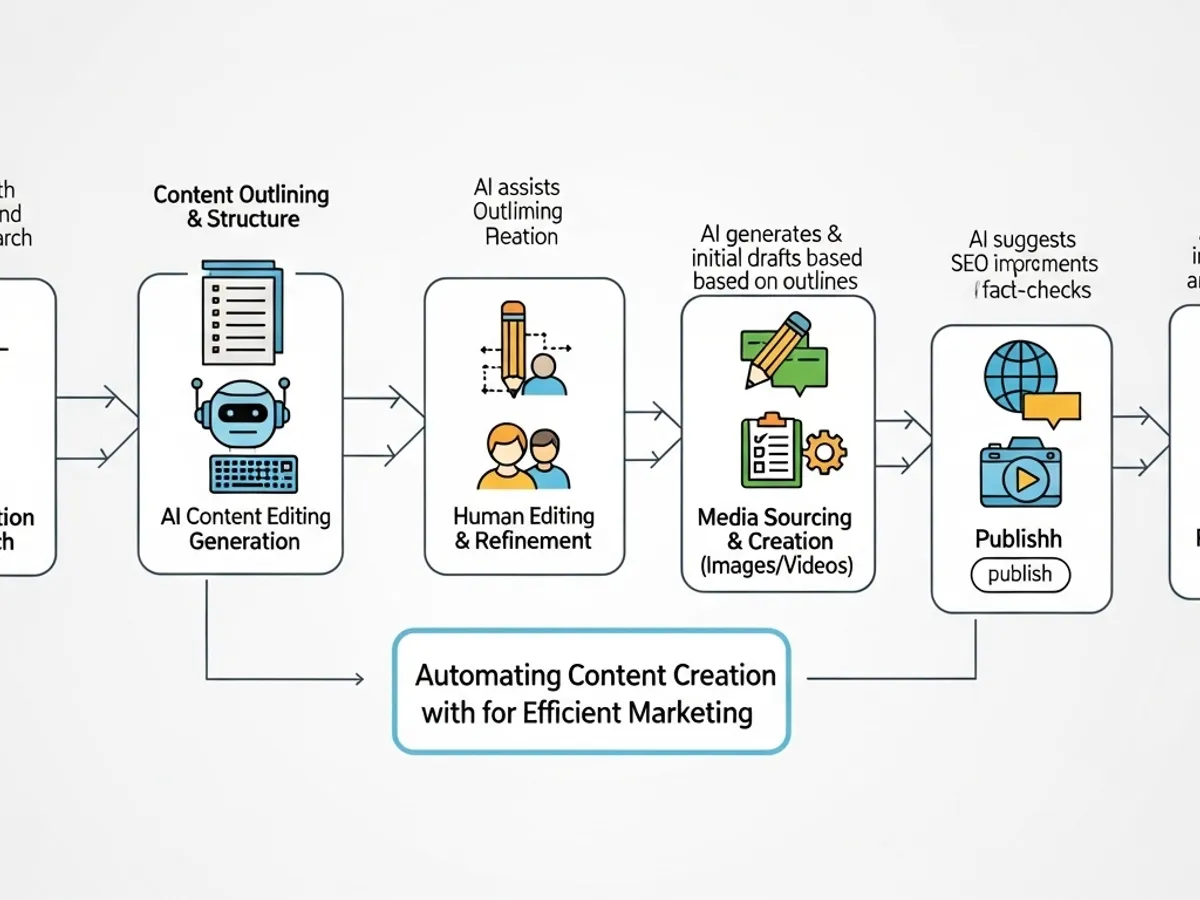
Integrating advanced AI writers into your content operations isn’t about replacing human creativity; it’s about amplifying it. The goal is to establish an AI content workflow that streamlines every stage, from initial concept to final publication, ensuring both speed and quality. This strategic approach allows marketers and writers to scale their output and achieve truly efficient content creation.
Phase 1: Ideation and Outlining with AI
Before a single word is written, AI can dramatically accelerate the ideation process. Tools like GenWrite leverage sophisticated algorithms to perform in-depth keyword research, identifying high-potential topics and relevant search queries. This isn’t just about finding keywords; it’s about understanding search intent.
AI can then generate comprehensive content outlines based on these insights, structuring articles for optimal readability and SEO performance. This ensures every piece starts with a solid, data-driven foundation, significantly cutting down on initial planning time.
Leveraging AI for ideation ensures your content pipeline is always full of high-potential topics.
Phase 2: AI-Powered Drafting for Speed
Once the outline is in place, this is where the speed of using AI in blogging truly shines. AI writers can take an outline and generate a robust first draft in minutes, not hours. This includes crafting engaging introductions, developing body paragraphs, and even suggesting calls to action.
This rapid generation frees human writers from the blank page syndrome, allowing them to focus on higher-level tasks. Instead of drafting from scratch, they begin with a structured, coherent piece of content ready for refinement.
Phase 3: Human Refinement and Strategic Optimization
While AI excels at speed, human expertise remains critical for nuance, brand voice, and strategic depth. This phase involves a thorough review and editing process:
- Fact-Checking & Accuracy: Verifying all information.
- Brand Voice & Tone: Adjusting the language to align perfectly with your brand’s unique persona.
- Adding Unique Insights: Injecting proprietary data, case studies, and expert commentary that only a human can provide.
- Advanced SEO: While AI provides a solid SEO foundation, human experts fine-tune for semantic richness and competitive edge. Understanding how to use AI SEO tools effectively can significantly boost your Google rankings and ensure your content is optimized for AI search.
Human oversight transforms AI-generated drafts into authoritative, brand-aligned content.
Phase 4: Automated Publishing and Performance Analysis
After human refinement, the final steps of your AI writer integration can also be automated. Platforms like GenWrite offer features like WordPress auto-posting, adding relevant images, and optimizing meta descriptions automatically. This seamless transition from creation to publication minimizes manual effort and accelerates time-to-market.
Crucially, the workflow doesn’t end at publishing. AI tools can help track content performance, analyzing metrics like traffic, engagement, and conversions. This data feeds back into the system, allowing for continuous improvement of AI prompts and strategies for maximum traffic generation.
Implementing an AI content workflow isn’t just about speed; it’s about creating a smarter, more adaptive content strategy that drives measurable results.
Are There Any Downsides? Addressing the Limitations and Ethical Considerations of AI in Blogging.
While the transformative power of AI in content creation, particularly with tools like GenWrite, offers unprecedented efficiency and scale, it’s imperative to approach this technology with a clear understanding of its inherent limitations and the ethical considerations involved. The promise of generating engaging blogs in under a minute is compelling, but it’s not a magic bullet that bypasses the need for human intelligence and discernment.
The Originality Conundrum and Potential for Generic Content
One of the primary AI writing limitations centers on originality. AI models learn from vast datasets of existing content. While this allows them to synthesize information and generate coherent text, it can sometimes lead to outputs that feel derivative or lack a truly unique voice. The AI might struggle with abstract thought, genuine creativity, or offering perspectives that haven’t been widely explored.
True innovation often stems from human intuition and experience.
This isn’t to say AI cannot produce good content; it excels at structuring information and optimizing for readability. However, for content that truly captivates and differentiates, a human editor’s touch is often indispensable to inject novel ideas and a distinct brand personality. Without careful guidance, AI-generated content can occasionally fall into predictable patterns, making it less impactful in a crowded digital space.
Addressing Bias and Ensuring Ethical AI Content
A more profound concern with AI-generated content is the potential for bias. AI models are only as unbiased as the data they are trained on. If the training data reflects societal biases—whether in gender, race, culture, or political viewpoints—the AI can inadvertently perpetuate these biases in its output. This can lead to content that is exclusionary, misinformed, or even harmful.
Crafting ethical AI content requires a vigilant approach to data curation and ongoing monitoring of AI outputs. It’s a continuous process of refinement to ensure fairness and accuracy. For instance, when GenWrite researches keywords and analyzes competitor content, our aim is to identify patterns, not to reproduce existing biases. Yet, the responsibility ultimately rests with the user to review and correct any such occurrences.
The Indispensable Role of Human Oversight AI
Despite the sophistication of advanced AI writers, AI content challenges necessitate robust human oversight AI. Tools like GenWrite are designed to automate significant portions of the content creation workflow—from keyword research and competitor analysis to drafting and SEO optimization. However, they are fundamentally powerful assistants, not autonomous content strategists.
AI provides the framework; humans provide the soul and strategic direction.
Human editors are crucial for fact-checking, ensuring accuracy, refining tone, and adapting content to specific brand nuances that AI might miss. They also play a vital role in navigating the complex landscape of AI search and geo-targeted SEO tactics, ensuring the content is not only optimized but also strategically aligned with evolving search engine guidelines and LLMs. This human input is what transforms good AI-generated content into truly exceptional, high-ranking material that resonates with audiences. For advanced strategies in this evolving landscape, exploring resources on how to master Google rankings and AI search is increasingly vital.
Ultimately, while AI significantly boosts productivity and reach, the human element remains the ultimate guarantor of quality, ethical integrity, and creative distinction in the blogging world.
What Should You Consider When Choosing the Best Advanced AI Blog Writer for Your Needs?
The burgeoning landscape of advanced AI blog writers presents a powerful opportunity, yet it also introduces the challenge of choosing the best fit for your unique operational needs. With the AI writing tools market projected to reach $5 billion by 2030, the sheer volume of options can feel overwhelming. Your decision hinges on a clear understanding of your specific requirements, budget constraints, desired features, and how the tool integrates into your existing content workflow.
Defining Your Needs: What’s Your Content Challenge?
Before diving into comparisons, identify your primary pain points. Are you struggling with ideation, needing to scale content production rapidly, or seeking to improve your SEO performance? Different AI writing tool solutions excel in different areas. For instance, some are built for sheer volume, while others prioritize deep semantic analysis and SEO optimization.
The right AI tool should directly address your most pressing content creation challenges.
Consider the scale of your content needs. Are you generating a few blogs a month, or do you require bulk content generation for multiple campaigns? This initial assessment is crucial for effective AI tool selection.
Key Criteria for Comparing AI Writers
When you compare AI writers, a few critical factors consistently emerge. First, evaluate the quality and human-likeness of the output. Does the AI generate content that genuinely resonates with your audience and aligns with your brand voice? Next, examine the depth of its SEO capabilities. Does it go beyond basic keyword insertion to offer comprehensive competitor analysis, semantic keyword research, and meta-data optimization?
A truly advanced AI blog writer offers more than just text generation; it’s a strategic partner.
For example, an AI blog generator like GenWrite is designed for end-to-end automation, encompassing everything from initial keyword research and relevant link building to image addition and automatic publishing. This comprehensive approach helps users increase website traffic and organic reach, aligning with the goal of generating high-quality, SEO-friendly content.
Feature Set and Integrations
Beyond core writing, what advanced features do you need? Look for tools that offer plagiarism checks, multi-language support, content summarization, and seamless integrations with your existing content management systems (CMS) or marketing platforms. The ability to integrate an AI Blog Writer into your current workflow can significantly boost efficiency, reducing content production costs by up to 70%.
The more seamlessly an AI integrates, the greater its impact on your overall content strategy.
To truly excel in today’s search landscape, your chosen platform should support advanced strategies like those outlined in guides on mastering Google rankings with AI search, leveraging sophisticated AI SEO tools to optimize for AI Overviews and traditional search.
Budget and Return on Investment (ROI)
Finally, consider your budget. While AI-driven tools can drastically reduce content production costs, they represent an investment. Evaluate the pricing models—subscription, pay-per-word, or feature-tiered—and project the potential ROI. Tools that offer strong SEO capabilities and automation often provide a quicker return by driving increased organic traffic and lead generation. Choosing an AI writing tool is about balancing upfront cost with the long-term value it delivers to your content marketing efforts.
Conclusion: Will Advanced AI Writers Redefine the Future of Blogging?
The question isn’t whether advanced AI writers will play a role in blogging, but how profoundly they will redefine its landscape. We’ve witnessed a significant shift, moving from basic text generation to sophisticated systems powered by advanced natural language processing (NLP) and machine learning (ML).
These intelligent tools have become indispensable partners, tackling the demanding pace of modern content creation. In an environment saturated with information, the need for personalized, high-quality content is paramount. AI dramatically boosts blogging efficiency, freeing human strategists for higher-level tasks.
The impact of AI writers is quantifiable: they can reduce content production costs by up to 70% and significantly increase website traffic through SEO-optimized content. By automating up to 80% of content-related tasks, AI solutions allow businesses to scale their content operations without compromising quality or relevance. Tools like GenWrite exemplify this, offering end-to-end automation for keyword research, competitor analysis, and seamless publishing.
This means creators can consistently generate high-quality, SEO-friendly content that aligns precisely with search engine guidelines and large language models (LLMs), ensuring greater organic reach. The transformation is not just about speed, but about strategic advantage.
Looking ahead, the future of blogging AI promises even greater sophistication. We are seeing a continuous AI content evolution towards systems that integrate real-time data analysis, audience sentiment, and emotional intelligence to produce even more relevant and timely content. With the AI writing tools market projected to reach $5 billion by 2030, this trajectory is clear: AI will be an increasingly integral part of every content strategy.
While AI can generate drafts in moments and handle the heavy lifting of optimization, the human element remains crucial. Our strategic oversight, creative intuition, and ethical judgment are irreplaceable. AI serves as a powerful assistant, amplifying our capabilities rather than replacing them, enabling us to craft engaging content at an unprecedented scale.
Ready to transform your content creation? Discover how GenWrite can automate your end-to-end blog generation, delivering SEO-optimized content at scale in minutes.
Frequently Asked Questions About Advanced AI Blog Writers
How quickly can AI generate a blog post?
Advanced AI blog writers can generate a draft of a blog post in under a minute. While the initial generation is rapid, human review and refinement are recommended to ensure optimal quality, brand voice, and unique insights.
Can AI truly create SEO-optimized content automatically?
AI tools can significantly assist with SEO by integrating keyword research, optimizing structure, and improving readability. However, nuanced SEO strategies and strategic link placement often benefit from human oversight to achieve the best results.
How do AI writers maintain a consistent brand voice?
Leading AI writers use advanced algorithms and can be trained on your existing content or style guides. This allows them to learn your brand’s specific tone, vocabulary, and messaging to produce content that sounds authentically yours.
What are the main benefits of using AI blog writers?
The primary benefits include significant time savings, cost reduction in content production, increased output volume, and improved SEO performance. AI can help overcome writer’s block and maintain a consistent publishing schedule.
Are there any limitations to using AI for blog writing?
Potential limitations include the risk of generic content, occasional factual inaccuracies, and the need for human editors to ensure originality, ethical considerations, and strategic depth. AI is best used as a powerful assistant, not a complete replacement for human creativity.
Which AI tools are considered top-tier for blog writing?
Leading AI tools often include Jasper, Copy.ai, and Writesonic, known for their comprehensive features. For end-to-end blog automation, including keyword research and publishing, explore solutions like GenWrite.