
Will massive AI spending trigger a financial crash? A beginner’s guide to capex
The trillion-dollar gamble behind your chat prompts
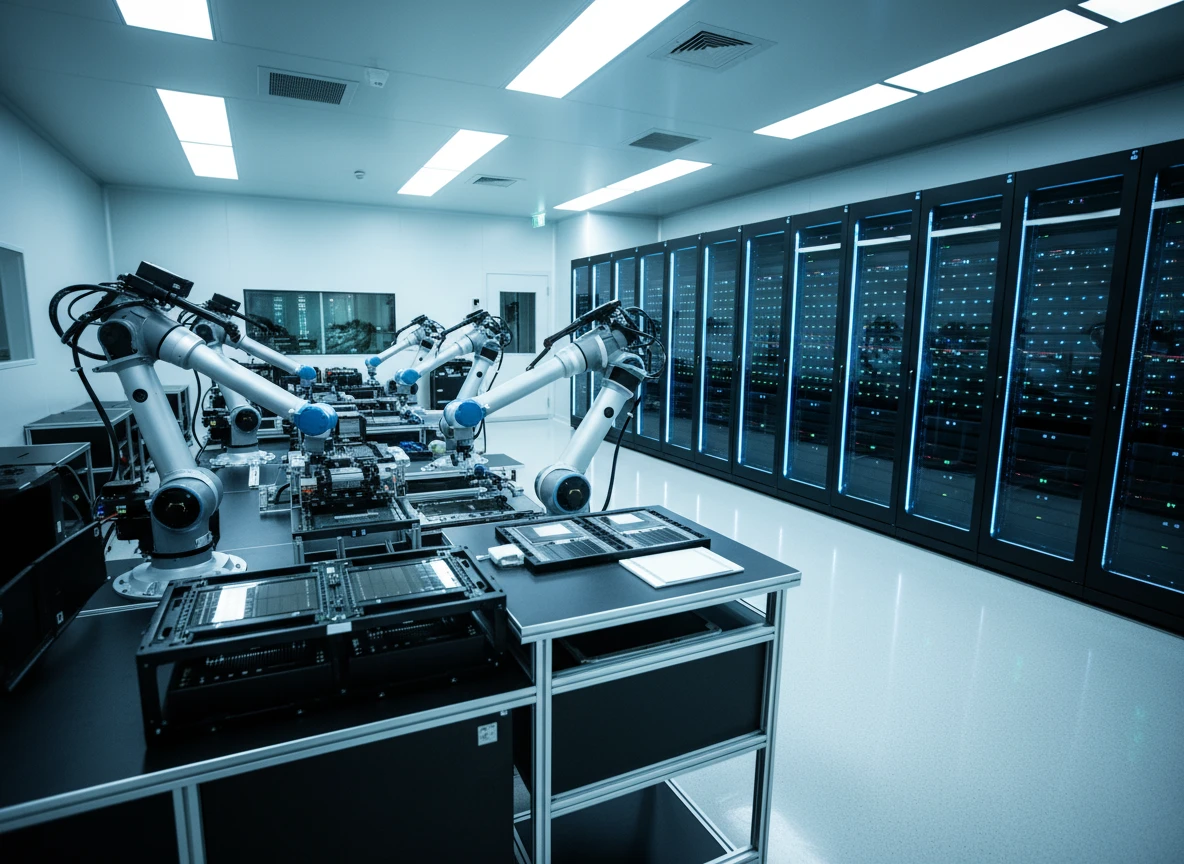
Every time you ask a chatbot to rewrite an email, a silent, incredibly expensive machine whirs to life in a data center you’ll never see. But have you ever stopped to wonder who is actually footing the bill for that casual query?
The current generative AI boom isn’t just a software revolution. Honestly, it’s a high-stakes corporate finance gamble. Tech giants are pouring hundreds of billions into specialized microchips, land, and power grids, hoping future returns will justify the eye-watering AI infrastructure spend. We’re talking about capital expenditures that routinely outstrip initial forecasts, sometimes pushing cash-rich firms into negative free cash flow territory. And let’s be honest, even the deepest corporate balance sheets have their limits when the cash burn is this intense.
Right now, the math is incredibly lopsided. Massive cash outflows are colliding with relatively modest direct revenues. It’s a classic infrastructure buildout pattern, reminiscent of the 1990s fiber-optic rush. Sure, the technology is undeniably powerful. But will the average business actually pay enough for these tools to cover the staggering cost of the hardware? Maybe not immediately.
Some of this expensive silicon will inevitably face obsolescence before the debt used to buy it is even paid off. When chips are updated every twelve months, last year’s multi-million-dollar server cluster can quickly become a stranded asset. It’s a brutal reality that tech-optimists often ignore: useful technology doesn’t always equal a profitable business model.
What is capex, anyway?
To understand why Wall Street is sweating over artificial intelligence, you have to look past the demos and stare at the balance sheet. We need to talk about tech capital expenditure. Simply put, capex is the money a company spends to buy, maintain, or upgrade physical assets like property, industrial buildings, or massive warehouses full of specialized microchips. It is an investment in long-term productive capacity. When a hyperscaler drops billions on a custom data center, that cash leaves the bank immediately, but accounting rules spread the expense out over years as the hardware depreciates.
That makes capex fundamentally different from operational expenditure, or opex. Opex covers the day-to-day bills keeping the lights on, like office Wi-Fi, cloud subscriptions, and employee salaries. Buying a server cluster is capex; paying the technician to plug it in is opex.
Think of it like buying a commercial bakery. The ovens, industrial mixers, and delivery vans are your capex. The flour, butter, and hourly wages for the bakers are your opex. If you misjudge demand, you’re stuck with expensive ovens that aren’t baking enough bread to pay for themselves.
This distinction matters right now because we are watching the biggest capex cycle in corporate history collide with unproven software monetization. Whenever markets get this euphoric about physical infrastructure, commentators start whispering about a capex bubble. The core anxiety isn’t whether advanced computing works, but whether the massive upfront outlays will ever generate enough cash flow to justify their staggering price tags.
Why the current spending frenzy has economists worried

According to recent venture capital estimates, the AI industry needs to generate roughly $600 billion in annual revenue just to pay for the massive data center infrastructure being built today. Yet, even the most optimistic tracking suggests actual generative AI software revenue is sitting somewhere under $20 billion. That leaves a massive, gaping hole of over $580 billion.
If we build on the bakery analogy from earlier, this is like buying a fleet of industrial bread ovens before anyone has actually walked through the door to buy a single loaf. Economists look at this mathematical mismatch and see the classic warning signs of a generative AI bubble. Tech giants are terrified of being left behind, so they keep overinvesting in AI chips like Nvidia’s H100s.
The friction lies in how fast this hardware loses value. A microchip bought today might lose half its economic utility in two years as faster, more power-efficient silicon hits the market. This means companies are borrowing heavily to buy assets that depreciate faster than they can generate cash. If these multi-billion-dollar data centers become obsolete before paying for themselves, the financial fallout could be severe.
Now, it’s possible that some of these massive bets will eventually pay off as enterprise software catches up. But the current pace of cash burn is putting unprecedented pressure on corporate balance sheets. When companies tap debt markets to fund rapidly depreciating assets, they’re playing a high-stakes game that rarely ends well for average shareholders.
Tracking the cash: how to spot a corporate solvency crisis
Spotting the cracks in the balance sheet
When capital spending consistently outpaces cash generation, companies must find money elsewhere. Usually, they borrow. This is where corporate solvency risks start to quietly mount behind the scenes, hidden under layers of optimistic growth projections.
A solvency crisis doesn’t explode overnight. It starts with a slow squeeze on operating cash. If those multi-billion-dollar data centers don’t generate immediate, cold hard cash, the interest payments on the debt used to build them will eat the firm alive. Soon, they’re borrowing just to service existing debt. It’s a dangerous, unsustainable treadmill.
To spot this early, look past the adjusted earnings hype. Focus on free cash flow instead. If free cash flow is deeply negative quarter after quarter while debt levels climb, you’re looking at a ticking clock. The company is relying entirely on the charity of debt markets to keep the lights on.
But many executives assume they can always refinance. That’s a lazy assumption. When interest rates are high, refinancing old debt with new, pricier debt only accelerates the bleeding.
The real disaster strikes when the underlying assets lose value faster than expected. If those expensive chips become obsolete in two years instead of five, the debt remains, but the asset value evaporates. That’s how a minor liquidity pinch morphs into a terminal solvency crisis. Lenders panic, credit lines dry up, and the math simply stops working.
Where beginners get it wrong about tech balance sheets

Imagine walking into a high-end data center and staring at a rack of brand-new, liquid-cooled graphics cards. Each one costs as much as a mid-sized sedan, and the company’s just bought eighty thousand of them. It’s easy to look at a tech giant’s balance sheet and assume they can easily absorb this massive AI infrastructure spend because they have billions in cash.
But that’s where the math gets messy.
First, cash reserves aren’t a bottomless well. When companies start overinvesting in AI, they’re often trading highly liquid cash for physical hardware that can’t be easily resold to pay off short-term debts. If the software revenue doesn’t start flowing soon, that pristine cash cushion evaporates, forcing even the giants to tap debt markets.
Second, beginners routinely ignore how fast these microchips rot. Unlike a corporate headquarters or a fiber-optic cable (which might depreciate over twenty or thirty years), advanced AI silicon has a brutally short shelf life. Chipmakers release faster, more efficient architectures every single year.
And this is where the real danger lies. Those forty-thousand-dollar chips might become economically unviable to run long before the company finishes paying off the loans used to buy them. Granted, some of this hardware might find a second life running simpler legacy tasks, but the financial loss from rapid obsolescence remains a massive, looming threat.
Lessons from history: when massive infrastructure builds went bust
Parallel paths to overcapacity
During the late 1990s telecom boom, companies laid over 80 million miles of fiber-optic cable, yet by 2001, less than 5% of that massive network was actually carrying active data. This wild overestimation of near-term demand triggered a brutal market reset. Trillions of dollars in market value evaporated, and telecom giants like WorldCom collapsed under the weight of their debt.
But look at where we are today. The physical infrastructure’s made of glass and silicon instead of steel rails, but the financial architecture is identical. In the 19th century, British railway mania saw thousands of miles of redundant tracks laid, culminating in the Panic of 1847. Investors lost everything, yet those tracks eventually formed the backbone of the modern British transport network.
And that is the messy reality of a major tech capital expenditure cycle. The society gets the revolutionary infrastructure, but the early investors get wiped out. If we face an AI market correction, it’s because we built too much of it, too quickly, with borrowed money. Some models suggest up to 60% of current data center capacity could face underutilization if enterprise adoption lags. Of course, this historical parallel isn’t a perfect predictor of our current AI trajectory, but the pattern of overbuilding is hard to ignore. We’ve seen this movie before, and the ending usually involves a lot of red ink.
What happens next if the numbers don’t add up?
The fallout of a reality check
If history is any guide, we won’t see a sudden, dramatic evaporation of artificial intelligence. Instead, an AI market correction usually starts with a quiet squeeze. Debt becomes more expensive, and public market investors start asking tough, uncomfortable questions about actual cash returns.
If the revenue gap doesn’t close soon, the generative AI bubble won’t just burst overnight,it will deflate through painful asset write-downs. We’ll likely see tech giants admitting that billions in specialized microchips are depreciating faster than they can monetize them. Some high-end infrastructure will simply be sold off at a steep discount, much like the dark fiber of the dot-com era.
But this doesn’t mean the technology disappears. The physical hardware stays in the server racks. The real winners of the next decade might be the lean, opportunistic startups that eventually buy up this cheap, depreciated capacity for pennies on the dollar.
So, how do you track this shift? Ignore the glossy product demos and focus on the boring stuff. Keep your eyes on quarterly free cash flow metrics and capital expenditure revisions. The real story isn’t in the chat prompts; it is buried deep in the financial statements. Will the hyperscalers blink first, or can they outrun the depreciation clock before the debt catches up?