
Why your content needs an answer engine optimisation strategy now
Understanding the Urgency: Why Answer Engine Optimisation (AEO) is No Longer Optional
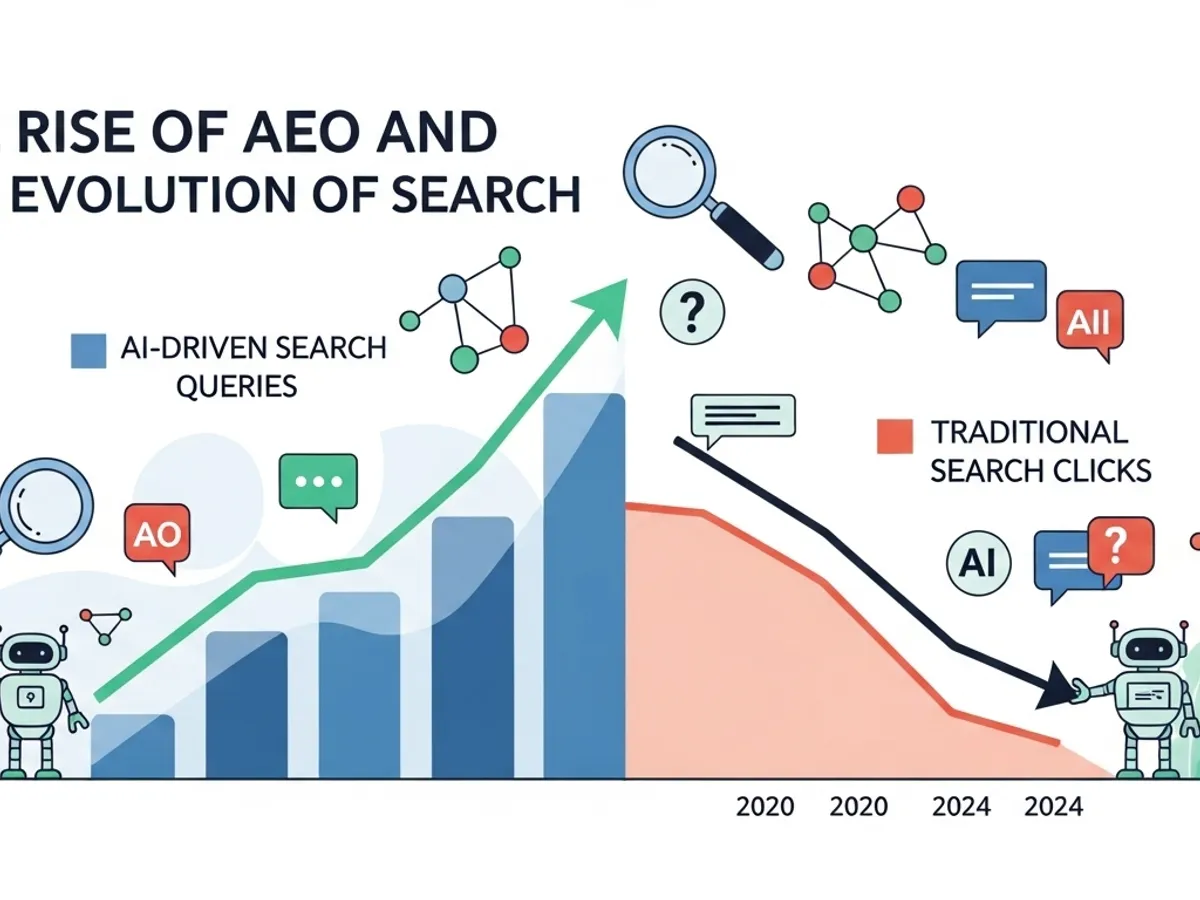
The digital landscape is undergoing a seismic shift. The rise of AI-driven search engines—think ChatGPT, Google Gemini, Perplexity, and Claude—demands a reevaluation of traditional SEO strategies. Sticking solely to those older tactics simply won’t cut it anymore. Answer Engine Optimisation (AEO) has rapidly transitioned from a ‘nice-to-have’ to an absolute necessity. Without it, your content risks becoming invisible in the very places people are increasingly turning to for information. Do you want to be left behind as AI takes center stage?
AEO is essential for maintaining your search visibility, generating consistent organic traffic, and ultimately, boosting your bottom line through increased sales. The core challenge is this: traditional SEO focused on ranking in a list of search results. Now, the game is about ensuring your content is discoverable and, crucially, citable by these intelligent, AI-driven search engines and chatbots. It’s no longer enough to be a result; you need to be the answer. This shift is profound and demands a strategic response.
Consider this: AI tools are designed to provide direct answers, often synthesizing information from multiple sources. If your content isn’t structured to be easily understood and cited by these AI systems, it simply won’t be included. That’s a lost opportunity—a missed chance to position your brand as an authority and capture the attention of users actively seeking information. The alternative is stark: decreased search visibility, dwindling organic traffic, and a loss of potential customers. Is that a risk you’re willing to take?

Step-by-Step Instructions: How to Implement an Effective AEO Strategy
Implementing an effective AEO strategy can seem daunting, but breaking it down into manageable steps makes the process far less intimidating. Let’s walk through a structured approach to optimising your content for this AI-driven world.
Step 1: Shifting from SEO to AEO – Understanding the Core Differences
At its heart, the transition from traditional SEO to AEO involves a fundamental change in perspective. While SEO traditionally focuses on improving a webpage’s position on search engine results pages (SERPs), AEO takes aim at a different target: getting your content explicitly mentioned in AI-generated answers across multiple AI platforms. Think of it this way: SEO is about ranking; AEO is about being cited. This distinction requires a strategic pivot.
The primary difference lies in the intended outcome. SEO is designed to drive clicks to your website. You want users to see your listing, click on it, and visit your page. AEO, on the other hand, prioritizes providing direct, authoritative answers to user queries, even if that means the user never actually clicks through to your site. This is sometimes referred to as “zero-click SEO,” where the user gets the information they need directly from the search engine’s answer.
Understanding this fundamental difference is the first and most crucial step in optimising for answer engines. It requires a shift from simply trying to attract traffic to actively seeking to become the trusted source of information that AI systems rely on. Traditional SEO still matters – you need a solid foundation of well-optimised content to even be considered by AI engines – but AEO adds a new layer of complexity and opportunity.
Consider the implications: you’re no longer just competing for a spot on the first page; you’re competing to be the definitive source of truth that AI chooses to highlight. This demands a different approach to content creation, keyword targeting, and overall strategy. Are you ready to make that shift?
Step 2: Understanding User Intent and Framing Content as Questions for AEO
The cornerstone of any successful AEO strategy lies in a deep understanding of user intent. What are people really asking when they turn to AI-powered search? What problems are they trying to solve? What information are they seeking? Answering these questions is paramount.
To effectively optimise for answer engine, you need to move beyond simply identifying keywords and start thinking in terms of questions. Instead of targeting the keyword “best coffee maker,” consider the questions a user might ask: “What is the best coffee maker for home use?” or “Which coffee maker is easiest to clean?”. Frame your content to directly address these questions.
The key is to anticipate the specific queries your target audience is likely to make. Conduct thorough keyword research, paying close attention to long-tail keywords and question-based searches. Tools like AnswerThePublic can be invaluable in uncovering the questions people are asking around a particular topic.
Once you’ve identified the key questions, structure your content to provide clear, concise, and authoritative answers. Start with the question itself, followed by a direct and immediate answer. Then, provide supporting details, explanations, and evidence to back up your answer. This question-forward approach ensures your content aligns with real intents and is easily “picked up” and cited by AI algorithms.
Think of your content as a comprehensive FAQ, designed to answer every conceivable question your audience might have. By anticipating user intent and providing direct, question-based answers, you significantly increase your chances of being featured in AI-generated responses. Are you framing your content as questions?
Step 3: Optimise for AI Language Models through Conversational Keyword Targeting
AI language models, such as those that power ChatGPT and Gemini, rely heavily on natural language processing (NLP) to understand and generate human-like text. To effectively optimize for answer engine, you need to speak their language—literally.
This means moving beyond traditional keyword targeting and embracing conversational keywords: the words and phrases people actually use when they speak or type in a natural, conversational manner. Instead of focusing solely on keywords like “running shoes,” consider phrases like “what are the best running shoes for beginners?” or “where can I buy cheap running shoes near me?”.
Optimize your content for AI language models by using these conversational keywords throughout your text, particularly in headings, subheadings, and the opening paragraphs of each section. This helps AI algorithms quickly identify the topic of your content and understand the intent behind it.
Furthermore, it involves writing in natural, conversational phrasing that favors the matching probabilities to the human prompts and long-format questions. Write as if you were explaining the topic to a friend or colleague, using simple language and avoiding jargon. The goal is to create content that feels authentic and human, not robotic and artificial.
Remember, AI is designed to understand and mimic human language. By using conversational keywords and writing in a natural style, you make it easier for AI to process your content and recognize it as a valuable source of information. Are you speaking the language of AI?
Step 4: Structuring Content for LLM Ranking and Perplexity Optimisation
Large Language Models (LLMs) form the foundation of most modern AI chat applications. These models analyze vast amounts of text data to understand and generate human-like language. If you want your content to rank well in these systems, you need to understand how LLMs work and structure your content accordingly.
For effective LLM ranking, structure your content to be easily scannable and digestible by AI models, starting with a concise answer to a user’s query. Present the most important information upfront, in a clear and straightforward manner. Use short paragraphs, bullet points, and numbered lists to break up the text and make it easier to read.
Use short, compelling headings and scannable elements like lists and tables to enhance readability and AI-friendliness. Think of your content as a series of easily digestible chunks of information, each designed to answer a specific question or address a particular point.
Consider using comparison tables and checklists to present complex information in a clear and concise format. These elements are particularly appealing to AI algorithms, as they provide structured data that can be easily extracted and synthesized.
Furthermore, be sure to include relevant schema markup to help AI engines understand the context and meaning of your content. Schema markup provides structured data that tells search engines what your content is about, making it easier for them to index and rank it. By structuring your content in a way that is both human-friendly and AI-friendly, you can significantly improve its chances of ranking well in LLM-powered search results. Is your content structured for LLMs?
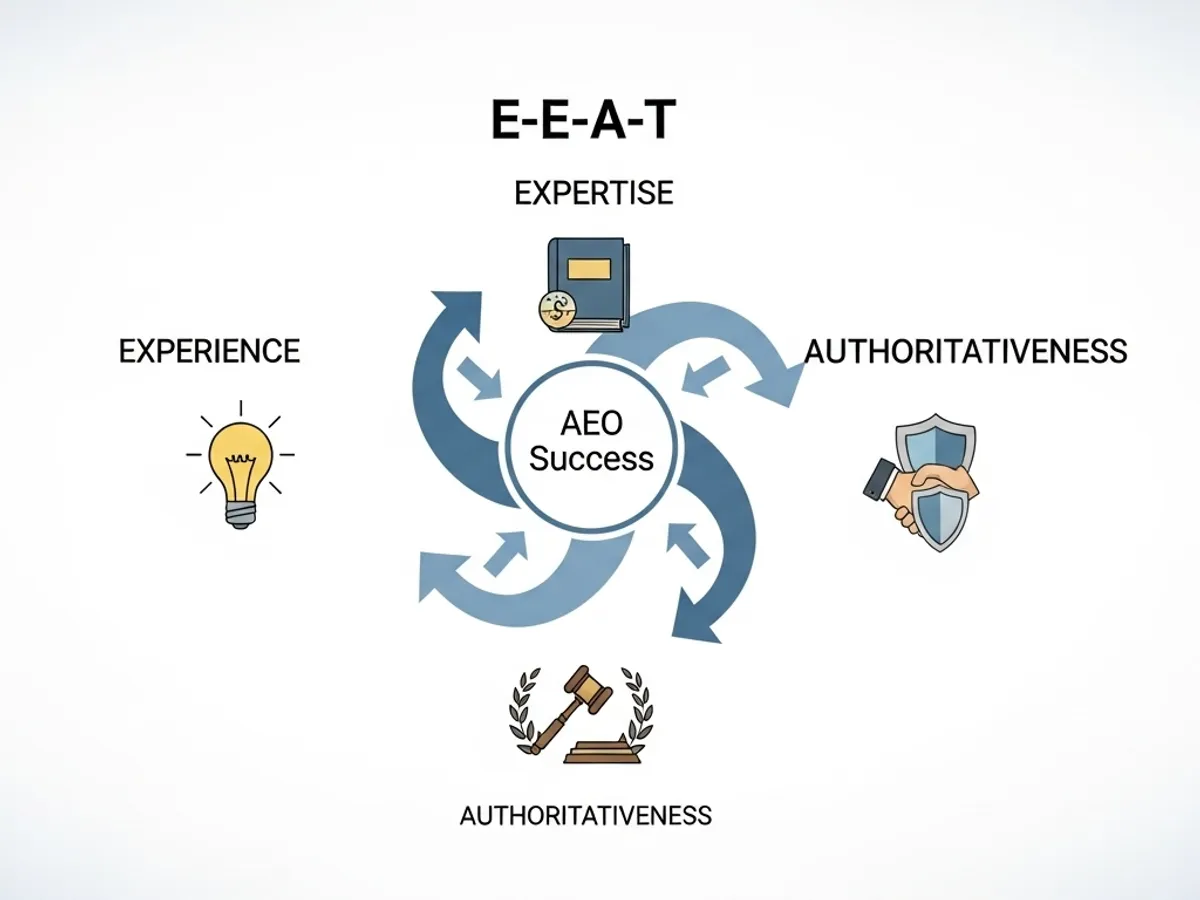
Step 5: Prioritising Authority and Trustworthiness (E-E-A-T) for AEO Success
In the world of AEO, authority and trustworthiness are paramount. Answer engines and AI models are designed to favor content from trusted, authoritative sources. If you want your content to be cited by these systems, you need to establish yourself as a credible source of information.
This is where the concept of E-E-A-T (Experience, Expertise, Authoritativeness, and Trustworthiness) comes into play. E-E-A-T is a set of guidelines that Google uses to evaluate the quality of content. While E-E-A-T is primarily used for traditional SEO, it is also highly relevant to AEO.
To establish authority, include author bios that highlight your experience and expertise in the relevant field. Cite credible sources to back up your claims and provide evidence to support your arguments. Share original research and data to demonstrate your knowledge and understanding of the topic.
Building trust signals is crucial for AEO, ensure your website is secure and trustworthy. Use HTTPS encryption, display trust badges, and provide clear contact information. Make it easy for users to verify your identity and contact you if they have any questions or concerns.
Furthermore, seek out mentions from high-authority sites in your industry. Earning backlinks from reputable websites can significantly boost your credibility and improve your chances of being cited by answer engines. By prioritizing authority and trustworthiness, you can ensure that your content is recognized as a reliable source of information. Are you building trust signals?

Step 6: Leveraging Schema Markup for Enhanced Search Visibility
Answer engines often rely on structured data to understand the context and meaning of content. This is where schema markup comes in. Schema markup is a type of code that you can add to your website to provide search engines with more information about your content. Think of it as a way to “label” your content so that AI engines can easily understand what it’s about.
By adding schema markup to your site for FAQs, how-tos, products, etc., you increase the chances that search engines interpret and directly present your content as an answer. For example, if you have a page that answers frequently asked questions, you can use FAQ schema to tell search engines that this page contains a list of questions and answers. This makes it easier for AI engines to extract the information and present it to users in a clear and concise format.
There are many different types of schema markup that you can use, depending on the type of content you have. Some common types of schema markup include:
- Article schema: Used for blog posts and news articles
- Product schema: Used for product pages
- FAQ schema: Used for frequently asked questions
- How-to schema: Used for how-to guides
- Recipe schema: Used for recipes
Implementing schema markup can be a bit technical, but there are many tools and resources available to help you get started. Google’s Structured Data Markup Helper is a great tool for generating schema markup code. By leveraging schema markup, you can significantly improve your content’s visibility in answer engine results. Are you using schema markup?
Step 7: Monitoring and Adapting Your AEO Strategy for AI Content Optimisation
The world of AI is constantly evolving. New algorithms are being developed, new technologies are emerging, and user behavior is changing. To stay ahead of the curve, it’s crucial to monitor and adapt your AEO strategy accordingly.
Track your content’s performance in AI-generated responses and adjust your approach based on the insights you gain. Use analytics tools to measure your organic traffic, track your keyword rankings, and monitor your citation share of voice (the percentage of times your brand is cited in AI-generated answers).
Pay close attention to the types of questions that AI engines are answering and the sources they are citing. Identify any gaps in your content and create new content to fill those gaps. Continuously refine your content and strategy to stay ahead of the curve in this dynamic environment.
Don’t be afraid to experiment with new approaches and techniques. Test different types of content, try different keyword strategies, and see what works best for your audience. The key is to be flexible and adaptable, always learning and evolving your strategy to meet the changing needs of the AI landscape. Are you monitoring and adapting?
Essential Tips and Warnings for Maximising Your AEO Strategy
To truly master answer engine optimisation, it’s not enough to just understand the basic steps. You also need to be aware of certain tips and warnings that can make or break your strategy. Let’s dive into some essential advice.
Tip 1: Focus on Platforms Most Relevant to Your Audience
In the rush to optimise for answer engine, it’s easy to fall into the trap of trying to be everywhere at once. However, a more strategic approach is to prioritise the platforms that are most relevant to your specific audience and business goals. Not all AI engines are created equal, and each one caters to a different user base and serves different purposes.
While ChatGPT and Google Gemini have the largest user bases and should be primary targets for most businesses, Perplexity AI is particularly valuable for B2B and professional topics due to its focus on authoritative sources. If you’re targeting a more niche audience, you may want to focus on smaller or more specialized AI engines.
Local businesses should prioritise platforms integrated with location services like Google Gemini and Apple Intelligence. These platforms are particularly useful for reaching local customers who are searching for businesses and services in their area. Starting with 2-3 platforms rather than trying to optimise for all engines simultaneously allows you to focus your efforts and resources on the platforms that will deliver the greatest return. Are you focusing on the right platforms?
Tip 2: Building Question Forward Sections that Map to Real Intents
Construct your content around clear, question-based sections that directly address user intents. This approach not only aids AI in extracting relevant information but also enhances user engagement by providing immediate answers to their queries. When creating your content, think about the questions your target audience is likely to ask. Then, structure your content around those questions, providing clear and concise answers that directly address the user’s intent.
This question-forward approach makes it easier for AI engines to understand the purpose of your content and extract the relevant information. It also makes it easier for users to find the answers they’re looking for, improving their overall experience. By building question-forward sections that map to real intents, you can create content that is both AI-friendly and user-friendly. Is your content question-forward?
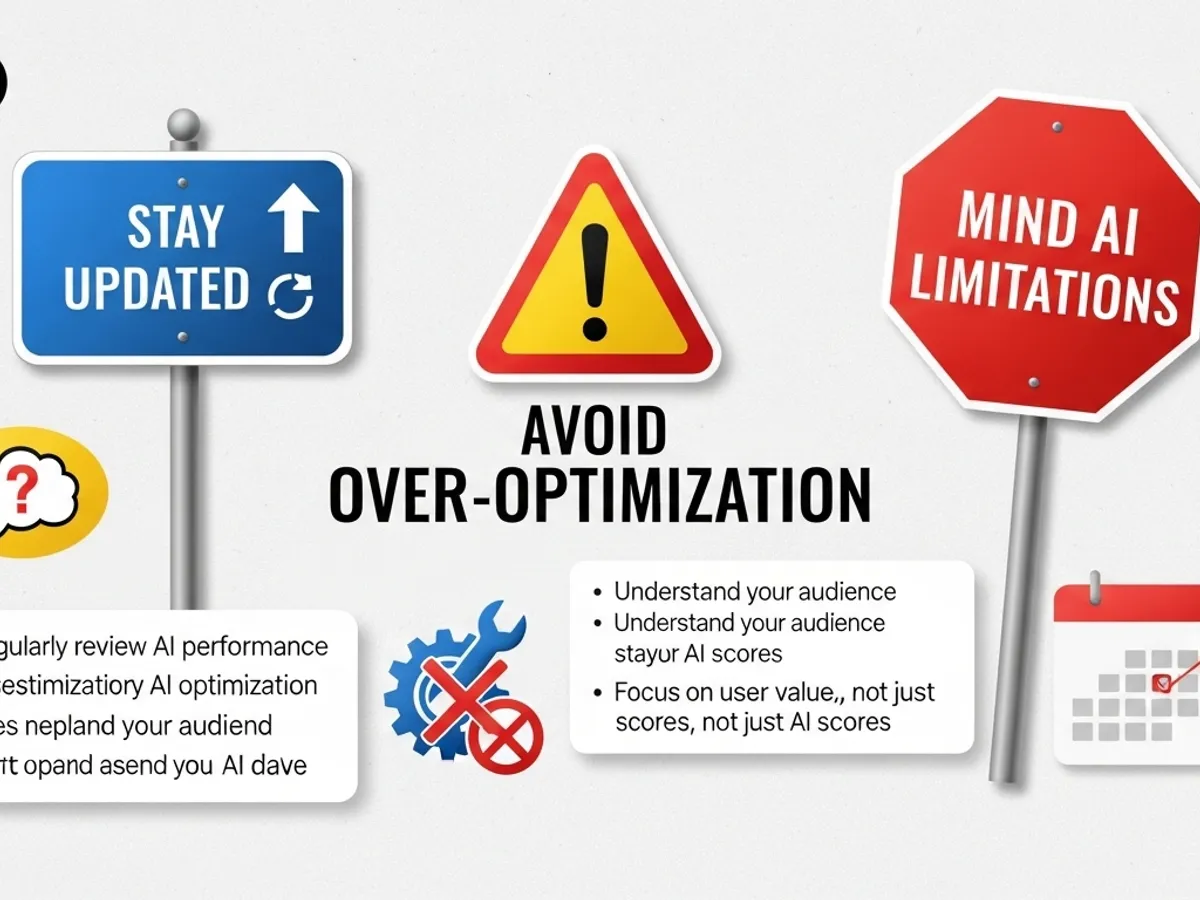
Tip 3: Avoid Over-Optimisation and Keyword Stuffing
While it’s important to optimise your content for AEO, it’s equally important to avoid over-optimisation and keyword stuffing. In the early days of SEO, it was common practice to stuff your content with as many keywords as possible in an attempt to trick search engines into ranking your site higher. However, this approach is no longer effective, and it can actually harm your rankings.
Search engines are now much smarter and can easily detect over-optimisation and keyword stuffing. If you try to game the system, you’re likely to be penalized. The key is to focus on creating high-quality, informative content that naturally incorporates relevant keywords. Use keywords where they make sense, but don’t force them into your content if they don’t fit naturally.
Remember, the goal is to create content that is helpful and informative for your audience, not just for search engines. By focusing on quality over quantity, you can create content that is both AI-friendly and user-friendly, leading to better rankings and more engagement. Are you avoiding over-optimisation?
Tip 4: Keep Statistics and Methods Up to Date for LLM Citation
In the world of answer engine optimisation, accuracy is essential. AI models are trained on vast amounts of data, and they are constantly learning and evolving. If your content contains outdated or inaccurate information, it’s likely to be ignored or even penalized by AI engines. This is particularly true for statistics, facts, and methodologies.
Ensure that your content, especially statistics, facts, and methodologies, are current and accurate. Regularly review and update your content to maintain its relevance and trustworthiness. Cite your sources and provide links to the original data whenever possible. This allows AI engines to verify the information and ensure that it is accurate.
Furthermore, be transparent about your methods and assumptions. Explain how you arrived at your conclusions and acknowledge any limitations or uncertainties. By being transparent and accurate, you can build trust with both AI engines and your audience. Is your content up to date?
Tip 5: Being Mindful of AI Engine Limitations
It’s important to remember that AI engines are not perfect. They are still under development, and they have certain limitations that you need to be aware of. One of the biggest limitations is that LLMs are probabilistic, not deterministic. This means that they don’t always provide the same answer to the same question. Different users can ask the same question and receive different answers and different sources.
This is because AI engines rely on algorithms and statistical models to generate their responses. These models are not always accurate, and they can be influenced by a variety of factors, such as the user’s location, search history, and personal preferences.
Be aware of these limitations and focus on creating high-quality, authoritative content that has a higher chance of being cited consistently. Don’t rely solely on AI engines to drive traffic to your site. Instead, use them as one part of a broader marketing strategy that includes traditional SEO, social media marketing, and email marketing. Are you mindful of AI limitations?

Conclusion: Embrace AEO to Secure Your Future in the AI-Driven Search Landscape
The rise of AI-powered search engines is not just a trend; it’s a fundamental transformation of the digital landscape. The implications are profound and far-reaching. Answer Engine Optimisation (AEO) is no longer an optional add-on to your marketing strategy; it’s an essential strategy for maintaining visibility, generating organic traffic, and driving high-purchase-intent traffic.
By understanding the core differences between SEO and AEO, implementing effective AEO techniques, and staying informed about the evolving AI landscape, you can ensure your content remains discoverable, citable, and valuable in this new era of search. The future of search belongs to those who adapt and embrace the power of AI. Are you ready to embrace AEO today to secure your future in the AI-driven search visibility landscape?
Quick Summary: AEO – The New Imperative for Content Strategy
Answer Engine Optimisation (AEO) is no longer an optional strategy but a necessity in the age of AI-driven search. Unlike traditional SEO, AEO focuses on optimising content to be directly cited and featured in AI-generated answers, increasing search visibility and driving high-intent traffic. By understanding user intent, optimising for natural language, prioritising authority, and leveraging structured data, brands can position themselves as trusted sources in the AI-powered search landscape. This proactive approach ensures content remains relevant, discoverable, and impactful as search continues to evolve.
FAQs: Answer Engine Optimisation (AEO)
What is the primary difference between SEO and AEO?
SEO aims to improve a webpage’s ranking on search engine results pages, while AEO focuses on getting your webpage mentioned in AI-generated answers across multiple AI platforms. AEO prioritizes direct answers for AI citations, not just website clicks.
Why is AEO important for my content strategy?
AEO is important because it drives more high-purchase-intent traffic to your website by ensuring your content is cited and mentioned in AI-generated responses. This boosts your brand’s search visibility in the AI-driven era.
How can I prioritise authority and trustworthiness in my AEO strategy?
Prioritise authority and trustworthiness by including author bios, citing credible sources, sharing original research, and earning mentions from high-authority sites. Focus on building your brand’s E-E-A-T (Experience, Expertise, Authoritativeness, and Trustworthiness).
What role does schema markup play in AEO?
Schema markup helps search engines interpret and directly present your content as an answer, increasing the chances of your content being cited in AI-generated responses. It provides structured data that AI can easily understand.
How often should I update my AEO strategy?
The AI landscape is constantly evolving, so it’s crucial to monitor and adapt your AEO strategy regularly to stay ahead of the curve. Continuous updates ensure your content remains optimized for the latest AI algorithms and user behaviors.
With GenWrite’s AI blog generator, you can easily create SEO-optimised content that ranks higher in search results and increases your website traffic. Start your free trial today and experience the power of AI content creation.