
Master generative AI to dominate search results with compelling content
1. Introduction: Harnessing Generative AI for Content to Dominate Search Engine Ranking
In today’s digital landscape, mastering generative AI for content is no longer optional but a necessity for anyone looking to dominate search results and create compelling content. The rise of AI SEO and AI content creation tools is rapidly changing how content is produced and consumed, making it essential to adapt your strategies to stay ahead. As a content strategy expert, I’ve seen firsthand how businesses can leverage AI writing tools to enhance their SEO strategies and achieve unprecedented growth in organic traffic. This guide provides a step-by-step framework for leveraging AI content creation to boost organic traffic and improve your search engine ranking. We’ll explore effective SEO strategies and content marketing techniques, focusing on LLM optimisation and answer engine optimisation to ensure your content stands out in the age of AI writing tools. This comprehensive approach will enable you to craft content that resonates with your target audience and achieves top rankings in search engine results pages (SERPs).
2. Step-by-Step Instructions: Crafting Compelling Content with Generative AI for Search Dominance
2.1. Laying the Foundation: Strategic Keyword Research with AI
Effective keyword research is the bedrock of any successful SEO strategy. Begin by identifying high-value keywords relevant to your niche, employing AI writing tools to analyze search trends and user intent. Consider both short-tail and long-tail keywords to capture a wider audience and address specific queries. For instance, if you’re in the fitness industry, AI algorithms can analyze search trends and user behavior to identify popular fitness-related topics and keywords like “best running shoes” or “workout leggings.” By understanding the intent behind these queries, you can create targeted content that resonates with your audience’s fitness goals and preferences. Use tools like HubSpot for keyword research and to uncover semantic keywords that enhance the context of your content. Understanding the intent behind these keywords is crucial for creating content that resonates with your audience and improves search engine ranking. As search engine algorithms evolve, understanding the nuances of keywords through AI-driven analysis becomes ever more critical to ensure your content aligns with user intent and search trends.
2.2. Generating High-Quality Content: Leveraging AI Content Creation Tools
Once you’ve identified your target keywords, leverage AI content creation tools like Writesonic and Divi AI to generate high-quality, engaging content. These tools can assist with drafting blog posts, articles, and website copy, saving you time and effort. For instance, Divi AI is a key tool many use for SEO-driven content creation. Focus on creating content that provides value to your audience, addressing their pain points and offering actionable solutions. Remember to refine and personalize the content generated by AI to ensure it aligns with your brand voice and maintains a unique perspective. You can use AI content creation tools to streamline keyword research, automate content outlining, generate high-quality drafts, and optimize on-page SEO elements with AI-powered insights.

2.3. Optimizing for Search Engines: Implementing Effective SEO Strategies
SEO strategies are crucial for ensuring your content ranks well in search engine results. Optimize your content with relevant keywords, ensuring they appear naturally within the text. Pay close attention to header tags, meta descriptions, and image alt tags to provide search engines with clear signals about the content’s topic and purpose. Implement internal and external linking strategies to improve your website’s authority and user experience. Use Surfer SEO to identify content gaps and optimize your content for better visibility in Google and AI chats. Remember, AI SEO combines traditional optimization with artificial intelligence tools, focusing on semantic search and user intent, and optimizes for AI-powered features such as Google’s AI Overviews and voice search results.
2.4. Mastering On-Page SEO: Structuring Content for Success
On-page SEO strategies are essential for enhancing your content’s visibility in search engine results. Ensure your content is well-structured with clear headings, subheadings, and bullet points to improve readability. Optimize your title tags and meta descriptions to entice users to click on your search result. Use semantic keywords to provide context and relevance to your content, signaling to search engines that you’re an expert content creator. For example, if you’re writing an article about “SEO techniques,” some relevant semantic keywords could be “search engine optimization,” “content marketing,” “link building,” or “on-page SEO.” By mastering on-page SEO, you can significantly improve your search engine ranking and attract more organic traffic. To further enhance your on-page SEO, consider using structured data markup, such as Schema.org tags, to help search engines understand your content and improve visibility in rich snippets and featured results.
2.5. Optimising for Generative AI: Focusing on GEO and AEO
As generative AI becomes more prevalent, it’s crucial to optimize your content for Generative Engine Optimization (GEO) and Answer Engine Optimization (AEO). This involves structuring your content to boost information gain and align with conversational queries. Use structured data markup, such as Schema.org tags, to help search engines understand your content and improve visibility in rich snippets and featured results. Focus on creating content that provides direct, conversational answers to user questions, ensuring it’s easily discoverable and useful in generative AI platforms. According to a June 2024 research study, Generative Engine Optimization (GEO) involves optimizing your content to be discoverable and useful in generative AI platforms, and, more importantly, to stand out among the many potential search results and data points that can be returned for a query or input.
2.6. Enhancing User Experience: Creating Compelling and Engaging Content
Creating compelling content that engages your audience is crucial for improving your search engine ranking and driving organic traffic. Use visual and interactive content, such as images, infographics, and videos, to capture your audience’s attention and keep them engaged. Focus on providing valuable information that addresses their needs and interests, building trust and establishing your brand as an authority in your niche. By enhancing user experience, you can increase dwell time and reduce bounce rate, signaling to search engines that your content is valuable and relevant. To create more compelling content, focus on user experience, track AI engagement, and iterate continuously to stay visible across both AI-driven and traditional search.
2.7. Analyzing and Iterating: Tracking Performance and Refining Strategies
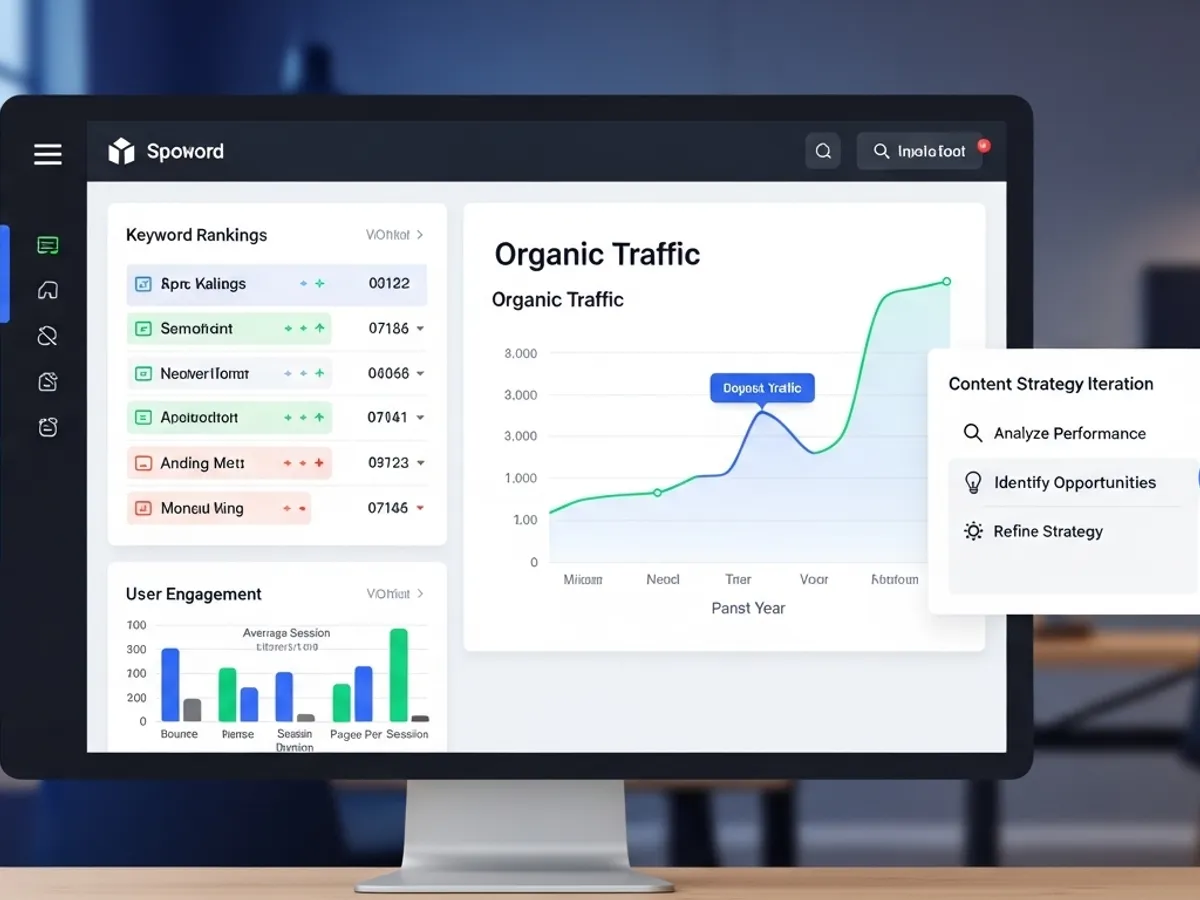
Regularly analyze your content’s performance using tools like HubSpot and Google Analytics to track key metrics such as organic traffic, search engine ranking, and user engagement. Identify areas for improvement and refine your SEO strategies accordingly. Pay attention to user feedback and adjust your content to better meet their needs and expectations. By continuously analyzing and iterating, you can ensure your content remains relevant, engaging, and optimized for search dominance. Before publishing your content, use an AI SEO tool to suggest and automatically create internal links within your website. Remember, AI SEO tools analyze webpage performance and content quality, providing recommendations to improve ranking factors such as backlinks, keywords, and user experience.
3. Tips and Warnings: Navigating the Generative AI Content Landscape
3.1. Avoiding Keyword Stuffing: Maintaining Content Quality and Readability
While it’s important to incorporate relevant keywords into your content, avoid the temptation to engage in keyword stuffing. Overusing keywords can negatively impact your content’s readability and user experience, potentially harming your search engine ranking. Instead, focus on using keywords naturally and semantically, ensuring they enhance the context and relevance of your content. Utilize variations and synonyms of your target keywords to maintain a natural flow and avoid repetition. Instead of keyword stuffing on your website, focus on semantic SEO strategies to enhance your website’s visibility and relevance to search queries.
3.2. Ensuring Accuracy and Factuality: Verifying AI-Generated Content
AI content creation tools can be incredibly helpful, but it’s crucial to verify the accuracy and factuality of the content they generate. Generative AI models can sometimes produce inaccurate or misleading information, so it’s essential to fact-check and validate all AI-generated content before publishing. Rely on reputable sources and expert knowledge to ensure your content is trustworthy and reliable. This is particularly important in industries where accuracy is paramount, such as healthcare, finance, and law. If you use AI SEO tools to create content, and it is optimized for E-E-A-T, it could potentially rank!
3.3. Addressing E-E-A-T: Demonstrating Expertise, Experience, Authoritativeness, and Trustworthiness
Google’s E-E-A-T guidelines emphasize the importance of expertise, experience, authoritativeness, and trustworthiness in content creation. To improve your content’s E-E-A-T, showcase your knowledge and experience in your niche. Cite reputable sources and provide evidence to support your claims. Build a strong online reputation by creating high-quality, valuable content that establishes you as an authority in your field. Focus on building trust with your audience by being transparent and honest in your content. One way to signal to Google that you’re an expert content creator is to ensure that your site gets a high-quality rating.
3.4. Staying Updated: Adapting to Algorithm Changes and AI Advancements
The SEO landscape is constantly evolving, with search engine algorithms and AI technologies changing rapidly. Stay updated on the latest trends and best practices by following industry blogs, attending webinars, and participating in online communities. Adapt your SEO strategies to align with algorithm updates and AI advancements, ensuring your content remains optimized for search dominance. Be prepared to experiment with new techniques and tools to stay ahead of the curve. This is especially crucial as generative SEO (GEO) optimizes content for AI-driven search engines like ChatGPT, Gemini, and Google’s AI Overviews, helping brands appear in AI-generated answers and get cited as authoritative sources.
3.5. Combining AI with Human Oversight: Maintaining Quality and Uniqueness
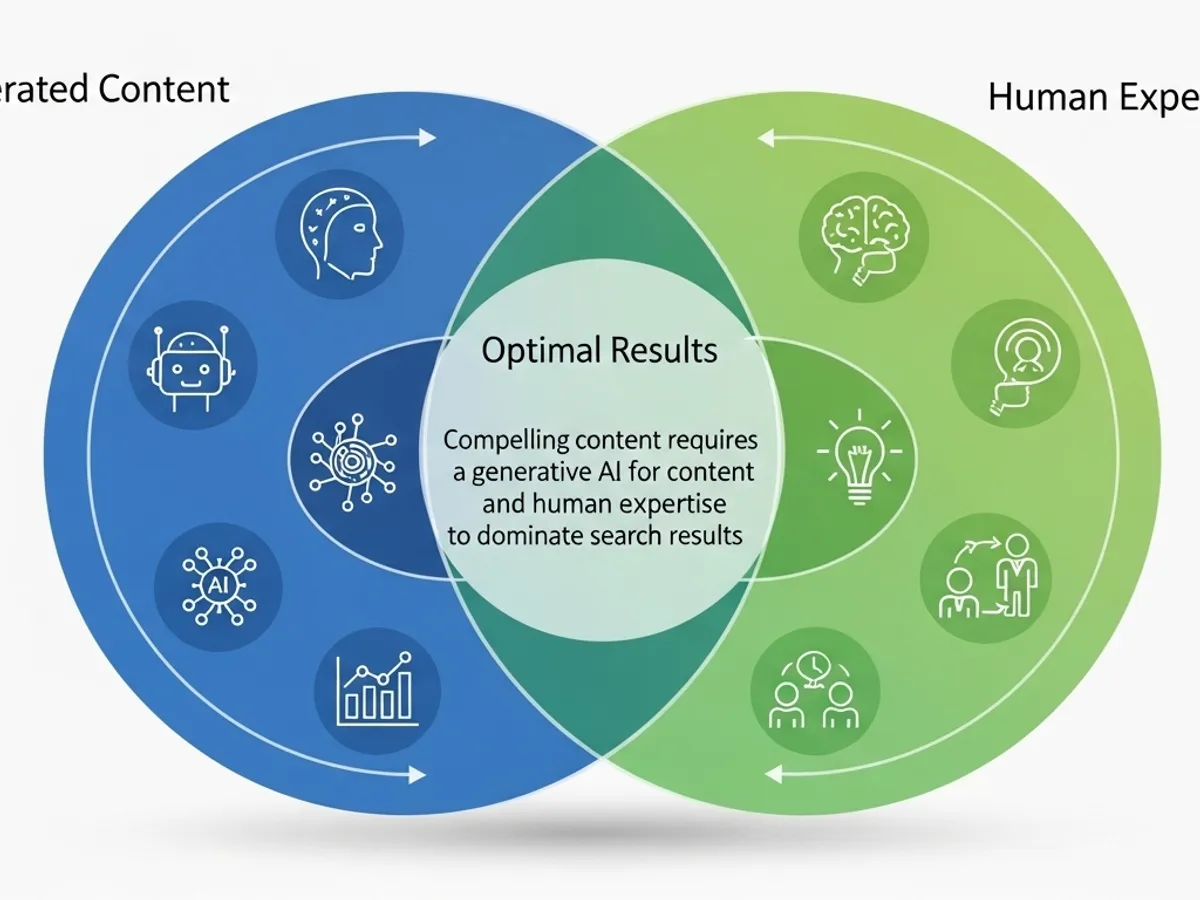
While AI content creation tools can streamline the content creation process, it’s important to combine AI with human oversight. Use AI to generate ideas and draft content, but rely on human editors and writers to refine and personalize the content. Human oversight ensures your content maintains its quality, uniqueness, and brand voice, preventing it from sounding generic or robotic. By combining AI with human expertise, you can create content that is both efficient and effective. Let AI generate ideas, but refine and personalize content for quality and uniqueness.
4. Conclusion: Mastering Generative AI for Sustainable Search Dominance
Mastering generative AI for content is essential for achieving sustainable search dominance and creating compelling content in today’s digital world. By implementing the SEO strategies and techniques outlined in this guide, you can leverage AI content creation to boost organic traffic, improve your search engine ranking, and engage your target audience. Remember to focus on creating high-quality, valuable content that provides direct, conversational answers to user questions, optimizing for both traditional search engines and generative AI platforms. With continuous analysis, iteration, and adaptation, you can harness the power of generative AI to achieve long-term success in the ever-evolving digital landscape. To further enhance your SEO efforts, focus on LLM optimisation and answer engine optimisation to ensure your content stands out in the age of AI writing tools.
Quick Summary
In this comprehensive guide, we explored how to master generative AI for content to dominate search results and create compelling content. We delved into strategic keyword research, leveraging AI content creation tools, implementing effective SEO strategies, and optimizing for Generative Engine Optimization (GEO) and Answer Engine Optimization (AEO). The guide emphasized the importance of enhancing user experience, analyzing performance, and iterating on strategies for continuous improvement. By combining AI with human expertise and staying updated with algorithm changes, you can achieve sustainable search dominance and drive organic traffic growth to your website.
Frequently Asked Questions (FAQs)
What is generative AI for content, and how can it benefit my SEO strategy?
Answer: Generative AI for content refers to using artificial intelligence to automatically generate various forms of content, such as blog posts, articles, and website copy. It benefits your SEO strategy by saving time, improving content quality, and identifying relevant keywords to boost your search engine ranking.
How can I ensure the accuracy and factuality of AI-generated content?
Answer: To ensure the accuracy of AI-generated content, always fact-check and validate the information before publishing, relying on reputable sources and expert knowledge to verify the content’s trustworthiness.
What is Generative Engine Optimization (GEO), and why is it important?
Answer: Generative Engine Optimization (GEO) involves optimizing your content for generative AI systems, such as ChatGPT and Google’s AI Overviews. It’s important because it helps your content appear in AI-generated answers, increasing its visibility and authority in AI-driven search results.
How can I improve my content’s E-E-A-T (Expertise, Experience, Authoritativeness, and Trustworthiness)?
Answer: To enhance your content’s E-E-A-T, showcase your knowledge and experience in your niche, cite reputable sources, build a strong online reputation, and focus on building trust with your audience by being transparent and honest in your content.
What are some tips for avoiding keyword stuffing when using AI content creation tools?
Answer: To avoid keyword stuffing, focus on using keywords naturally and semantically within your content, utilizing variations and synonyms of your target keywords to maintain a natural flow and avoid repetition, which enhances readability and user experience.
Unlock your blog’s SEO potential with AI-driven content strategies that elevate your content and drive traffic with GenWrite.