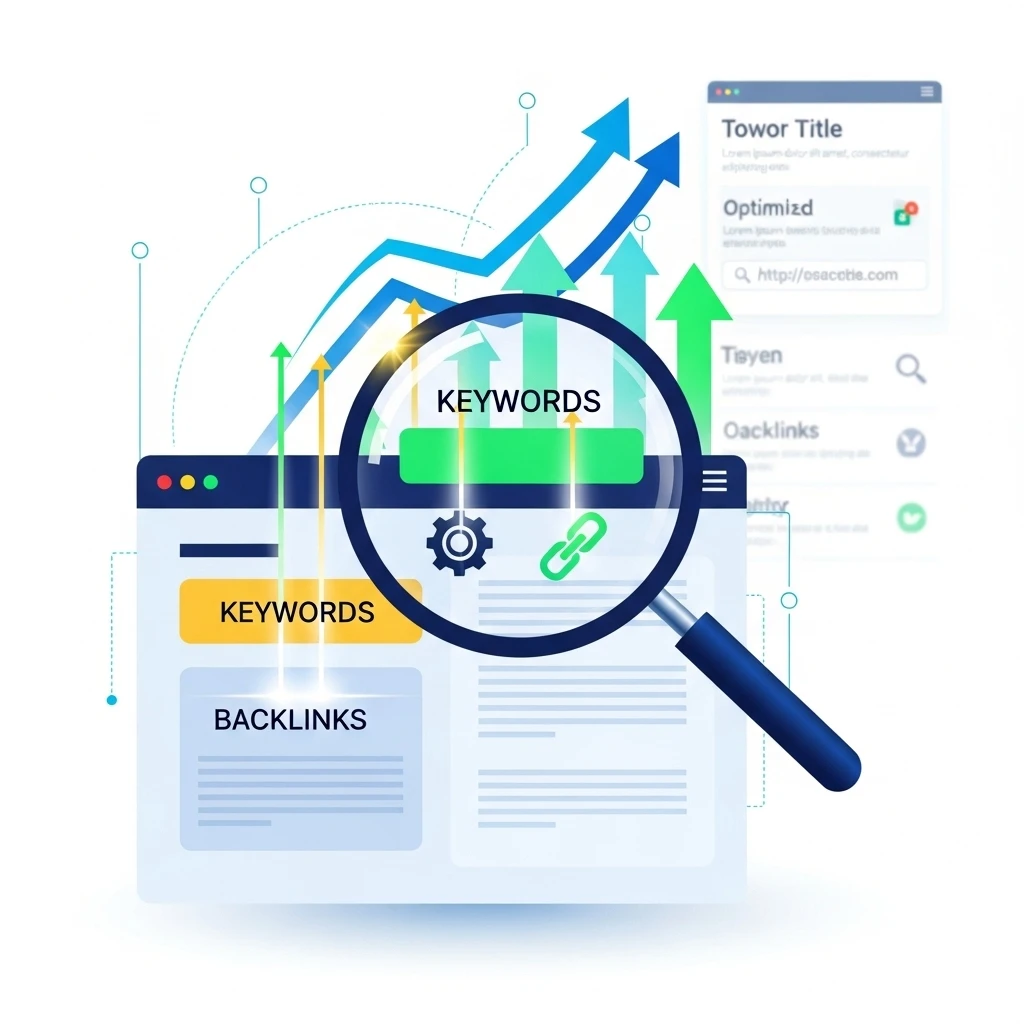
Making Your Site Visible: A Primer on Search Engine Optimization
Stepping out of the shadows: why your website needs search engines

You’ve poured your heart into a fantastic website, but it’s met with crickets. No traffic, no engagement. The harsh reality? Without search engines, your site is practically invisible. This isn’t just a minor setback; it’s a fundamental problem for anyone trying to build an online presence. But don’t worry, you’re not alone, and you can absolutely change this.
So, why does your website need search engines? Because that’s exactly where your audience is. Think about how you find information. When you want to buy something, learn something, or find a service, where do you start? Google, right? Your potential customers behave the same way. A 2024 study shows the top organic result in Google gets almost 28% of the clicks, illustrating just how important ranking high is. If you want to be found, you simply must be visible in search results.
This guide is for you if you’re a beginner, maybe a small business owner or a new content creator, asking, “How do I get my website seen?” You might feel intimidated by the jargon or the perceived complexity of search engine optimization (SEO). That’s understandable, but the core concepts are accessible, and the payoff is huge. And don’t forget, a significant 90.63% of all web pages get zero organic search traffic from Google, making a deliberate strategy essential for success.
In this guide, we’ll break down the fundamentals. You’ll learn the core principles of search engine optimization and discover why it’s so important for your website’s success. We’ll explore the basics of SEO and how you can get started, even if you know nothing about it right now. We’ll also look at the role of AI in SEO and how you can leverage it.
We’ll cover how to improve your website’s visibility and attract more organic traffic. You’ll understand the importance of keyword research, on-page optimization, and why creating high-quality content is so essential. You’ll also learn about common pitfalls and the benefits of using AI SEO tools to make this process easier. Plus, we’ll show you the steps to humanize your AI-generated content effectively. The goal? To give you the essential knowledge for building a website that not only exists but thrives online, connecting you with the audience you’ve been missing.
Decoding SEO: what is search engine optimization, really?
So, you know your website needs search engines. But what is search engine optimization (SEO) at its core? It’s the art and science of making your website more visible in search engine results. When someone types a query into Google, the goal of SEO is to get your site to show up as high as possible for relevant searches. The higher you rank, the more organic traffic you get. A 2024 Backlinko study found the top result snags nearly 28% of the clicks. It’s a pretty big deal.
Think of it this way: imagine you’re opening a new restaurant. SEO is like strategically choosing your location, designing an attractive storefront, and then shouting your restaurant’s name (and what you serve) from the rooftops. You’re trying to attract the right customers—those actively looking for what you offer.
But the ‘art and science’ part is where things get genuinely interesting. The ‘art’ is about creating compelling, user-friendly content that people actually want to read and share. It’s about understanding your audience and speaking directly to their needs. The ‘science,’ on the other hand, involves understanding how search engines like Google work. This is a constantly evolving puzzle. Google uses incredibly complex algorithms to determine which websites are most relevant, authoritative, and trustworthy for a given search query. To rank well, you really need to optimize your website for both these human and machine factors. This can feel like a moving target sometimes.
This involves a range of specific tactics. Keyword research helps you understand precisely what people are searching for and the language they use. On-page optimization ensures your website’s content and underlying structure are clear, relevant, and easily understood by both users and search engine crawlers. Then there’s off-page optimization, like building backlinks from other reputable sites. This signals to Google that your site is a valuable resource. For anyone new, I highly recommend checking out this guide to AI SEO. It details the impact of AI on search engine optimization. It’s a good starting point, especially as AI continues to reshape the digital landscape. You’ll also want to consider how to humanize content if you’re using AI for generation, as robotic text can hinder reader connection and SEO efforts.
Ultimately, SEO isn’t about tricking Google. It’s about providing genuine value to users. Tools like GenWrite can help you automate many of the time-consuming tasks associated with SEO, such as keyword research and content creation. This lets you focus on delivering that value. It’s a long-term game, to be sure. But the payoff—increased organic traffic, brand visibility, and qualified leads—is well worth the sustained effort. It might not be a quick fix, but a well-executed SEO strategy often proves to be one of the most sustainable and impactful marketing channels available.
The undeniable numbers: why ignoring SEO costs you

You understand the fundamentals of SEO. You know it’s about getting your site to rank higher in search results. But what’s the real cost of not prioritizing SEO? The numbers paint a clear picture.
Consider this: A 2024 study by Backlinko found that the top organic result on Google gets an average click-through rate (CTR) of 27.6%. That’s a massive chunk of potential visitors. The tenth result captures only a tiny fraction of that attention. This gap shows a basic fact: if you aren’t on the first page, you’re losing out.
Beyond just being seen, SEO directly affects your revenue. Search Engine Journal reports that SEO leads have a 14.6% close rate. That’s much higher than many other channels. People who find you via search are actively looking for what you offer. They’re far more likely to become customers. Compare that to the 1.7% close rate for outbound leads, and SEO’s value is obvious.
Now, what about the cost of doing nothing? Ahrefs discovered that almost 91% of web pages get zero organic traffic from Google. Zero! That’s a lot of time, effort, and money spent on a website that’s essentially invisible. Without a solid SEO strategy, your website likely gets lost in the digital noise. It’s like having a great shop in a back alley nobody visits.
Of course, doing SEO properly requires an investment. But here’s the key point: the investment usually pays off. Pay-Per-Click (PPC) advertising can deliver immediate results. However, those results stop the moment you stop paying. SEO, conversely, offers growing returns over time. A blog post might cost a few hundred dollars to create, but it can bring in thousands in ‘free’ organic traffic for years. I’ve seen this happen, which is why I strongly believe in the power of SEO optimization.
For instance, companies like NerdWallet have become leaders in personal finance by focusing on in-depth, authoritative content and ‘Topic Clusters.’ They built main pages for broad terms like ‘best credit cards’ and linked them to hundreds of specific reviews. This strategy helped them keep top rankings even with intense competition. This smart content approach, often boosted by advanced AI SEO tools, can significantly improve your online presence.
If you’re seeking a simpler, faster method, look into tools like GenWrite. It’s an AI platform that automates blog creation with a focus on SEO. GenWrite assists with keyword research, competitor analysis, and content generation. This helps you boost website traffic and organic reach more quickly.
Ignoring SEO is more than just a missed chance; it’s a competitive disadvantage. It allows your rivals to easily claim the top search spots. You’ll be left fighting for minimal attention. You’ll miss out on valuable leads and potentially lose revenue. The data is undeniable. Investing in an SEO optimization service isn’t optional; it’s necessary for anyone aiming for online success and a secure digital future.
Your first moves: building an SEO-friendly foundation
So, you’re convinced SEO is a must. Great! But where do you begin? You can get started easily by laying a solid SEO foundation; it doesn’t require a computer science degree. With some focused effort, you can make significant strides, and that’s what I’ll cover in this section.
Keyword research: the cornerstone
Before you write a single word, you need to understand what your audience is searching for. This is where keyword research comes in. Use tools to identify the terms people are actually using. Don’t just guess; use data. Think about the problems your content solves. For example, if you’re a local plumber, you might focus on terms like “plumber near me” or “emergency plumbing services.” Tools like the free version of Google Keyword Planner can provide a good starting point, but I often recommend more advanced options like Ahrefs or SEMrush for deeper insights. These platforms give you search volume, competition metrics, and even suggest related keywords you might not have considered. Don’t fall into the trap of targeting only the most popular keywords, either. Long-tail keywords, which are longer and more specific phrases, can be less competitive and attract highly targeted traffic. This can lead to a higher conversion rate. In fact, teams using continuous deployment pipelines often see similar gains in efficiency. For more help, an AI keyword research tool can simplify this process, helping you uncover valuable opportunities.
Technical SEO: making it crawlable
Technical SEO is the behind-the-scenes work that helps search engines understand and index your site. Honestly, it’s not glamorous, but it’s essential. Make sure your website is mobile-friendly, as Google prioritizes mobile-first indexing. This means that if your site isn’t responsive, you’ll struggle to rank. Ensure your site has a sitemap, which is a roadmap for search engine bots. Submit this sitemap to Google Search Console to help them crawl your site efficiently. Also, optimize your site’s loading speed. Slow sites frustrate users, and Google takes page speed into account. Tools like Google’s PageSpeed Insights can help you identify areas for improvement. I’ve found that using GenWrite can speed up blog creation, especially when it comes to the technical SEO elements. This is because GenWrite integrates an efficient process, which can help ensure your blogs are optimized for search engines from the outset. You can also monitor your website ranking using a website ranking checker.
On-page optimization: content is king
Once you have your keywords and a technically sound site, it’s time to focus on your content. This is where you create value for your audience. Use your target keywords naturally in your content, but don’t overdo it. This is where keyword stuffing, or overuse, can hurt you. Write compelling, original content that provides value to the reader. Use clear headings and subheadings to structure your content, making it easy to read and navigate. Include relevant images and videos to enhance the user experience. Make sure your content is well-written, error-free, and easy to understand. Remember, Google is getting better at understanding context and user intent. Create content that answers the questions your audience is asking. It’s really that simple. For assistance with crafting optimized content, consider an automated on-page SEO writing solution.
Starting with these foundational elements will set you on the right path. It might seem like a lot, but the payoff is worth the effort. By focusing on keyword research, technical SEO, and on-page optimization, you’ll build a website that’s not only visible to search engines but also truly valuable to your audience. And that’s the ultimate goal, isn’t it? GenWrite, an AI SEO tool, can assist with all these steps and help you get better results, turning your SEO efforts into tangible growth for your online presence. You can learn more about how AI is transforming optimization on the GenWrite blog.
Avoiding the usual traps: beginner mistakes that kill visibility

So, you’ve put in the work: keywords are researched, your site’s technically sound (we hope!), and you’re eager to share your content. That’s a great start! But wait. Before you publish every idea, let’s discuss common beginner mistakes. I’ve seen these errors really hurt SEO efforts, wasting creators’ time, money, and causing a lot of frustration. Avoiding these pitfalls early can significantly boost your site’s visibility.
The Keyword Stuffing Trap
It’s so tempting, right? You have your keywords and want to ensure Google knows what your page is about. You might want to cram those keywords into every sentence, header, and even image alt text. Don’t do it! Keyword stuffing often leads to penalties. Google’s algorithms are smart; they’ll spot this tactic and penalize you with lower rankings. Instead, focus on naturally weaving keywords into well-written, engaging content. This isn’t just for Google; it keeps readers happy and improves their experience. Tools like GenWrite can help, suggesting natural keyword integration as you write.
Neglecting Technical SEO Basics
You might have amazing content, but if your site is slow, not mobile-friendly, or has a confusing structure, you’re fighting an uphill battle. These technical aspects are the foundation of good SEO. Make sure your site is responsive, working perfectly on all devices, and has a clear sitemap for search engines to crawl. Speed matters too; a fast-loading site is essential. Also, check for broken links regularly. Beginners often overlook technical SEO, but it’s crucial for search engine success. Wondering how your site performs? GenWrite’s SEO content optimization tool can analyze your site and point out technical issues you might have missed.
The Illusion of ‘Set It and Forget It’
SEO is an ongoing process, not a one-time task. You can’t just optimize your site, publish some posts, and expect big results immediately. SEO demands consistent effort, patience, and adaptability. Search engine algorithms change, user behavior shifts, and competitors are always improving their rankings. You’ll need to consistently create quality content, track your performance, and adjust your strategy. This means regular keyword research, content updates, and ongoing link building. While GenWrite can automate parts of this, you still need to stay informed and involved.
The Link-Building Blunder
Links are a powerful ranking factor, but not all are equal. Your main goal should be earning high-quality, relevant links from authoritative sites. Avoid spammy tactics like buying links or joining link farms. These can easily lead to severe penalties from Google. Instead, focus on creating truly valuable content that other websites will naturally want to reference and link to. Guest blogging on reputable sites, building relationships with other bloggers, and using social media are effective ways to build a strong, high-quality backlink profile. For more on this, check out GenWrite’s blog on dominating search results.
The Content Quality Conundrum
Content quality is paramount; it’s the foundation. It doesn’t matter how well you optimize if your content is thin, unoriginal, or poorly written. Google consistently favors high-quality content that truly provides value. So, focus on creating in-depth, informative, and engaging content that answers your audience’s questions and solves their problems. Ensure your content is well-researched, accurate, and kept current. If you’re struggling with content quality or need help developing a content strategy, GenWrite’s AI blog generator can help you craft compelling and SEO-friendly content.
Winning locally: putting google my business to work
So, you’ve sidestepped the common beginner traps in SEO. That’s great! But if you’re a local business, there’s another battlefield where you can quickly gain ground: Google My Business (GMB), now known as Google Business Profile. What’s the point of ranking on page one if your target customers can’t find you when they’re searching nearby? Let’s get practical about making your local presence shine.
First, claim and fully optimize your profile. This isn’t just about filling out the basics; it’s about treating each field as a chance to signal relevance to Google. You’ll want to include your business name, address, phone number (NAP), website URL, and a detailed description that uses relevant keywords. Don’t be shy about adding high-quality photos and videos. Remember that Joy Hawkins’s experiment showed a 35% increase in actions just by adding photos. For instance, a small bakery in Brooklyn saw a 40% jump in walk-in customers after updating their GMB with mouth-watering photos of their fresh pastries and a virtual tour. It’s surprising how many businesses overlook this simple step. {image:google-business-profile-dashboard.png}
Next, actively solicit and manage your reviews. Positive reviews are a major ranking factor, and they build trust with potential customers. It’s smart to respond to every review, both positive and negative. Thank people for their feedback and address any concerns professionally. You can use tools like GenWrite to help generate personalized responses to reviews, saving you time. Did you know that 98% of consumers use the internet to find local businesses? (BrightLocal, 2024). In fact, a 2024 BrightLocal study confirms that your online reputation really is everything for local searchers.
Then, make the most of GMB’s features. Post updates regularly to share promotions, new products, and events. Use the messaging feature to communicate directly with customers. Consider adding a booking button if applicable. And don’t forget to track your performance. Google provides analytics that show you how customers are finding your profile and what actions they’re taking. Use this data to refine your strategy. You can also use GenWrite to automate your GMB posts, making consistent updates a breeze. Imagine a local gym posting daily workout tips or class schedules automatically, keeping their profile fresh and engaging without constant manual effort.
So, if you’re serious about local success, remember this: an optimized Google Business Profile isn’t just a listing; it’s your dynamic digital storefront, ready to attract and welcome customers right to your door. And with smart tools like GenWrite, keeping it fresh and engaging is simpler than ever, allowing you to focus on running your business.
Beyond the basics: resources for continuous learning
You’ve probably got the basics down. Keyword research, site structure, maybe even a Google Business Profile are in your toolkit. But SEO isn’t static. It’s always changing. To stay ahead, you need to keep learning. Luckily, there are plenty of resources out there. Here are a few categories to help you improve your SEO game.
Blogs to Follow
For deep dives and the latest industry news, check out these blogs:
- Search Engine Land: This site offers daily updates, in-depth articles, and practical guides. They cover a wide range of SEO topics, from technical details to content marketing. It’s comprehensive.
- Search Engine Journal: Here, you’ll find a mix of news, how-to guides, and opinion pieces. They often feature case studies and interviews with industry experts, which are insightful.
- Ahrefs Blog: Ahrefs, a popular SEO tool, shares advice often backed by its own data and research. They cover link building, content strategy, and technical SEO. You can even see their detailed analysis of average SEO pricing across the industry.
Books to Read
If you prefer a more structured learning path, these books offer solid coverage:
- SEO for Dummies by Peter Kent: A classic for a reason. It’s a great starting point for understanding fundamentals and staying current.
- The Art of SEO by Eric Enge, Stephan Spencer, Jessie Stricchiola, and Rand Fishkin: This book dives deep into technical SEO, content strategy, and link building.
Tools to Explore
Beyond the basics, you’ll need tools to track progress and find new opportunities:
- Ahrefs: This is a full SEO toolkit for keyword research, competitor analysis, and backlink analysis. Ahrefs provides data-driven insights that are valuable for your SEO strategy.
- SEMrush: Like Ahrefs, SEMrush has a wide range of features, including site audits, rank tracking, and content marketing tools. If you’re looking for an all-in-one SEO optimization service, SEMrush is a strong choice.
- Google Search Console: This free tool from Google lets you monitor your site’s performance in search results. You can track indexing status, identify technical issues, and see which keywords drive traffic. It’s essential for any SEO strategy.
Community & Courses
Don’t overlook the power of community and formal training. They’re important.
- SEO forums: Forums like the Moz community are great places to ask questions, share insights, and connect with other SEO professionals. You’ll find help on everything from transforming your content strategy using AI SEO generators to complex technical audits.
- Online courses: Platforms like Coursera, Udemy, and Skillshare offer many SEO courses. These range from beginner introductions to advanced specializations in areas like local SEO or e-commerce SEO.
SEO is a lot of work. That’s where a tool like GenWrite can help. GenWrite uses AI to automate many time-consuming SEO tasks, from keyword research to content creation. It’s a way to accelerate your results.
This list is just a start. The best way to learn SEO is to practice, experiment, and stay curious. The more you immerse yourself in search engine optimization, the better you’ll get. If you’re looking for a serious boost, check out GenWrite and see how it can help you get ahead.
Taking the leap: your site deserves to be found
You’ve come this far. You’ve seen the numbers, grasped the basics, and understand the potential pitfalls. What’s next? The truth is, the toughest part of SEO isn’t knowing the concepts; it’s actually starting. You have the knowledge. Now, put it to work.
It might feel overwhelming. But really, everyone starts somewhere. You don’t need to be perfect. Just begin. Start with the fundamentals: ensure your site is crawlable, your content is easy to read, and your keywords hit the mark. Build from there.
Consider this: Ahrefs reports that 90.63% of web pages get absolutely no organic traffic from Google. That’s a massive opportunity for you. Implement just a few of the strategies we’ve covered, and you’ll already be ahead.
And you’re not on your own. Tools exist to help. Take GenWrite, for example. It can streamline your content creation and SEO efforts. GenWrite helps with tasks like keyword research and analyzing competitors. This lets you concentrate on your core business.
So, why wait? Make the jump. Your site needs to be found. With some effort and the right tools, it will be. Want to see results? Try GenWrite and boost your traffic.
Struggling to get your website seen? Automate your SEO efforts and start driving more organic traffic with GenWrite. We help you research keywords, analyze competitors, and publish optimized content effortlessly.
People Also Ask About SEO
How do search engines like Google find and rank websites?
Search engines use automated programs called ‘crawlers’ to discover web pages. They then analyze the content, keywords, and links on these pages to understand what they’re about. Finally, complex algorithms rank these pages based on hundreds of factors to provide the most relevant results for a user’s search query.
What’s the difference between SEO and paid advertising (PPC)?
SEO focuses on earning organic traffic by improving your website’s visibility in search results over time. It’s a long-term strategy with compounding returns. PPC, on the other hand, involves paying for ad placements, which gives you immediate visibility but stops the moment you stop paying.
Is it really worth investing in SEO for a small business?
Absolutely! For local businesses, optimizing your Google Business Profile can significantly boost local visibility and drive customer actions. Plus, SEO leads generally have a much higher close rate compared to outbound leads, making it a smart investment for sustainable growth.
How long does it typically take to see SEO results?
Honestly, SEO is a marathon, not a sprint. Most beginners start seeing noticeable results in about 4 to 6 months, though significant growth can take longer. Consistency with your strategy is key to building that compounding return.
What is ‘Technical SEO’ and why is it important?
Technical SEO refers to optimizing your website’s infrastructure so search engines can crawl and index it effectively. This includes things like site speed, mobile-friendliness, and having a clear site structure. Google’s mobile-first indexing means your site must perform well on mobile devices to rank.
How can I make my content more appealing to both users and search engines?
Focus on creating unique, valuable content that directly answers user questions and satisfies their search intent. Use relevant keywords naturally, ensure your content is well-structured with headings, and prioritize readability. Google’s recent updates are really cracking down on unoriginal, low-quality content, so genuine expertise and experience matter.