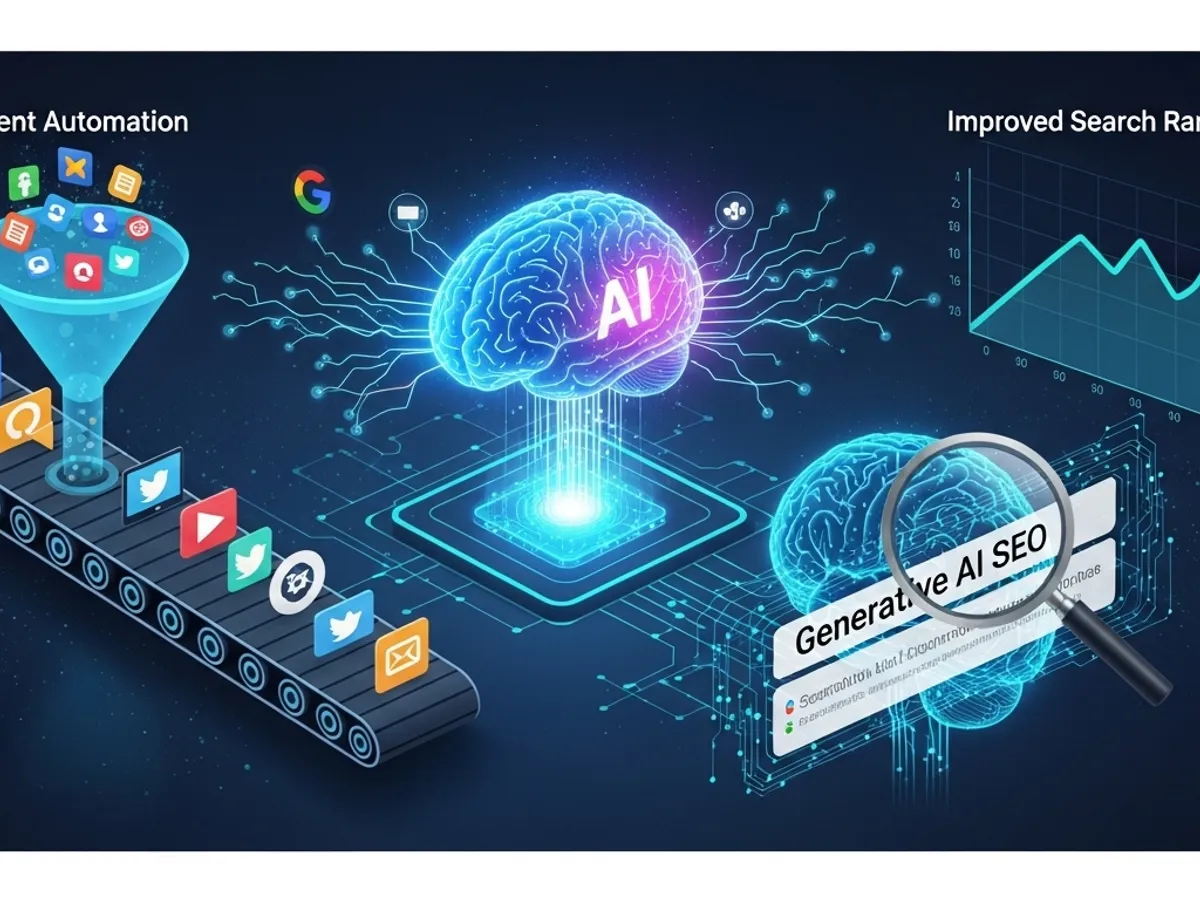
Conquer search rankings by mastering generative AI for your content strategy
1. Introduction: The Generative AI Revolution in Content and Search Rankings
The landscape of digital marketing is undergoing a seismic shift, fueled by the rise of generative AI for content. Search Engine Optimization (SEO), once a realm of keyword tactics, is now evolving into a holistic strategy where authority, structure, and relevance reign supreme. Generative AI isn’t just a tool; it’s a paradigm shift, transforming how we approach content creation, SEO, and ultimately, how we conquer search rankings. As a game-changer, GenWrite is an AI blog generator that automates the end-to-end blog creation process, focusing on SEO optimization. It researches keywords, adds relevant links and images, analyzes competitor content, and automatically publishes blogs to help users increase website traffic and organic reach. This guide will provide a step-by-step approach to mastering generative AI for content, enhancing your AI content strategy, and dominating search rankings.
2. Step-by-Step Instructions: How to Integrate Generative AI into Your Content Strategy for Enhanced Search Rankings
2.1. Understanding the Foundations: Generative AI and Its Impact on SEO
Generative AI for content is revolutionizing content creation and search engine optimization. Tools like Jasper AI and Copy.ai are capable of generating SEO-optimized content, including blog posts, product descriptions, and web pages, at unprecedented speeds. This technology uses machine learning algorithms to understand patterns in data and create new, original content. The integration of generative AI into SEO is not just about automating content creation; it’s about enhancing the quality, relevance, and scalability of your content strategy. By mastering generative AI, you can create content that resonates with both search engines and human readers, driving organic traffic and improving search rankings. The rise of generative AI marks a pivotal moment for digital marketing, necessitating a shift in how we approach content and SEO. As noted by experts, generative AI has upended traditional SEO by shifting the focus from keyword tactics to authority, structure, and relevance.
2.2. Harnessing AI-Driven Keyword Research for Content That Ranks
Keyword research remains the cornerstone of any successful SEO strategy. AI tools offer advanced capabilities for identifying untapped keyword opportunities and understanding search intent. By leveraging SEO AI agents, businesses can gain deeper insights into the terms and phrases that drive traffic in their niche. These tools analyze vast amounts of data to uncover long-tail keywords, related terms, and trending topics, providing a competitive edge in search rankings. AI-driven keyword research not only helps you identify the right keywords but also provides context on how to use them effectively in your content. Companies like GenWrite focus on keyword research to ensure users can improve organic traffic and SEO.
2.3. Creating High-Quality, SEO-Optimized Content with Generative AI Tools
Generative AI empowers you to create high-quality, SEO-optimized content at scale. Tools like Jasper AI and Copy.ai can assist in generating engaging blog posts, compelling product descriptions, and informative web pages. However, it’s essential to remember that AI-generated content should not be used blindly. Always review and refine the output to ensure it aligns with your brand voice, expertise, and target audience. By combining the power of AI with human creativity and insight, you can produce content that ranks well in search results and provides value to your audience. For instance, GenWrite, an AI blog generator, focuses on ensuring its AI content aligns with search engine guidelines and LLMs.

2.4. Optimizing Meta Tags and Title Tags with AI for Better Search Visibility
Meta tags and title tags are crucial elements for SEO, influencing how search engines understand and display your content. Generative AI can assist in optimizing these tags by analyzing their impact on click-through rates and search rankings. By leveraging AI-powered tools, you can identify the most effective keywords and craft compelling meta descriptions and title tags that attract clicks and improve visibility. Remember to keep your title tags concise and relevant, and use meta descriptions to provide a brief summary of your content, enticing users to click through to your site. For example, using GenWrite can improve SEO by improving the quality of title tags.
2.5. Analyzing User Engagement Data with Generative AI to Refine Content Strategy
Generative AI can analyze user engagement data to inform content strategy. By examining metrics such as bounce rate, time on page, and social shares, you can gain insights into what resonates with your audience. AI-powered tools can identify patterns and trends in user behavior, helping you understand which types of content perform best and which need improvement. This data-driven approach allows you to refine your content strategy, focusing on topics, formats, and styles that drive engagement and improve search rankings. Analyzing user engagement data is crucial as it helps businesses understand search intent better and optimize their content strategies, as emphasized by SEO AI agents.

2.6. Leveraging AI for Content Personalization and Enhanced User Experience
Personalization is key to creating a user experience that keeps visitors engaged and coming back for more. Generative AI enables you to tailor content to individual user preferences, delivering personalized recommendations, offers, and experiences. By analyzing user data and behavior, AI-powered tools can identify patterns and segments, allowing you to create content that resonates with specific audiences. This level of personalization not only enhances user experience but also improves engagement metrics, leading to better search rankings and increased organic traffic. As AI continues to transform marketing, using AI-driven tools to enhance targeting, automation, and customer experience is crucial.
2.7. Adapting to AI Search Algorithms: Generative Engine Optimization (GEO)
As AI search continues to grow, brands need to upgrade their content strategy beyond SEO and into the realm of Generative Engine Optimization (GEO). While content strategy for SEO and GEO are similar, there are some unique things to consider when dealing with AI. As AI-driven search and tools like ChatGPT, Gemini, and Perplexity play a larger role in brand narrative and visibility, content strategy is even more important and must evolve. Integrating generative AI into SEO strategies offers a comprehensive approach to content creation, keyword research, and optimization. For businesses aiming to stay ahead, understanding and implementing Generative Engine Optimization (GEO) is essential, as it helps content remain visible in AI-powered search.

2.8. Monitoring and Adapting: Staying Ahead in the AI-Driven SEO Landscape
The field of AI and SEO is constantly evolving. It’s critical to continuously monitor the latest trends, algorithm updates, and best practices to stay ahead of the curve. Keep experimenting with new AI tools and techniques, and stay informed through industry publications, conferences, and online communities. By embracing a mindset of continuous learning and adaptation, you can ensure that your content strategy remains effective and competitive in the AI-driven SEO landscape. Given the rapid advancements in AI, continuous learning and adaptation are vital for maintaining a competitive and effective content strategy.
3. Tips and Warnings: Maximizing Your Success with Generative AI in SEO
3.1. Focus on E-E-A-T: Experience, Expertise, Authoritativeness, and Trustworthiness
Google’s E-E-A-T guidelines are more important than ever in the age of AI. Ensure that your content demonstrates experience, expertise, authoritativeness, and trustworthiness to gain the trust of both users and search engines. Focus on creating original, well-researched content that provides value to your audience. Back up your claims with credible sources, and showcase your expertise through thought leadership and unique insights. Ensuring your content meets Google’s E-E-A-T guidelines is crucial for maintaining search rankings and building user trust. As generative AI shifts the focus from keyword tactics to authority, structure, and relevance, content teams can future-proof their strategy by aligning with the new rules of AI-powered search.
3.2. Avoid Over-Reliance on AI: Maintain Human Oversight and Creativity
While generative AI can be a powerful tool, it’s important to avoid over-reliance and maintain human oversight. AI-generated content should always be reviewed and refined by human editors to ensure accuracy, clarity, and brand alignment. Remember that AI is a tool to augment human creativity, not replace it. By combining the power of AI with human insight and creativity, you can produce content that is both optimized for search engines and engaging for human readers. While AI can automate content creation, human oversight remains crucial for quality and ethical content.
3.3. Stay Updated on Google’s Guidelines for AI-Generated Content
Google has specific guidelines for AI-generated content, emphasizing the importance of creating helpful, original content that benefits users. Familiarize yourself with these guidelines and ensure that your content strategy aligns with Google’s best practices. Avoid using AI to generate spammy or low-quality content, as this can harm your search rankings and reputation. Focus on creating content that provides value to your audience and meets their needs. Staying informed about Google’s guidelines for AI-generated content is essential to avoid violating SEO policies and maintain credibility.
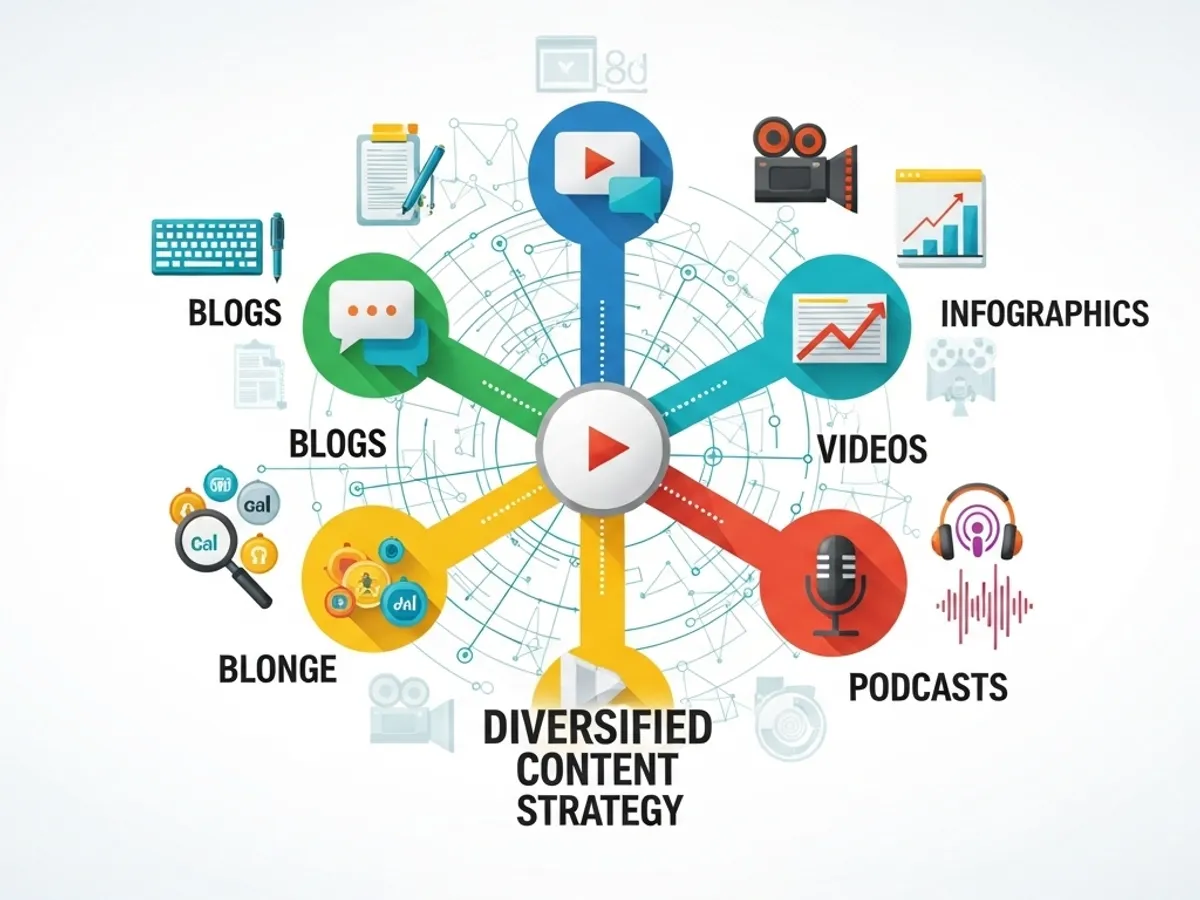
3.4. Diversify Your Content Strategy: Don’t Rely Solely on AI-Generated Content
While AI can be a valuable tool for content creation, it’s important to diversify your content strategy and not rely solely on AI-generated content. Incorporate a mix of content formats, including blog posts, videos, infographics, and podcasts, to cater to different user preferences and needs. Focus on creating original, high-quality content that showcases your brand’s unique voice and expertise. As AI search continues to grow, brands need to upgrade their content strategy beyond SEO and ensure they are providing a mix of content formats.
3.5. Continuously Monitor and Analyze Your Results
SEO is an ongoing process, and it’s important to continuously monitor and analyze your results to identify what’s working and what’s not. Track your key metrics, such as organic traffic, keyword rankings, and user engagement, to measure the effectiveness of your content strategy. Use this data to refine your approach and optimize your content for better results. Continuously monitoring and analyzing your results is essential for refining your content strategy and optimizing content for better search rankings. One way to grow blog with AI is by streamlining content creation and enhancing SEO.
4. Conclusion: Mastering Generative AI for Long-Term Search Ranking Success
Mastering generative AI for content is essential for achieving long-term search ranking success in today’s digital marketing landscape. By integrating AI into your content strategy, you can automate content creation, optimize meta tags, analyze user engagement data, and personalize the user experience. Remember to focus on E-E-A-T, maintain human oversight, and diversify your content strategy to maximize your results. With the right approach, you can leverage the power of generative AI to conquer search rankings and drive organic traffic to your website. GenWrite provides high-quality, SEO-friendly content that aligns with search engine guidelines and LLMs, making it easier to achieve long-term search ranking success. It’s a myth that AI-generated content won’t rank in search results or get cited by AI chatbots, but with tools such as GenWrite, you can ensure the content is high quality and therefore has the opportunity to rank.
Quick Summary
Generative AI is transforming content strategy and SEO, making it crucial to adapt for improved search rankings. By incorporating AI tools for keyword research, content creation, and data analysis, marketers can enhance their content’s quality, relevance, and scalability. Focusing on Google’s E-E-A-T guidelines, maintaining human oversight, and diversifying content formats are essential for long-term success in the AI-driven SEO landscape. Embracing Generative Engine Optimization (GEO) ensures that content remains visible and authoritative in AI-powered search results. To dominate search results, it is vital to master generative AI for content.
FAQs
How does generative AI enhance content creation for SEO?
Generative AI automates content creation, optimizes meta tags, analyzes user engagement data, and personalizes user experiences, leading to higher-quality, SEO-optimized content.
What is Generative Engine Optimization (GEO) and why is it important?
GEO is optimizing content for AI-powered search engines, ensuring visibility and authority in AI-generated search results, which is increasingly important as AI search grows.
How can AI-driven keyword research improve my content strategy?
AI-driven keyword research uncovers untapped keyword opportunities, identifies long-tail keywords, and provides insights into search intent, allowing for more targeted and effective content. One can elevate your blog posts with this AI writing guide.
What are the key considerations for using AI-generated content?
Key considerations include maintaining human oversight, ensuring content aligns with Google’s E-E-A-T guidelines, and diversifying content strategy to avoid over-reliance on AI.
How do I stay updated with the latest trends in AI and SEO?
Continuously monitor industry publications, attend conferences, engage with online communities, and experiment with new AI tools and techniques to stay informed and adapt your strategies. Effortlessly craft high-ranking articles using AI.